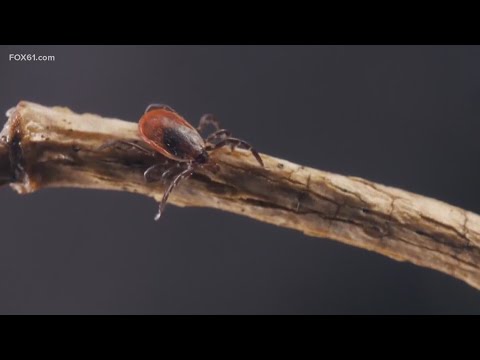
The vaccine, now formally designated PF-07307405 (also called LB6V, and previously known as VLA15), cleared its first regulatory hurdle since March's Phase 3 results. On August 14, 2026, the European Medicines Agency validated Pfizer and Valneva's marketing application, meaning the dossier is complete and formal review can begin.
European regulators expect to issue a decision within about a year, putting a verdict as early as mid-2027 in play. Pfizer has not yet confirmed filing its U.S. application, though it still aims to submit one in 2026. Valneva's August 13 earnings update reaffirmed full-year sales guidance of 135 to 150 million euros while the company waits on the vaccine's fate.
Why it matters
Half a million Americans get Lyme disease every year; a vaccine is now in formal review, decades after the last one failed.
Questions about this story
Free account needed to ask — your question is kept and asked for you right after sign-up. Answers are public.
No questions yet — be the first to ask.
Key Indicators
73.2%
Vaccine efficacy
Reduction in confirmed Lyme disease cases versus placebo, measured from 28 days after the fourth dose
476,000
Annual U.S. Lyme cases
Estimated number of Americans diagnosed and treated for Lyme disease each year
24 years
Gap since last vaccine
LYMErix was withdrawn in February 2002; no Lyme disease vaccine has been available since
$1B
Estimated peak annual sales
Valneva's projection for the vaccine's commercial potential at maturity
9,437
Trial participants
Enrolled across the United States, Europe, and Canada in Lyme-endemic areas
13 events
Latest: August 13th, 2026 · 2 months ago
Showing 8 of 13
JK to step
Tap a bar to jump to that date
Jump to
August 2026
Valneva reaffirms 2026 sales guidance in half-year results
LatestFinancial
Valneva reported product sales of 64.0 million euros for the first half of 2026 and reaffirmed full-year guidance of 135-150 million euros. The company said Pfizer expects Lyme vaccine regulatory decisions in Europe and the U.S. within about 12 months.
March 2026
Phase 3 results show 73% efficacy; Pfizer to seek FDA approval
Clinical Trial
Pfizer and Valneva announced the vaccine demonstrated 73.2% efficacy in preventing Lyme disease, with no safety concerns identified. However, the trial technically missed its pre-specified statistical threshold because fewer Lyme cases occurred than anticipated, shrinking the evaluable dataset. Pfizer said it will file for FDA approval in 2026 regardless, targeting a launch in late 2027.
November 2025
Positive Phase 2 booster data reported
Clinical Trial
Valneva published positive results from a Phase 2 study evaluating booster doses of VLA15, supporting the durability of immune response beyond the primary series.
July 2024
Primary three-dose vaccination series completed
Clinical Trial
All trial participants completed their primary vaccination series. Researchers then monitored participants through the 2025 Lyme season to measure how many developed the disease.
December 2023
VALOR trial completes enrollment with 9,437 participants
Clinical Trial
After the site quality issues reduced enrollment, the trial closed with 9,437 participants randomized equally between the vaccine and a saline placebo.
February 2023
Pfizer drops roughly half of trial participants over site quality issues
Clinical Trial
Pfizer discontinued a significant number of U.S. participants after discovering good clinical practice violations at third-party trial sites operated by Care Access. The trial continued with approximately 9,400 participants.
August 2022
Phase 3 VALOR trial begins enrolling participants
Clinical Trial
The pivotal trial began recruiting participants aged five and older across Lyme-endemic areas in the United States, Europe, and Canada. The study used a four-dose schedule: a three-dose primary series plus one booster.
June 2022
Pfizer invests $95 million for 8.1% stake in Valneva
Financial
Pfizer deepened its commitment by taking an equity stake in Valneva and revising cost-sharing terms. Valneva's share of development costs rose to 40%, but the company gained eligibility for up to $100 million in additional sales milestones.
April 2020
Pfizer partners with Valneva to co-develop VLA15
Partnership
Pfizer licensed global commercialization rights to VLA15 from Valneva, paying $130 million upfront. The deal gave the small biotech access to Pfizer's regulatory expertise and global distribution infrastructure.
July 2017
FDA grants Fast Track designation to Valneva's VLA15
Regulatory
The FDA designated VLA15 for expedited review, recognizing the unmet medical need for a Lyme disease vaccine. The designation allows rolling submission of clinical data and more frequent FDA meetings.
February 2002
GlaxoSmithKline withdraws LYMErix from the market
Market
With projected sales of just 10,000 doses for 2002, GlaxoSmithKline voluntarily pulled LYMErix. Unsubstantiated safety fears, anti-vaccine sentiment amplified by the Wakefield scandal, and lawsuits had collapsed demand. No Lyme vaccine would be available for the next two decades.
A Philadelphia law firm filed suit on behalf of 121 individuals alleging the vaccine triggered autoimmune arthritis. FDA safety reviews later found no evidence supporting the claim—arthritis rates in vaccinated people matched background rates.
December 1998
FDA approves LYMErix, the first Lyme disease vaccine
Regulatory
SmithKline Beecham's LYMErix became the first and only licensed Lyme disease vaccine, showing 78% efficacy after three doses. It worked by stimulating antibodies that attacked the bacteria inside the tick's gut before it could enter the human body.
Scenarios
1
FDA approves vaccine, Pfizer launches in late 2027
Likely
Discussed by: Pfizer and Valneva in their press release; multiple biotech analysts covering the companies
The FDA accepts Pfizer's Biologics License Application and grants approval based on the 73% efficacy data and strong safety profile, despite the missed statistical threshold. The Fast Track designation accelerates review. Pfizer launches in Lyme-endemic regions in the second half of 2027, with European approval following shortly after. Strong demand from outdoor enthusiasts, families in endemic areas, and public health advocates drives sales toward the projected $1 billion peak. This scenario depends on the FDA viewing the efficacy signal as clinically meaningful even without meeting the pre-specified statistical bar.
2
FDA requests additional data, delaying approval by one to two years
Possible
Discussed by: STAT News and CNBC analysts noting the missed statistical endpoint as a regulatory risk
The FDA determines that the Phase 3 data, while promising, does not meet the evidentiary standard for approval without additional confirmation. The agency requests either a supplementary study or an additional season of follow-up data from existing participants. This would push approval into 2028 or 2029, increasing costs for Valneva and testing the patience of a company already running net losses exceeding 100 million euros annually. The political environment around vaccines under the current administration could make regulators more cautious rather than less.
3
Vaccine approved but demand disappoints, echoing LYMErix
Possible
Discussed by: Public health historians and vaccine hesitancy researchers who have studied the LYMErix precedent
The FDA approves the vaccine, but uptake falls short of projections. Anti-vaccine sentiment—stronger now than in 2002—suppresses demand among the general public. The four-dose schedule proves a barrier to completion rates. Insurance coverage disputes limit access. Sales plateau well below the $1 billion target, raising questions about the commercial viability of vaccines for diseases that many people still underestimate. Valneva's financial position deteriorates if milestone payments from Pfizer do not materialize.
4
Competing approaches overtake VLA15 before it reaches peak sales
Even if VLA15 wins approval first, newer technologies could erode its market. Moderna has two mRNA-based Lyme vaccine candidates in Phase 1/2 trials that could offer single-dose convenience. Tonix Pharmaceuticals is developing a monoclonal antibody that provides seasonal protection from a single injection without requiring the immune system to generate its own response—a potential advantage for immunocompromised patients. If either proves more effective or easier to administer, VLA15's first-mover advantage could prove temporary.
Historical Context
3 moments from history that rhyme with this story — and how they unfolded.
1 of 3
December 1998 – February 2002
LYMErix withdrawal (2002)
SmithKline Beecham's LYMErix became the first licensed Lyme disease vaccine in 1998, showing 78% efficacy. Within a year, a class-action lawsuit on behalf of 121 people alleged it caused autoimmune arthritis—a claim the FDA investigated and found unsupported. But the damage was done: media amplification of unproven fears, compounded by the broader anti-vaccine climate triggered by Andrew Wakefield's fraudulent 1998 autism study, collapsed demand to roughly 10,000 projected doses for 2002.
Then
GlaxoSmithKline voluntarily withdrew the vaccine in February 2002, settling the lawsuit by paying lawyers $926,250. Vaccine recipients received nothing.
Now
No Lyme disease vaccine was available for 24 years. The episode became a canonical case study in how unfounded safety fears can destroy a beneficial medical product. It also chilled pharmaceutical investment in Lyme disease for over a decade.
Why this matters now
The LYMErix failure is the direct reason this vaccine is newsworthy—it created the two-decade gap VLA15 aims to fill. It also defines the commercial risk: even a safe, effective vaccine can fail if public trust collapses. Pfizer and Valneva face a more polarized vaccine environment than GlaxoSmithKline did in 2002.
2 of 3
June 2006 – present
HPV vaccine controversy and eventual adoption (2006–present)
Merck's Gardasil, a vaccine against human papillomavirus (HPV) that prevents cervical cancer, faced fierce opposition after its 2006 approval. Conservative groups objected on moral grounds, claiming it would encourage sexual activity. Anti-vaccine activists raised safety concerns. Several U.S. states that attempted to mandate the vaccine for schoolchildren faced political backlash and withdrew the requirements.
Then
U.S. uptake was far slower than in countries like Australia, which implemented a national school-based program. By 2010, only about 32% of eligible U.S. girls had completed the three-dose series.
Now
Australia's early, aggressive adoption produced measurable results: cervical cancer rates dropped significantly, and the country is on track to effectively eliminate the disease. U.S. rates eventually climbed but remained below targets for years, representing preventable cancer cases lost to hesitancy.
Why this matters now
Gardasil shows that a vaccine can overcome initial political and cultural resistance to achieve widespread adoption—but that the speed of adoption has real consequences measured in preventable illness. The Lyme vaccine faces a similar dynamic: a clearly beneficial product navigating a skeptical public and politicized regulatory environment.
3 of 3
August 1998 – February 2006
Rotavirus vaccine withdrawal and replacement (1999–2006)
Wyeth's RotaShield, the first rotavirus vaccine, was withdrawn in 1999 after being linked to a rare bowel obstruction called intussusception—roughly 1 case per 10,000 vaccinated infants. The withdrawal was scientifically justified but left a gap in protection against a disease killing over 500,000 children globally each year. It took seven years before Merck's RotaTeq filled the gap in 2006.
Then
The withdrawal left hundreds of thousands of children unprotected against rotavirus during the seven-year gap between vaccines.
Now
RotaTeq and GlaxoSmithKline's Rotarix proved safe and effective, and rotavirus deaths plummeted globally. But the RotaShield episode, occurring the same year as the Wakefield fraud, contributed to the broader vaccine confidence crisis that helped kill LYMErix.
Why this matters now
The RotaShield withdrawal demonstrates the real human cost of vaccine gaps—and the fact that a replacement can eventually succeed even after a predecessor fails. VLA15 is attempting the same recovery arc that rotavirus vaccines achieved, but in a disease category where the commercial case is less clear-cut.