

Pull to refresh
Logo
China-Kyrgyzstan-Uzbekistan railway drills first tunnel through Kyrgyz mountains

China-Kyrgyzstan-Uzbekistan railway drills first tunnel through Kyrgyz mountains

Built World

First breakthrough on the 500-km Belt and Road rail link giving Central Asia a direct route to China

Today: First tunnel breakthrough announced

Overview

Updated 1 hour ago

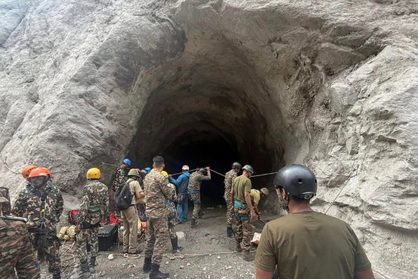
Workers holed through the 209.6-meter Kosh Dobo North No. 2 tunnel on August 5 after 87 days of boring. On September 5, the trilateral joint venture running the China-Kyrgyzstan-Uzbekistan railway announced the breakthrough — the first of 27 tunnels now under construction on the Kyrgyz section.

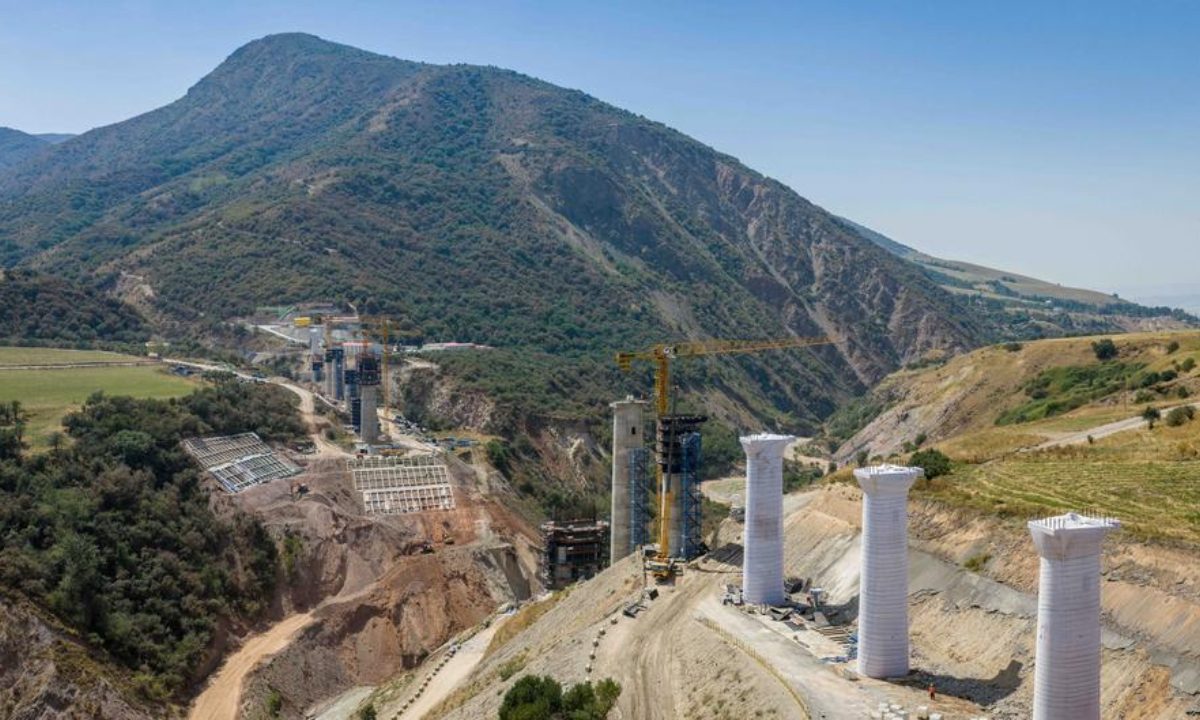
The railway will run more than 500 kilometers from Kashgar in China's Xinjiang region through Kyrgyzstan to Andijan, Uzbekistan. It ends Central Asia's rail dependence on Russia and gives landlocked Kyrgyzstan its first east-west corridor of its own.

Why it matters

This rail link gives Central Asia a direct trade route to China, bypassing Russia's rail network — construction is now physically underway, not just planned.

Questions about this story

Free account needed to ask — your question is kept and asked for you right after sign-up. Answers are public.

No questions yet — be the first to ask.

Key Indicators

209.6 m
Length of first tunnel holed through
The Kosh Dobo North No. 2 tunnel, bored in 87 days.
87 days
Time to drill the first tunnel
From May 10 to August 5, 2026.
17%
Overall project progress
On the Kyrgyz section as of August 2026, per China Railway International.
304.84 km
Length of the Kyrgyz section
About 60% of the railway's total length.
27
Tunnels under construction
Of 29 planned; 43 bridges and 88 roadbed sections also underway.
2,000+
Kyrgyz workers employed
More than 1,800 have received construction training.

Voices

Curated perspectives — historical figures and your fellow readers.

Ever wondered what historical figures would say about today's headlines?

Sign up to generate historical perspectives on this story.

Play

Exploring all sides of a story is often best achieved with Play.

Most of these play right now — no account needed. Sign up to save scores, keep a streak, and unlock Debate and Predict. Log in Sign Up
Predict 3 ways this could play out. Back the one you believe — contrarian picks score more when a scenario has a resolution date. Log in to play

People Involved

Organizations Involved

Timeline

December 2024 September 2026

7 events Latest: Today
Tap a bar to jump to that date
  1. First tunnel breakthrough announced

    Today Milestone

    Project company announces the first tunnel completion on the Kyrgyz section.

  2. First tunnel holed through

    Construction

    Kosh Dobo North No. 2 is drilled through after 87 days.

  3. Boring starts on Kosh Dobo North No. 2

    Construction

    Work begins on the 209.6-meter tunnel north of Kosh Dobo.

  4. Loan agreements signed with Chinese banks

    Funding

    Joint venture signs financing deals with China Development Bank and Export-Import Bank.

  5. Full-scale construction begins

    Construction

    Civil construction starts across the 304.84-km Kyrgyz section.

  6. Three key tunnels begin construction

    Construction

    Initial tunnel boring starts on the Kyrgyz section.

  7. Groundbreaking ceremony for the railway

    Milestone

    The three countries hold an official groundbreaking for the project.

Historical Context

3 moments from history that rhyme with this story — and how they unfolded.

1959-1978

Karakoram Highway (1959-1978)

China and Pakistan spent nearly two decades carving a 1,300-kilometer highway through the Karakoram and Himalaya ranges, connecting Kashgar to Islamabad. The route required blasting through some of the world's toughest mountain terrain and claimed hundreds of workers' lives.

Then

Opened in 1978, it became the main overland trade and strategic link between China and Pakistan.

Now

It set the template for China's high-altitude infrastructure ambitions across Central Asia.

Why this matters now

Kashgar is the same starting point as the CKU railway — the new project extends China's mountain infrastructure push westward, swapping road for rail.

2001-2006

Qinghai-Tibet railway (2006)

China completed a 1,956-kilometer rail line from Xining to Lhasa, crossing permafrost at elevations above 4,500 meters. The final Golmud-to-Lhasa leg took five years and required special engineering for frozen ground.

Then

Became the world's highest railway and a backbone of Tibet's economy.

Now

China gained proven rail-engineering experience in cold, high-altitude, seismically active terrain.

Why this matters now

The Tien Shan route on the CKU railway faces similar permafrost and seismic challenges, and Chinese contractors bring this track record to the project.

2007-2017

Baku-Tbilisi-Kars railway (2007-2017)

Azerbaijan, Georgia, and Turkey built an 826-kilometer rail line connecting the Caspian to Europe, deliberately bypassing Russia. Construction started in 2007 after years of planning and the line opened in 2017, a decade later, after repeated delays.

Then

Provided a new east-west freight corridor through the South Caucasus outside Russia's rail system.

Now

Showed both the strategic value and the difficulty of multi-country rail projects in the post-Soviet space.

Why this matters now

The CKU railway follows the same logic — a trilateral rail link bypassing Russia — but on harder terrain and with a partner whose construction resources run far deeper.

Sources

(9)