
Army Corps grants permit for Louisiana's new deepwater container port
Built WorldThe $2.6 billion terminal would be the nation's only new greenfield container port, built downriver of a bridge too low for today's biggest ships.
Yesterday: USACE grants federal permitNew here? Follow stories to track developments over time. Create a free account to get updates when stories you care about change.
Overview
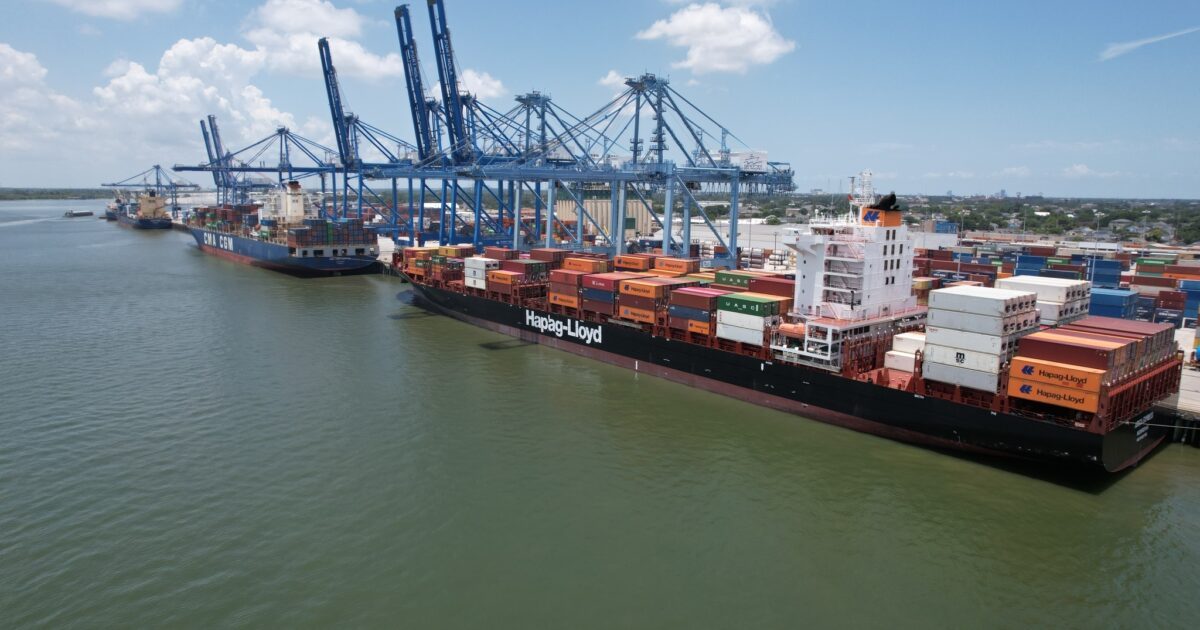
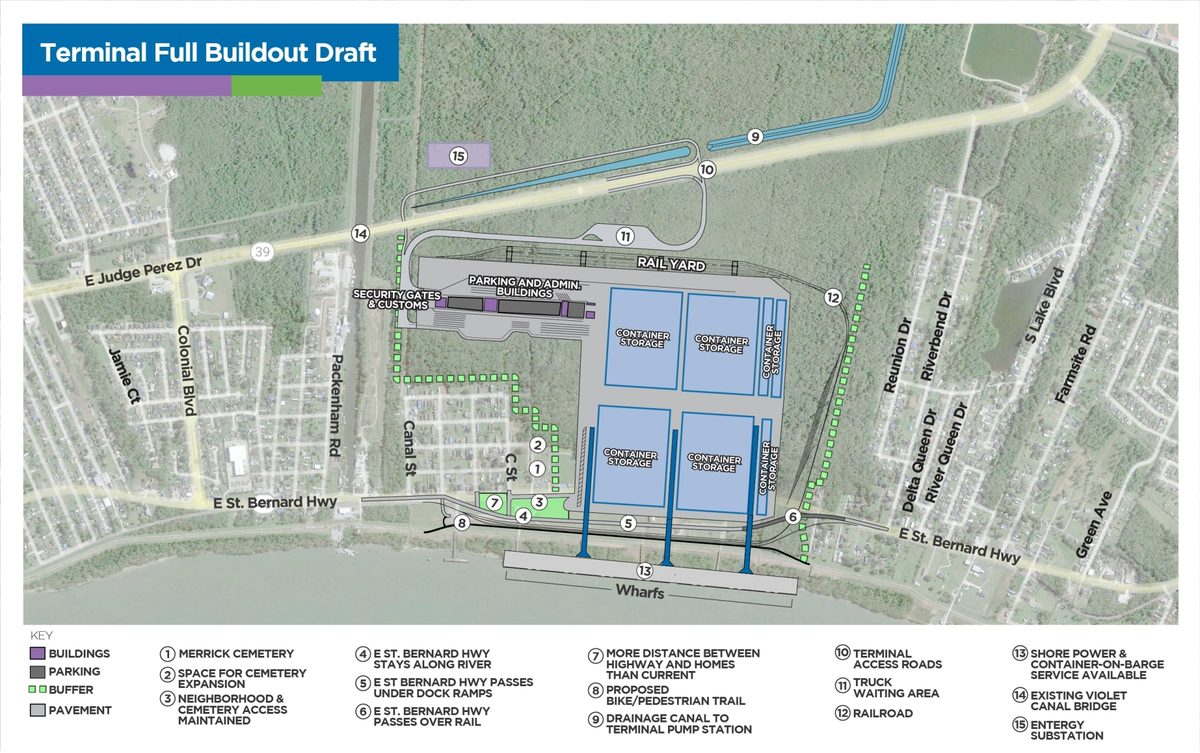
Updated 39 minutes agoThe biggest container ships in the world cannot reach the Port of New Orleans; the Crescent City Connection bridge is too low for vessels hauling 24,000 boxes. The answer is a brand-new port built 17 miles downriver where they can dock, and this week it cleared its biggest hurdle.
The U.S. Army Corps of Engineers granted the federal permit for the Louisiana International Terminal, ending more than four years of review. The $2.6 billion project is the nation's only greenfield container port under development. Roughly half its funding, a $1 billion access highway, and three local lawsuits still stand in the way.
Why it matters
If LIT opens, the largest container ships can serve Louisiana directly, rerouting Gulf Coast trade and supply chains that today move through other ports.
Questions about this story
Free account needed to ask — your question is kept and asked for you right after sign-up. Answers are public.
No questions yet — be the first to ask.
Key Indicators
Voices
Curated perspectives — historical figures and your fellow readers.
Play
Exploring all sides of a story is often best achieved with Play.
Higher or Lower
A number from this story, against one from elsewhere in the news — guess which is bigger, then keep the chain going. 5 rounds, 3 strikes; a miss costs a strike and resets your streak.
Keyboard: ↓/L lower · ↑/H higher
0 points — sign up to put that on the leaderboard.
Connections
Sixteen names from the news. Find the four hidden groups of four. Four mistakes max.
Sign up to keep a daily streak — a new puzzle lands every day.
Exit debate?
Your progress in this debate will be lost.
- 1 Two AI personas square off on this story.
- 2 You predict who'll win each round — correct picks earn XP.
- 3 One crossfire question is yours to fire. Pick it carefully.
Couldn't generate a topic
Select Your Champions
Choose one persona for each side of the debate
DEBATE TOPIC
Choose personas with different perspectives for a more dynamic debate.
Select debater for this side:
No debate personas available right now.
Select debater for this side:
No debate personas available right now.
Who's Got This Round?
Make your prediction before the referee scores
The referee scores both sides on
Round Results
Set the Crossfire
Pick the question both personas must answer in the final round
Debate Oracle! You called every round!
Sharp Instincts! You know your debaters!
The Coin Flip Strategist! Perfectly balanced!
The Contrarian! Bold predictions!
Inverse Genius! Try betting the opposite next time!
XP Breakdown
Prediction History
People Involved
Organizations Involved
Public agency that operates the Port of New Orleans and leads the LIT public-private partnership.
Federal agency whose permits govern construction in U.S. waters and wetlands.
Terminal operating arm of Mediterranean Shipping Company, the world's largest container line.
Largest U.S. marine terminal operator, handling container, breakbulk, and auto cargo.
Timeline
June 2022 December 2031
-
Target opening
Upcoming ProjectionFive-year build could open the terminal's first berth by late 2031.
-
Site work expected this fall
Upcoming ConstructionAccess roads, ground clearing, and soil preparation could begin at Violet.
-
USACE grants federal permit
Latest RegulatoryArmy Corps authorizes LIT construction, clearing the project's biggest regulatory hurdle.
-
Funding package firming up
FundingProject website lists $800M from private partners and more than $500M in public money.
-
Permit application filed
RegulatoryPort NOLA files LIT construction permits with USACE; federal review begins.
Historical Context
2 moments from history that rhyme with this story — and how they unfolded.
Panama Canal expansion (2016)
The canal opened a third set of locks, allowing neopanamax ships of roughly 14,000 containers to cross between the Pacific and Atlantic. That made very large vessels viable on U.S. Gulf and East Coast routes for the first time.
East and Gulf Coast ports rushed to deepen channels and buy bigger cranes; Savannah, Charleston, and New York-New Jersey led the wave.
Ship sizes kept growing past what many fixed bridges and channels could handle, forcing ports to choose between raising bridges or building downriver.
The same escalation made the Crescent City Connection too low for modern ships, driving the decision to build LIT downriver at Violet rather than try to widen the existing harbor.
Bayonne Bridge raising (2019)
The Port Authority of New York and New Jersey lifted the Bayonne Bridge's roadway from 151 feet to 215 feet, at a cost near $1.7 billion, so post-Panamax container ships could reach the ports of Newark and Elizabeth. The bridge had capped the size of vessels the region's terminals could serve.
New York-area terminals kept handling the largest ships transiting the expanded Panama Canal, protecting their share of East Coast cargo.
The $1.7 billion job became the standard fix for low bridges at container ports, and a measure of how expensive that fix is.
LIT faces the same height problem on the Mississippi, where the Crescent City Connection cannot be raised affordably. Building an entirely new port below the bridge is the alternative path.
