


Pull to refresh
Logo
PortMiami completes shore-power buildout at five cruise berths

PortMiami completes shore-power buildout at five cruise berths

Built World

Five of nine berths can run docked ships on the grid, but the port's power plant supports only three connections at once

Overview

Updated 27 minutes ago

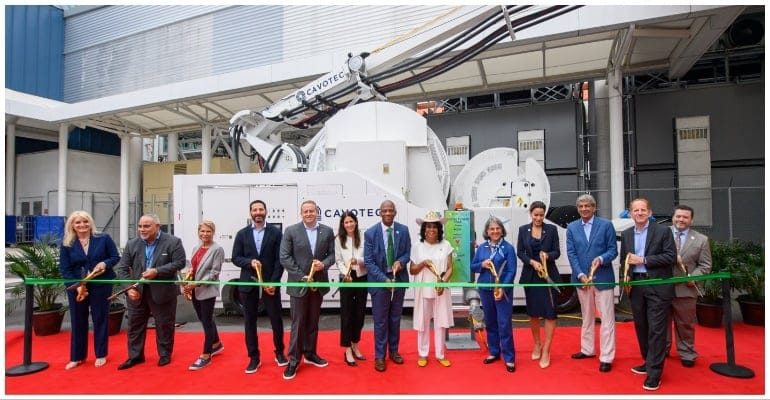
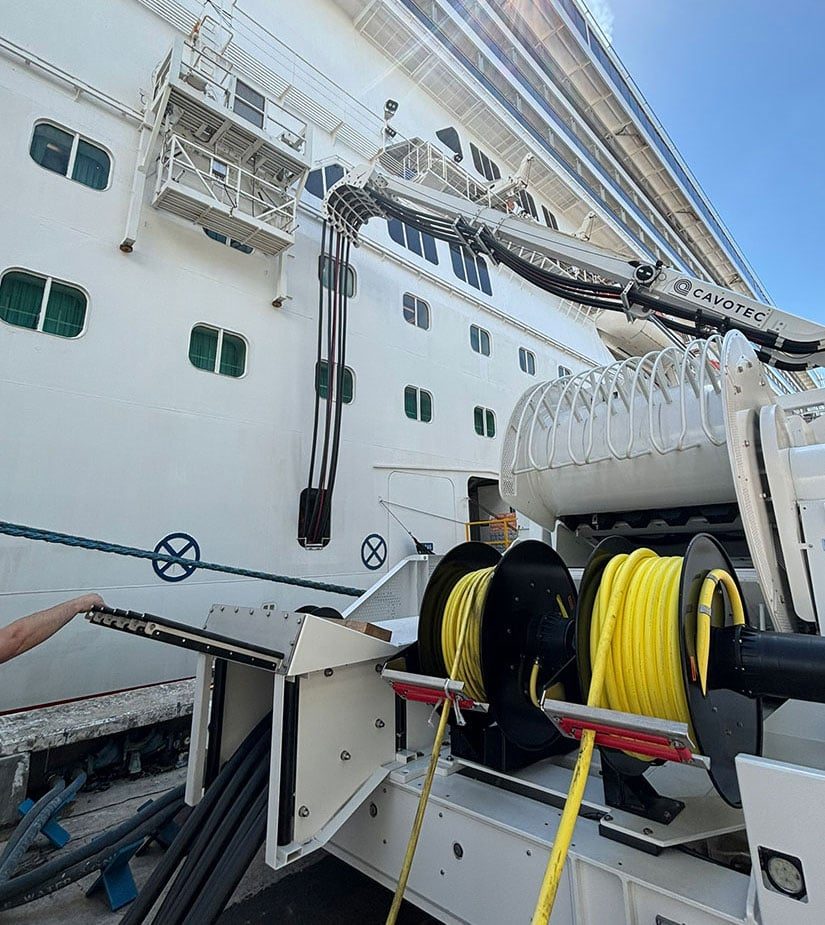
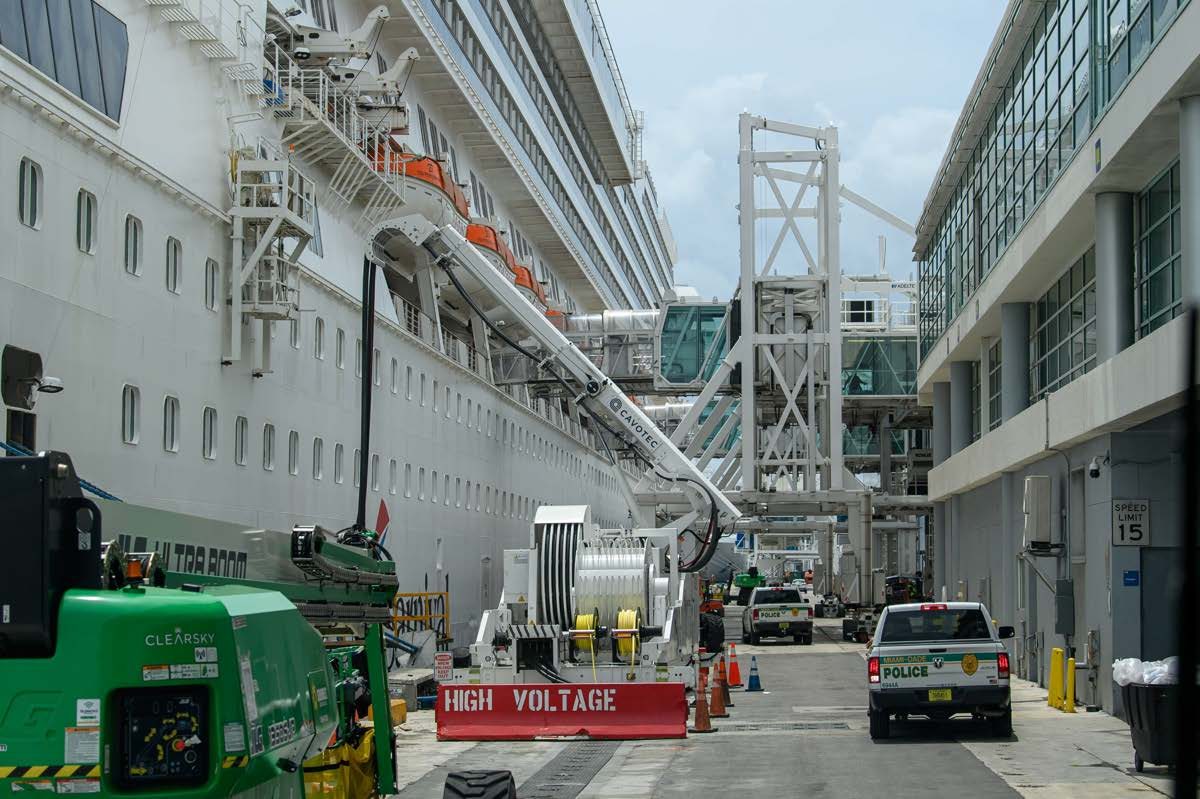
A cruise ship at berth keeps its engines running to power lights, refrigeration, air conditioning and systems, drawing as much electricity as a small city. Since May 2024, ships docking at five of PortMiami's nine cruise berths can shut those engines off and plug into the local grid instead, the most shore-power connections at any US passenger port.

The buildout cost just over $125 million, about $28 million of it federal grants. The port says connecting cuts at-berth emissions by up to 95 percent, and it counts 6,000 tonnes of greenhouse gas avoided across 175 plug-in days. The ceiling is supply: only three berths can connect at once until Florida Power & Light expands the plant it runs inside the port.

Why it matters

Docked cruise ships burn fuel beside city neighborhoods. Five Miami berths can now run them on the grid instead, cutting at-berth emissions by up to 95 percent.

Questions about this story

Free account needed to ask — your question is kept and asked for you right after sign-up. Answers are public.

No questions yet — be the first to ask.

Key Indicators

5
Cruise berths wired for shore power
Out of nine cruise berths, the most at any US passenger port.
3
Berths that can connect simultaneously
Limited by capacity at the Florida Power & Light plant inside the port.
$125M
Total project cost
Roughly $28 million came from federal grants.
95%
At-berth emissions cut when a ship plugs in
PortMiami's figure for connected vessels.
6,000 tonnes
Greenhouse gas avoided so far
Across 175 days of ship connections, per the port.
16 MW
Capacity of the shore-power system
Docked cruise ships need between 8 and 13 megawatts.
4%
Share of ports Carnival calls on that offer shore power
About 4 percent of 800 ports, while over 70 percent of the fleet is equipped.

Voices

Curated perspectives — historical figures and your fellow readers.

Sign up to generate historical perspectives on this story.

People Involved

Organizations Involved

Timeline

2021 November 2026

5 events Latest: Today
Tap a bar to jump to that date
  1. Upgrades finalized for next-generation vessels

    Today Infrastructure

    PortMiami completes grid and terminal modifications built to serve shore-power and zero-emission ships.

  2. Design wins industry award

    Award

    The American Association of Port Authorities honors the program for its port-wide, hurricane-hardened design.

  3. Five berths wired

    Infrastructure

    Remaining terminals complete, giving the port five shore-power berths and three simultaneous connections.

  4. First berth goes live

    Infrastructure

    The first PortMiami cruise berth begins supplying shore power to docked vessels.

Scenarios

1

FPL expands port power, five berths connect at once

Possible Resolves by End of 2027

Discussed by: PortMiami director Hydi Webb, in interviews with the Miami Herald and cruise trade press

The port's stated next phase is five simultaneous connections, which depends entirely on Florida Power & Light adding capacity at the plant it runs inside PortMiami. If FPL commits, the port would be able to serve the roughly ten additional shore-power-capable ships it expects to call. No expansion has been announced.

2

Miami-Dade replaces voluntary plug-in deals with a mandate

Unlikely Resolves by Q2 2027

Discussed by: Cruise executives and port officials contrasting Miami with Seattle and California ports

Miami uses voluntary agreements: equipped ships plug in when a berth is free. Seattle and several California ports require it. If the county commission moves to an ordinance, plug-in rates would rise but cruise lines would absorb higher costs than burning fuel already aboard, since connecting runs $4,115 a day plus electricity.

3

Three-connection ceiling holds into 2028

Likely Resolves by Q2 2028

Discussed by: PortMiami officials describing the utility constraint

The system has 16 megawatts of capacity against ships that need 8 to 13 megawatts each, and the utility plant feeding it has not been expanded. Without that expansion, the port's five wired berths would keep rotating, and growth in plug-in days would be capped by scheduling rather than by demand.

Historical Context

2 moments from history that rhyme with this story — and how they unfolded.

2000s-2020s

West Coast shore power (2000s onward)

Ports in Alaska, Washington and California installed shore-power connections years before Miami did. Seattle and several California ports went further, requiring capable ships to plug in rather than relying on voluntary agreements. Early systems were often fixed in one spot on a pier and could not be moved to serve different vessel classes.

Then

Ships on those routes cut fuel burning at berth while Miami's cruise terminals kept running engines alongside downtown.

Now

Several West Coast ports are now retrofitting fixed systems to accommodate more ships, a cost Miami avoided by building mobile connections first.

Why this matters now

Miami arrived late but built to a standard the early adopters lacked, with movable connections and a single port-wide grid design.

2021

The 2021 Miami Herald investigation

The Herald questioned why Miami-Dade had promised shore power for years without installing it, while cruise lines had already equipped much of their fleets. The county had no berth wired at the time, and ships burned fuel beside a dense city center.

Then

The county committed to the project, won about $28 million in federal grants, and went from zero berths to five at once.

Now

The port logged 175 plug-in days and 6,000 tonnes of avoided greenhouse gas, and now charges lines $4,115 a day to connect.

Why this matters now

It shows the buildout was triggered by local reporting and county funding, not by a federal mandate or international rule.

Sources

(8)