
Pull to refresh
Logo
Xiamen Port operates China's largest all-electric tugboat fleet

Xiamen Port operates China's largest all-electric tugboat fleet

Built World

Five battery and hybrid tugs have taken over routine harbor work since January.

Overview

Updated 1 hour ago

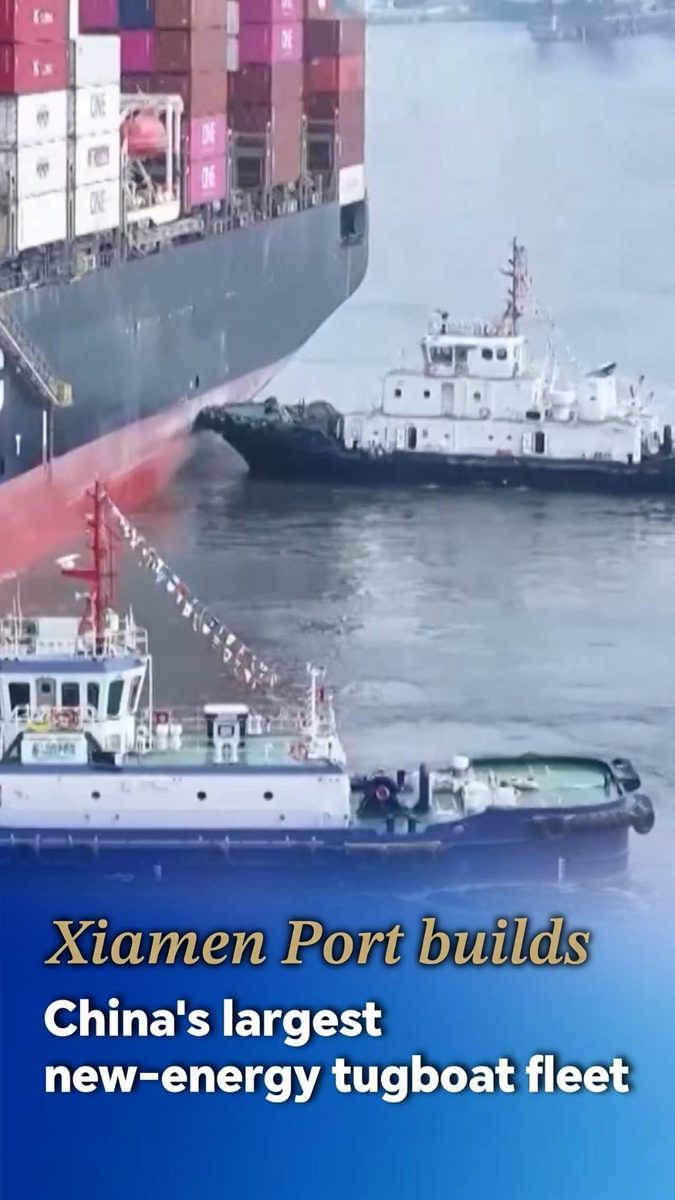
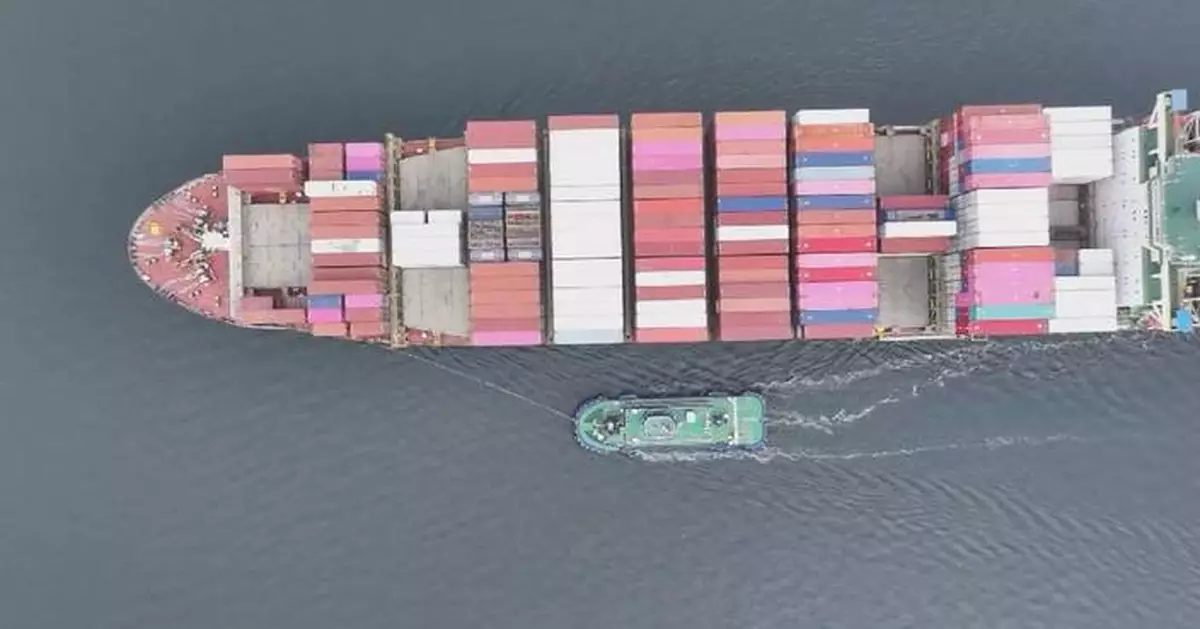
On a single three-hour charge, one of Xiamen Port's new tugboats can push a 34,000-tonne container ship into its berth eight times. The tug has no diesel engine, no exhaust stack and no engine-room roar.

Xiamen now runs five new-energy tugs, four of them all-electric, the largest such fleet in China. The four battery tugs were delivered in January 2026; the fifth, a 2023 hybrid, was the country's first series-hybrid tug.

Tugboats are small but they run hard, idling and sprinting for hours. If batteries can cover that duty cycle, they can cover much of the rest of the port's equipment.

Why it matters

Harbor tugs burn heavily per hour worked; if batteries can replace diesel here, they can replace it across port fleets.

Questions about this story

Free account needed to ask — your question is kept and asked for you right after sign-up. Answers are public.

No questions yet — be the first to ask.

Key Indicators

5
New-energy tugboats in the fleet
Four all-electric tugs plus one 2023 series hybrid.
7,316 kWh
Battery capacity, largest tugs
Up from 1,960 kWh on the 2023 hybrid predecessor.
3 hours
Full charge time
On a 2-megawatt DC fast charger at the berth.
3,000+ tonnes
Projected annual CO2 cut
Delivery estimate; a September 2026 provincial report put the figure above 4,000 tonnes.
63.03 tonnes
Bollard pull, Tuo 31 and 32
Rated pull for the 5,000-horsepower pair.
22%
Higher utilization than diesel tugs
Average use rate reported for January to May 2026.

Voices

Curated perspectives — historical figures and your fellow readers.

Sign up to generate historical perspectives on this story.

People Involved

Organizations Involved

Timeline

October 2023 November 2026

9 events Latest: Today
Tap a bar to jump to that date
  1. CGTN profiles the five-tug fleet

    Today Report

    CGTN reports the fleet charges in three hours and handles eight arrivals per charge.

  2. Provincial report raises annual CO2 estimate

    Data

    Fujian transport officials say the fleet should cut more than 4,000 tonnes a year, with 22% higher utilization.

  3. First two-month results reported

    Data

    The four tugs assisted 914 berthings, ran 968 hours and cut more than 460 tonnes of CO2.

  4. Electric tugs tow a 34,000-tonne ship

    Operation

    Tuo 33 and 34 berth the container ship Chang Xing using more than 800 kWh in one hour.

  5. Four all-electric tugs delivered

    Delivery

    Xiamen takes the four battery tugs, forming China's largest new-energy tugboat fleet with the 2023 hybrid.

  6. Tuo 31 makes maiden voyage

    Milestone

    The first all-electric tug begins harbor trials in Xiamen Port.

  7. Second pair of electric tugs launched

    Launch

    Xia Gang Tuo 33 and 34 are launched, completing the four-tug electric order.

  8. First two all-battery tugs launched

    Launch

    Xia Gang Tuo 31 and 32 are launched as Fujian's first all-battery tugboats.

  9. China's first series-hybrid tug enters service

    Deployment

    Xia Gang Tuo 30 is delivered to Xiamen, giving the port a battery-assisted bridge to full electric.

Scenarios

1

Xiamen orders another all-electric tug

Likely Resolves by End of 2027

Discussed by: Xiamen Port Shipping Co. statements reported by Fujian transport officials

The operator says it will keep investing in new-energy tugs. A new order or delivery would show the model is being scaled rather than maintained at five vessels.

2

A second Fujian port puts an all-electric tug to work

Possible Resolves by End of 2027

Discussed by: Fujian Provincial Department of Industry and Information Technology

The province says it wants to scale electric tugs beyond Xiamen and build coastal electric cargo routes. A second port would test whether the model travels.

3

Xiamen's electric tugs cut 3,000 tonnes of CO2 in a full year

Likely Resolves by Q1 2027

Discussed by: Xiamen Port Shipping Co. and Fujian transport officials

The delivery estimate was more than 3,000 tonnes a year; a September 2026 provincial report put the figure above 4,000. A full-year accounting would settle it.

Historical Context

2 moments from history that rhyme with this story — and how they unfolded.

2015

MF Ampere, Norway (2015)

Norwegian ferry operator Norled put the battery-electric MF Ampere on the Lavik-Oppedal crossing of the Sognefjord. The vessel showed that a short, high-frequency route could run on batteries alone.

Then

The route became a reference for operators weighing battery power on short crossings.

Now

Battery ferries spread across Norwegian fjords, and shipyards began offering battery-powered designs for short routes.

Why this matters now

Tug work is also short and power-heavy, the duty cycle where batteries beat diesel.

2011-2017

Shenzhen bus electrification (2011-2017)

Shenzhen replaced its diesel city buses with battery-electric models, building depot charging as it went. By the end of 2017 the city had converted its fleet, one of the largest municipal bus fleets in the world.

Then

Air quality and noise improved along bus corridors, and the city built charging depots at scale.

Now

Chinese bus makers used the order book to drive down battery costs and export electric buses worldwide.

Why this matters now

Xiamen's fleet follows a similar playbook: a government-linked buyer, a domestic builder, and charging built where the vehicles work.

Sources

(7)