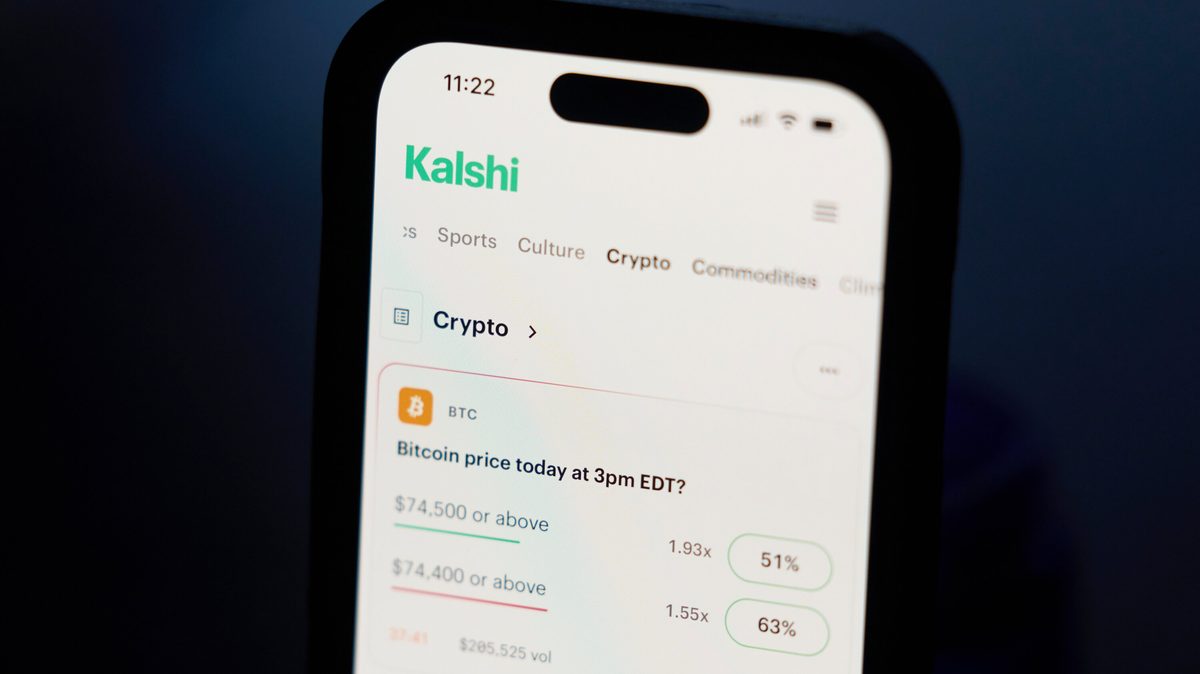
Kalshi closed a $1 billion funding round on May 7 at a $22 billion valuation, led by Coatue Management with Morgan Stanley, Sequoia, Andreessen Horowitz, Paradigm, IVP, and ARK Invest. Annualized trading volume reached $178 billion, up from $52 billion six months earlier, and Kalshi now accounts for more than 90% of U.S. prediction market activity.
The raise landed during a national legal fight. Arizona filed 20 criminal misdemeanor charges against Kalshi in March, accusing the company of running an unlicensed gambling operation. Nevada courts blocked the platform from offering sports and entertainment contracts under an injunction extended in April.
The CFTC and Justice Department responded by suing Arizona, Connecticut, and Illinois to assert that federal oversight of derivatives preempts state gambling law. A Third Circuit ruling on April 6 backed the CFTC in the New Jersey case, but the Ninth Circuit heard arguments on Nevada on April 16 and appeared to lean the other way. If confirmed in its written ruling, that disagreement could send the preemption question to the Supreme Court.
Why it matters
Kalshi now competes with futures exchanges and sportsbooks, giving traders one venue to hedge elections, weather, and Fed decisions.
Questions about this story
Free account needed to ask — your question is kept and asked for you right after sign-up. Answers are public.
No questions yet — be the first to ask.
Key Indicators
$22B
Valuation
Kalshi's post-money valuation after the Series F, double its prior round five months earlier.
$1B
Series F raise
Coatue led the round with Morgan Stanley, Sequoia, a16z, Paradigm, IVP, and ARK Invest.
800%
Institutional volume growth
Six-month rise in trading volume from institutional accounts, per Kalshi disclosures.
$178B
Annualized trading volume
Up from $52 billion six months earlier.
5 months
Valuation doubling time
Time between Kalshi's prior $11 billion round and the May raise at $22 billion.
19 events
Latest: May 7th, 2026 · 6 months ago
Showing 8 of 19
JK to step
Tap a bar to jump to that date
Jump to
May 2026
Kalshi closes $1 billion Series F at $22 billion
LatestFunding
Coatue leads the round with Morgan Stanley, Sequoia, Andreessen Horowitz, Paradigm, IVP, and ARK Invest. Kalshi discloses 800% growth in institutional volume and $178 billion annualized trading volume.
April 2026
CFTC closes ANPRM comment period with 1,500+ submissions
Regulatory
The CFTC's prediction market rulemaking notice draws more than 1,500 public comments by the deadline. State gaming regulators and tribal groups urge the agency to treat sports contracts as gambling; Kalshi, Polymarket, Andreessen Horowitz, and Coinbase back continued federal oversight.
Ninth Circuit hears Nevada case; panel appears skeptical of federal preemption
Legal
The U.S. Court of Appeals for the Ninth Circuit hears consolidated oral arguments from Kalshi, Robinhood, and Crypto.com challenging Nevada's ban. The three-judge panel appeared to lean toward Nevada's position, setting up a likely split with the Third Circuit's April 6 ruling.
Third Circuit rules federal law preempts New Jersey gambling statutes
Legal
The U.S. Court of Appeals for the Third Circuit rules 2-1 that the Commodity Exchange Act's field preemption covers Kalshi's sports event contracts, blocking New Jersey from enforcing its gambling laws against the platform in the first appellate ruling to reach the merits of the preemption question.
Nevada judge extends Kalshi ban, calls contracts indistinguishable from gambling
Legal
A Nevada state judge extends the temporary restraining order against Kalshi, describing the sports contracts as "indistinguishable" from gambling and signaling a full preliminary injunction is imminent.
CFTC and DOJ sue Arizona, Connecticut, and Illinois
Legal
The CFTC and Justice Department file federal lawsuits against three states to block enforcement actions against Kalshi and Robinhood's prediction market products, asserting that the Commodity Exchange Act strips states of authority to regulate federally licensed event contracts.
March 2026
Washington state sues Kalshi
Legal
Washington Attorney General Nick Brown files suit in King County Superior Court, arguing Kalshi violates state laws that restrict sports wagering to tribal lands and operates in direct violation of the state Gambling Act.
Bipartisan Senate bill introduced to ban sports prediction contracts
Legislative
Senators Adam Schiff (D-CA) and John Curtis (R-UT) introduce the Prediction Markets Are Gambling Act, which would bar CFTC-registered entities from listing sports-related or casino-style contracts, bypassing the federal preemption question through legislation.
Nevada court blocks Kalshi sports and entertainment contracts
Legal
A Nevada district court grants the Gaming Control Board's application for a temporary restraining order, barring Kalshi from offering sports, election, and entertainment contracts in the state. The judge rejects Kalshi's federal preemption argument, calling the legal question "nuanced and rapidly evolving."
Arizona files first criminal charges against a prediction market platform
Legal
Arizona Attorney General Kris Mayes files 20 criminal misdemeanor counts against Kalshi, including four charges of election wagering, making Arizona the first state to pursue criminal rather than civil enforcement against a federally regulated prediction market.
The CFTC issues an Advance Notice of Proposed Rulemaking on event contract regulation and withdraws a prior proposed rule that would have banned political and sports contracts, signaling a more permissive federal stance toward prediction markets.
December 2025
Prior funding round at ~$11 billion
Funding
Kalshi closes an earlier round that values the company at roughly half its May 2026 valuation, setting up the rapid markup.
March 2025
State cease-and-desist letters
Legal
Nevada, New Jersey, and Montana gaming regulators tell Kalshi to halt sports contracts, claiming jurisdiction over what they call sports betting.
January 2025
Sports event contracts launch
Product
Kalshi adds contracts on sporting events including the Super Bowl, drawing pushback from state gaming regulators.
October 2024
Election contracts go live
Product
Kalshi launches presidential and congressional election contracts after a D.C. Circuit denial of a CFTC stay.
September 2024
Federal court clears election contracts
Legal
A U.S. district judge rules Kalshi can list contracts on which party will control Congress, rejecting CFTC objections.
July 2021
Series A funding round
Funding
Sequoia, Charles Schwab, and Henry Kravis back Kalshi's first major institutional round.
November 2020
CFTC grants Kalshi exchange status
Regulatory
Kalshi becomes the first event-contract platform designated as a regulated derivatives exchange by the Commodity Futures Trading Commission.
June 2018
Kalshi founded by MIT graduates
Founding
Tarek Mansour and Luana Lopes Lara start Kalshi to build a regulated event-contract exchange.
Scenarios
1
Prediction markets settle in as standard hedging infrastructure
Likely
Discussed by: Coatue (in its funding announcement), Bloomberg's market structure desk, Andreessen Horowitz partners
Institutional volume keeps compounding as banks, hedge funds, and asset managers add Kalshi to their hedging toolkit alongside futures and options. Kalshi expands into commodity, weather, and macro contracts that traditional exchanges have been slow to list. The $1 billion war chest funds a clearing buildout and international licensing, locking in first-mover advantage before CME or ICE catch up.
2
State-versus-federal jurisdiction fight reaches the Supreme Court
Possible
Discussed by: Gaming-law scholars at the University of Nevada Las Vegas, Eric Goldman at Santa Clara Law, state attorneys general in Nevada and New Jersey
State gaming regulators continue to argue that Kalshi's sports contracts are sports betting subject to state licensing, while Kalshi argues federal CFTC oversight preempts state law. Conflicting circuit decisions push the question to the Supreme Court, where a ruling either confirms federal preemption (clearing the field for Kalshi nationally) or carves out state authority over sports-style contracts (forcing Kalshi to geofence major markets).
3
CME and ICE launch competing event contracts
Possible
Discussed by: Wall Street Journal markets reporters, derivatives industry analysts at Greenwich Associates
CME Group and Intercontinental Exchange, the two largest U.S. futures exchanges, file CFTC proposals for their own event contracts, leveraging existing clearing relationships with banks. Kalshi's lead in retail brand and election contracts holds, but margins compress as the incumbents enter macro and weather categories. Consolidation talk follows, with one of the major exchanges or a bank exploring an acquisition rather than building from scratch.
4
Congress passes a targeted ban on sports event contracts
Uncertain
Discussed by: Senators Adam Schiff (D-CA) and John Curtis (R-UT), who introduced the Prediction Markets Are Gambling Act in March 2026; Senator Jeff Merkley (D-OR), who introduced the broader Stop Corrupt Bets Act the same week
A bipartisan bill would bar CFTC-licensed platforms from listing sports-related or casino-style contracts, bypassing the courts entirely. If it passes, Kalshi keeps its macro, weather, and election contract business but loses the sports categories that drew state enforcement. That outcome ends the preemption fight while cutting Kalshi's fastest-growing retail segment. As of May 2026, the bill has bipartisan Senate sponsors and no stated opposition from the White House or CFTC.
Historical Context
2 moments from history that rhyme with this story — and how they unfolded.
1 of 2
October 2015 - 2018
Daily fantasy sports state battles (2015-2018)
DraftKings and FanDuel grew from niche fantasy sports operators into billion-dollar consumer brands by selling daily contests with cash prizes. New York Attorney General Eric Schneiderman declared the products illegal gambling in November 2015, and other states followed with cease-and-desist orders. The companies argued the contests were games of skill exempt from state gambling laws.
Then
DraftKings and FanDuel pulled out of several states and faced an estimated $50 million in legal costs. A planned merger collapsed in 2017 under Federal Trade Commission antitrust pressure.
Now
Both companies eventually negotiated state-by-state legalization frameworks for daily fantasy and pivoted into licensed sportsbooks after the 2018 Supreme Court PASPA decision. DraftKings went public in 2020 at a $3.3 billion valuation.
Why this matters now
Kalshi faces the same state-versus-federal jurisdiction question over sports event contracts that DraftKings and FanDuel faced over daily fantasy sports. The DFS pattern suggests state battles can be expensive and slow but do not necessarily stop the underlying business model.
2 of 2
January 2024
Bitcoin spot ETF approval
After more than a decade of Securities and Exchange Commission rejections, the SEC approved 11 spot Bitcoin exchange-traded funds on January 10, 2024. BlackRock, Fidelity, and other large asset managers launched products that quickly attracted tens of billions in inflows, ending a regulatory standoff that began with the first Winklevoss filing in 2013.
Then
Spot Bitcoin ETFs took in roughly $30 billion in net inflows in their first year, the fastest-growing ETF category in history.
Now
Bitcoin moved from a fringe asset that institutions could not legally hold to a category line item in pension funds, endowments, and corporate treasuries. The approval pulled in spot Ether ETFs and reset how regulators evaluated novel asset classes.
Why this matters now
Kalshi's institutional volume growth follows the same arc: a financial product the largest investors could not touch becomes mainstream once regulatory and infrastructure barriers fall. The Bitcoin precedent suggests once the institutional dam breaks, capital flows compound quickly.