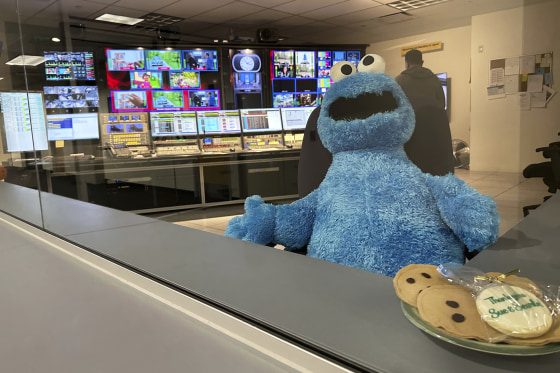
For 58 years, the Corporation for Public Broadcasting channeled federal funds to 1,500 local radio and TV stations. On January 5, 2026, its board voted to dissolve rather than exist in a defunded state. Eight days later, PBS News Weekend aired its final broadcast—the first major national programming casualty of Congress's $1.1 billion rescission.
The cuts hit rural America hardest. Stations in West Virginia, Alaska, and New Mexico, where federal grants covered 30-50% of budgets, face closure.
Urban outlets like KQED and GBH have shed hundreds of jobs. The Public Broadcasting Act of 1967 remains law, but its funding mechanism is gone.
Questions about this story
Free account needed to ask — your question is kept and asked for you right after sign-up. Answers are public.
No questions yet — be the first to ask.
Key Indicators
$1.1B
Federal Funding Rescinded
Two fiscal years of CPB appropriations clawed back through the Rescissions Act of 2025.
58
Years of CPB Operations
The Corporation for Public Broadcasting operated from 1967 until its dissolution in January 2026.
332+
Public Media Layoffs
Staff cuts tracked across NPR and PBS stations since July 2025.
245
Rural Stations at Risk
New York Times analysis of stations in rural communities facing potential closure.
18 events
Latest: January 18th, 2026 · 9 months ago
Showing 8 of 18
JK to step
Tap a bar to jump to that date
Jump to
January 2026
Compass Points from PBS News Premieres
LatestProgramming
Nick Schifrin's foreign affairs program debuts on Sundays at 6 PM ET, focusing on America's power and influence abroad. The pre-taped format reduces weekend staffing costs.
Horizons from PBS News Premieres
Programming
William Brangham's science and technology program debuts on Saturdays at 6 PM ET, focusing on AI, medicine, and climate science. The pre-taped format enables weekend staff reductions.
PBS Cancellation Takes Effect
Programming
PBS News Weekend officially ends. PBS announces replacement programs 'Horizons' and 'Compass Points' will debut the following weekend as pre-taped alternatives.
PBS News Weekend Airs Final Broadcast
Programming
Anchor John Yang signs off PBS News Weekend after 13 years. The program averaged 827,000 viewers but became unsustainable after federal cuts.
CPB Board Votes to Dissolve
Organizational
The CPB board votes to formally dissolve the 58-year-old corporation rather than remain in a defunded state.
September 2025
CPB Staff Eliminated
Organizational
Majority of CPB staff positions end with the fiscal year. A small transition team remains through January 2026.
Penn State Announces WPSU Closure
Station Impact
Penn State announces plans to close its 60-year-old NPR/PBS affiliate WPSU by June 2026, citing loss of $1.3 million in annual federal funding.
August 2025
CPB Announces Wind-Down
Organizational
CPB announces it will begin an orderly wind-down of operations. Most staff positions will end by September 30.
July 2025
Trump Signs Rescissions Act Into Law
Legislative
President Trump signs the Rescissions Act of 2025, officially eliminating $1.1 billion in CPB funding for FY2026 and FY2027.
House Gives Final Approval
Legislative
The House passes the Senate-amended Rescissions Act 216-213, sending the bill to President Trump.
Senate Passes Rescissions Act
Legislative
After 13 hours of amendment votes, the Senate passes the amended Rescissions Act 51-48. Republicans Susan Collins and Lisa Murkowski join Democrats in opposition.
June 2025
WPSU Closure Announced
Station Impact
Penn State announces plans to close its 60-year-old NPR/PBS affiliate WPSU by June 30, 2026, citing loss of $1.3 million in annual federal funding.
House Passes Rescissions Act
Legislative
The House passes H.R. 4, the Rescissions Act of 2025, by a 214-212 vote. The bill includes $1.1 billion in cuts to CPB funding for fiscal years 2026-2027.
May 2025
CPB CEO Calls for NPR CEO to Resign
Political
Patricia Harrison asks Katherine Maher whether she would acknowledge bias concerns, then tells her to resign 'for the good of public media.' Maher refuses, believing acknowledgment would undermine NPR.
September 2013
PBS News Weekend Launches
Programming
PBS NewsHour Weekend debuts as a half-hour Saturday and Sunday broadcast produced by WNET in New York, anchored by Hari Sreenivasan.
February 1995
Gingrich Vows to 'Zero Out' CPB
Political
House Speaker Newt Gingrich announces plans to eliminate CPB funding entirely. The effort ultimately fails, though budgets are reduced.
June 1972
Nixon Vetoes Public Broadcasting Funding
Political
President Nixon vetoes a $150 million CPB authorization bill, citing concerns about centralization. The veto follows White House anger over hiring of journalists deemed unfriendly to the administration.
November 1967
Public Broadcasting Act Creates CPB
Legislative
President Lyndon Johnson signs the Public Broadcasting Act, creating the Corporation for Public Broadcasting as a nonprofit to distribute federal funds to local stations.
Scenarios
1
Rural Station Closures Accelerate Through 2026
Likely
Discussed by: New York Times analysis, CPB impact reports, station announcements from WPSU and NJ PBS
The 245 rural stations identified as at-risk begin closing or severely reducing operations. Stations in West Virginia, Alaska, and New Mexico—where federal funding exceeded 30% of budgets—are first to go. Communities lose local news, emergency broadcasting, and educational programming. The pattern continues through 2026 as donation surges fade and reserve funds deplete.
2
Major Urban Stations Survive Through Private Funding
Likely
Discussed by: PBS leadership statements, NPR CEO Katherine Maher, station donation reports
Large stations like KQED, GBH, and WNET survive through a combination of corporate underwriting, foundation grants, and individual donations. Staff reductions stabilize. Weekday PBS NewsHour continues. However, these stations serve a smaller geographic footprint, leaving much of rural America without public broadcasting access.
3
Future Congress Restores CPB Funding
Uncertain
Discussed by: CPB board statement noting the Public Broadcasting Act of 1967 remains law, media policy analysts
A future Congress reappropriates funding and reconstitutes the Corporation for Public Broadcasting. The legal framework established in 1967 remains intact. However, rebuilding the station network would take years—many closed stations would not reopen, and institutional knowledge has scattered. 66% of Americans support federal funding for public radio, including 58% of Republicans, providing potential political pathway.
4
PBS NewsHour Weekday Broadcast Eliminated
Unlikely
Discussed by: Sara Just's cautionary statements, media analysts noting continued financial pressure
Despite assurances that the weekday NewsHour is not at immediate risk, continued financial pressure forces additional cuts. The flagship program, which traces its lineage to MacNeil/Lehrer's 1975 debut, either reduces frequency or ends entirely. PBS becomes primarily a children's and cultural programming service without daily news.
Historical Context
3 moments from history that rhyme with this story — and how they unfolded.
1 of 3
June 1972
Nixon's Public Broadcasting Veto (1972)
President Nixon vetoed a $150 million CPB authorization bill after learning journalists Robert MacNeil and Sander Vanocur—whom he considered unfriendly—would anchor a new public affairs program. A White House memo called their hiring 'the last straw' and demanded all public broadcasting funds be cut. Nixon's veto led to resignations of CPB's chairman and president.
Then
CPB's new leadership, appointed by Nixon, voted to defund most public affairs programming including Bill Moyers' Journal and Washington Week in Review.
Now
Public broadcasting survived and later earned acclaim for its Watergate coverage. But the episode established a pattern: presidents hostile to public media could weaponize funding to pressure programming decisions.
Why this matters now
Nixon's veto showed federal funding could be a lever for political pressure. The 2025 rescission achieved what Nixon could not: complete elimination of federal support. But unlike 1972, no public affairs programming survived to document the moment.
2 of 3
February 1995
Gingrich's 'Zero Out' Campaign (1995)
House Speaker Newt Gingrich announced plans to 'zero out' CPB's $286 million budget, calling public broadcasting 'elitist' and arguing Rush Limbaugh represented real public broadcasting. He told allies: 'The appropriation is gone, the game is over.' Defenders rallied around Big Bird and Sesame Street.
Then
Gingrich relented. Congress passed a reduced CPB budget rather than eliminating it entirely.
Now
Gingrich later acknowledged Big Bird 'made $800 million' and was 'not the problem.' The episode became a template for defending public media: lead with beloved children's programming. But it also showed concentrated political will could eventually succeed.
Why this matters now
The 1995 effort failed because public broadcasting had bipartisan defenders willing to break with leadership. In 2025, only two Senate Republicans voted against the Rescissions Act. What Gingrich could not accomplish with a larger majority, the 119th Congress achieved with razor-thin margins.
3 of 3
2015-2016
BBC Charter Renewal Debates (2015-2016)
The British government reviewed the BBC's royal charter, with some officials proposing dramatic cuts to the license fee that funds it. The review questioned whether the BBC should compete with commercial broadcasters and suggested reducing its scope. Annual per-capita funding for BBC was roughly three times that of CPB.
Then
The BBC accepted some cuts but retained its core funding model and editorial independence through 2027.
Now
Unlike the U.S. model of annual appropriations vulnerable to rescission, the BBC's charter system provided multi-year stability. But it demonstrated that even well-funded public broadcasters face periodic existential reviews.
Why this matters now
The U.S. has always funded public broadcasting at far lower per-capita levels than peer democracies—roughly one-tenth of the BBC model. The 2025 elimination made the U.S. the only major Western democracy without federal support for public broadcasting.