


Pull to refresh
Logo
PC shipments post record Q3 decline as AI memory costs surge

PC shipments post record Q3 decline as AI memory costs surge

Money Moves

Worst third-quarter drop on record, with prices expected to stay elevated

Today: Q3 2026 PC shipments post record decline

Overview

Updated 1 hour ago

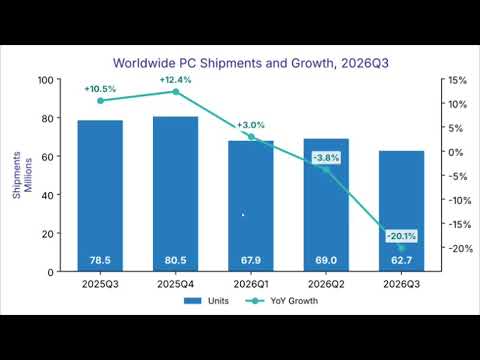
PC shipments fell 20.1% year over year to 62.7 million units in the third quarter of 2026, the worst Q3 decline IDC has recorded. Lenovo, Dell, and HP each saw shipments drop more than 20%.

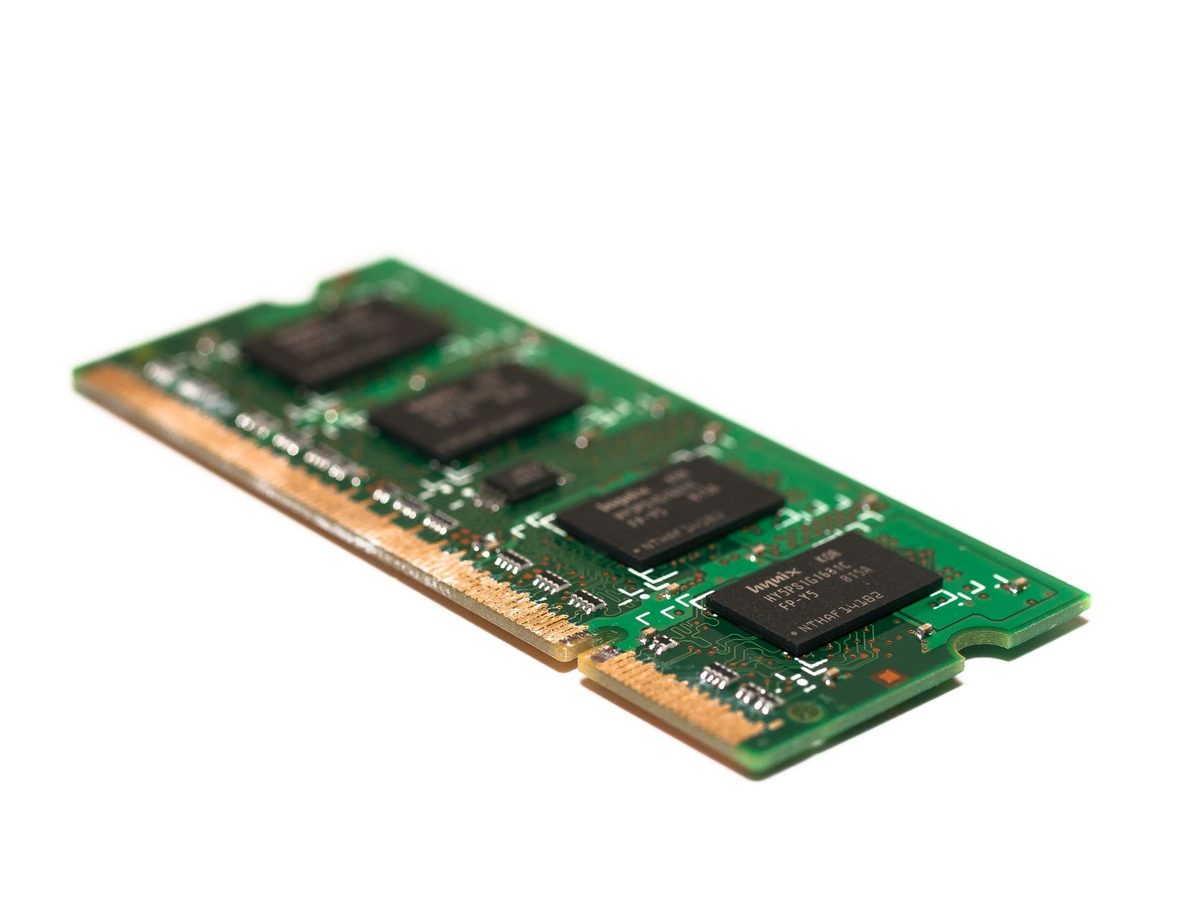
The cause is an AI-driven memory shortage. Demand for high-bandwidth memory and server DRAM for AI workloads has squeezed capacity for consumer chips. Memory and storage now make up nearly 40% of a PC's bill of materials, up from a typical 15%.

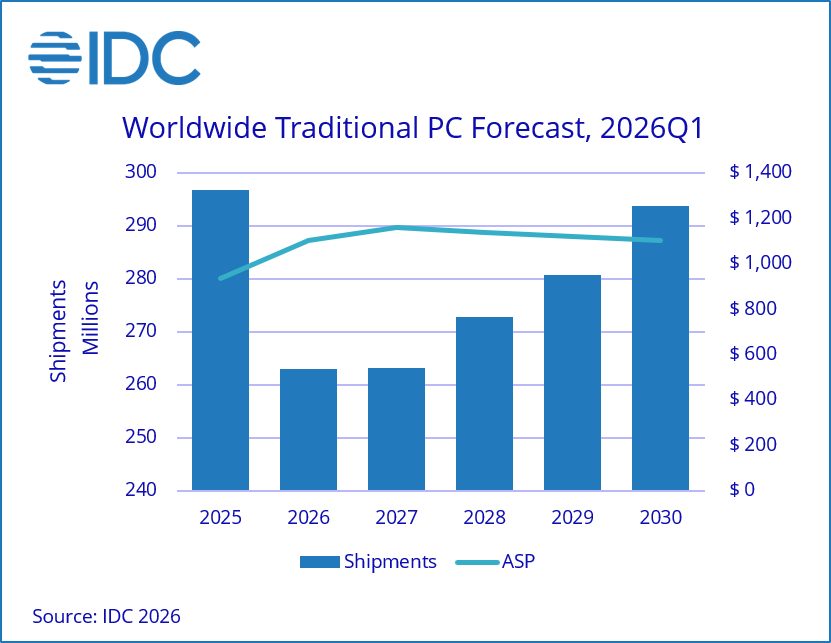
PC prices have risen more than fourfold, and analysts expect them to stay elevated. The shortage could persist through 2028, according to Micron and Samsung.

Why it matters

If memory prices stay high, new PCs cost more for years, and the shortage could last through 2028.

Questions about this story

Free account needed to ask — your question is kept and asked for you right after sign-up. Answers are public.

No questions yet — be the first to ask.

Key Indicators

20.1%
Year-over-year decline in Q3 2026 PC shipments
Worst Q3 decline on record, per IDC
62.7M
PC units shipped in Q3 2026
Down from 78.5 million in Q3 2025
40%
Memory and storage share of PC bill of materials
Up from a typical 15%, per Omdia
9.1%
Sequential decline from Q2 2026
Q3 usually outpaces Q2; this year it fell

Voices

Curated perspectives — historical figures and your fellow readers.

Ever wondered what historical figures would say about today's headlines?

Sign up to generate historical perspectives on this story.

People Involved

Organizations Involved

Timeline

2025 October 2026

4 events Latest: Today
Tap a bar to jump to that date
  1. Q3 2026 PC shipments post record decline

    Today Report

    IDC reports shipments fell 20.1% year over year, the worst Q3 decline on record.

  2. Memory makers warn of prolonged shortage

    Statement

    Micron and Samsung executives indicate component shortages could continue through 2028.

  3. Vendors stock up ahead of price hikes

    Market shift

    PC vendors and channels stock up on inventory ahead of memory price hikes.

  4. AI demand tightens memory supply

    Market shift

    AI demand for high-bandwidth memory and server DRAM limits capacity for consumer devices.

Scenarios

1

Memory shortage eases, PC shipments recover

Possible Resolves by Apr 15, 2027

Discussed by: Omdia expects shipments to decline 7% in 2027, implying a gradual recovery as new memory capacity comes online.

Samsung, SK Hynix, and Micron are expanding memory production. If new capacity comes online faster than expected, memory prices could fall, PC prices would follow, and demand would recover. Omdia's forecast of a 7% decline in 2027 suggests the market bottoms out and stabilizes.

2

Shortage persists, market keeps shrinking

Likely Resolves by Jan 15, 2027

Discussed by: Micron and Samsung executives warned the shortage could continue through 2028. Omdia expects a 24% decline in Q4 2026.

If memory supply stays tight, prices remain elevated, and PC demand keeps falling. Omdia projects a 24% year-over-year decline in Q4 2026, and Micron's CEO expects the shortage to tighten further into 2027 and 2028.

3

Prices ease, demand stabilizes at lower level

Possible Resolves by Jan 15, 2027

Discussed by: IDC expects PC prices to decrease only modestly and briefly as channels clear inventory.

Vendors and retailers may cut prices to clear inventory, offering short-term relief. But IDC expects prices to remain well above year-ago levels, so demand stabilizes at a lower baseline rather than recovering to pre-shortage levels.

Historical Context

3 moments from history that rhyme with this story — and how they unfolded.

October 2022 - March 2023

Post-pandemic PC crash (2022-2023)

PC shipments fell 28.2% in Q4 2022 and 28.7% in Q1 2023 as pandemic-era demand evaporated and excess inventory piled up. The market had boomed during remote work, then collapsed when people returned to offices.

Then

Vendors cut production and cleared inventory through discounts.

Now

The market stabilized at a lower baseline, with shipments settling below pandemic peaks.

Why this matters now

The 2022-2023 crash came from excess inventory, while the 2026 decline comes from supply constraints and high prices. Both show how quickly PC demand can collapse.

2021-2022

Global chip shortage (2021-2022)

A global semiconductor shortage, triggered by pandemic demand for electronics and supply disruptions, forced automakers to cut production and drove up prices for cars and electronics. Ford, GM, and Toyota all idled plants.

Then

Automakers prioritized high-margin vehicles, and consumers faced long waits and higher prices.

Now

The shortage accelerated investment in new chip capacity and reshoring efforts.

Why this matters now

Like the 2021 chip shortage, the 2026 memory shortage shows how a supply constraint in one component can ripple through an entire industry.

October 2011

Thailand floods and HDD shortage (2011)

Floods in Thailand, which produced about 40% of the world's hard disk drives, shut down factories and sent HDD prices up sharply. PC prices rose as a result.

Then

HDD prices roughly doubled, and PC makers passed costs to consumers.

Now

The shortage accelerated the shift to solid-state drives and pushed manufacturers to diversify production.

Why this matters now

A single-component supply shock raised PC prices and suppressed demand, much like the current memory shortage.

Sources

(10)