




Pull to refresh
Logo
Rapport's epilepsy drug clears mid-stage bipolar mania trial

Rapport's epilepsy drug clears mid-stage bipolar mania trial

New Capabilities

Drug designed for seizures narrowly beats placebo in mania study; analysts see first new mechanism in decades

Yesterday: RAP-219 meets primary endpoint in Phase 2 bipolar mania trial

Overview

Updated Yesterday

Rapport Therapeutics' epilepsy pill beat placebo in a mid-stage bipolar mania trial, results announced Oct. 20. Patients on RAP-219 improved 15.4 points on a 60-point mania scale over three weeks, versus 12.3 for placebo. The 3.1-point gap was statistically significant — but barely.

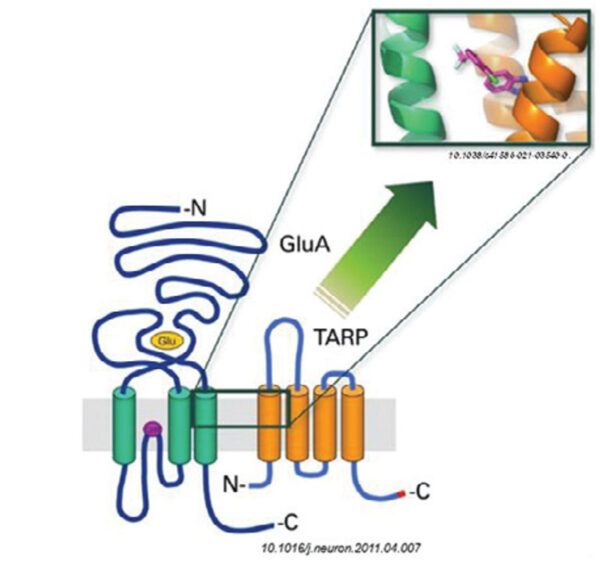
RAP-219 targets a regulatory protein tied to AMPA receptors that control glutamate signaling, a pathway overactive in both seizures and mania. Analysts at Stifel had low expectations; Jefferies called the safety profile "clean." If later trials hold, the drug would be the first new mechanism for acute mania in decades, with analysts seeing a billion-dollar-plus opportunity across seizures and bipolar.

Why it matters

A tolerable new mechanism for acute mania could displace older drugs patients abandon over side effects, unlocking a billion-dollar market.

Questions about this story

Free account needed to ask — your question is kept and asked for you right after sign-up. Answers are public.

No questions yet — be the first to ask.

Key Indicators

253
Patients randomized in Phase 2
Adults with bipolar I disorder in acute mania; 126 on RAP-219, 127 on placebo.
3.1 points
Placebo-adjusted YMRS improvement at week 3
Drug patients improved 15.4 points vs 12.3 for placebo on the Young Mania Rating Scale.
p = 0.045
Primary endpoint significance
The placebo-adjusted difference cleared the threshold, but analysts noted it was close to not hitting.
$436M
Cash position as of June 30, 2026
Expected to fund operations into the second half of 2029.
3.2% vs 0.8%
Discontinuation due to adverse events, drug vs placebo
Overall discontinuation was higher on drug (24.6% vs 11.8%), driven mostly by consent withdrawal.

Voices

Curated perspectives — historical figures and your fellow readers.

Ever wondered what historical figures would say about today's headlines?

Sign up to generate historical perspectives on this story.

People Involved

Organizations Involved

Timeline

1 event Latest: Yesterday
  1. RAP-219 meets primary endpoint in Phase 2 bipolar mania trial

    Latest Clinical trial results

    Rapport announced RAP-219 improved mania scores by 3.1 points over placebo at week 3 (p=0.045) in a 253-patient study, hitting both primary and key secondary endpoints.

Scenarios

1

Rapport launches Phase 3 program in bipolar mania on schedule

Likely Resolves by End of 2027

Discussed by: Rapport's own guidance; Guggenheim raised probability of success to 65% from 45%

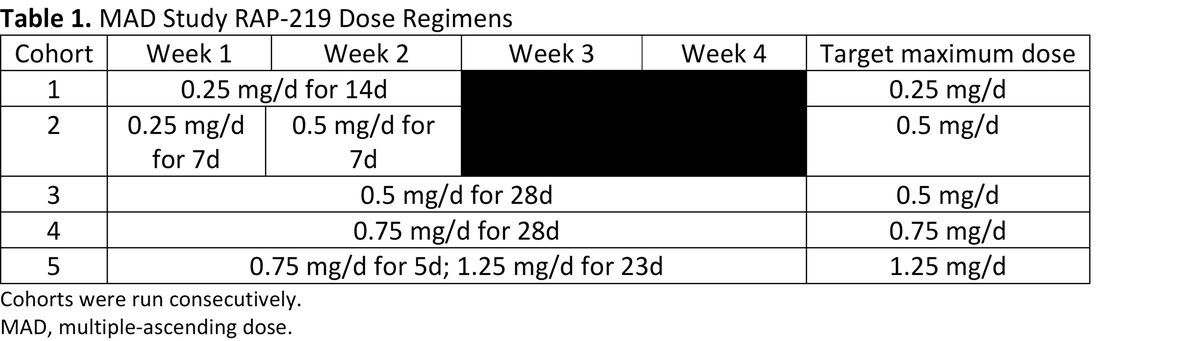
Rapport plans an end-of-Phase 2 meeting with the FDA in the first quarter of 2027, then start two late-stage trials in acute bipolar mania in the second half of the year. The Phase 3 program will test a higher 1.25 mg dose and add sites outside the US, where neuropsychiatric trials have shown strong signal.

2

Phase 3 data confirm efficacy and RAP-219 heads toward approval

Possible Resolves by End of 2030

Discussed by: Jefferies; Guggenheim models peak bipolar sales of roughly $800 million

Jefferies called RAP-219's safety "clean" and noted efficacy in line with approved drugs. If the higher dose in Phase 3 improves efficacy without adding side effects, an approval filing would follow. Guggenheim models a 2030 launch for the mania indication, on top of roughly $2.3 billion in peak focal-onset seizure sales.

3

Phase 3 fails to replicate the Phase 2 result

Possible Resolves by End of 2030

Discussed by: Stifel's Paul Matteis flagged the borderline p-value and low-end efficacy

The Phase 2 win was narrow — p=0.045 — and efficacy sat at the low end of the range competitive with approved drugs. Overall discontinuation during treatment was higher on drug (24.6% vs 11.8%), mostly from consent withdrawal. Psychiatric trials carry a high late-stage failure rate, which is why expectations entering the study were low.

Historical Context

2 moments from history that rhyme with this story — and how they unfolded.

1990s–2000s

Antiepileptics become mood stabilizers

Valproate and lamotrigine, both developed as epilepsy drugs, were repurposed as treatments for bipolar disorder. They joined lithium as standard maintenance and acute therapies for the illness.

Then

Gave psychiatrists new options for patients who did not respond to lithium or antipsychotics.

Now

Established the crossover from seizure to mood indications — the same path RAP-219 is taking.

Why this matters now

RAP-219 follows a proven precedent of epilepsy drugs treating bipolar disorder, but with a mechanism-targeted approach rather than broad receptor effects. The Phase 2 win extends that crossover to a molecule designed for a specific pathway.

1949–present

Lithium, the decades-old standard

John Cade discovered lithium's mood-stabilizing effect in 1949. It remains a frontline treatment for bipolar disorder roughly 80 years later.

Then

Gave psychiatry its first specific treatment for mania and transformed the management of bipolar illness.

Now

No genuinely new mechanism of action has reached the mania market since, which is why Ceesay's 'decades' claim carries weight.

Why this matters now

It measures how long the field has gone without a novel mechanism for acute mania. RAP-219, if it holds up, would break that gap.

Sources

(6)