

Pull to refresh
Logo
Webb telescope finds orderly weather on a turbulent brown dwarf

Webb telescope finds orderly weather on a turbulent brown dwarf

New Capabilities

Three recurring atmospheric states, driven by temperature and cloud structure, explain most of the variability on SIMP 0136, a world 20 light-years away.

Today: Orderly weather system found on SIMP 0136

Overview

Updated 1 hour ago

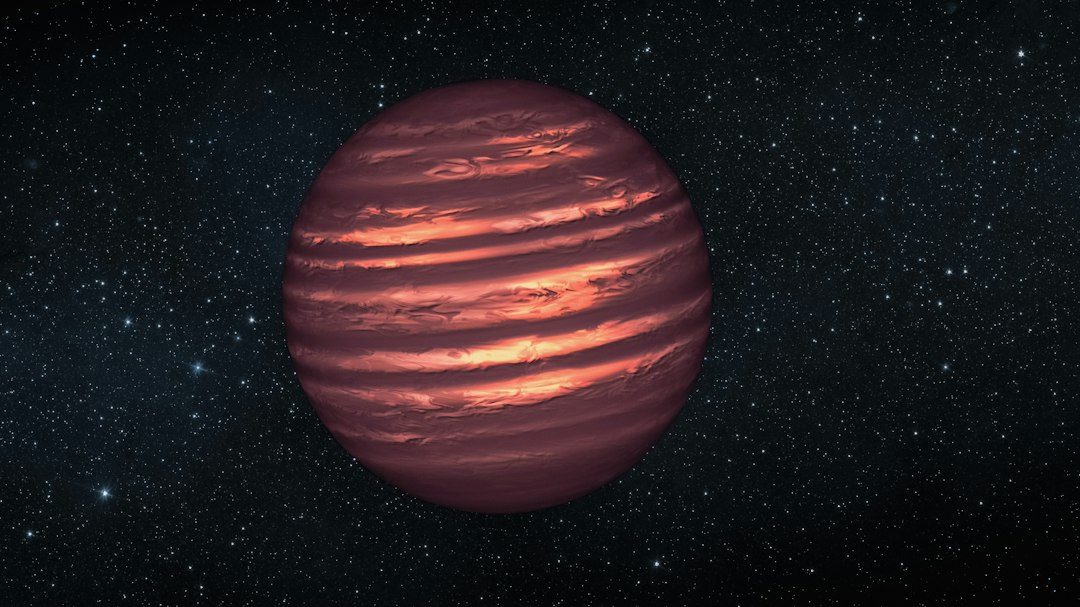
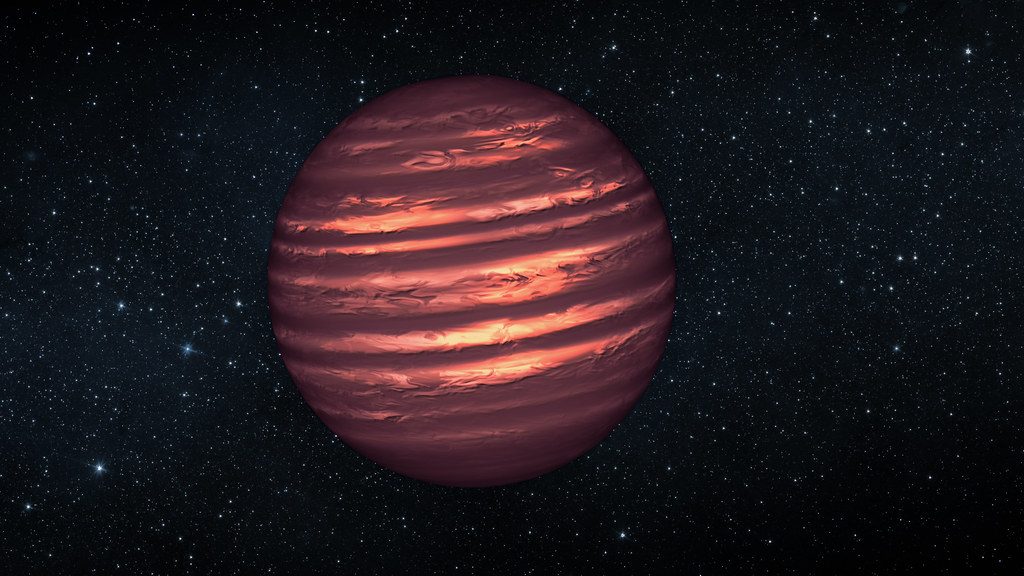
A brown dwarf 20 light-years away looks chaotic through a telescope. Astronomers at Trinity College Dublin found its atmosphere runs on a surprisingly orderly system, with three recurring weather states rotating in and out of view.

Using James Webb Space Telescope data, the team showed two processes explain most of the change in the object's brightness: temperature shifts and the vertical structure of its clouds. The statistical method, principal component analysis, is published in Astronomy & Astrophysics and gives researchers a fast first pass before heavy computer modeling of alien atmospheres.

Why it matters

A fast new method distills noisy telescope data into the few forces driving a distant world's weather, speeding up exoplanet atmosphere studies.

Questions about this story

Free account needed to ask — your question is kept and asked for you right after sign-up. Answers are public.

No questions yet — be the first to ask.

Key Indicators

79%
Share of meaningful atmospheric variability explained by two components
Temperature and cloud vertical structure drive most of SIMP 0136's observed brightness changes.
3
Recurring weather states identified
Patches that are hot with thin clouds, cool with thin clouds, and cool with thick, tall clouds rotate in and out of view.
20 light-years
Distance to SIMP 0136
Its light takes about two decades to reach Earth.

Voices

Curated perspectives — historical figures and your fellow readers.

Ever wondered what historical figures would say about today's headlines?

Sign up to generate historical perspectives on this story.

People Involved

Organizations Involved

Timeline

2023 October 2026

4 events Latest: Today
Tap a bar to jump to that date
  1. Orderly weather system found on SIMP 0136

    Today Publication

    Trinity College Dublin reports three recurring weather states driven by temperature and cloud structure.

  2. SIMP 0136 linked to clouds, hot spots, carbon chemistry

    Study

    Earlier JWST work ties the object's brightness changes to clouds, hot spots, and shifting carbon chemistry.

  3. Webb maps 3D weather on other brown dwarfs

    Study

    A Webb survey finds multiple cloud layers on two brown dwarfs, the larger rotating every seven hours.

  4. Webb observes SIMP 0136

    Observation

    JWST captures time-resolved infrared spectra of the brown dwarf across multiple wavelengths.

Scenarios

1

PCA weather mapping spreads across JWST brown dwarf studies

Likely Resolves by Oct 17, 2027

Discussed by: The Trinity team and Astronomy & Astrophysics

The technique identifies dominant atmospheric drivers quickly. Other groups studying brown dwarfs and isolated planetary-mass objects could apply it to their own Webb data, publishing new breakdowns of what controls distant weather. The Trinity team calls the method an efficient first step before heavy computation.

2

Longer Webb watch of SIMP 0136 reveals more extreme weather

Possible Resolves by Oct 17, 2028

Discussed by: The team's published analysis, which notes a longer observation could catch hotter or cloudier states

The three weather states come from a single rotation of the brown dwarf. A longer continuous Webb observation could reveal patches more extreme than those already seen, testing whether the two-component model holds as the atmosphere shifts.

3

PCA hits limits on a more complex alien atmosphere

Possible Resolves by Oct 17, 2027

Discussed by: Earlier SIMP 0136 work, which found multiple mechanisms at play including carbon chemistry

Earlier studies linked SIMP 0136's variability to clouds, hot spots, and changing carbon chemistry, not just two processes. Applying the method to other objects could reveal atmospheres where temperature and cloud structure leave substantial unexplained variability, pointing to mechanisms the technique misses.

Historical Context

3 moments from history that rhyme with this story — and how they unfolded.

October 1995

Gliese 229B: the first confirmed brown dwarf (1995)

A Caltech team using Palomar Observatory imaged a faint companion beside the star Gliese 229. Its spectrum showed methane absorption, a sign of a cool atmosphere, confirming it as an object too small to fuse hydrogen in its core.

Then

Gliese 229B became the first directly confirmed brown dwarf, validating a theoretical class of objects.

Now

It established brown dwarfs as a distinct population bridging planets and stars, and made them accessible targets for atmospheric study.

Why this matters now

It launched the field this study continues: using brown dwarfs as laboratories for giant-planet atmospheric physics that are bright enough to observe directly.

2010s

Spitzer tracks patchy weather on brown dwarfs (2010s)

NASA's Spitzer Space Telescope monitored nearby brown dwarfs over long periods and found their infrared brightness varied as clouds rotated in and out of view. Researchers interpreted the variations as patchy atmospheric features on a fast-spinning surface.

Then

The observations showed brown dwarf weather was common and dynamic.

Now

They set the stage for time-resolved spectroscopy by JWST, which maps those features in detail rather than just detecting brightness changes.

Why this matters now

SIMP 0136 was known from such variability studies before Webb, so the new work extends a line of inquiry begun a decade earlier.

December 1995

Galileo probe reaches Jupiter's atmosphere (1995)

NASA's Galileo atmospheric probe descended into Jupiter on December 7, 1995, passing through an unusually clear, dry region called a hot spot. The probe measured cloud layers and atmospheric chemistry as it fell.

Then

It revealed Jupiter's multiple cloud layers and high-altitude hot spots directly for the first time.

Now

Those structures became a reference for understanding similar features elsewhere, including on brown dwarfs.

Why this matters now

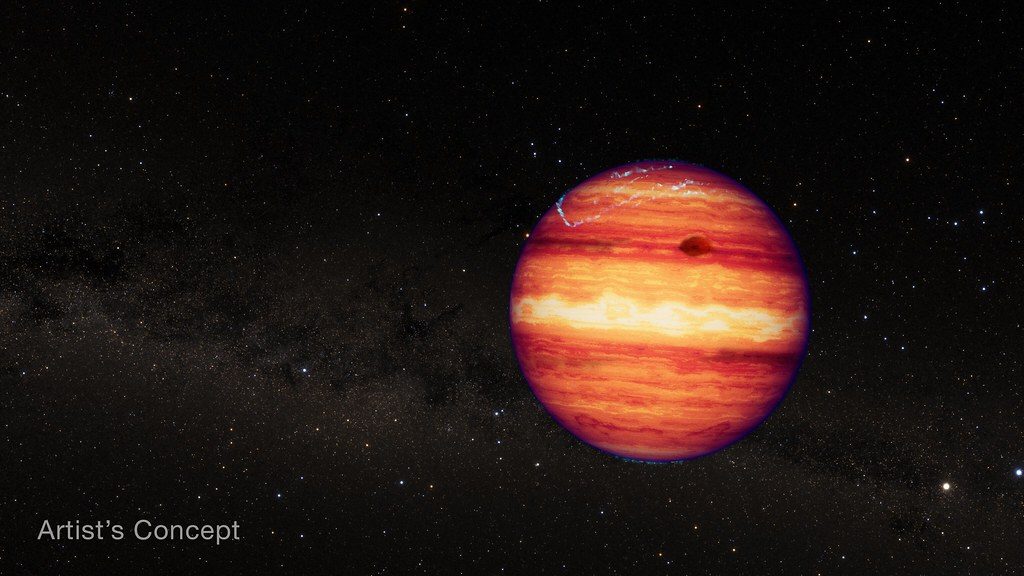
The new SIMP 0136 study draws the same parallel: Jupiter's multi-layer clouds and hot spots resemble the patchwork of thin and thick cloud regions seen on the brown dwarf.

Sources

(6)