


Pull to refresh
Logo
Astronomers map lopsided atmosphere on a distant hot Jupiter

Astronomers map lopsided atmosphere on a distant hot Jupiter

New Capabilities

New 'transmission strings' technique reveals WASP-17b's atmosphere extends farther on one side

Yesterday: WASP-17b's lopsided atmosphere revealed

Overview

Updated 1 hour ago

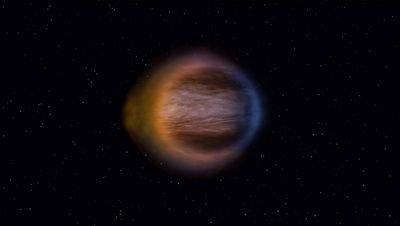
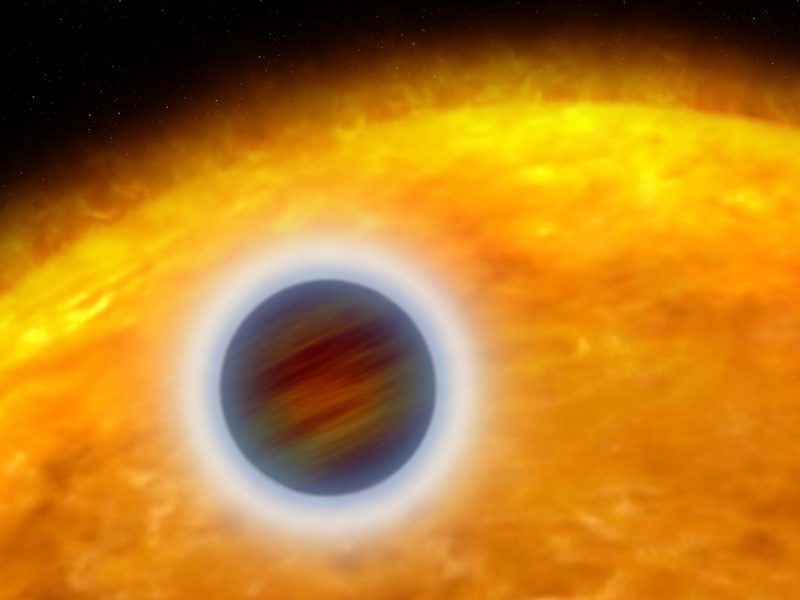
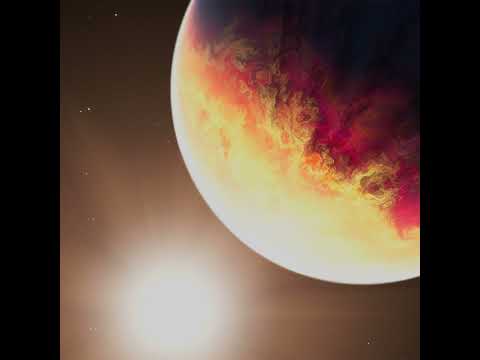
Astronomers using the James Webb Space Telescope found that WASP-17b, a scorching gas giant 1,300 light-years away, has a lopsided atmosphere that bulges outward on one side. The discovery, published in Nature Astronomy, came from a new technique called transmission strings that maps the atmosphere's outer edge at dozens of angles during a transit.

The bulge sits on the planet's evening side, where winds carry heat from the hemisphere that permanently faces its star to the hemisphere locked in darkness. The finding confirms a decades-old prediction about hot Jupiters: morning and evening sides should differ sharply in temperature, and WASP-17b matches the expected trend almost exactly.

Why it matters

A new technique maps exoplanet atmospheres in 3D, turning transit spectra into weather maps of worlds beyond our solar system.

Questions about this story

Free account needed to ask — your question is kept and asked for you right after sign-up. Answers are public.

No questions yet — be the first to ask.

Key Indicators

4 days
WASP-17b orbital period
The planet laps its star in under four Earth days, closer than Mercury orbits the Sun.
1,500°C
Atmospheric temperature
Roughly 2,700°F; hot enough that solid crystals form directly from gas in the upper atmosphere.
1,300 light-years
Distance from Earth
The planet is a point of infrared light, yet its atmospheric shape can now be measured.
2x
Jupiter's width
WASP-17b is about twice as wide as Jupiter but only 0.8 times its mass, giving it a puffy density.
6,000+
Exoplanets confirmed to date
Each is a potential target for future atmospheric mapping with the new technique.

Voices

Curated perspectives — historical figures and your fellow readers.

Ever wondered what historical figures would say about today's headlines?

Sign up to generate historical perspectives on this story.

People Involved

Organizations Involved

Timeline

2023 October 2026

3 events Latest: Yesterday
  1. WASP-17b's lopsided atmosphere revealed

    Latest Discovery

    Nature Astronomy publishes the transmission strings study showing WASP-17b's atmosphere bulges on its evening side, confirming hot Jupiter theory.

  2. WASP-107b shows east-west atmospheric asymmetry

    Science

    Astronomers using JWST report that WASP-107b, a uniquely inflated hot Neptune, has an asymmetric atmosphere — an early hint that 3D structure could be mapped.

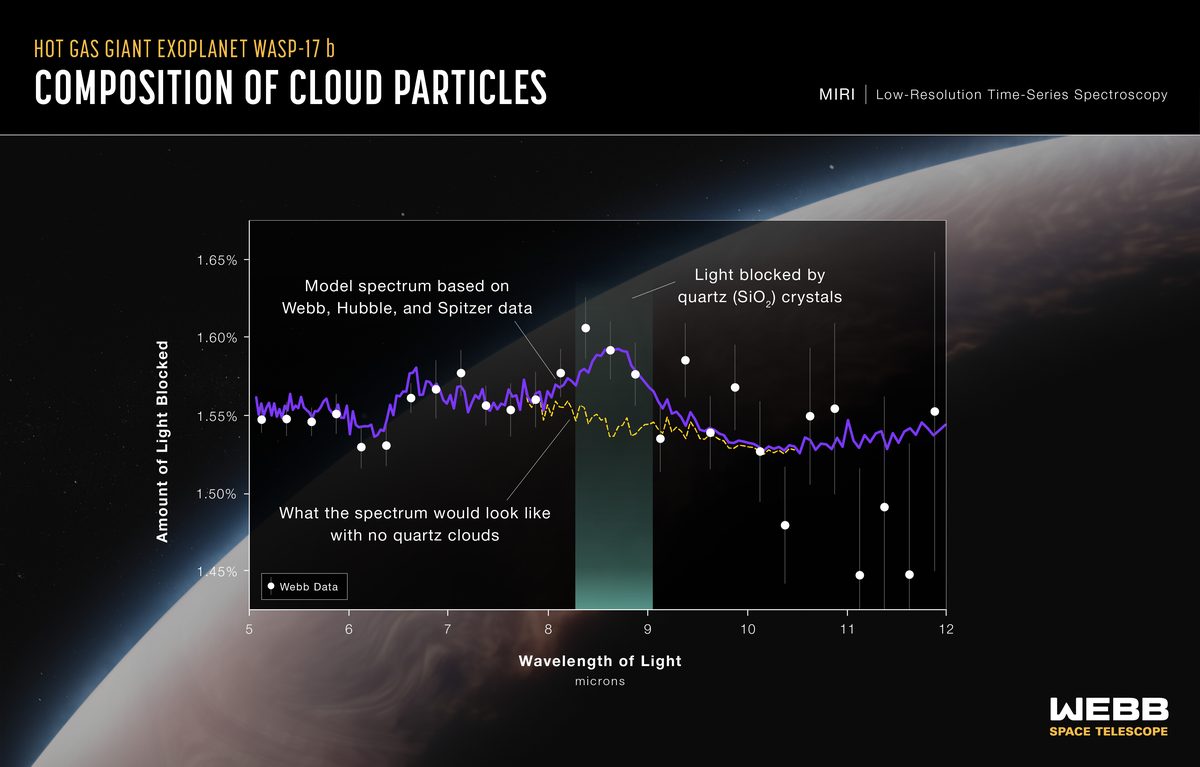
  3. JWST detects quartz crystals in WASP-17b's clouds

    Science

    NASA announces the first detection of silica (SiO2) particles in an exoplanet atmosphere, using the Mid-Infrared Instrument on JWST.

Scenarios

1

Transmission strings maps a dozen hot Jupiters by 2029

Likely Resolves by End of 2029

Discussed by: The Nature Astronomy study authors

Grant, Wakeford and colleagues note the technique can distinguish conditions at different latitudes as well as day—night differences. If other teams adopt it for bright transiting gas giants, a comparative atlas of hot Jupiter atmospheres could emerge within a few years.

2

Technique reaches smaller, cooler planets by 2030

Possible Resolves by End of 2030

Discussed by: Exoplanet community researchers

The method works for any planet whose transits produce measurable spectral signals. Warm Neptunes and super-Earths around small, bright stars could be mapped, revealing atmospheric structures on smaller worlds than WASP-17b.

3

Technique stalls beyond the first result

Unlikely Resolves by End of 2029

Discussed by: Observers skeptical of the method's signal requirements

The technique depends on extremely bright transits; most known exoplanets don't produce enough signal. Without follow-up studies in JWST observing cycles, transmission strings remains a demonstration rather than a standard tool.

Historical Context

3 moments from history that rhyme with this story — and how they unfolded.

November 2001

First exoplanet atmosphere detection (2001)

Astronomers using the Hubble Space Telescope detected sodium in the atmosphere of HD 209458b, a hot Jupiter 150 light-years away. They saw starlight filter through the planet's atmosphere during a transit and absorb sodium's signature.

Then

Confirmed that exoplanet atmospheres could be studied from Earth-orbit instruments and opened the field of transit spectroscopy.

Now

Created the observational toolkit — transit spectroscopy — that JWST now uses in far greater detail.

Why this matters now

Transmission strings is the latest refinement of that same tool: starlight at the edge of the atmosphere, measured at angles to build a 3D picture instead of a single average.

September 2024

WASP-107b asymmetric atmosphere (2024)

Astronomers using JWST found that WASP-107b, a 'popcorn planet' that is Jupiter-sized but only a tenth of its mass, has an east-west asymmetry in its atmosphere. The planet is uniquely inflated, with a core at least twice as massive as originally estimated.

Then

Showed that hot Jupiters can have observable atmospheric asymmetries.

Now

Teamed with the WASP-17b result to establish 3D atmospheric mapping as a realistic goal for JWST-era exoplanet science.

Why this matters now

The WASP-17b study extends asymmetry mapping from a single detection to a confirmed technique applicable across many worlds.

March 2009 – November 2018

Kepler mission's transit revolution (2009–2018)

NASA's Kepler space telescope stared at one patch of sky for four years, recording tiny dips in starlight as planets crossed in front of their stars. It found more than 2,600 confirmed exoplanets, showing that most stars host planets.

Then

Multiplied the known exoplanet count and demonstrated the power of a single, systematic observational technique.

Now

Established the census of exoplanets and motivated the atmospheric follow-up work JWST now performs.

Why this matters now

Transmission strings has the same character: a focused new method that could turn individual detections into a systematic map of exoplanet atmospheres.

Sources

(5)