

Pull to refresh
Logo
AI selloff pushes the S&P 500 into a correction

AI selloff pushes the S&P 500 into a correction

Money Moves

Chip stocks led a 3.7% drop that erased the Nasdaq's 2026 gain and capped the worst week since April 2025

Overview

Updated 56 minutes ago

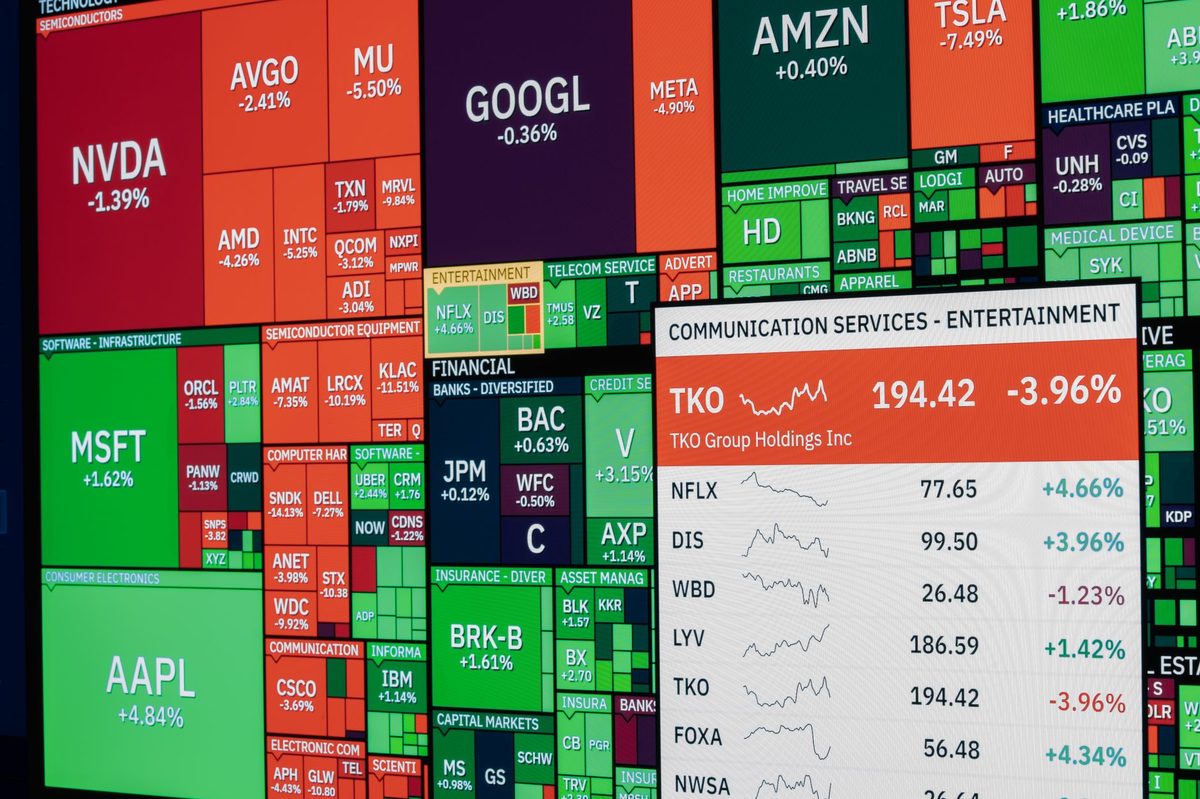
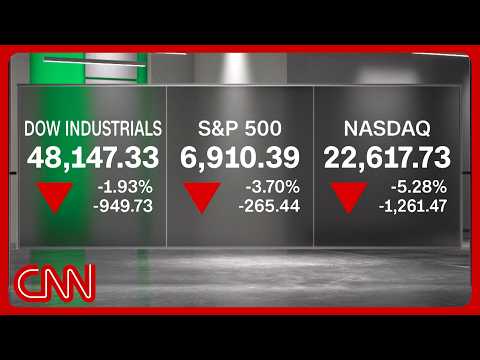
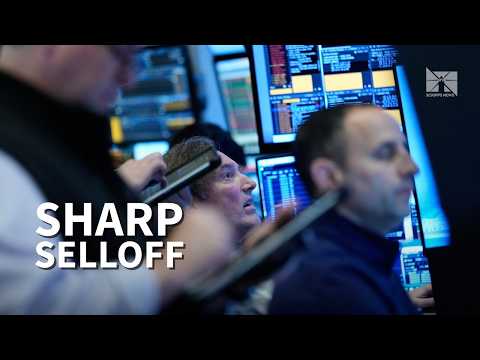
On Friday, Nov. 20, the S&P 500 fell 3.7% to 6,910.39. That left the index more than 10% below its Oct. 6 record, a drop investors call a correction, and closed out its worst week since April 2025.

AI stocks carried the market's 2026 gains and now carry its decline. They sit inside most index funds, so a sustained slide reaches retirement accounts far outside the chip industry.

Why it matters

AI shares sit in most index and retirement funds, so a sustained slide reaches savings far beyond the tech sector.

Questions about this story

Free account needed to ask — your question is kept and asked for you right after sign-up. Answers are public.

No questions yet — be the first to ask.

Key Indicators

3.7%
S&P 500 one-day decline
Friday's close at 6,910.39 was the index's worst week in more than 18 months.
5.3%
Nasdaq composite one-day decline
The tech-heavy index closed at 22,617.73.
2.7%
Nasdaq's decline for the year
The index gave back all of its 2026 gains on Friday.
13.8%
Nvidia's one-day decline
Its ninth down day in 10; the stock is more than 25% lower since the Huang scandal broke.
71
Nasdaq-100 stocks in a bear market
Out of 101 members, including all 20 semiconductor and memory chip names.
37
VIX volatility index close
The gauge of expected stock swings rose 33% on Friday.

Voices

Curated perspectives — historical figures and your fellow readers.

Sign up to generate historical perspectives on this story.

People Involved

Organizations Involved

Timeline

September 2026 November 2026

6 events Latest: Yesterday
Tap a bar to jump to that date
  1. S&P 500 enters correction as AI stocks sink

    Latest Markets

    The index falls 3.7% and the Nasdaq 5.3%, erasing the Nasdaq's gain for the year.

  2. Anthropic holds the largest IPO on record

    Markets

    Shares price at $83 and peak at $115.10, briefly valuing the company above $2 trillion.

  3. Democrats win both chambers of Congress

    Politics

    Victorious candidates campaigned on slowing data center construction at the federal and state level.

  4. Jensen Huang leaves Nvidia

    Corporate

    The co-founder's departure begins a slide of more than 25% in the chipmaker's shares.

  5. Nvidia reports strong quarterly results

    Earnings

    The company posts solid numbers despite the leadership turmoil.

  6. Fed raises rates for the first time since 2023

    Policy

    The increase makes borrowing more expensive for companies building AI data centers.

Scenarios

1

S&P 500 closes 20% below its record, confirming a bear market

Possible Resolves by Q2 2027

Discussed by: Hank Smith of Haverford Trust, who expects AI to stay out of favor into next year

A bear market means a 20% fall from the peak. Smith says the market will need time to heal rather than bouncing back the way it did after earlier AI dips. Continued Fed hikes or a weak showing from AI companies that report earnings in the coming weeks would push the index toward that mark.

2

Indexes recover and the S&P 500 sets a new record

Possible Resolves by End of 2027

Discussed by: Michael Antonelli of Baird, who says the bull market that began in October 2022 is not over

Antonelli argues investors are repricing AI spending, not ending the bull market. If Nvidia's earnings hold up and the Fed stops raising rates, buyers could step in the way they did after the April 2025 tariff selloff, and the index could retake its October high.

3

Anthropic trades below its $83 IPO price

Possible Resolves by Feb 28, 2027

Discussed by: Gene Goldman of Cetera, who calls the listing a valuation test

Anthropic closed Friday at $88.30, above its $83 offer price but well below the $115.10 first-day peak. Lockup expirations and further tech selling would test whether buyers support the largest listing on record at its offer price.

4

Fed raises rates again before the AI selloff ends

Likely Resolves by Q1 2027

Discussed by: Reuters, citing investor expectations tied to high inflation readings

Higher rates raise the cost of the debt that pays for data centers and reduce the present value of future AI profits. Reuters reported that investors expect high inflation to force further increases in the coming months, which would keep pressure on the shares that led the selloff.

Historical Context

3 moments from history that rhyme with this story — and how they unfolded.

March 2000 - October 2002

Dot-com bust (2000-2002)

The Nasdaq composite peaked in March 2000 after a run in internet stocks that often had no profits. Over the next two and a half years the index lost most of its value, and companies such as Pets.com shut down.

Then

Investors who bought near the peak lost the majority of their holdings, and the U.S. economy entered a recession in 2001.

Now

Survivors such as Amazon became dominant, but the Nasdaq took about 15 years to regain its 2000 high.

Why this matters now

The current worry has the same shape: high valuations and heavy spending. The difference Hank Smith points to is that today's leaders, including Meta and Apple, are profitable.

January - December 2022

2022 rate-hike selloff

The Federal Reserve raised rates from near zero to above 4% in 2022 to fight inflation. Growth and technology stocks fell hardest, and the Nasdaq composite lost roughly a third of its value.

Then

The S&P 500 fell about 19% for the year, its worst since 2008.

Now

Tech stocks recovered in 2023 as the AI trade took hold, led by Nvidia.

Why this matters now

It shows how directly a hiking cycle hits stocks whose value rests on profits years away, which is the pressure AI shares face now.

March - April 2025

Tariff selloff (April 2025)

The Trump administration's April 2025 tariffs set off a global stock selloff. The S&P 500's slide that spring was its last correction before this one, according to NPR.

Then

Indexes fell sharply for days, then rebounded after tariff negotiations and a pause on the duties.

Now

The market returned to record highs within months, the pattern some investors expected AI shares to follow this time.

Why this matters now

Smith argues this selloff will not bounce back the same way, which is why strategists are watching whether buyers treat the dip as a bargain.

Sources

(10)