

Pull to refresh
Logo
Salt Lake City opens a 105-unit affordable complex on its west side

Salt Lake City opens a 105-unit affordable complex on its west side

Built World Salt Lake City, UT local

Latitude Apartments is the newest city-subsidized building in a corridor where about 1,000 units are under construction

Overview

Updated 1 hour ago

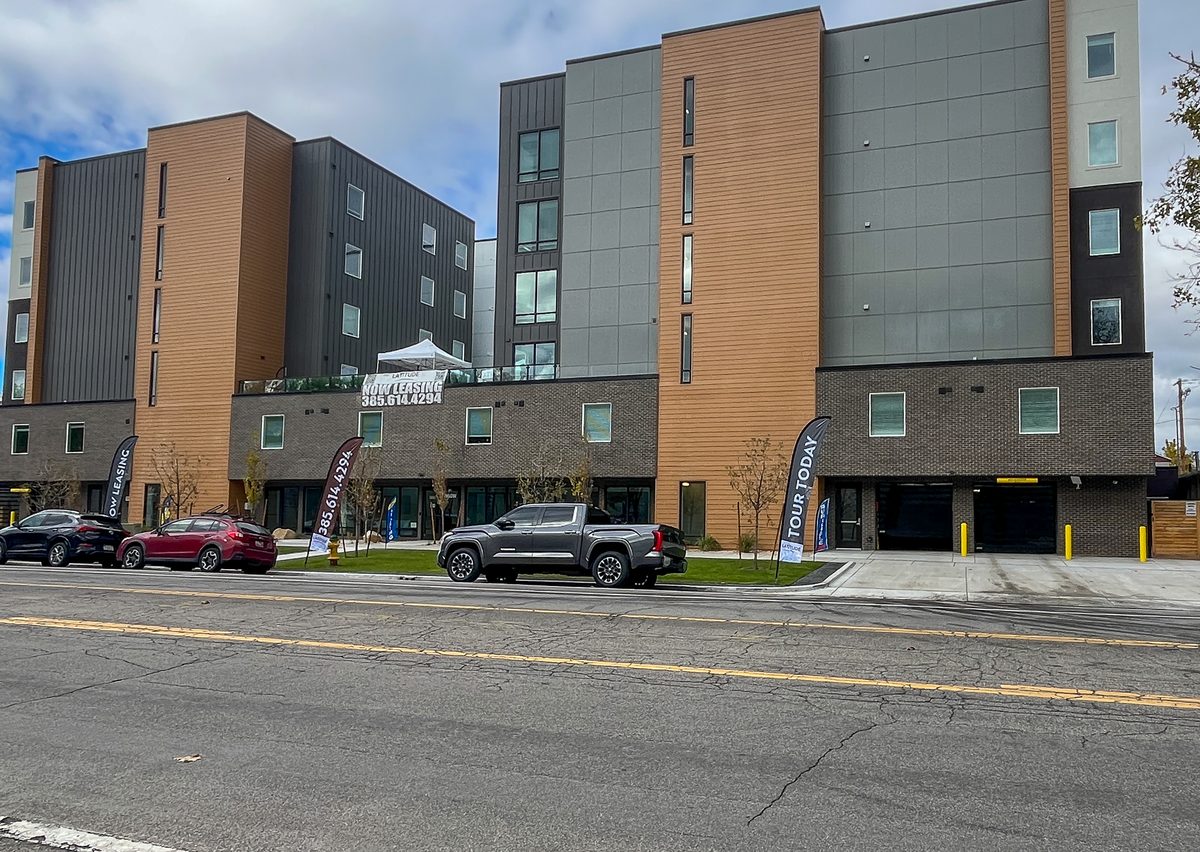
Lynda Davison moved into Latitude Apartments a few weeks ago, months after her husband of 45 years died. The 105-unit building at 940 West 200 South is the newest city-subsidized rental complex on Salt Lake City's west side, and every unit is reserved for households earning 60% of the area median income or less.

Sixteen of those units are set aside for people at 30% of median income. The project cost nearly $39 million, including about $2.8 million from the city, more than $13 million in federal tax credits and $3 million in state credits. It opens while Utah's affordable rental shortfall is estimated at roughly 44,000 units.

Why it matters

One building adds 105 units against a Utah shortfall the report puts at roughly 44,000 affordable rentals.

Last Monday's email for Salt Lake City, UT

Sent Nov 2. It carried:

Get next Monday's: one short email a week. Free. Unsubscribe in one click.

Questions about this story

Free account needed to ask — your question is kept and asked for you right after sign-up. Answers are public.

No questions yet — be the first to ask.

Key Indicators

105
Affordable units at Latitude Apartments
All reserved for households at 60% of area median income or below.
16
Units at 30% of median income
The deepest subsidy tier in the building, reserved for the lowest-income renters.
$38.9M
Total project cost
Roughly the full cost of construction and financing for the 105 units.
$2.8M
City contribution
Salt Lake City's direct share, per its affordable housing dashboard.
44,000
Estimated Utah shortfall
Affordable and available rental units the state is short, as cited in the report.

Voices

Curated perspectives — historical figures and your fellow readers.

Sign up to generate historical perspectives on this story.

People Involved

Organizations Involved

Timeline

June 2023 November 2026

3 events Latest: Yesterday
  1. Latitude Apartments opens 105 income-restricted units

    Latest Opening

    All units are capped at 60% of area median income, with 16 reserved for households at 30%; about 1,000 more units are under construction nearby.

  2. Latitude Apartments breaks ground

    Construction

    Construction on the 105-unit complex at 940 West 200 South begins in spring.

  3. Salt Lake City adopts Housing SLC

    Policy

    The City Council approves a five-year housing plan with targets for 10,000 entitled units, 4,000 of them affordable.

Scenarios

1

A thousand more west-side units finish by 2028

Likely Resolves by End of 2028

Discussed by: Salt Lake City Council Chairman Alejandro Puy, who cites about 1,000 units under construction within a few blocks

Puy says roughly 1,000 units are going up within blocks of Latitude, a mix of affordable and market-rate. If construction costs and financing hold, those buildings would roughly tenfold the corridor's recent subsidized production. The trigger to watch is certificates of occupancy, not groundbreaking.

2

Salt Lake City falls short of its 10,000-unit entitlement target

Possible Resolves by Jun 13, 2028

Discussed by: Housing SLC, the city's 2023 five-year plan, which set the 10,000-unit and 4,000-affordable targets

The plan's goals come due in June 2028. Meeting them depends on private construction continuing at recent rates while the city keeps subsidizing the affordable share. High construction costs and expensive land, which Puy cites as the reason the west side is building at all, cut both ways: they drive the pipeline and they threaten its margins.

3

Latitude's 16 deepest-subsidy units stay leased

Likely Resolves by Nov 30, 2027

Discussed by: Chelsea Investment Corporation, the owner, which set the 30% income tier

The 16 units reserved for households at 30% of area median income are the hardest to keep filled, because those renters have the least margin for rent increases or a missed paycheck. If they stay occupied under income-restricted leases through the end of 2027, the deepest tier is working as designed.

Historical Context

2 moments from history that rhyme with this story — and how they unfolded.

1986

Low-Income Housing Tax Credit (1986)

The Tax Reform Act of 1986 created a federal tax credit for affordable rental construction. The federal government allocates credits to states, which award them to developers; developers sell the credits to investors and use the cash as equity, in exchange for long-term rent and income limits on the units.

Then

Developers gained a financing source that did not require direct federal spending, and states gained discretion over which projects got built.

Now

The credit became the main federal tool for producing affordable rental housing, and most subsidized apartment buildings now carry it.

Why this matters now

More than $13 million of Latitude Apartments' roughly $39 million cost came from federal tax credits, and $3 million more from state credits. This is the machinery that makes a building like this financeable at all.

1974

Montgomery County's Moderately Priced Dwelling Unit program (1974)

Montgomery County, Maryland, outside Washington, D.C., required larger residential subdivisions to set aside a share of homes at below-market prices, in exchange for permission to build more units than zoning otherwise allowed. It is widely described as the country's first such law.

Then

Builders accepted the trade of density for below-market units, and the county began adding price-restricted homes inside market-rate subdivisions.

Now

The program produced below-market homes for decades and became the template for similar rules in other jurisdictions.

Why this matters now

It shows the core bargain in this story: public permission or public money in exchange for units that stay affordable. It also shows the limit. Set-aside programs produce a steady trickle of units, not enough to close a gap measured in the tens of thousands.

Sources

(2)