Anchor

Unanimous vote restricts Class 2 and 3 e-bikes in Butterfield, Yellow Fork canyons; parks and cities may follow
Today: Ban reported; councilor outlines expansionNew here? Follow stories to track developments over time. Create a free account to get updates when stories you care about change.
Overview
Updated 1 hour agoSalt Lake County's two southwestern canyons now close their dirt trails to the fastest e-bikes. The county council voted unanimously to ban Class 2 and Class 3 e-bikes, which reach 20 and 28 mph, from natural-surface trails and parks in areas outside city limits.
The restriction lands hardest on Butterfield and Yellow Fork canyons, where trails are almost entirely dirt. Sponsor Suzanne Harrison calls it a first step toward safer trails. She plans to carry the same rules into regional parks and, later, city trail systems.
Why it matters
If the ban spreads to parks and cities, riders of faster e-bikes lose trail access across Salt Lake County's metro area.
Questions about this story
Free account needed to ask — your question is kept and asked for you right after sign-up. Answers are public.
No questions yet — be the first to ask.
Key Indicators
2
E-bike classes banned from natural trails
Class 2 throttle and Class 3 pedal-assist bikes are prohibited in unincorporated areas.
$150
Fine for ordinance violations
Charged to riders caught on banned classes or Class 1 e-bikes exceeding 20 mph.
Unanimous
Council vote margin
All present council members approved the ordinance on Sept 1, 2026.
20 mph
Class 1 speed cap on county trails
Pedal-assist e-bikes allowed on trails must stay at or under 20 mph.
Related Media
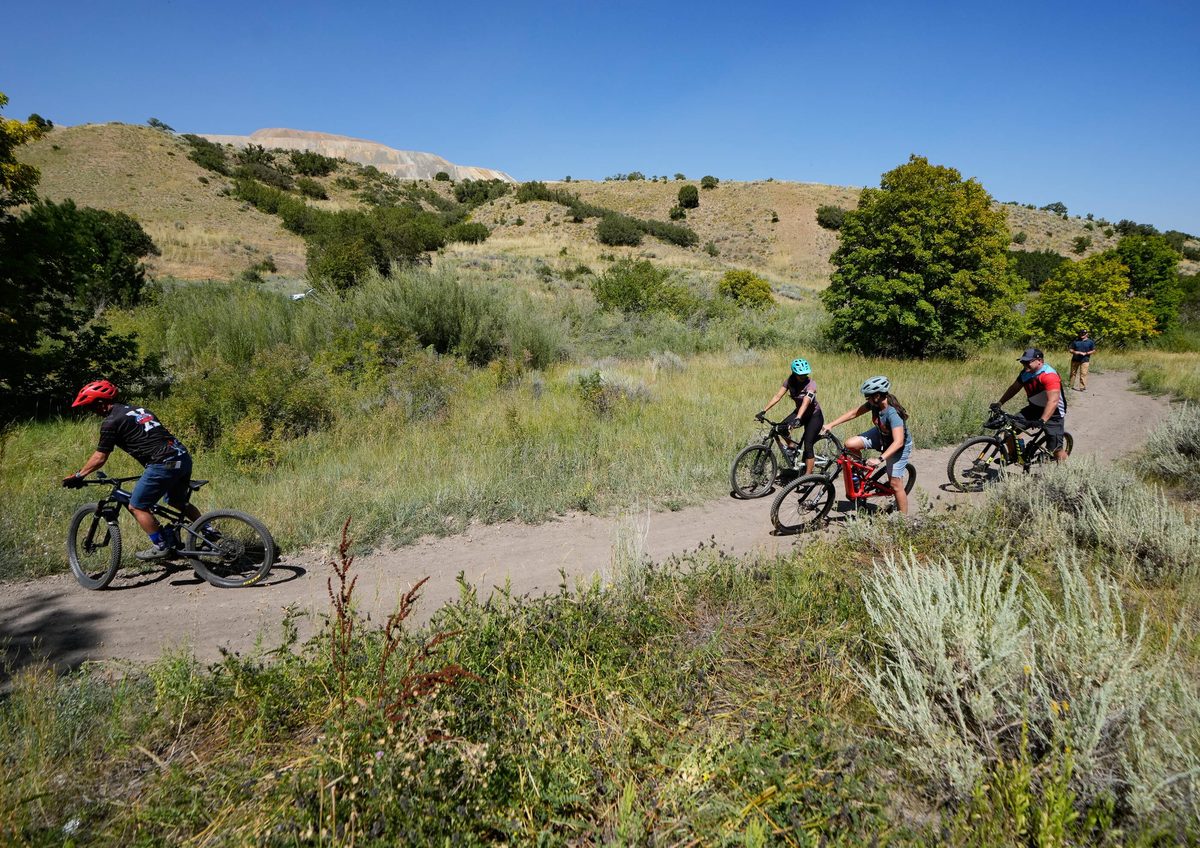
Salt Lake County's Butterfield Canyon trails to be completed by June
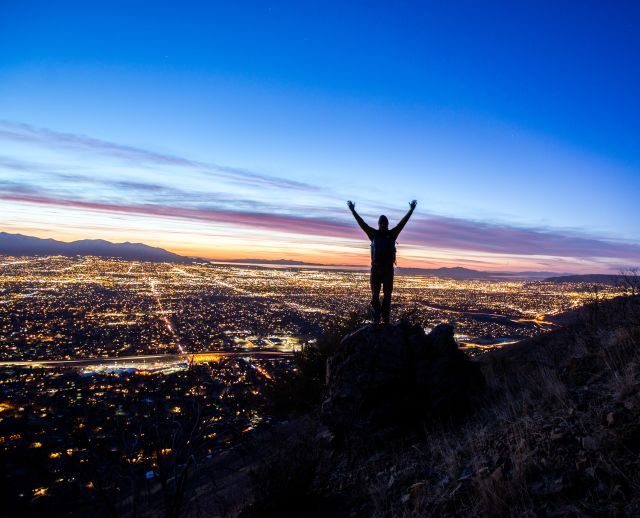
Butterfield Trailhead Regional Park | a Salt Lake Hiking & Biking Outdoors & Recreation in Southwest Valley
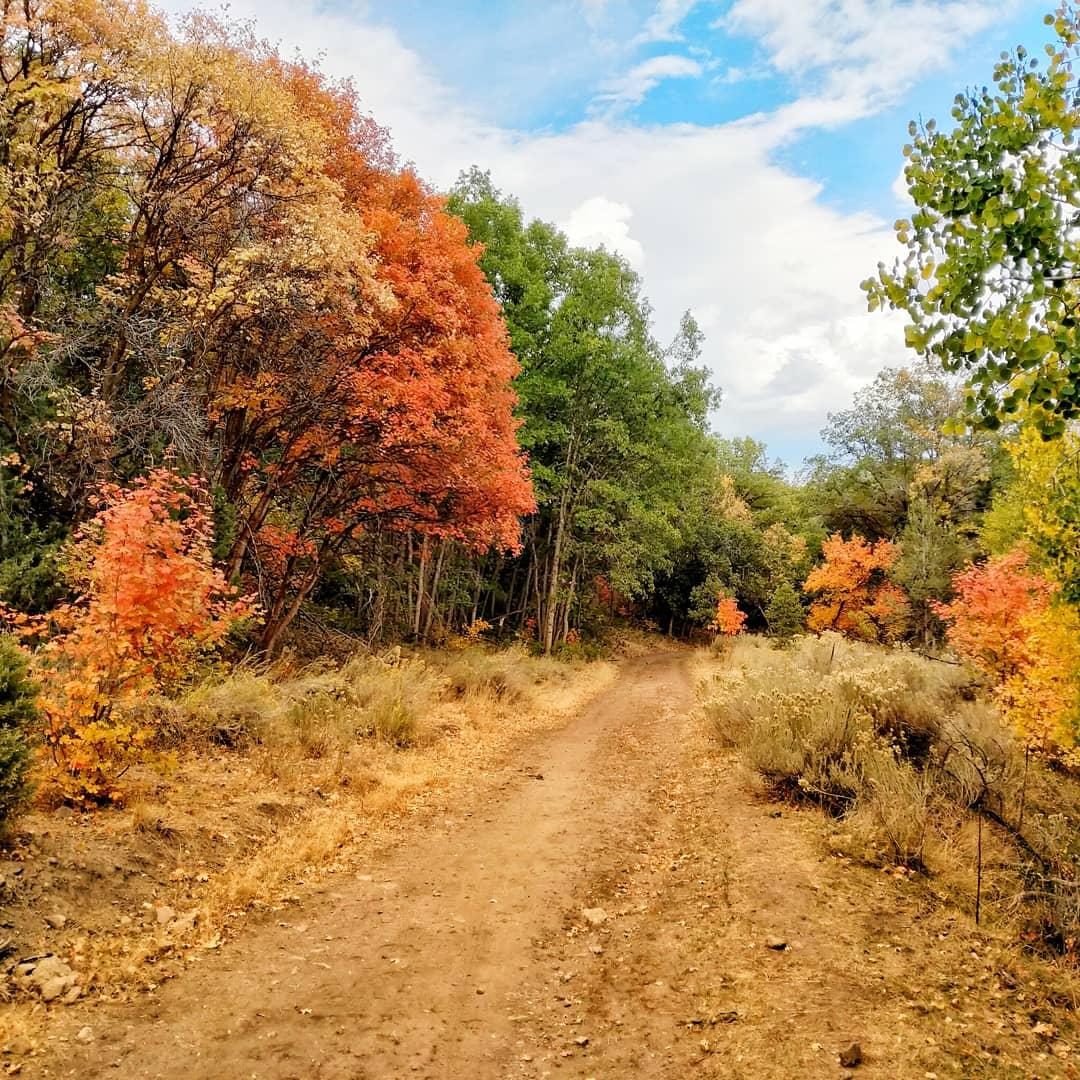
Yellow Fork Canyon County Park Mountain Bike Trail in Herriman, Utah - Directions, Maps, Photos, and Reviews
1.2K views
2:04
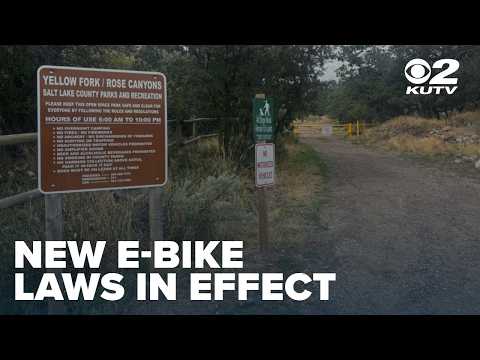
New e-bike restrictions take effect on Salt Lake County trails
KUTV 2 News Salt Lake City
316 views
2:34
Salt Lake County council weighs e-bike law for trails, pathways
KUTV 2 News Salt Lake City
2.0K views
2:03
New Utah law tightens rules on high-powered e-bikes ...
KUTV 2 News Salt Lake City
Images from Openverse under Creative Commons licenses. Videos from YouTube.
Voices
Curated perspectives — historical figures and your fellow readers.
Play
Exploring all sides of a story is often best achieved with Play.
Most of these play right now — no account needed. Sign up to save scores, keep a streak, and unlock Debate and Predict.
Log in
Sign Up
WHO SAID WHAT?
Can you match the quotes to the right people?
Rounds
People
Per question
Scoring
- points for each correct match.
- time bonus when you answer in under seconds.
- streak bonus once you hit correct in a row.
Score:
Round /
streak
— Who said this?
Tip: press 1– to answer.
Score:
Round /
streak
+
Base +
⚡ Speed +
🔥 Streak +
Streak reset · the answer was
No answer in time · it was
Next Up
Round
of
Score
points
Correct
Best Streak
Time Bonus
Avg. Time
points — sign up to put that on the leaderboard.
Now try on this story
Higher or Lower
A number from this story, against one from elsewhere in the news — guess which is bigger, then keep the chain going. 5 rounds, 3 strikes; a miss costs a strike and resets your streak.
Example
Anchor
EU tariff revenue
$52B
Big for this kind of number
Mystery
Pentagon AI contract
?
Round 1
Streak: 0
Mystery
?
Keyboard: ↓/L lower · ↑/H higher
0 pts
Best streak: 0 · Rounds: 0
0 points — sign up to put that on the leaderboard.
Now try on this story
Connections
Sixteen names from the news. Find the four hidden groups of four. Four mistakes max.
Loading today's puzzle…
0/4 groups
Mistakes
Sign up to keep a daily streak — a new puzzle lands every day.
Now try on this story
Exit debate?
Your progress in this debate will be lost.
How it works
- 1 Two AI personas square off on this story.
- 2 You predict who'll win each round — correct picks earn XP.
- 3 One crossfire question is yours to fire. Pick it carefully.
Couldn't generate a topic
Select Your Champions
Choose one persona for each side of the debate
DEBATE TOPIC
Choose personas with different perspectives for a more dynamic debate.
SIDE A (PRO)
Select debater for this side:
No debate personas available right now.
SIDE B (CON)
Select debater for this side:
No debate personas available right now.
VS
Get ready to make your prediction...
Round of
Claim
Evidence
Stakes
Crossfire Answer
Closing Statement
Claim
Evidence
Stakes
Crossfire Answer
Closing Statement
Your Crossfire Question
Generating arguments...
Who's Got This Round?
Make your prediction before the referee scores
The referee scores both sides on
Correct predictions earn +20 XP
· Press 1 or 2 to pick
Evidence
40%
Logic
30%
Detail
20%
Style
10%
Round Results
Your Pick
Not this time
(%)
Overall Score
/10
Your Pick
Not this time
(%)
Overall Score
/10
Set the Crossfire
Pick the question both personas must answer in the final round
Crafting crossfire questions...
Choosing a question earns +10 XP crossfire bonus
🏆
Total XP Earned
Cred Change
Predictions
Debate Oracle! You called every round!
Sharp Instincts! You know your debaters!
The Coin Flip Strategist! Perfectly balanced!
The Contrarian! Bold predictions!
Inverse Genius! Try betting the opposite next time!
XP Breakdown
Base completion
+20 XP
Rounds played ( rounds x 5 XP)
+ XP
Correct predictions ( correct x 20 XP)
+ XP
Crossfire bonus
+10 XP
Accuracy
%
Prediction History
Round
You picked:
✓
✗
Now try on this story
Keep debating to level up your credibility and unlock achievements
People Involved
Suzanne Harrison
Salt Lake County Council member at-large and ordinance sponsor
Planning to expand the restriction to regional parks and cities
Dave Iltis
Editor of Cycling West magazine
Publicly urged the council to reconsider the Class 3 ban
TW
Trent Woolston
Horseback rider who regularly rides in Yellow Fork Canyon
Supports the ban
David Smart
Horseback rider in Yellow Fork Canyon
Supports the ban
Organizations Involved
Salt Lake County Council
County legislative body
Passed the e-bike restriction unanimously
Governing body for Salt Lake County's unincorporated areas, where the new e-bike restriction takes effect.
Utah Outdoor Recreation
State agency under the Utah Department of Natural Resources
Publishes the e-bike classification guide that defines the three classes
State office that explains where e-bikes may ride on Utah public lands and defines Class 1, 2, and 3 e-bikes.
Bike Utah
Nonprofit cycling advocacy group
Consulted by the county council before the vote
Statewide cycling advocacy nonprofit that the council says it heard from ahead of the e-bike vote.
Timeline
2 events
Latest: Today
-
Ban reported; councilor outlines expansion
Today StatementSuzanne Harrison says next steps include extending rules to regional parks and starting talks with cities on matching ordinances.
-
Salt Lake County Council passes e-bike restriction
RegulationCouncil votes unanimously to ban Class 2 and 3 e-bikes from natural trails and parks in unincorporated areas, effective immediately.
Historical Context
3 moments from history that rhyme with this story — and how they unfolded.
August 2019
US Interior e-bike order (2019)
Secretary David Bernhardt signed an order directing federal land managers to treat e-bikes as non-motorized vehicles, opening many national parks and Bureau of Land Management trails to pedal-assist bikes.
Then
More federal trails opened to e-bikes, especially Class 1 pedal-assist models.
Now
Created a definitional split: federal lands trended toward allowing e-bikes while local agencies set their own, often stricter, rules.
Why this matters now
It explains why Utah e-bike policy is a patchwork, with federal land managers opening trails even as Salt Lake County closes its own.
September 2025
BLM Moab opens trails to Class 1 e-bikes (2025)
The BLM Moab Field Office announced it would open many mountain bike trails to Class 1 e-bikes starting in March 2026, a rare federal expansion of access.
Then
Designated Moab trails now allow Class 1 pedal-assist e-bikes.
Now
Shows the opposite policy direction from Salt Lake County, which restricts the faster e-bike classes.
Why this matters now
Highlights how widely e-bike access rules differ even within a single state.
1980s-1990s
Mountain biking's early access fight (1980s-1990s)
When mountain bikes emerged, trail managers debated whether the new mechanized bikes belonged on hiking and equestrian trails. Some trails closed to bikes while others opened with formal designations.
Then
Trails were designated by use type, with many singletrack routes opened to mountain bikes.
Now
Established the trail-designation system today's e-bike debates inherit.
Why this matters now
Parallels the current question of whether a new bike technology belongs on existing trails and who gets to decide.
Sources
(3)Related Stories
Runtastic Haunted Salt Lake City clears food permit for October race
Rule Changes
Updated 4 days ago
Utah adds 450 elk hunting permits as drought strains herds
Rule Changes
Updated Yesterday
Utah phases out automatic mail-in voting by 2029
Rule Changes
Updated 3 days ago
Patagonia, tribes sue Trump over Utah monument shrink
Rule Changes
Updated Yesterday
Urban Nations Powwow cleared to operate at Smith's Ballpark in Salt Lake City
Rule Changes
Updated 4 days ago
Hoodah Fest 2026 food permit appears in Salt Lake County records
Rule Changes
Updated Yesterday