


Pull to refresh
Logo
Samsung's new Bluetooth 'smart control' clears FCC with head-level SAR testing

Samsung's new Bluetooth 'smart control' clears FCC with head-level SAR testing

New Capabilities

The Nov. 16 grant covers model VGTM2760 and a 2.4 GHz radio — five days after Samsung said its TVs do not passively record audio.

Overview

Updated 1 hour ago

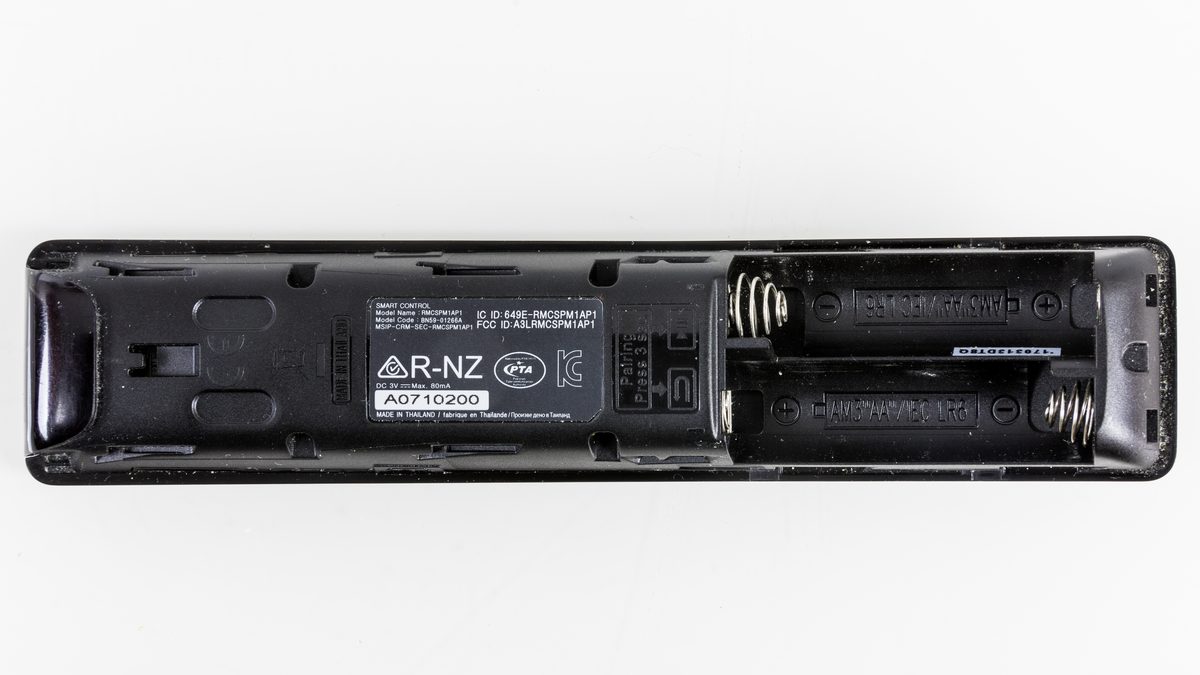
The Federal Communications Commission granted Samsung authorization on Nov. 16, 2026 for a device it calls "SMART CONTROL," model VGTM2760. The record lists a 2.4 GHz Bluetooth transmitter and reports radio exposure testing at the head and face. That is the test setup used for hardware people hold near their mouths.

Nothing in the grant says the word microphone. The timing is what draws attention. Five days earlier, Samsung told The Verge its televisions do not passively record or transmit audio, after an October researcher report claimed Tizen software can reach for a connected soundbar's mic.

Why it matters

The microphone in your next TV may sit in your hand, and the paperwork for it lands months before the product does.

Questions about this story

Free account needed to ask — your question is kept and asked for you right after sign-up. Answers are public.

No questions yet — be the first to ask.

Key Indicators

0.006 W
Maximum conducted output power
The grant lists 6 milliwatts, a typical level for a short-range Bluetooth control.
2,402–2,480 MHz
Operating frequency
The Bluetooth band; the attached test report is titled "Test Report BLE."
< 0.10 W/kg
Highest head (face) SAR
Specific Absorption Rate testing at the head is how regulators check devices held close to the mouth.
0.14 W/kg
Highest 10g extremity SAR
Hand exposure measurement reported in the same grant note.
5 days
Gap between Samsung's denial and the grant
Samsung's privacy statement to The Verge is dated Nov. 11; the grant is dated Nov. 16.

Voices

Curated perspectives — historical figures and your fellow readers.

Sign up to generate historical perspectives on this story.

People Involved

Organizations Involved

Timeline

September 2026 November 2026

4 events Latest: November 16th, 2026 · 1 week ago
Tap a bar to jump to that date
  1. FCC grants Samsung 'SMART CONTROL' VGTM2760

    Latest Regulatory

    The grant covers a 2.4 GHz Bluetooth device with head (face) SAR testing reported at under 0.10 W/kg.

  2. Samsung denies passive audio recording

    Statement

    Samsung tells The Verge its TVs do not passively monitor, record or transmit audio, and that remote mics need a button press.

Scenarios

1

Samsung ships a voice remote with a microphone

Likely Resolves by Q2 2027

Discussed by: Gadget Files, which read the head SAR testing as evidence of voice use; Notebookcheck's coverage of the same filing

The filing already shows face-level exposure testing, the setup used for hardware held near a mouth. Samsung's current remotes carry microphones that activate on a button press, so a successor with a spec sheet listing voice control would fit the pattern. A launch alongside new TVs is the likely window.

2

The device is a plain Bluetooth control with no microphone

Possible Resolves by Q2 2027

Discussed by: The FCC record itself, which lists a radio class but no audio function

The grant gives a frequency range and a power level, nothing more. Head SAR testing applies to any small transmitter that might end up near a face. If the product manual lists buttons and pairing only, the voice inference has no support.

3

The FTC opens an inquiry into TV microphone practices

Unlikely Resolves by Q3 2027

Discussed by: Privacy-focused coverage of the October researcher claims; no agency has announced a review

A formal inquiry would need a complaint or a fuller technical record than the current posts provide. The researcher's own notes call the audio route untraced, and Samsung's statement does not address soundbar microphones. A regulator could still ask the question the company has not answered.

Historical Context

2 moments from history that rhyme with this story — and how they unfolded.

February 2015

Samsung SmartTV voice policy (2015)

Samsung's voice-recognition privacy policy warned that if spoken words included personal information, it would be "among the data captured and transmitted to a third party." Privacy advocates and reporters flagged the wording, and the episode became the reference point for TV voice-data questions.

Then

Samsung clarified that voice data was sent only when a user made a voice request and that it did not retain the audio.

Now

The wording set the template for how journalists and regulators frame TV microphone questions: where the mic is, and when it turns on.

Why this matters now

The current dispute asks the same question about a different component, a remote or a soundbar rather than the TV itself.

February 2017

Vizio viewing-data settlement (2017)

The Federal Trade Commission and New Jersey's attorney general settled with television maker Vizio over software that collected viewing data on about 11 million sets and shared it with advertisers without clear consent.

Then

Vizio paid a multimillion-dollar settlement and agreed to delete data collected before a set date.

Now

It established that viewing and ambient data from a TV is a consumer-protection matter, not only a privacy-policy question.

Why this matters now

Sound-sensor counters for barking and crying, if they are transmitted, would raise the same kind of question about consent and disclosure.

Sources

(7)

Same owner: Gadget Files and Newzino are both owned by Bionics LLC.