
Pull to refresh
Logo
San Francisco's Tom & Jerry Christmas house is demolished for a two-unit building

San Francisco's Tom & Jerry Christmas house is demolished for a two-unit building

Built World San Francisco, CA local

The Victorian at 3650 21st Street hosted one of the city's largest holiday light displays for four decades. A permit issued in April cleared the way for a four-story replacement.

Overview

Updated 40 minutes ago

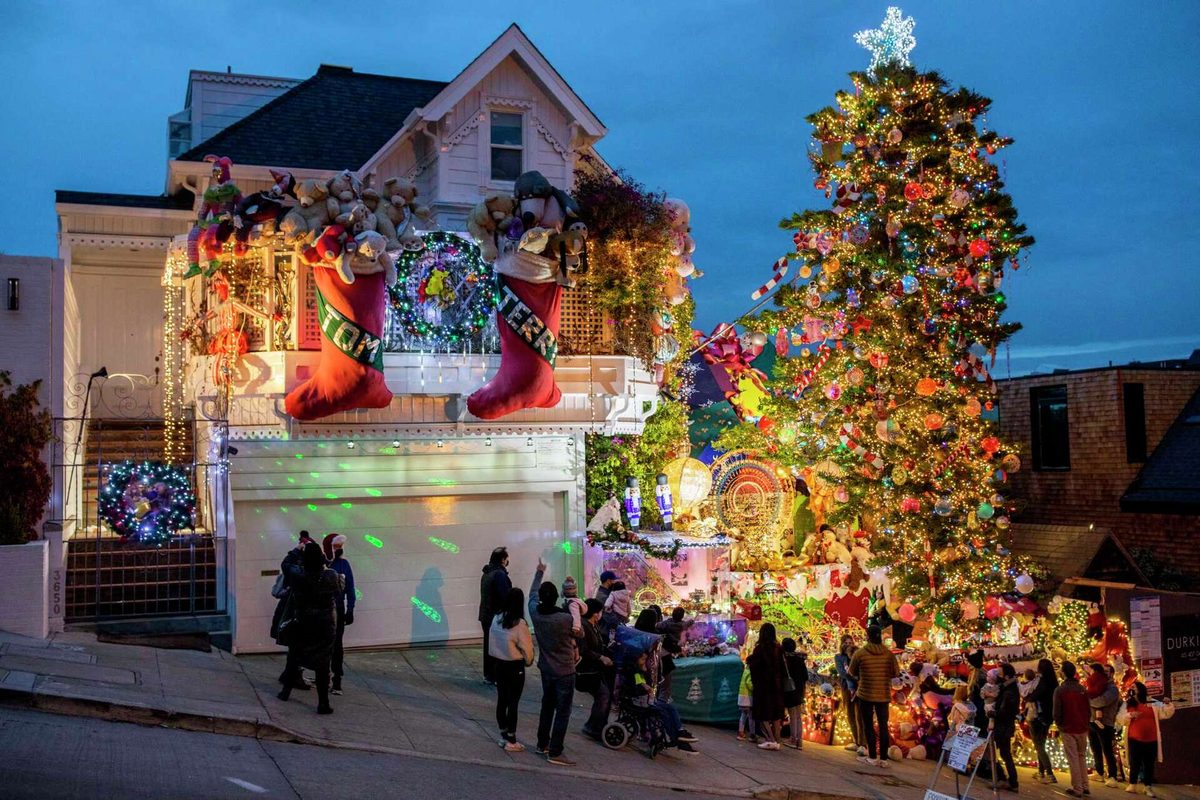
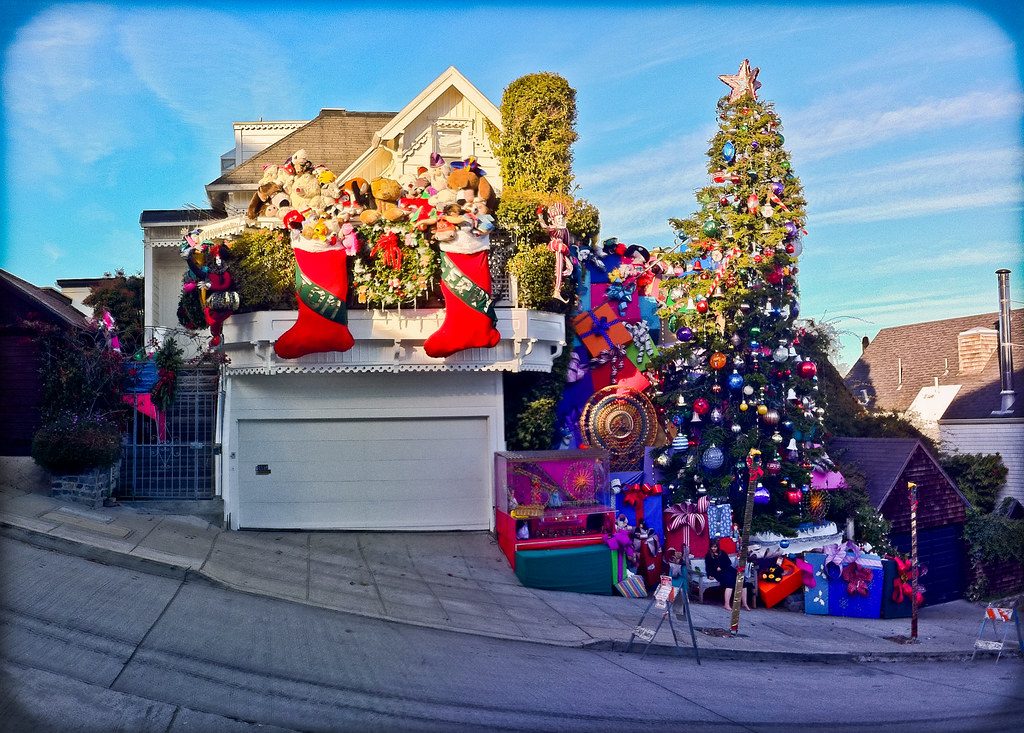
The house at 3650 21st Street has been torn down, three years after the death of its last owner. For about four decades it was one of San Francisco's biggest holiday spectacles: a 65-foot Norfolk Island pine strung with thousands of lights, a small Ferris wheel, a model train, and two oversize stockings reading "Tom" and "Jerry."

The display stopped before the demolition did: Tom Taylor, who built it, died in 2020, and his husband, Dr. Jerome Goldstein, died in November 2023. San Francisco issued a demolition permit in April 2026, clearing a four-story, two-unit building for a lot that Mission Local had noted could have qualified for historic preservation.

Why it matters

A free holiday landmark that drew tens of thousands of visitors a year is gone, and the lot it sat on gains a single housing unit.

Last Monday's email for San Francisco, CA

Sent Nov 23. It carried:

Get next Monday's: one short email a week. Free. Unsubscribe in one click.

Questions about this story

Free account needed to ask — your question is kept and asked for you right after sign-up. Answers are public.

No questions yet — be the first to ask.

Key Indicators

2
Residential units in the replacement building
The site previously held a single-family house.
$2.5M
Declared construction cost
Figure listed on the permit for the new four-story structure.
65 ft
Height of the Norfolk Island pine
Planted in the front yard around 1973; renderings show it preserved.
30,000–40,000
Estimated holiday visitors per year
Taylor's own estimate of foot traffic at the display's peak.

Voices

Curated perspectives — historical figures and your fellow readers.

Sign up to generate historical perspectives on this story.

People Involved

Organizations Involved

Timeline

1973 November 2026

9 events Latest: Yesterday
Tap a bar to jump to that date
  1. Demolition confirmed

    Latest Demolition

    Images on social media show construction underway where the house stood; local outlets report the house is gone.

  2. Demolition permit issued

    Permit

    San Francisco authorises demolition of the single-family house. A separate permit allows a four-story building over a basement with two units.

  3. Plans filed for a two-unit building

    Development

    A proposal is filed for a three-story, two-unit building; renderings appear to keep the front-yard pine.

  4. Jerry Goldstein dies at 82

    Death

    Taylor's husband of 48 years dies, leaving the property without either of the men who built its annual display.

  5. Tom Taylor dies at 77

    Death

    The December 2020 display goes up in his memory. It is the last one the house ever hosts.

  6. National television comes to 21st Street

    Culture

    The house appears on ABC's "The Great Christmas Light Fight."

  7. The couple marry in the street

    Culture

    Taylor and Goldstein wed in a ceremony outside their home, with rainbow flag creator Gilbert Baker as officiant.

  8. Documentary screens at Frameline

    Culture

    "Making Christmas: The View from the Tom & Jerry Christmas Tree" screens at the San Francisco film festival; DVDs are later sold at a stand by the house.

  9. A houseplant becomes a yard tree

    Origin

    Taylor and Goldstein plant the Norfolk Island pine outside after it outgrows their living room. It grows past 65 feet and its roots find the sewer line.

Scenarios

1

The Norfolk Island pine survives the rebuild

Likely Resolves by End of 2028

Discussed by: SFist, reading the project renderings filed with the permit

Renderings submitted with the project show the front-yard pine retained under the new structure. If construction sequencing protects the root zone, the tree that anchored four decades of displays outlasts the house it decorated. This is the outcome the permit drawings point to, and the one neighbours and former visitors are watching for.

2

The pine comes down during construction

Possible Resolves by End of 2028

Discussed by: Not predicted in any cited source; it is the risk implied by building directly around a mature tree

The tree sits in the front yard of a lot now cleared for a four-story building. Roots, drainage and excavation on a steep slope are the usual ways mature yard trees are lost during construction, even when drawings show them retained. If the pine dies or is felled, the last physical remnant of the display goes with it.

3

San Francisco adds historic review before similar demolitions

Unlikely Resolves by End of 2028

Discussed by: Mission Local, which reported the house could have been a candidate for preservation and that the permit was issued quickly

The house was identified as potentially eligible for historic preservation, yet the demolition permit moved through without a visible landmark effort. If that gap draws attention at the Board of Supervisors, the result would be a new step requiring historic-resource review before demolition permits issue for flagged properties. Nothing in the current record shows such legislation drafted.

Historical Context

2 moments from history that rhyme with this story — and how they unfolded.

1921–1954

Watts Towers (1921–1954)

Sabato "Simon" Rodia spent 33 years building 17 interconnected towers from steel, wire mesh and cement in the backyard of his house in Watts, south Los Angeles. He walked away in 1954, and in 1959 the city condemned the site and ordered the towers demolished as a structural hazard.

Then

Artists and neighbours formed a committee to fight the demolition. A load test using a crane proved the towers could take the strain, and the wrecking order was dropped.

Now

Los Angeles designated the towers a cultural monument in 1963. They later became a National Historic Landmark and a state historic park.

Why this matters now

The towers survived because people organised around them while the owner was still alive to be argued with. The Tom & Jerry House had no comparable campaign, and its owners had both died before the permit was pulled.

1931–1988

The Big Duck (1931, moved 1988)

Martin Maurer built a shop shaped like a concrete duck on Long Island's Route 24 in 1931 to sell Peking ducks from his farm. It became a roadside landmark as duck farming spread across eastern Long Island.

Then

When the site was redeveloped, preservationists had the duck loaded onto a flatbed and moved a few miles east to Flanders in 1988 rather than let it be demolished.

Now

It was later listed on the National Register of Historic Places and now runs as a seasonal museum.

Why this matters now

Relocation is the standard escape route for a landmark sitting on land worth more without it. A 65-foot pine with roots in a hillside lot cannot be moved, which is why the Tom & Jerry House had no equivalent fallback.

Sources

(2)