Anchor

Immune signal that lets zebrafish regrow spinal cords identified
New CapabilitiesNeutrophils release Il-4 to calm destructive inflammation; the molecule alone restored full regeneration
Today: Discovery draws wider attentionNew here? Follow stories to track developments over time. Create a free account to get updates when stories you care about change.
Overview
Updated 2 hours agoA zebrafish can cut its spinal cord and regrow the nerve fibers within weeks. A human cannot.
Researchers at TU Dresden traced that difference to a hidden immune signal. A specialized group of neutrophils releases the cytokine Il-4, which calms the destructive inflammation that blocks nerve growth. Supplying Il-4 alone restored full regeneration, even without those neutrophils.
The finding, published in the Journal of Neuroinflammation, raises an obvious question: does the same mechanism work in humans? Spinal cord injuries in people trigger a runaway inflammatory response that leaves permanent damage — the exact response Il-4 prevents in zebrafish.
Why it matters
If Il-4 works in humans, it could calm the destructive inflammation that permanently blocks spinal cord repair after injury.
Questions about this story
Free account needed to ask — your question is kept and asked for you right after sign-up. Answers are public.
No questions yet — be the first to ask.
Key Indicators
24 h
Time to peak neutrophil infiltration after injury
Neutrophils arrive and trigger the regenerative response within the first day.
3 days
Peak microglial recruitment post-injury
Maximum microglial accumulation at 3 days post-injury, overlapping stem cell proliferation.
complete
Regeneration with Il-4 alone
Larval fish spinal cords regenerated fully when Il-4 was added without neutrophils present.
necessary & sufficient
Role of il4 expression in neutrophils
il4 is both required for regeneration and enough on its own to drive it.
Related Media
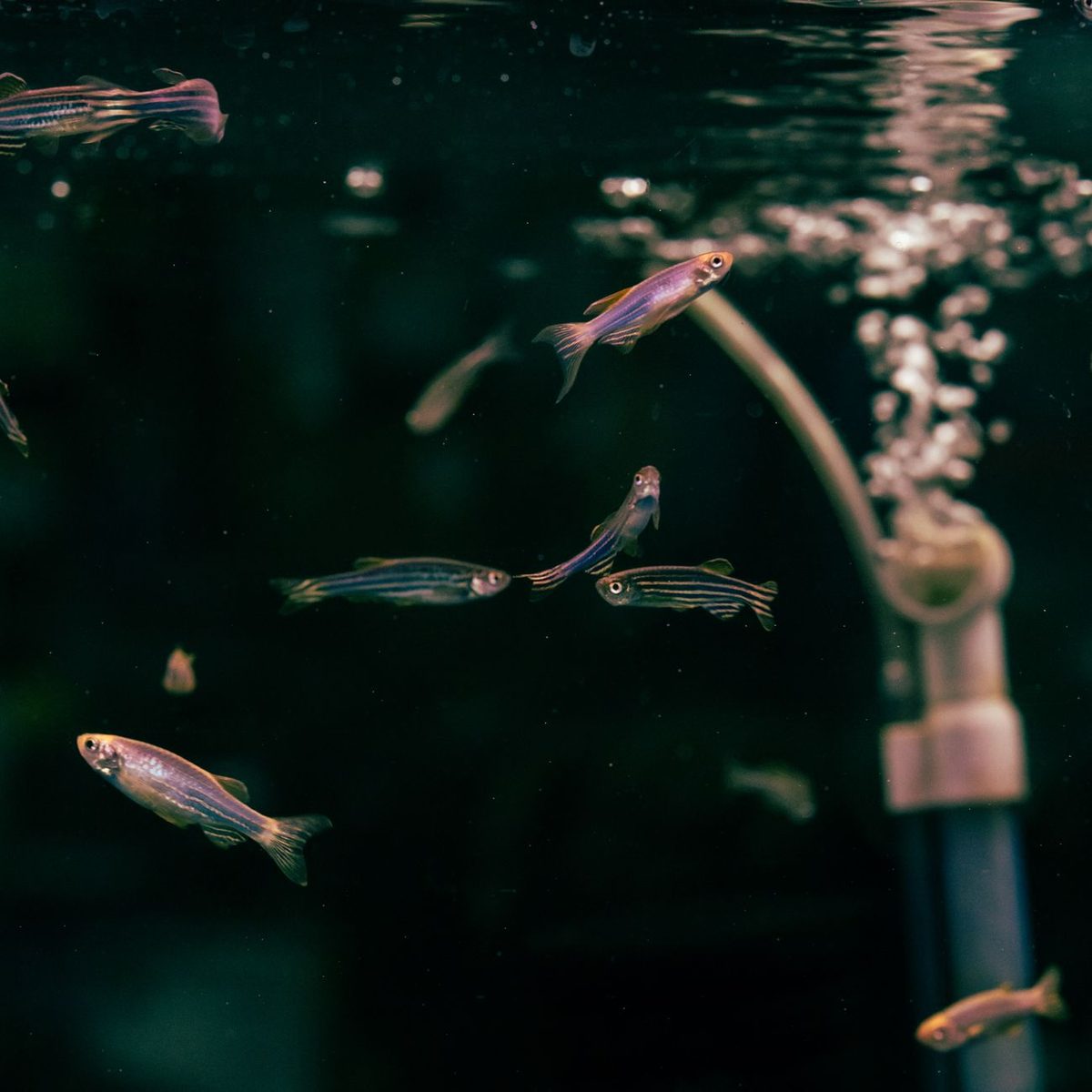
Zebrafish gracefully swimming in an aquarium with air bubbles, showcasing aquatic life.
250 views
2:33
Scientists use zebrafish to understand the connection between ...
Science X
28.4K views
7:39
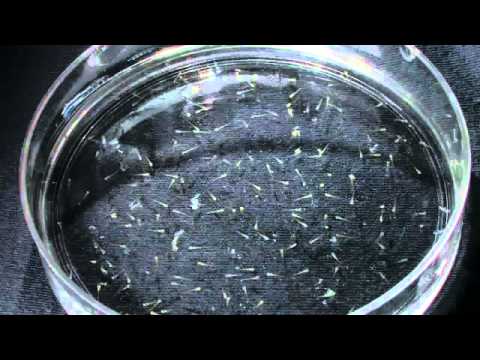
Spinal Cord Regeneration in Zebra Fish
Cornell CALS
2.0K views
0:58
Interleukin 4 (IL-4) - Mechanisms, Disease & Therapy
Assay Genie
Images from Openverse under Creative Commons licenses. Videos from YouTube.
Voices
Curated perspectives — historical figures and your fellow readers.
Play
Exploring all sides of a story is often best achieved with Play.
Most of these play right now — no account needed. Sign up to save scores, keep a streak, and unlock Debate and Predict.
Log in
Sign Up
Higher or Lower
A number from this story, against one from elsewhere in the news — guess which is bigger, then keep the chain going. 5 rounds, 3 strikes; a miss costs a strike and resets your streak.
Example
Anchor
EU tariff revenue
$52B
Big for this kind of number
Mystery
Pentagon AI contract
?
Round 1
Streak: 0
Mystery
?
Keyboard: ↓/L lower · ↑/H higher
0 pts
Best streak: 0 · Rounds: 0
0 points — sign up to put that on the leaderboard.
Now try on this story
Connections
Sixteen names from the news. Find the four hidden groups of four. Four mistakes max.
Loading today's puzzle…
0/4 groups
Mistakes
Sign up to keep a daily streak — a new puzzle lands every day.
Now try on this story
Exit debate?
Your progress in this debate will be lost.
How it works
- 1 Two AI personas square off on this story.
- 2 You predict who'll win each round — correct picks earn XP.
- 3 One crossfire question is yours to fire. Pick it carefully.
Couldn't generate a topic
Select Your Champions
Choose one persona for each side of the debate
DEBATE TOPIC
Choose personas with different perspectives for a more dynamic debate.
SIDE A (PRO)
Select debater for this side:
No debate personas available right now.
SIDE B (CON)
Select debater for this side:
No debate personas available right now.
VS
Get ready to make your prediction...
Round of
Claim
Evidence
Stakes
Crossfire Answer
Closing Statement
Claim
Evidence
Stakes
Crossfire Answer
Closing Statement
Your Crossfire Question
Generating arguments...
Who's Got This Round?
Make your prediction before the referee scores
The referee scores both sides on
Correct predictions earn +20 XP
· Press 1 or 2 to pick
Evidence
40%
Logic
30%
Detail
20%
Style
10%
Round Results
Your Pick
Not this time
(%)
Overall Score
/10
Your Pick
Not this time
(%)
Overall Score
/10
Set the Crossfire
Pick the question both personas must answer in the final round
Crafting crossfire questions...
Choosing a question earns +10 XP crossfire bonus
🏆
Total XP Earned
Cred Change
Predictions
Debate Oracle! You called every round!
Sharp Instincts! You know your debaters!
The Coin Flip Strategist! Perfectly balanced!
The Contrarian! Bold predictions!
Inverse Genius! Try betting the opposite next time!
XP Breakdown
Base completion
+20 XP
Rounds played ( rounds x 5 XP)
+ XP
Correct predictions ( correct x 20 XP)
+ XP
Crossfire bonus
+10 XP
Accuracy
%
Prediction History
Round
You picked:
✓
✗
Now try on this story
Keep debating to level up your credibility and unlock achievements
People Involved
XT
Xiaobo Tian
Researcher who led the study in the Becker group at TU Dresden
Reporting results; flagging human translation as the next open question
TB
Thomas Becker
Group leader, Center for Regenerative Therapies Dresden
Co-leads the Becker group studying zebrafish central nervous system regeneration
Catherina Becker
Group leader, Center for Regenerative Therapies Dresden
Co-leads the Becker group studying zebrafish spinal cord regeneration
Organizations Involved
Center for Regenerative Therapies Dresden
Academic research center
Home of the Becker group and the Il-4 study
Research center at TU Dresden focused on regenerative medicine, including the zebrafish model.
Journal of Neuroinflammation
Peer-reviewed scientific journal
Published the Il-4 study
Open-access journal covering the role of inflammation in nervous system injury and disease.
Timeline
January 2024 September 2026
4 events
Latest: Today
Tap a bar to jump to that date
-
Discovery draws wider attention
Today CoverageBroader outlets covered the finding; researchers flag whether Il-4 plays the same role in humans as the next question.
-
Study published; ScienceDaily reports finding
PublicationThe Il-4 neutrophil study appeared in the Journal of Neuroinflammation, and ScienceDaily covered the discovery.
-
Il-4 neutrophil mechanism posted as preprint
PreprintResearchers posted findings that a neutrophil subpopulation expressing il4 controls Il-1β production in macrophages after spinal cord injury.
-
Preprint shows neutrophil dynamics shape regeneration
PreprintA bioRxiv study showed that accelerating neutrophil clearance via Cxcr4 inhibition improved zebrafish spinal cord regeneration, while delaying infiltration impaired it.
Historical Context
3 moments from history that rhyme with this story — and how they unfolded.
1951-1986
Nerve growth factor discovery (1951-1986)
Rita Levi-Montalcini discovered nerve growth factor (NGF), a protein that drove embryonic neurons to grow, with Stanley Cohen helping to purify it. The work won the 1986 Nobel Prize in Physiology or Medicine.
Then
NGF became a cornerstone of neurobiology and later a therapy candidate for peripheral neuropathy.
Now
It showed that a single signaling molecule can drive nerve growth — the same logic now applied to Il-4.
Why this matters now
Both stories hinge on one molecule whose signaling proves decisive for nerve biology. NGF took decades to reach clinical testing; Il-4 may follow a similar arc if it translates.
2002
Zebrafish heart regeneration mapped (2002)
Kenneth Poss and colleagues showed zebrafish regenerate up to 20% of an amputated heart ventricle, establishing the fish as the leading vertebrate regeneration model.
Then
Opened a research program on why some vertebrates regenerate organs and others don't.
Now
The same logic now underpins spinal cord regeneration work in zebrafish.
Why this matters now
Established that zebrafish are the right model for asking why regeneration works — the question at the center of the Il-4 study.
2010s
Macrophage polarization shapes spinal cord injury outcomes (2010s)
Researchers found that 'M2' anti-inflammatory macrophages promote recovery after spinal cord injury while 'M1' pro-inflammatory macrophages hinder it. This reframed the immune response as a therapeutic target rather than a bystander.
Then
Spurred trials of immunomodulatory approaches for spinal cord injury.
Now
Broke ground for the idea that fine-tuning inflammation, not blocking it, is the path to repair.
Why this matters now
The Il-4 finding extends this concept by identifying the specific neutrophil signal that controls macrophage behavior after injury.
Sources
(7)Related Stories
The long road to spinal cord repair
New Capabilities
Updated May 29
Lab-grown organs transform medical research
New Capabilities
Updated May 29
Scientists identify the stem cell that builds tendons and ligaments
New Capabilities
Updated 8 hours ago
Glucose and neural touch guide the stem cells that build the human brain
New Capabilities
Updated Yesterday
The race to repair broken hearts
New Capabilities
Updated May 21
The gene therapy revolution: from fatal setback to living cures
New Capabilities
Updated Jul 3