

Pull to refresh
Logo
Daily Brief
Following
Why
The long road to spinal cord repair

The long road to spinal cord repair

New Capabilities
By Newzino Staff |

New Research Reveals How the Body's Own Cells Coordinate Healing After Injury

February 13th, 2026: Cedars-Sinai Publishes CCN1 Mechanism in Nature

Overview

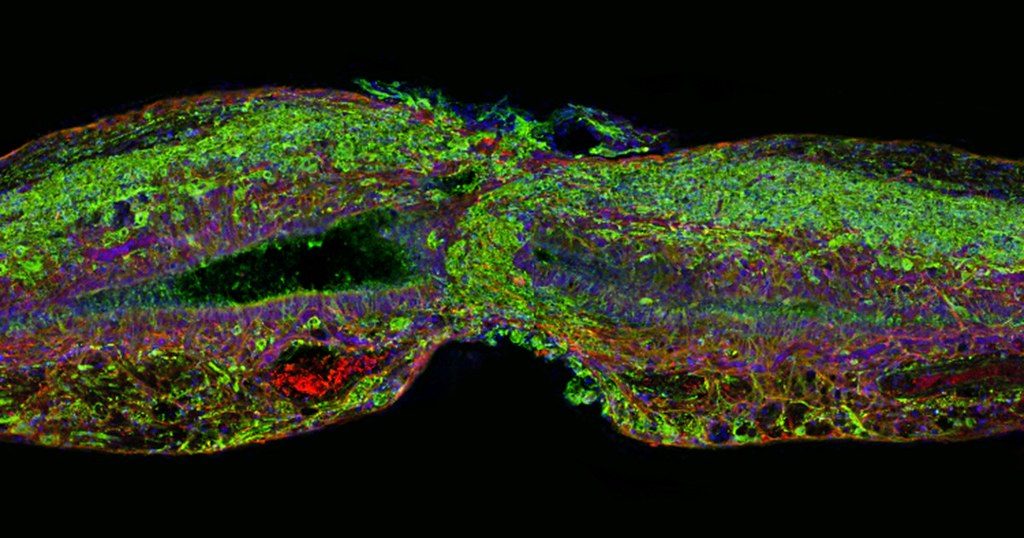
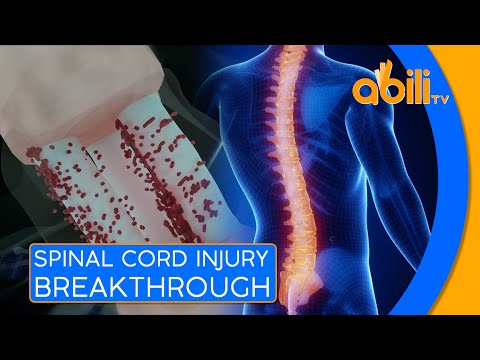
For decades, doctors told paralyzed patients that severed spinal cords cannot heal. That dogma is crumbling. Researchers at Cedars-Sinai Medical Center have identified a previously unknown repair system in the spinal cord: support cells called astrocytes, located far from the injury site, release a protein signal that reprograms immune cells to clear debris and enable recovery. The findings, published in Nature in February 2026, open therapeutic pathways for treating paralysis, stroke, and multiple sclerosis.

The discovery matters because the central nervous system's limited healing capacity has stymied treatment development for 30 years. When nerve tissue is damaged, fatty myelin debris accumulates and blocks regeneration—it can persist for years. The Cedars-Sinai team found that 'lesion-remote astrocytes' secrete a protein called CCN1 that transforms nearby immune cells (microglia) into efficient debris-clearing machines. Without CCN1, recovery is drastically impaired. The mechanism was validated in both mice and human tissue, suggesting it could be harnessed therapeutically.

Key Indicators

5.4M
Americans living with paralysis
Nearly 1 in 50 people in the United States live with some form of paralysis.
18,000
New spinal cord injuries per year (USA)
Traumatic spinal cord injuries occur primarily from vehicle crashes, falls, and violence.
1
Approved treatment worldwide
STEMIRAC, offered only in Japan, is currently the only approved spinal cord injury treatment.
Years
Myelin debris persistence
Fatty nerve debris can remain at injury sites for years, blocking natural regeneration.

Interactive

Exploring all sides of a story is often best achieved with Play.

Ever wondered what historical figures would say about today's headlines?

Sign up to generate historical perspectives on this story.

Sign Up

Debate Arena

Two rounds, two personas, one winner. You set the crossfire.

People Involved

Joshua Burda, PhD
Joshua Burda, PhD
Assistant Professor and Principal Investigator, Cedars-Sinai Medical Center (Leading follow-up research on CCN1 therapeutic applications)
Michael V. Sofroniew, MD, PhD
Professor of Neurobiology, UCLA (Continuing astrocyte research)

Organizations Involved

Cedars-Sinai Medical Center
Academic Medical Center
Status: Leading institution in current CCN1 research

A nonprofit academic medical center in Los Angeles with extensive neuroscience research programs.

Christopher & Dana Reeve Foundation
Nonprofit Research Foundation
Status: Actively funding spinal cord injury research

The preeminent spinal cord injury and paralysis foundation, providing research funding and patient advocacy.

Timeline

  1. Cedars-Sinai Publishes CCN1 Mechanism in Nature

    Research Breakthrough

    Joshua Burda's team publishes Nature study identifying how lesion-remote astrocytes secrete CCN1 to reprogram microglia for myelin debris clearance. Validated in mice and human tissue, the mechanism offers new therapeutic targets for paralysis, stroke, and multiple sclerosis.

  2. Reeve Foundation Awards $1.5M in New Research Grants

    Funding

    The Christopher & Dana Reeve Foundation and Spinal Research announce four preclinical research grants totaling $1.5 million for drugs, biologics, and gene therapies.

  3. 'Dancing Molecules' Treatment Gets FDA Orphan Drug Status

    Regulatory

    Amphix Bio's novel treatment for spinal cord injury receives FDA orphan drug designation. The company targets late 2026 for first human trials.

  4. FDA Grants Orphan Drug Status to KP-100IT

    Regulatory

    Kringle Pharma's KP-100IT for acute spinal cord injury receives FDA orphan drug designation following positive Phase III trial results.

  5. Burda Lab Posts CCN1 Preprint

    Research

    Joshua Burda's team at Cedars-Sinai posts preprint to bioRxiv describing the role of lesion-remote astrocytes in white matter repair via CCN1 signaling.

  6. UCLA Study Overturns Scar Tissue Dogma

    Research Breakthrough

    Michael Sofroniew's lab at UCLA publishes landmark Nature paper demonstrating astrocyte scar tissue aids spinal cord regeneration rather than blocking it—reversing decades of conventional wisdom.

  7. CCN1 Wound Healing Function Discovered

    Research

    Researchers identify that CCN1 protein induces fibroblast senescence to limit scar tissue formation during wound healing, establishing its role as a key tissue repair signal.

  8. Reeve Lobbies Congress to Double NIH Budget

    Policy

    Christopher Reeve's congressional testimony contributes to NIH budget growth from $12 billion (1998) to $27 billion (2003), dramatically expanding spinal cord research funding.

  9. Christopher Reeve Paralyzed in Horse Riding Accident

    Cultural Milestone

    Actor Christopher Reeve suffers C1-C2 spinal cord injury, becoming quadriplegic. His subsequent advocacy transforms public awareness and research funding for spinal cord injuries.

Scenarios

1

CCN1-Based Drug Enters Clinical Trials Within 5 Years

Discussed by: Cedars-Sinai researchers; regenerative medicine analysts

The CCN1 signaling pathway becomes a therapeutic target. Researchers develop either recombinant CCN1 protein or small molecules that mimic its effects on microglia. Given CCN1's known safety profile from wound healing research and the validation in human tissue, a drug candidate could advance to Phase I trials for acute spinal cord injury by 2030-2031. This would represent a new class of treatments that enhance the body's natural repair mechanisms rather than replacing damaged cells.

2

Combination Therapy Achieves Functional Recovery

Discussed by: eBioMedicine; Christopher & Dana Reeve Foundation research reviews

CCN1 modulation is combined with other emerging therapies—stem cells, electrical stimulation, or 'dancing molecules'—to create a multi-pronged treatment protocol. Research consistently shows combinatorial approaches outperform single therapies. A treatment regimen that clears debris (via CCN1), promotes axon growth (via growth factors), and bridges gaps (via biomaterials) could achieve meaningful motor function recovery in some patients with recent injuries.

3

Mechanism Proves Difficult to Manipulate Therapeutically

Discussed by: Pharmaceutical development analysts; historical precedent in neuroscience drug development

The CCN1 pathway proves too complex or context-dependent to target effectively with drugs. Neuroscience has seen many promising basic research findings fail in translation—the blood-brain barrier limits drug delivery, timing windows prove narrow, or systemic CCN1 manipulation causes off-target effects. The discovery advances scientific understanding but does not yield approved treatments within a decade.

4

Multiple Sclerosis Applications Advance First

Discussed by: Nature paper authors; MS treatment researchers

Because the CCN1 mechanism was validated in demyelinating disorders and MS involves ongoing white matter damage rather than acute trauma, drug developers prioritize MS applications. The larger patient population and easier clinical trial endpoints (measurable brain lesions via MRI) attract pharmaceutical investment. A CCN1-targeting therapy reaches MS patients before spinal cord injury patients.

Historical Context

Christopher Reeve's Injury and Advocacy (1995-2004)

May 1995 - October 2004

What Happened

Actor Christopher Reeve, famous for playing Superman, was paralyzed from the neck down after a horse riding accident fractured his C1 and C2 vertebrae. Rather than retreat from public life, Reeve became the most visible advocate for spinal cord injury research in American history. He testified before Congress, lobbied for increased National Institutes of Health funding, and funded early basic science research that challenged the dogma that spinal cords could never heal.

Outcome

Short Term

Reeve's advocacy helped double the NIH budget from $12 billion to $27 billion between 1998 and 2003, with significant allocations to spinal cord research.

Long Term

The Christopher & Dana Reeve Foundation has invested over $145 million in research, funding discoveries that now form the foundation of regenerative therapies in clinical trials. Reeve 'put a face on the injury' and transformed public perception of what paralysis research could achieve.

Why It's Relevant Today

The CCN1 discovery builds directly on the research ecosystem Reeve helped create. The Reeve Foundation continues funding the preclinical studies that could translate basic discoveries like this into treatments.

Astrocyte Scar Paradigm Shift (2016)

August 2016

What Happened

For decades, researchers believed that astrocyte scar tissue—the glial scar that forms around spinal cord injuries—was the primary barrier blocking nerve regeneration. Michael Sofroniew's lab at UCLA published a Nature paper demonstrating the opposite: mice engineered to prevent scar formation showed worse nerve regeneration, not better. Astrocytes were helping, not hurting.

Outcome

Short Term

The paper redirected research priorities away from eliminating astrocyte scars and toward understanding how astrocytes promote repair.

Long Term

The paradigm shift enabled discoveries like the CCN1 mechanism. Instead of viewing astrocytes as obstacles to overcome, researchers began mapping their repair-promoting functions—leading directly to the Cedars-Sinai findings about lesion-remote astrocytes.

Why It's Relevant Today

The CCN1 discovery is a direct intellectual descendant of Sofroniew's work. It identifies a specific molecular mechanism by which astrocytes—even those far from the injury—coordinate healing.

Stem Cell Therapy Disappointments (2010-2020)

2010-2020

What Happened

Multiple high-profile stem cell therapy trials for spinal cord injury showed limited or no efficacy, despite promising animal results. Geron Corporation halted its embryonic stem cell trial in 2011 citing costs. StemCells Inc. shut down after its Phase II trial failed in 2016. The field faced a 'translation gap' between laboratory success and clinical benefit.

Outcome

Short Term

Several biotech companies exited spinal cord injury research. Investor enthusiasm cooled.

Long Term

Researchers recognized that simply adding new cells to injured spinal cords was insufficient. The hostile environment—including accumulated myelin debris—prevented transplanted cells from functioning. This shifted focus toward understanding and improving the injury microenvironment.

Why It's Relevant Today

The CCN1 discovery addresses a key reason stem cell therapies struggled: the persistence of myelin debris. Clearing this debris through CCN1 signaling could make the injury site more hospitable to future cell-based treatments, potentially resurrecting combinatorial approaches.

10 Sources: