

Pull to refresh
Logo
Scientists solve 1840s space weather mystery

Scientists solve 1840s space weather mystery

New Capabilities

An 1871 Nature article misdated an Exeter train delay by seven years, moving the first solar storm to disrupt technology to 1847

September 16th, 2026: Study corrects the date to 1848

Overview

Updated 1 hour ago

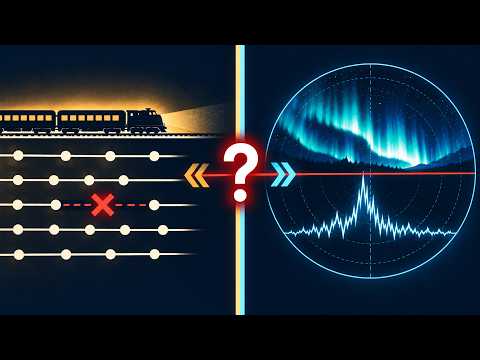
An 1871 Nature article said a solar storm delayed a train at Exeter by 16 minutes on 18 October 1841. One problem: the Exeter-to-Newton-Abbot railway didn't open until 1846.

A new study shows the event actually happened on 18 October 1848. A misprint in the Nature account had turned '1848' into '1841.' The correction moves the earliest recorded space weather impact to 19 March 1847, when an aurora disrupted the Midland Railway's telegraph.

Space weather is often treated as a modern hazard. This record shows solar storms have disrupted technology for nearly two centuries, which helps forecasters calibrate how often extreme events hit Earth.

Why it matters

Solar storms have disrupted technology for nearly two centuries; the corrected record sharpens forecasts of how often extreme space weather hits Earth.

Questions about this story

Free account needed to ask — your question is kept and asked for you right after sign-up. Answers are public.

No questions yet — be the first to ask.

Key Indicators

16 min
Delay to the 10:05 p.m. Exeter express
The geomagnetic disturbance disrupted the signalling telegraph, holding the train for 16 minutes.
7 years
Error in the 1871 Nature article date
A misprint printed '1841' instead of '1848'.
178
Years the Exeter date error went unnoticed
From the actual 1848 event to the 2026 study that corrected it.
1847
Corrected date of earliest recorded space weather tech impact
Midland Railway telegraph disruption near Derby during the aurora of 19 March 1847.

Voices

Curated perspectives — historical figures and your fellow readers.

Ever wondered what historical figures would say about today's headlines?

Sign up to generate historical perspectives on this story.

People Involved

Organizations Involved

Timeline

March 1847 September 2026

5 events Latest: September 16th, 2026 · 1 week ago
Tap a bar to jump to that date
  1. Study corrects the date to 1848

    Latest Publication

    Wild et al. published evidence the Exeter event occurred on 18 October 1848, using railway timetables, geomagnetic records, solar observations, and newspapers.

  2. Cade III rediscovers the 1871 account

    Rediscovery

    A Space Weather journal article by Cade III brought the misdated 1841 claim back to scholarly attention.

  3. Nature publishes account with wrong date

    Publication

    An anonymous Nature article reported the Exeter incident but printed '1841' instead of '1848'.

  4. Geomagnetic storm delays Exeter train

    Historical Event

    A strong geomagnetic disturbance disrupted the signalling telegraph, delaying the 10:05 p.m. express from Exeter by 16 minutes.

  5. Aurora disrupts Midland Railway telegraph

    Historical Event

    Spontaneous electrical currents disrupted the Midland Railway's telegraph near Derby during an aurora over Britain.

Scenarios

1

Earlier solar storm impacts found

Possible Resolves by End of 2027

Discussed by: The study team, which left the possibility open; earth.com noted 'earlier examples than the 1847 Midland Railway case' may be waiting in archives.

Historians of science find documented telegraph or electrical disruptions from geomagnetic activity before 19 March 1847. The discovery would push the first recorded space weather technology impact earlier and appear in a peer-reviewed journal.

2

1847 stays the earliest recorded impact

Likely Resolves by End of 2027

Discussed by: The study authors, who concluded the Barlow (1849) account 'remains the earliest credible report on record.'

No earlier documented case emerges. The 19 March 1847 Midland Railway event, backed by auroral catalogues and the Barlow account, remains the accepted first example in reference works and textbooks.

Historical Context

2 moments from history that rhyme with this story — and how they unfolded.

November 1847

Tuscany telegraph disturbance (1847)

Physicist Carlo Matteucci reported 'spontaneous electrical currents' in telegraph wires in Tuscany during an aurora on 17 November 1847. The new study flags this and other contemporaneous accounts as containing apparent dating errors.

Then

The account circulated in European scientific correspondence but its dating was never rigorously checked.

Now

It illustrates how unreliable early space weather reports can be, which led the Exeter team to verify every claim against railway timetables and geomagnetic records.

Why this matters now

The Exeter correction fits the same pattern of misdated early space weather records, underscoring the need for archival verification.

September 1859

Carrington Event (1859)

In September 1859, astronomer Richard Carrington observed an intense solar flare. About 17 hours later the strongest geomagnetic storm on record struck Earth, with auroras visible in the tropics and telegraph systems failing across Europe and North America.

Then

Telegraph operators reported sparks and shocks; some messages ran with the batteries disconnected, powered by the storm itself.

Now

The event became the benchmark for extreme space weather, the yardstick agencies use to plan for worst-case solar storms.

Why this matters now

The corrected record shows solar storms hit technology 12 years before Carrington, reframing that storm not as the first impact but as the first extreme one.

Sources

(9)