
Pull to refresh
Logo
Daily Brief
Following
Why
Severe solar storm hits Earth at solar maximum

Severe solar storm hits Earth at solar maximum

Force in Play
By Newzino Staff | |

Largest Radiation Storm in Over Two Decades Followed by Continued X-Class Flares During Solar Maximum

February 5th, 2026: Additional CME Detected; Earth Arrival Forecast February 9

Overview

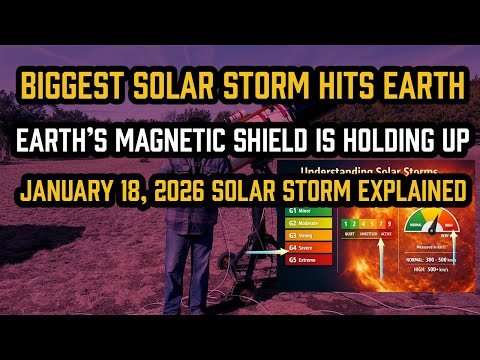
On January 18, 2026, the Sun fired the most intense radiation storm in over 20 years directly at Earth. An X1.9-class flare launched a coronal mass ejection traveling at 1,700 kilometers per second—plasma moving fast enough to cross the Sun-Earth distance in just 25 hours. The resulting geomagnetic storm reached G4 (Severe) levels, placing it at the top of warning scales and triggering auroras visible from Texas to Italy. Three weeks later, the Sun has not quieted. On February 2, a massive sunspot region designated AR4366—nearly 10 times wider than Earth—erupted with an X8.1 flare, the strongest since the January event. Two days later, on February 4, another X4.2 flare followed, with additional M-class flares crackling almost continuously from the same region.

The storm tested every system space weather experts worry about: satellites, power grids, aviation, and GPS navigation. For now, infrastructure held. Airlines rerouted polar flights, satellite operators activated safe modes, and grid operators reduced loads. But the Sun remains near its maximum activity phase through 2026, and the February eruptions confirm this may be a sustained period of extreme activity rather than a single event. NOAA forecasters expect continued X-class flare potential through mid-February as AR4366 transits the visible solar disk, with another surge likely in late February as the region rotates back into view. Lloyd's of London estimates a worst-case solar storm could cost the global economy $9.1 trillion over five years. Meanwhile, NASA's Artemis II lunar mission—scheduled for March 2026—will test deep-space radiation protocols with its four-person crew facing exposure levels 50 to 100 times higher than ground-level radiation as they pass through Earth's Van Allen belts and venture beyond the planet's protective magnetic field.

Key Indicators

X8.1
Strongest Flare Since January
Erupted February 2 from sunspot region AR4366; followed by X4.2 flare on February 4
S4
Radiation Storm Severity (January)
Highest since the 2003 Halloween Storms, exceeding prior GOES satellite records
G4
Geomagnetic Storm Level (January)
Second-highest on the 5-level scale; capable of affecting satellites, navigation, and power grids
10x Earth
Sunspot Region AR4366 Size
Rapidly grown magnetically unstable region producing multiple X-class flares
50-100x
Artemis II Crew Radiation Exposure
Estimated exposure levels compared to ground-level radiation during lunar transit

Interactive

Exploring all sides of a story is often best achieved with Play.

Ever wondered what historical figures would say about today's headlines?

Sign up to generate historical perspectives on this story.

Sign Up

Debate Arena

Two rounds, two personas, one winner. You set the crossfire.

People Involved

Elsayed Talaat
Elsayed Talaat
Director, Office of Space Weather Observations at NOAA's National Environmental Satellite, Data, and Information Service (Leading federal space weather monitoring efforts)

Organizations Involved

NOAA Space Weather Prediction Center
Federal Agency
Status: Issued G4 storm warnings and coordinated response

The official U.S. source for space weather forecasts, watches, warnings, and alerts.

European Space Agency (ESA)
Intergovernmental Space Agency
Status: Actively monitoring event via SOHO satellite

Europe's gateway to space, operating solar observation missions including the SOHO satellite.

Lloyd's of London
Lloyd's of London
Insurance Market
Status: Published systemic risk assessment for space weather

The world's leading insurance market, covering nearly a third of global space risks.

Timeline

  1. Additional CME Detected; Earth Arrival Forecast February 9

    Space Weather Alert

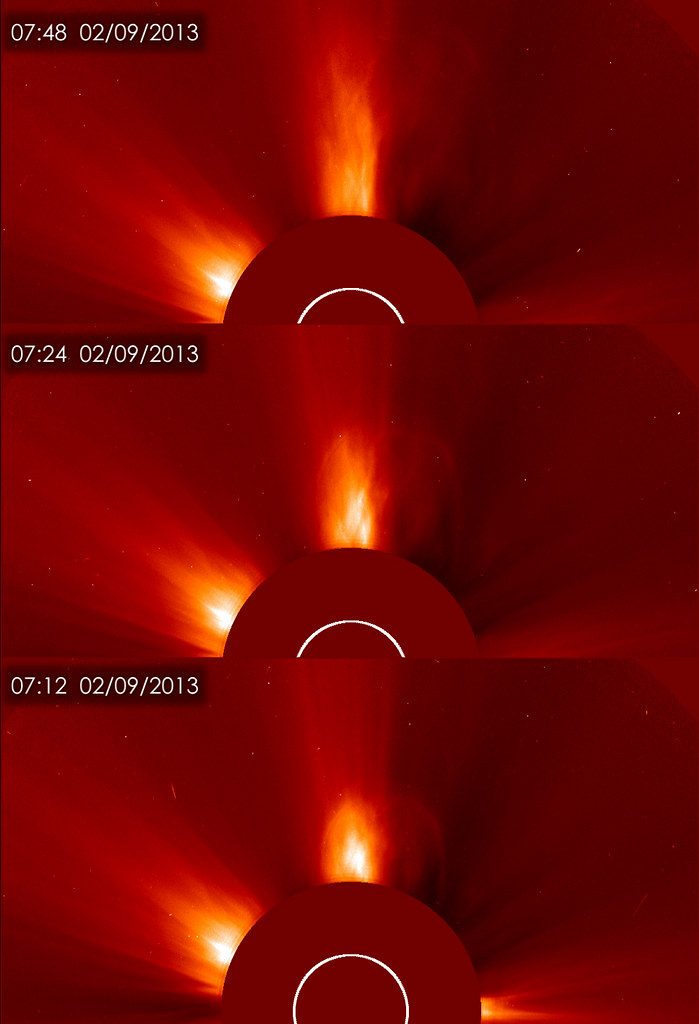
    A slower CME erupted from the Sun's south/southwest limb. Models suggest Earth arrival around 8 UTC on February 9, with expected Kp index ~3-4 and unsettled to active geomagnetic conditions.

  2. X4.2 Solar Flare Erupts from AR4366

    Solar Event

    Strong X-class flare recorded from sunspot region AR4366, with associated CME expected to impact Earth around February 8-9. Continued aurora activity forecast for northern regions.

  3. X8.1 Flare and Sunspot Region AR4366 Explosion

    Solar Event

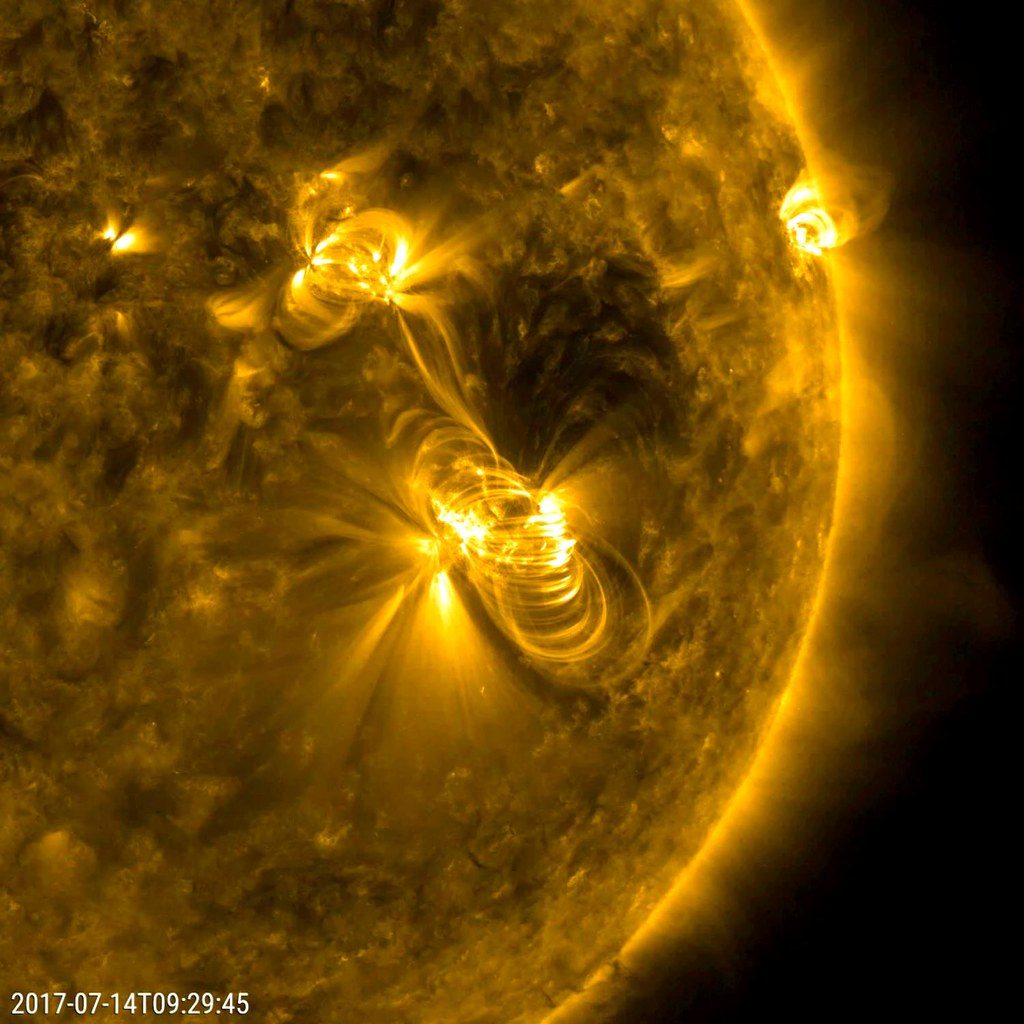
    Sunspot region AR4366 erupted with an X8.1 flare—the strongest since January 18. The region has rapidly grown to nearly 10 times Earth's width with delta-class magnetic configuration. Multiple M-class flares followed, with high probability of additional X-class activity through mid-February.

  4. Four Strong Solar Flares in Single Day

    Solar Event

    The Sun emitted four strong solar flares on February 1, peaking at 7:33 a.m. ET, 6:37 p.m. ET, 7:36 p.m. ET, and additional flares. Activity linked to newly visible sunspot region AR4366 entering the solar disk.

  5. G4 Watch Extended

    Space Weather Alert

    NOAA issued G4 (Severe) geomagnetic storm watch for January 20 as ongoing solar activity continued to affect Earth's magnetic field.

  6. Radiation Storm Reaches S4 Severity

    Space Weather Alert

    High-energy particle shower peaked at Severe (S4) levels on the NOAA scale—the most intense radiation storm since the 2003 Halloween Storms, exceeding GOES satellite records.

  7. CME Strikes Earth, G4 Storm Begins

    Geomagnetic Event

    Coronal mass ejection arrived earlier than forecast, triggering G4 (Severe) geomagnetic storm conditions. Grid operators, airlines, and satellite operators activated protective measures.

  8. Auroras Light Up Unusual Latitudes

    Observable Effect

    Northern lights visible across Canada, much of the United States including Texas, and Europe at latitudes as far south as Italy. Widely photographed phenomenon became storm's most visible impact.

  9. X1.9 Solar Flare Erupts

    Solar Event

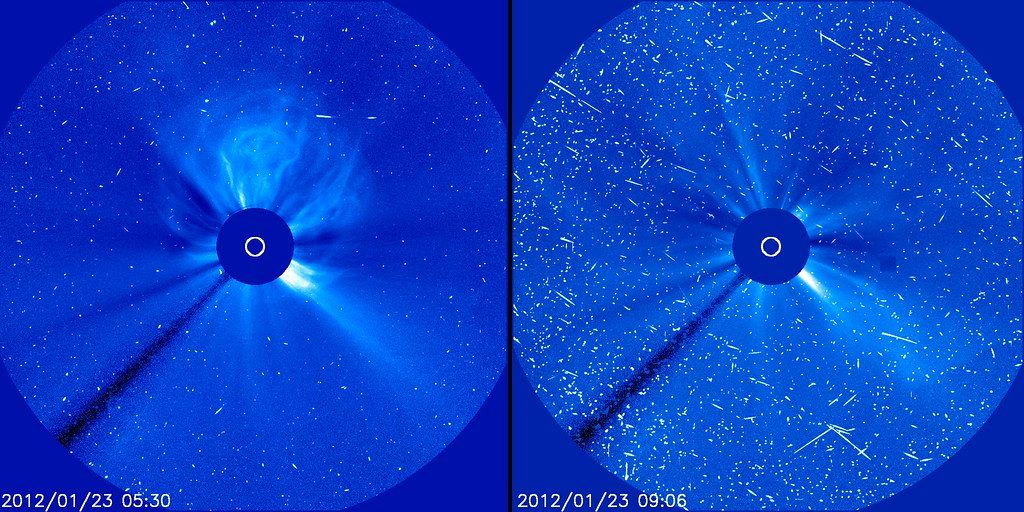
    The Sun released a powerful X-class flare accompanied by a fast-moving coronal mass ejection traveling at 1,700 km/s directly toward Earth. SOHO satellite detected the CME.

  10. Lloyd's Warns of Trillion-Dollar Space Weather Risk

    Risk Assessment

    Insurance market Lloyd's of London published scenario showing extreme solar storm could cost global economy up to $9.1 trillion over five years.

  11. NASA and NOAA Declare Solar Maximum

    Scientific Milestone

    Scientists announced the Sun had entered its maximum activity phase for Solar Cycle 25. Heightened solar activity expected to persist through 2026.

  12. Most Powerful Storm Since 1989

    Historical Context

    A G5 (Extreme) geomagnetic storm hit Earth, the strongest in 21 years. Auroras reached Mexico and produced the most equatorial display possibly in 500 years. SpaceX lost 40 Starlink satellites to increased atmospheric drag.

Scenarios

1

Solar Maximum Passes Without Major Damage

Discussed by: NOAA forecasters, space weather researchers

The Sun's activity phase peaks in 2026 and declines without producing a G5 or Carrington-class event. January's storm serves as a successful stress test—satellites return to normal operation, no significant grid failures occur, and improved forecasting proves its value. Early warning systems and protective protocols prevent significant economic losses.

2

Larger Storm Overwhelms Protective Measures

Discussed by: Lloyd's of London risk analysts, USGS, infrastructure researchers

A subsequent CME during the active phase produces a G5 (Extreme) storm exceeding the May 2024 event. Extended power outages affect millions in the U.S. Midwest and East Coast, where bedrock conditions amplify geoelectric currents. High-voltage transformers fail, requiring months-long replacements. Satellite constellations experience mass casualties. Economic losses reach hundreds of billions.

3

Carrington-Scale Event Tests Global Resilience

Discussed by: Lloyd's systemic risk scenario, space weather researchers, federal agencies

An 1859-level superstorm occurs during solar maximum. Grid failures cascade across continents. GPS and satellite communications experience prolonged outages affecting aviation, maritime shipping, and financial systems. Recovery takes years. Lloyd's models suggest losses between $2.4 trillion and $9.1 trillion globally. The event forces fundamental redesign of space-facing infrastructure.

4

Artemis II Crew Faces Radiation Event

Discussed by: NASA mission planners, radiation safety experts

A major solar flare occurs while the Artemis II crew is beyond Earth's protective magnetic field during their lunar mission, scheduled for March 2026. Astronauts shelter in Orion's radiation-protected areas using newly tested equipment. The event validates or exposes gaps in deep-space radiation protocols and influences planning for subsequent crewed lunar missions.

5

Sustained X-Class Flare Sequence Through February

Discussed by: NOAA Space Weather Prediction Center forecasters, NASA Solar Dynamics Observatory analysts

AR4366 continues producing X-class flares as it transits the visible solar disk through mid-February, with a high probability window identified for February 2-10. The region rotates out of view mid-month but is expected to return to the visible disk February 23-28, potentially triggering another surge of activity. Multiple CME arrivals create overlapping geomagnetic disturbances, keeping auroras visible at unusually low latitudes and testing grid operators' ability to manage sustained elevated conditions.

6

Artemis II Encounters Solar Flare During Lunar Transit

Discussed by: NASA mission planners, radiation safety experts, space weather forecasters

A significant solar flare occurs while Artemis II crew is in transit to the Moon in March 2026, exposing astronauts to elevated radiation levels beyond Earth's magnetic field protection. The crew shelters in Orion's radiation-protected areas using newly tested equipment and protective vests designed to absorb up to 60% of radiation. The event validates deep-space radiation protocols and provides critical data on crew safety for future lunar missions, though protection against high-energy cosmic nuclei remains limited.

Historical Context

Halloween Solar Storms (2003)

October-November 2003

What Happened

A series of powerful solar storms produced the largest flare ever recorded by GOES satellites—estimated at X45. Three massive sunspot groups, the largest 13 times Earth's size, launched CMEs at 2,125 km/s. The resulting G5 storm affected over half of Earth's orbiting satellites and destroyed a Japanese scientific satellite.

Outcome

Short Term

Sweden experienced a one-hour power outage. Airlines rerouted polar flights. Satellite operators switched to backup systems. Auroras appeared as far south as Texas and the Mediterranean.

Long Term

Space agencies upgraded monitoring systems and warning protocols. The event became the benchmark for severe space weather until May 2024.

Why It's Relevant Today

The January 2026 radiation storm exceeded the Halloween Storms' intensity on NOAA's S-scale, marking the first time in 23 years that record was surpassed. However, infrastructure weathered the 2026 event better, suggesting improved preparedness.

May 2024 G5 Geomagnetic Storm

May 2024

What Happened

The strongest geomagnetic storm since 1989 struck Earth, reaching G5 (Extreme) levels with a peak Dst index of -412 nT. Multiple coronal mass ejections created possibly the most equatorial aurora display in 500 years—visible from Mexico to the Mediterranean. SpaceX lost 40 Starlink satellites to increased atmospheric drag.

Outcome

Short Term

GPS errors reached 50 centimeters. HF radio communications degraded. Airlines avoided polar routes. Power grids operated on heightened alert but avoided failures.

Long Term

Satellite operators revised altitude management strategies. The event demonstrated both the vulnerability of low-Earth orbit constellations and the resilience of power grids with modern protective equipment.

Why It's Relevant Today

The May 2024 storm reached higher geomagnetic levels (G5 vs. G4) but lower radiation intensity than January 2026. Together, these events show the Sun is delivering on solar maximum predictions—and that multiple severe storms can occur in a single cycle.

Carrington Event (1859)

September 1859

What Happened

The most intense geomagnetic storm in recorded history. British astronomer Richard Carrington observed a white-light solar flare—the first ever documented. The resulting CME reached Earth in just 17.6 hours. Telegraph systems worldwide failed; some operators received shocks, and equipment caught fire even when disconnected from power. Auroras appeared in the tropics.

Outcome

Short Term

Telegraph communication disrupted globally for days. Some operators found they could transmit messages using only the current induced by the storm itself.

Long Term

The event established the field of space weather research. Modern estimates suggest a Carrington-class event today would affect 20-40 million Americans with power outages lasting 16 days to 2 years, costing up to $2.6 trillion in the United States alone.

Why It's Relevant Today

The Carrington Event remains the benchmark for catastrophic space weather. January 2026's storm was severe but not Carrington-class. As Lloyd's warns, a true repeat during our satellite-dependent era would test civilization's infrastructure in ways the 2026 event did not.

19 Sources: