
Pull to refresh
Logo
Singapore makes bus nuisance behaviour a finable offence, aligning with rail rules

Singapore makes bus nuisance behaviour a finable offence, aligning with rail rules

Rule Changes

Starting September 23, eating, loud audio, and feet on seats draw fines up to S$500 — serious violations up to S$5,000

Today: LTA announces new bus conduct regulations

Overview

Updated 1 hour ago

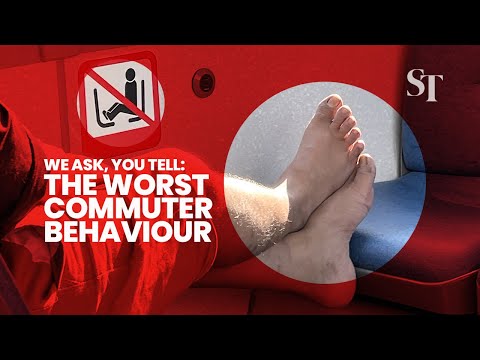
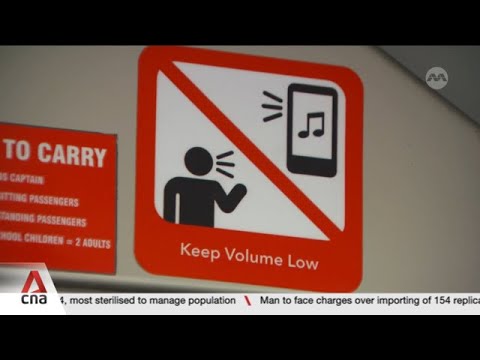
On September 23, eating on a Singapore public bus becomes an offence carrying a fine of up to S$500 (US$390). So does putting your feet on a seat, playing loud audio, or littering.

The change moves bus conduct from contract to statute. Under operators' Conditions of Carriage, a bus captain could only ask a nuisance passenger to alight — the behaviour itself wasn't illegal. Now it is, with penalties up to S$5,000 (US$3,900) for soiling a bus or obstructing an interchange or terminal.

Why it matters

Every Singapore bus rider now faces fines for eating, loud audio, or feet on seats — behaviour operators previously could only ask them to stop.

Questions about this story

Free account needed to ask — your question is kept and asked for you right after sign-up. Answers are public.

No questions yet — be the first to ask.

Key Indicators

S$500 (US$390)
Maximum fine for nuisance offences
Eating, drinking, loud audio, feet on seats, and littering on buses.
S$5,000 (US$3,900)
Maximum fine for serious offences
Soiling a bus, or causing obstruction or danger at interchanges and terminals.
23 Sep 2026
Regulations take effect
Announced September 21, in force September 23.

Voices

Curated perspectives — historical figures and your fellow readers.

Ever wondered what historical figures would say about today's headlines?

Sign up to generate historical perspectives on this story.

Organizations Involved

Timeline

October 2025 September 2026

3 events Latest: Today
  1. LTA announces new bus conduct regulations

    Today Statement

    LTA details fines up to S$500 for nuisance behaviour and S$5,000 for serious violations, effective September 23.

  2. Parliament passes Transport Sector (Miscellaneous Amendments) Act

    Legislation

    The Act empowers LTA to align regulations against nuisance conduct across buses and trains.

Scenarios

1

Regulations settle quietly with light enforcement

Likely Resolves by End of 2026

Discussed by: LTA's own announcement, which stresses discretion and fairness for commuters with health conditions

LTA says it will exercise discretion and continue education alongside enforcement. If that stance holds, operators issue few notifications in the first months, no disputes reach the news, and compliance rises through awareness rather than penalties.

2

High-profile penalty sets the norm

Possible Resolves by Q1 2027

Discussed by: Media coverage framing Singapore as a 'Fine City'

A visible case — a passenger fined for soiling a bus, playing loud audio, or obstructing an interchange — makes national headlines. The public example cements the rules' deterrent effect and triggers wider discussion of enforcement fairness.

3

Enforcement data shows routine use

Possible Resolves by Q3 2027

Discussed by: Policy observers tracking the rail-bus alignment

If operators issue Administrative Notifications routinely, LTA's statistics will show thousands within the first year. That signals active enforcement rather than compliance driven mainly by deterrence.

Historical Context

2 moments from history that rhyme with this story — and how they unfolded.

January 1992

Singapore gum ban (1992)

Singapore banned the import and sale of chewing gum, framing it as a cleanliness measure. Smuggling carried fines and prison terms, and the ban became the emblem of Singapore's 'Fine City' reputation.

Then

Gum vanished from shops within months; the ban was enforced at the border.

Now

Partially relaxed in 2004 for therapeutic gums sold by prescription. It remains a global shorthand for Singapore's rule-heavy public conduct model.

Why this matters now

The bus conduct rules apply the same template: minor public misbehaviour managed through formal penalties rather than informal social pressure.

Ongoing since rail network expansion

Existing rail conduct regulations

Singapore's rail network already operated under the Rapid Transit Systems Regulations, which made nuisance and disruptive conduct on trains an offence with parallel fines. Misbehaviour on trains had long been enforceable; buses were the gap.

Then

Train conduct had statutory penalties; bus operators relied only on Conditions of Carriage, letting a captain ask a passenger to leave.

Now

The new regulations close that gap, bringing buses under the same framework as the Mass Rapid Transit network.

Why this matters now

This is the direct template: the fines, officer powers, and investigation flow for buses mirror the rail regime Singapore has operated for years.

Sources

(8)