


Pull to refresh
Logo
Sirolimus-coated balloon is noninferior to drug-eluting stent at one year in TRANSFORM II

Sirolimus-coated balloon is noninferior to drug-eluting stent at one year in TRANSFORM II

New Capabilities

The trial randomized 1,842 patients after successful lesion preparation and reported 2.1% target lesion failure with the balloon versus 2.4% with the stent.

Overview

Updated Yesterday

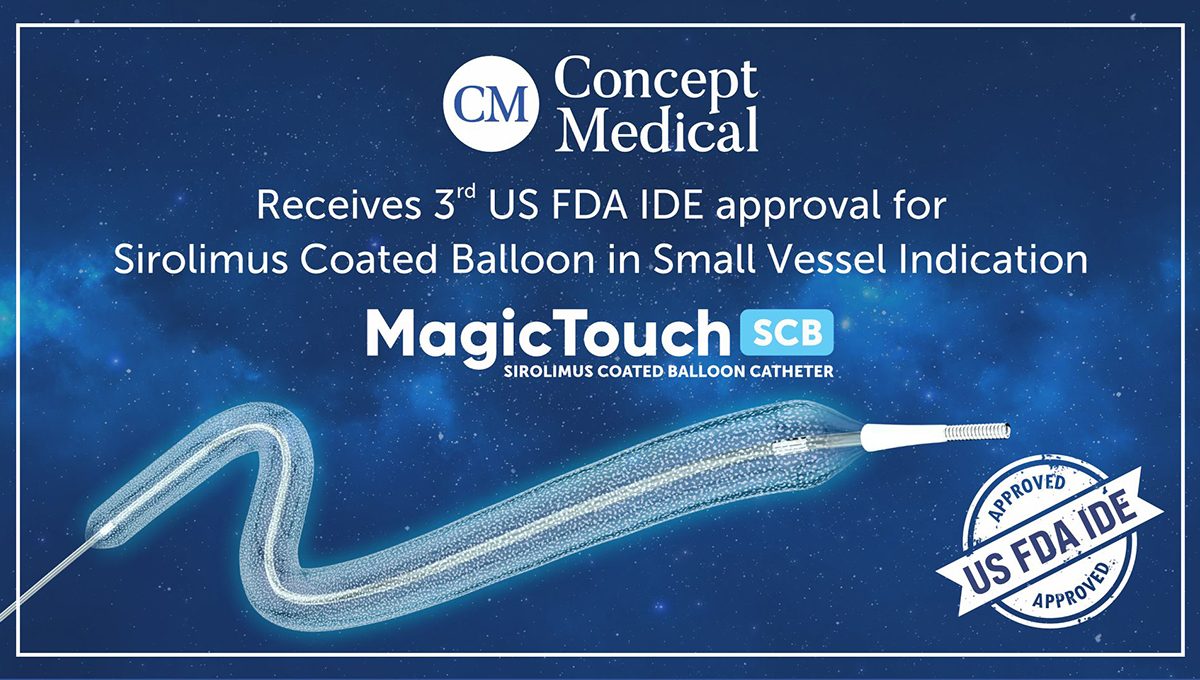
For years, opening a narrowed coronary artery usually meant leaving a metal stent behind. TRANSFORM II tested a different approach: a balloon coated with sirolimus, a drug that limits scar tissue, used after the lesion is prepared and with a stent available as backup.

At one year, target lesion failure occurred in 2.1% of patients treated with the sirolimus-coated balloon and 2.4% treated with an everolimus-eluting stent. The difference fell inside the trial's 1.5-point noninferiority margin. Bailout stenting was needed in 7.6% of balloon patients; the result applies to de novo lesions that responded to preparation and not to severely calcified, left main, thrombotic or STEMI lesions.

Why it matters

If the result holds outside expert centers, some patients could avoid a permanent metal stent, but cost and reimbursement still decide who gets the balloon.

Questions about this story

Free account needed to ask — your question is kept and asked for you right after sign-up. Answers are public.

No questions yet — be the first to ask.

Key Indicators

2.1%
Target lesion failure, sirolimus balloon
Cardiac death, target-vessel heart attack or ischemia-driven revascularization at 12 months.
2.4%
Target lesion failure, everolimus stent
Comparator arm at 12 months.
7.6%
Bailout stenting in balloon arm
Patients assigned to the balloon who needed a stent during the procedure.
1,842
Patients randomized
Across 53 centers in 11 countries.
1.5 points
Noninferiority margin
The trial allowed the balloon to be up to 1.5 percentage points worse than the stent.

Voices

Curated perspectives — historical figures and your fellow readers.

Sign up to generate historical perspectives on this story.

People Involved

Organizations Involved

Timeline

2 events Latest: Yesterday
  1. Trial results announced in press release

    Latest Announcement

    PR Newswire distributes the one-year results and notes five-year follow-up is planned.

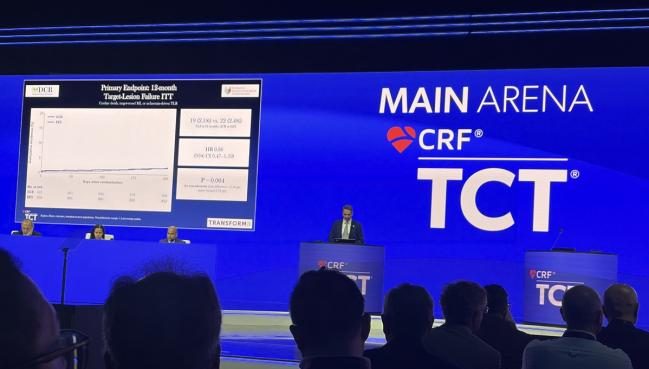
  2. TRANSFORM II results presented at TCT 2026

    Clinical trial

    Sirolimus-coated balloon was noninferior to everolimus-eluting stent for one-year target lesion failure (2.1% vs 2.4%).

Scenarios

1

Five-year TRANSFORM II follow-up confirms no late safety penalty for the balloon

Possible Resolves by End of 2031

Discussed by: Cortese and the TRANSFORM II investigators, who planned follow-up to five years

The trial will follow patients to five years to see whether avoiding a permanent implant reduces very late device-related events. A clean result would strengthen the case for DCB in selected de novo lesions.

2

US payers keep coronary DCB reimbursement below stent levels

Possible Resolves by End of 2027

Discussed by: Ajay Kirtane and Jennifer Tremmel at TCT 2026, who flagged cost and reimbursement

The trial's clinical result does not settle payment. In the US, coronary DCBs cost more than DES, and reimbursement is already a center-level concern. If CMS and private payers do not widen coverage, adoption may stay limited to selected patients and experienced centers.

3

Cardiology guidelines name sirolimus DCB as an alternative for selected de novo lesions

Possible Resolves by End of 2028

Discussed by: Trial investigators and conference panelists

Guideline committees weigh new trial data against cost, operator experience and lesion selection. A Class IIa or stronger recommendation would give hospitals a clearer standard for when to use the balloon.

Historical Context

2 moments from history that rhyme with this story — and how they unfolded.

2025

SELUTION DeNovo (2025)

A sirolimus-coated balloon (Selution; Cordis) was compared with a drug-eluting stent in de novo coronary lesions. The trial found the balloon noninferior for target lesion failure at one year.

Then

The result supported sirolimus DCB as an alternative in selected lesions.

Now

It set up TRANSFORM II as a larger test with randomization only after lesion preparation.

Why this matters now

TRANSFORM II used a similar strategy but required successful preparation before randomization, which investigators say lowered bailout stenting.

2024

REC-CAGEFREE I (2024)

A paclitaxel-coated balloon (Swide; Shenqi) was compared with a drug-eluting stent in de novo coronary lesions. At three years, the balloon did not perform as well as the stent.

Then

The trial tempered expectations for DCB in de novo disease.

Now

It showed that not every coated balloon matches a stent, making drug choice and lesion preparation central.

Why this matters now

TRANSFORM II used sirolimus rather than paclitaxel and randomized only after successful preparation.

Sources

(5)