
Pull to refresh
Logo
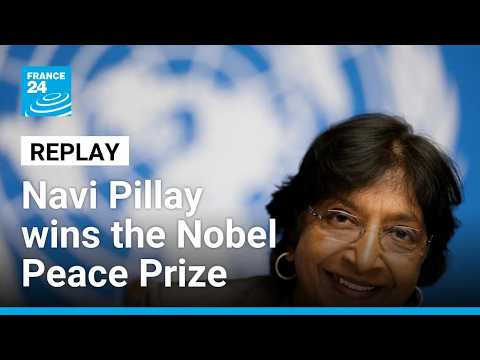
Nobel Peace Prize awarded to Navi Pillay for international law work

Nobel Peace Prize awarded to Navi Pillay for international law work

Rule Changes

South African jurist honored as international legal institutions face political pressure

Today: Awarded Nobel Peace Prize

Overview

Updated 3 hours ago

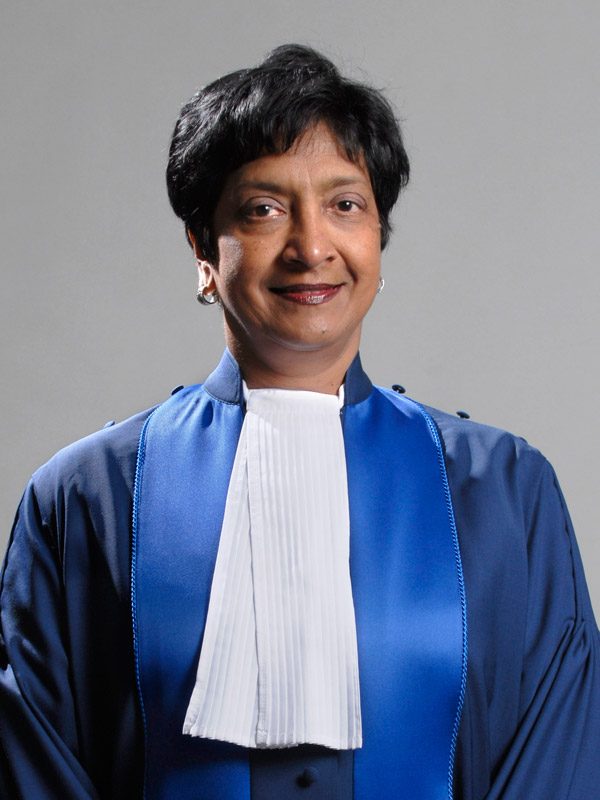
The Norwegian Nobel Committee awarded the 2026 Peace Prize to Navanethem "Navi" Pillay, an 85-year-old South African jurist who spent five decades moving from defending Nelson Mandela under apartheid to judging war crimes at the world's top tribunals. The committee called her "one of the great defenders of international legal principles in our time."

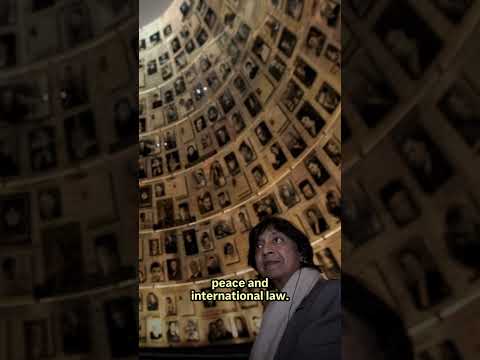
The announcement is also a defense of international law itself. Committee chair Jorgen Watne Frydnes said the legal system "is no longer just a supplement to peace and security. It is an absolute necessity," warning that courts are under attack while the United States has sanctioned International Criminal Court officials.

Why it matters

The prize revives the rule of law as the peace prize's core theme while major powers undercut war crimes tribunals.

Questions about this story

Free account needed to ask — your question is kept and asked for you right after sign-up. Answers are public.

No questions yet — be the first to ask.

Key Indicators

143
Peace Prize laureates since 1901
Awarded 106 times between 1901 and 2025 to individuals and organizations.
85
Pillay's age
Born in 1941 in Durban, South Africa.
$1.2M
Prize amount
12 million Swedish kronor, roughly $1.2 million.
287
Candidates nominated this year
The Nobel committee weighed 287 nominations for the 2026 prize.

Voices

Curated perspectives — historical figures and your fellow readers.

Ever wondered what historical figures would say about today's headlines?

Sign up to generate historical perspectives on this story.

People Involved

Organizations Involved

Timeline

1941 October 2026

8 events Latest: Today
Tap a bar to jump to that date
  1. Awarded Nobel Peace Prize

    Today Award

    Norwegian committee honors Pillay for promoting peace and international law.

  2. Commission finds genocide in Gaza

    Finding

    The inquiry she chaired accuses Israel of genocide in the Gaza conflict.

  3. Named to head Gaza inquiry

    Appointment

    Appointed to chair the UN commission of inquiry on the Occupied Palestinian Territory.

  4. Named UN rights chief

    Appointment

    Becomes United Nations High Commissioner for Human Rights until 2014.

  5. Joins International Criminal Court

    Appointment

    Elected as a judge at the permanent war crimes court.

  6. Joins Rwanda tribunal

    Appointment

    Appointed to the International Criminal Tribunal for Rwanda bench.

  7. Pillay born in Durban

    Biography

    Born to an Indian Tamil family under apartheid in South Africa.

Scenarios

1

ICJ rules Myanmar committed genocide against Rohingya

Possible Resolves by End of 2027

Discussed by: Legal analysts following The Gambia v. Myanmar, the case before the ICJ

The Gambia filed the case in 2019 accusing Myanmar of genocide against its Rohingya population. Pillay sits on the bench that will decide it. The court has already found jurisdiction and ordered provisional measures; a merits judgment would mark the culmination of her judicial career and a landmark in international law.

2

ICC issues Gaza warrants tied to Pillay commission evidence

Possible Resolves by End of 2027

Discussed by: AFP reporting on evidence the commission shared with ICC prosecutors

Pillay's UN commission said it shared thousands of pieces of information with ICC prosecutors investigating the situation in Palestine. The court has already issued warrants for Israeli and Hamas leaders. New warrants could follow from the commission's genocide finding, extending her legacy into concrete prosecutions.

3

US expands sanctions on international courts after prize

Uncertain Resolves by End of 2027

Discussed by: AFP, which said the prize "is sure to anger" the Trump administration

The United States has authorized sanctions on International Criminal Court officials under existing law. The prize could prompt the administration to extend measures against the court or against ICJ judges, responding to the Gaza commission findings that Pillay led.

Historical Context

3 moments from history that rhyme with this story — and how they unfolded.

December 1993

Mandela and de Klerk win Nobel (1993)

The Peace Prize went to Nelson Mandela and F.W. de Klerk for negotiating the end of apartheid. Pillay had defended Mandela in political trials decades earlier.

Then

The prize marked global recognition of South Africa's negotiated transition to democracy.

Now

It stands as the Nobel committee's clearest endorsement of a legal-political settlement over armed conflict.

Why this matters now

Pillay's early career is inseparable from the anti-apartheid legal struggle Mandela led, binding her to the earlier prize.

November 1945 - October 1946

Nuremberg Trials (1945-1946)

Allied powers put senior Nazi leaders on trial for war crimes, crimes against humanity, and crimes against peace after World War II.

Then

Twelve defendants were sentenced to death and the trials established individual criminal responsibility.

Now

Nuremberg laid the groundwork for the genocide convention, later tribunals, and the International Criminal Court.

Why this matters now

The Nobel committee cites Nuremberg's legacy as the foundation for the international law Pillay has spent her career building.

October 2003

Shirin Ebadi wins Nobel (2003)

Iranian human rights lawyer Shirin Ebadi won the Peace Prize for democracy and human rights work, despite hostility from her own government.

Then

The prize brought global attention to Iran's legal repression but did not change the regime's behavior.

Now

It set a pattern of the committee honoring jurists who oppose state power over the rule of law.

Why this matters now

Like Ebadi, Pillay is honored partly for standing up to powerful states, including over Gaza.

Sources

(10)