


Pull to refresh
Logo
Daily Brief
Following
Why
Iran extends Nobel laureate Narges Mohammadi's prison sentence

Iran extends Nobel laureate Narges Mohammadi's prison sentence

Force in Play
By Newzino Staff |

The Ongoing Persecution of Iran's Most Prominent Human Rights Defender

February 9th, 2026: Ends Hunger Strike

Overview

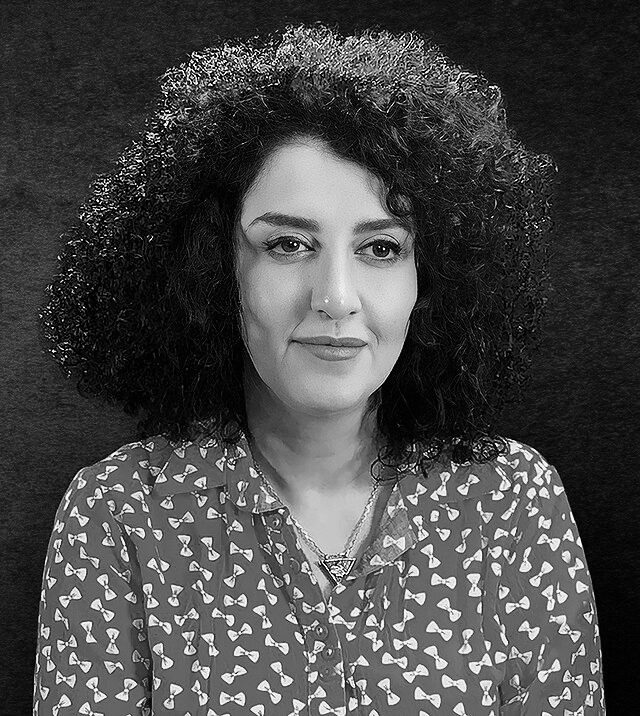
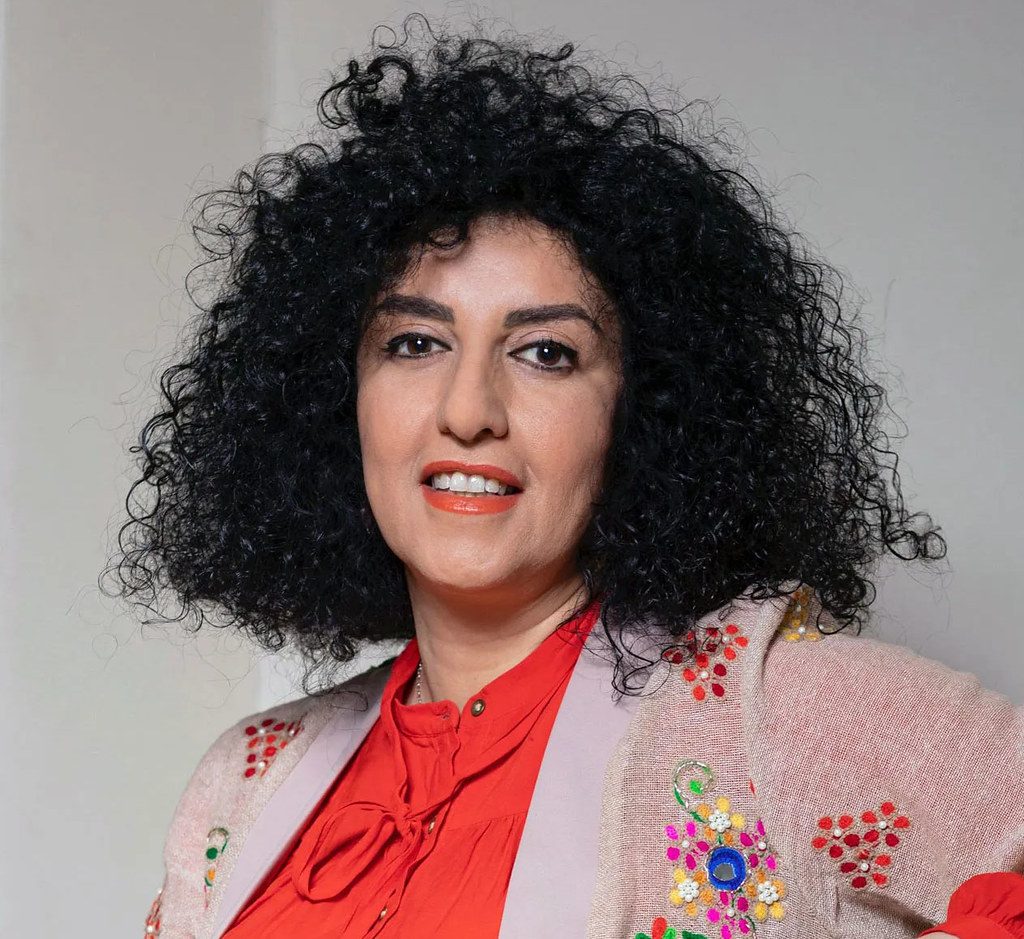
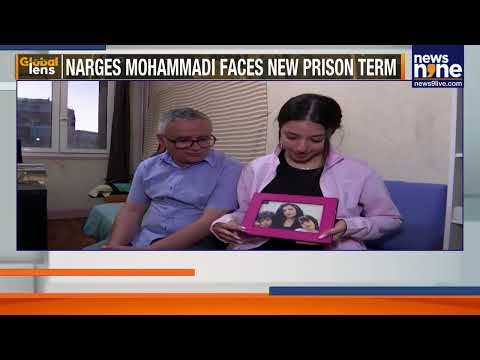
Narges Mohammadi has spent more time in Iranian prisons than with her own children. On February 8, 2026, the 53-year-old Nobel Peace Prize laureate received yet another sentence: six years for 'gathering and collusion,' plus 18 months for 'propaganda,' plus two years of internal exile to a remote eastern province. The verdict came while she was on her sixth day of a hunger strike, detained in an intelligence ministry facility in Mashhad after being beaten during her arrest at a memorial service two months earlier.

The new sentence lands amid Iran's deadliest crackdown in decades. Since protests erupted on December 28, 2025, security forces have killed thousands of demonstrators. Mohammadi—who has been arrested 13 times, convicted five times, and sentenced to a cumulative 31 years in prison and 154 lashes—represents both the regime's most visible target and the movement's most defiant symbol. Her family in Paris has not seen her in over eight years.

Key Indicators

13
Times arrested
Mohammadi has been detained by Iranian authorities thirteen times since 1998
31+
Years sentenced
Cumulative prison sentences handed down across multiple convictions
8
Years since seeing children
Her twin children Ali and Kiana live in exile in Paris with her husband
6,900+
Protest deaths documented
Protesters killed since December 2025 uprising began, per human rights groups

Interactive

Exploring all sides of a story is often best achieved with Play.

Ever wondered what historical figures would say about today's headlines?

Sign up to generate historical perspectives on this story.

Sign Up

Debate Arena

Two rounds, two personas, one winner. You set the crossfire.

People Involved

Narges Mohammadi
Narges Mohammadi
Human rights activist, 2023 Nobel Peace Prize laureate (Detained at intelligence ministry facility in Mashhad; sentenced to 7.5 additional years)
Taghi Rahmani
Taghi Rahmani
Journalist, activist, Mohammadi's husband (Living in exile in Paris with their children)
Mostafa Nili
Mostafa Nili
Defense attorney for Narges Mohammadi (Practicing in Iran)
Khosro Alikordi
Khosro Alikordi
Human rights lawyer (Deceased (December 8, 2025))
Shirin Ebadi
Shirin Ebadi
2003 Nobel Peace Prize laureate, lawyer (Living in exile in London since 2009)

Organizations Involved

Defenders of Human Rights Center
Human rights organization
Status: Officially closed in Iran since 2008; members continue work from exile

Iranian human rights organization that has produced two Nobel Peace Prize laureates, both of whom were persecuted by the government.

NA
Narges Mohammadi Foundation
International advocacy organization
Status: Active

International foundation that advocates for Mohammadi's release and publicizes her situation.

Timeline

  1. Ends Hunger Strike

    Health

    After six days, Mohammadi ends her hunger strike. Her physical condition is described as 'deeply alarming.'

  2. Sentenced to 7.5 More Years

    Legal

    Revolutionary Court in Mashhad sentences her to six years for 'gathering and collusion,' 18 months for 'propaganda,' plus two-year internal exile.

  3. Begins Hunger Strike

    Protest

    Mohammadi starts hunger strike to protest her detention conditions and denial of contact with family and lawyers.

  4. Nationwide Protests Erupt

    Protest

    Economic grievances spark Iran's largest protests since 2022. The government responds with lethal force.

  5. Arrested at Memorial Service

    Arrest

    Mohammadi and over 50 others arrested at Alikordi's memorial. She is beaten with batons and hospitalized twice for injuries.

  6. Human Rights Lawyer Found Dead

    Death

    Khosro Alikordi, 46, found dead in his Mashhad office. Officials claim heart attack; family and 81 lawyers demand investigation.

  7. Released from Evin Prison

    Release

    Mohammadi released after completing her sentence. Her freedom lasts less than two weeks.

  8. Children Accept Nobel in Oslo

    Recognition

    Mohammadi's twins Ali and Kiana accept the Nobel Prize on her behalf in Oslo, reading a speech she smuggled from prison.

  9. Awarded Nobel Peace Prize

    Recognition

    While imprisoned in Evin Prison, Mohammadi receives the Nobel Peace Prize 'for her fight against the oppression of women in Iran.'

  10. Mahsa Amini Dies in Custody

    Catalyst

    22-year-old Kurdish woman Mahsa Amini dies after arrest by morality police, sparking the 'Woman, Life, Freedom' movement.

  11. 16-Year Sentence for Founding Legam

    Legal

    Sentenced to 16 years for establishing human rights group Legam, which campaigned against the death penalty.

  12. Sentenced to 11 Years

    Legal

    Convicted of 'acting against national security, membership of DHRC, and propaganda against the regime.' Released in July 2012.

  13. Joins Defenders of Human Rights Center

    Activism

    Mohammadi joins the human rights organization founded by future Nobel laureate Shirin Ebadi. She later becomes vice president.

  14. First Arrest

    Arrest

    Mohammadi first arrested for criticizing the Iranian government. She spent a year in prison.

Scenarios

1

Mohammadi Serves Extended Sentence, Becomes Symbol of Regime Brutality

Discussed by: Human Rights Watch, Amnesty International, Iranian exile media

The most likely near-term outcome. Mohammadi remains imprisoned, her health deteriorates, and she continues issuing statements from detention. Each new sentence reinforces her status as the international face of Iran's human rights crisis. The regime calculates that releasing her would embolden dissent, while her continued imprisonment—though costly diplomatically—demonstrates that no one is beyond the state's reach.

2

Medical Emergency Forces Temporary Release

Discussed by: Her lawyer Mostafa Nili, medical advocates, UN human rights bodies

Mohammadi's documented health issues—including a bone lesion that doctors feared could be cancerous—could force authorities to grant temporary release for treatment. Iran has occasionally released high-profile prisoners on 'medical furlough' when international pressure intensifies or when deaths in custody would create larger problems. Such release would likely come with severe restrictions.

3

Prisoner Exchange Includes Mohammadi

Discussed by: Diplomatic analysts, US-Iran negotiations observers

With US-Iran nuclear talks underway in Oman, a broader deal could include prisoner releases. Iran has previously exchanged detained dual nationals and activists for sanctions relief or frozen assets. Mohammadi's Nobel status makes her a valuable bargaining chip. However, her Iranian citizenship (not dual national status) and the regime's investment in punishing her make inclusion in an exchange less straightforward than typical cases.

4

Regime Change Leads to Release

Discussed by: Opposition figures, some exile organizations

The December 2025 protests have been described as the largest since 1979, with thousands killed. Some analysts suggest the regime faces an existential challenge. If the government were to fall or undergo significant reform, political prisoners including Mohammadi could be released. However, previous protest waves (2019, 2022) were ultimately suppressed, and the regime retains control of security forces.

Historical Context

Shirin Ebadi Nobel Prize and Exile (2003-2009)

October 2003 - February 2009

What Happened

Shirin Ebadi became the first Iranian to win the Nobel Peace Prize in 2003 for her human rights work. Rather than moderating its treatment of activists, the regime increased pressure: her Defenders of Human Rights Center was closed in 2008, her home was raided, her Nobel medal confiscated, and her husband was imprisoned and beaten. She went into exile in 2009.

Outcome

Short Term

Ebadi left Iran rather than face imprisonment. Her organization was shuttered.

Long Term

The pattern was established: Nobel recognition does not protect Iranian activists. If anything, it intensifies persecution. Mohammadi joined the same organization and now follows a similar trajectory, except she chose prison over exile.

Why It's Relevant Today

Two members of the same human rights organization have now won Nobel Peace Prizes, and both have been persecuted. The regime's playbook remains consistent: international recognition is treated as evidence of foreign conspiracy, not as a shield.

Liu Xiaobo's Imprisonment and Death (2009-2017)

December 2009 - July 2017

What Happened

Chinese dissident Liu Xiaobo was awarded the Nobel Peace Prize in 2010 while serving an 11-year sentence for 'inciting subversion.' China refused to release him, prevented his wife from leaving the country, and blocked all international pressure. He died of liver cancer in custody in 2017, never having been freed.

Outcome

Short Term

China faced diplomatic criticism but no consequences severe enough to change its behavior.

Long Term

Liu's case demonstrated that authoritarian regimes can keep Nobel laureates imprisoned indefinitely if they are willing to absorb international criticism. His death in custody showed the ultimate stakes.

Why It's Relevant Today

Mohammadi's case follows the Liu Xiaobo pattern: a Nobel laureate imprisoned by a regime that treats international pressure as interference. The trajectory suggests her imprisonment could last years unless a major political shift occurs.

Andrei Sakharov's Internal Exile (1980-1986)

January 1980 - December 1986

What Happened

Soviet physicist and 1975 Nobel Peace Prize laureate Andrei Sakharov was exiled to the closed city of Gorky after criticizing the Soviet invasion of Afghanistan. He was denied contact with the outside world for six years. His wife Yelena Bonner was also confined. He undertook multiple hunger strikes.

Outcome

Short Term

Sakharov was isolated but continued writing and protesting, including hunger strikes.

Long Term

Mikhail Gorbachev released Sakharov in 1986 as part of glasnost reforms. He became a leading voice for democratic change until his death in 1989. Regime change, not international pressure, freed him.

Why It's Relevant Today

Mohammadi's new sentence includes two years of internal exile to Khosf, a remote city in eastern Iran—echoing Sakharov's punishment. Like Sakharov, she has used hunger strikes to protest. The parallel suggests that only fundamental political change in Iran would secure her freedom.

12 Sources: