
Pull to refresh
Logo
Daily Brief
Following
Why
South Asian Games return to Pakistan after 22 years

South Asian Games return to Pakistan after 22 years

Rule Changes
By Newzino Staff |

Regional Athletics Meet Tests Sports Diplomacy Amid India-Pakistan Tensions

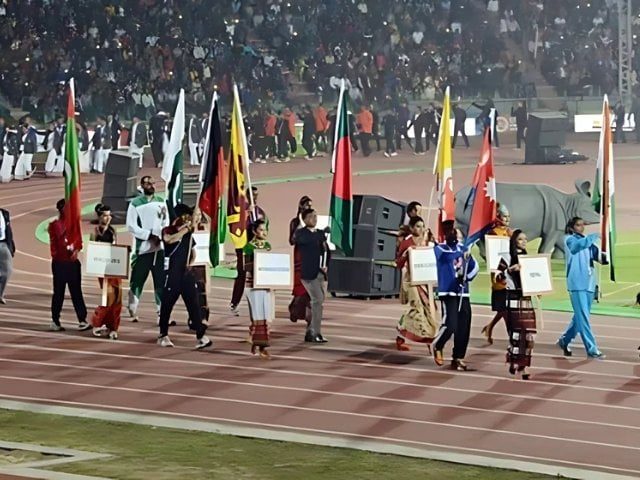
January 23rd, 2026: 14th South Asian Games Open in Lahore

Overview

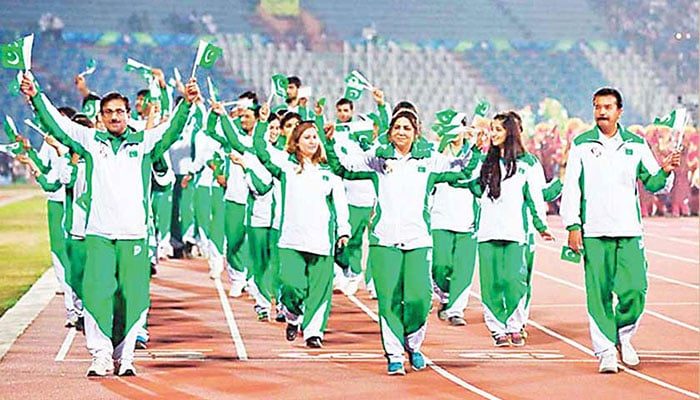
Pakistan last hosted a major regional sporting event in 2004. Twenty-two years later, Lahore opened the 14th South Asian Games on January 23, 2026, welcoming over 3,500 athletes from eight nations to compete across 27 sports through February 6. The Games mark Pakistan's first hosting outside Islamabad and its third overall, following the 1989 and 2004 editions.

The timing places regional sports diplomacy under stress. Nine months ago, India and Pakistan exchanged missile and drone strikes in their most serious conflict since 1971—a four-day confrontation that ended only after U.S.-brokered ceasefire negotiations. India's participation, confirmed by the Indian Olympic Association but requiring government approval, remains the central uncertainty. If Indian athletes compete on Pakistani soil, it would mark the largest people-to-people exchange between the nuclear-armed rivals since May 2025.

Key Indicators

22
Years Since Last Pakistan Hosting
Pakistan last hosted the South Asian Games in 2004 in Islamabad
3,500+
Athletes Expected
Competitors from eight South Asian nations across 27 disciplines
8
Participating Nations
Afghanistan, Bangladesh, Bhutan, India, Maldives, Nepal, Pakistan, Sri Lanka
27
Sports Disciplines
Including cricket, athletics, hockey, kabaddi, and swimming

Interactive

Exploring all sides of a story is often best achieved with Play.

Ever wondered what historical figures would say about today's headlines?

Sign up to generate historical perspectives on this story.

Sign Up

Debate Arena

Two rounds, two personas, one winner. You set the crossfire.

People Involved

Shehbaz Sharif
Shehbaz Sharif
Prime Minister of Pakistan (Approved high-level organizing committee for 2026 Games)
Ishaq Dar
Ishaq Dar
Deputy Prime Minister and Foreign Minister of Pakistan (Chairman of South Asian Games Organizing Committee)
Arif Saeed
Arif Saeed
President of Pakistan Olympic Association and South Asia Olympic Council (Leading Games preparations)
Arshad Nadeem
Arshad Nadeem
Pakistani Olympic Gold Medalist (Javelin) (Expected to compete in 2026 Games)
Neeraj Chopra
Neeraj Chopra
Indian Olympic Gold Medalist (Javelin) (Potential Indian team member)

Organizations Involved

South Asia Olympic Council
Regional Sports Governing Body
Status: Governing body overseeing Games organization

Regional Olympic body coordinating athletic competition among eight South Asian nations since 1984.

Indian Olympic Association
National Olympic Committee
Status: Participation requires government clearance

India's national Olympic committee, requiring government approval to send athletes to Pakistan.

Pakistan Olympic Association
National Olympic Committee
Status: Host nation organizing committee

Pakistan's national Olympic committee, coordinating with government on Games logistics and security.

Timeline

  1. 14th South Asian Games Open in Lahore

    Event

    Opening ceremony marks Pakistan's return as host after 22 years. Over 3,500 athletes from eight nations to compete through February 6.

  2. India Announces Sports Policy

    Policy

    Indian government confirmed no bilateral sporting events with Pakistan, but allowed multilateral participation including Asia Cup.

  3. Pakistan Forms Organizing Committee

    Organizational

    PM Shehbaz Sharif approved high-level committee chaired by Deputy PM Ishaq Dar to oversee Games preparations.

  4. India-Pakistan Ceasefire

    Geopolitical

    Four-day conflict ended with ceasefire announced by U.S. President Trump. India and Pakistan dispute extent of U.S. mediation role.

  5. India Launches Operation Sindoor

    Geopolitical

    India conducted missile strikes on nine locations in Pakistan, claiming to target militant infrastructure. Pakistan retaliated with Operation Bunyan-um-Marsoos.

  6. Pahalgam Attack Kills 26

    Geopolitical

    Gunmen killed 26 civilians, mostly tourists, in Indian-administered Kashmir. India blamed Pakistan-based militant groups.

  7. SAOC Finalizes Games Program

    Organizational

    Executive committee in Lahore approved 27 sports. Indian representative joined remotely, assuring IOA would send athletes.

  8. Arif Saeed Elected POA President

    Organizational

    Former rugby union president elected to lead Pakistan Olympic Association for 2025-2029 term.

  9. Second Postponement to 2026

    Organizational

    Games rescheduled from 2024 to January 2026 due to coordination issues between POA and government.

  10. First Postponement to 2024

    Organizational

    Games delayed from March 2023 to March 2024 due to COVID-19 pandemic impacts and organizational challenges.

  11. Pakistan Awarded 14th South Asian Games

    Organizational

    SAOC confirmed Pakistan as host, initially targeting March 2023 dates.

  12. Nepal Hosts 13th South Asian Games

    Historical

    Most recent edition saw India win record 312 medals. Arshad Nadeem set Games javelin record of 86.23m.

  13. 2004 Games Open After Multiple Delays

    Historical

    Islamabad hosted the ninth edition after postponements due to 9/11, Iraq War, and India-Pakistan tensions. India participated despite earlier withdrawal threats.

  14. Pakistan Hosts First South Asian Games

    Historical

    Islamabad hosted the fifth edition, Pakistan's first time as host nation.

  15. First South Asian Games Held in Nepal

    Historical

    Kathmandu hosted inaugural Games with seven nations competing in five sports. Pakistan participated from the beginning.

Scenarios

1

Full Participation: India Competes, Games Succeed

Discussed by: SAOC officials, Pakistan Olympic Association leadership, sports analysts

India's government grants clearance and a full contingent competes in Pakistan. The Games proceed without major security incidents, demonstrating Pakistan's capacity to host international events post-conflict. The successful exchange could ease diplomatic tensions and potentially open doors for future sporting engagement, echoing the 2004 Friendship Series dynamic.

2

Partial Participation: India Sends Limited Delegation

Discussed by: Indian sports ministry sources, diplomatic analysts

India sends a reduced team to select events, avoiding high-profile sports like cricket and hockey where India-Pakistan matchups would draw intense scrutiny. This compromise satisfies multilateral event commitments while minimizing domestic political risk in India. The Games proceed but with diminished regional significance.

3

India Withdraws: Games Proceed Without Largest Contingent

Discussed by: Regional security analysts, Indian media

India's government declines to issue clearance, citing security concerns or domestic political pressure following the May 2025 conflict. The Games proceed with seven nations but lose the competitive and diplomatic significance that Indian participation provides. Pakistan portrays the withdrawal as Indian intransigence; India frames it as responsible caution.

4

Games Postponed or Cancelled

Discussed by: Nukta (Pakistani media), regional analysts

Security concerns, flood damage, or escalating tensions force another postponement or outright cancellation. A high-level meeting involving IPC, POA, and Foreign Office was scheduled to assess whether Pakistan can proceed given the geopolitical environment. Cancellation would mark the first time the South Asian Games failed to occur since their 1984 founding.

Historical Context

2004 India-Pakistan Cricket Friendship Series

March-April 2004

What Happened

After 14 years without bilateral cricket following the Kargil War, Indian Prime Minister Atal Bihari Vajpayee authorized a full tour of Pakistan. He presented captain Sourav Ganguly a bat inscribed 'Not only the game, win hearts as well.' Over 20,000 Indian fans crossed into Pakistan—the largest people-to-people exchange in years.

Outcome

Short Term

India won the series 2-1. Virender Sehwag's triple century became a defining moment. Both nations relaxed visa requirements.

Long Term

The tour marked the high point of cricket diplomacy, enabling President Musharraf's 2005 India visit. The 2008 Mumbai attacks froze bilateral ties again; no bilateral cricket has occurred since 2012-13.

Why It's Relevant Today

If India participates fully in the 2026 Games, it would represent the largest sporting exchange since May 2025's conflict—potentially serving a similar diplomatic bridge function as the 2004 series.

Ping-Pong Diplomacy (1971)

April 1971

What Happened

At the World Table Tennis Championships in Japan, Chinese player Zhuang Zedong gifted American player Glenn Cowan a silk-screen picture. Chairman Mao seized the moment, inviting the U.S. team to China. The exchange bypassed frozen state-to-state relations through athlete-to-athlete contact.

Outcome

Short Term

The U.S. table tennis team became the first Americans to visit China since 1949. Media coverage reached millions.

Long Term

The visit paved the way for Henry Kissinger's secret diplomacy and Nixon's 1972 China visit, fundamentally reshaping Cold War dynamics.

Why It's Relevant Today

Demonstrates how athletic exchanges can create diplomatic openings when official channels are closed. The 2026 Games could serve a similar function—or fail to, depending on whether governments view sports as a tool for thaw or as too politically costly.

1988 Seoul Olympics North-South Korea Dispute

1981-1988

What Happened

When Seoul won the 1988 Olympics, North Korea demanded co-hosting rights. IOC President Samaranch offered Pyongyang several sports; North Korea rejected each compromise. In November 1987, North Korean agents bombed Korean Air Flight 858, killing 115 people. North Korea and allies boycotted the Games.

Outcome

Short Term

The Games proceeded with 159 nations—the largest Cold War-era participation. North Korea's isolation deepened.

Long Term

The Olympics accelerated South Korea's diplomatic relations with the Soviet bloc and China. The two Koreas would not march together under a unified flag until 2000.

Why It's Relevant Today

Shows how regional sporting events can become venues for broader geopolitical positioning. Pakistan faces a less extreme version of the same challenge: turning athletic competition into diplomatic opportunity rather than another battleground.

15 Sources: