

Overview
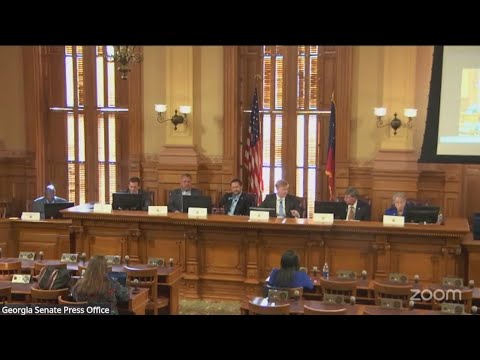
A Georgia Senate committee voted 6-3 along party lines to eliminate the state's income tax by 2032, starting with exempting the first $50,000 for individuals and $100,000 for couples in January 2027. The move would immediately blow a $3 billion hole in the state budget mid-fiscal year, eventually eliminating a $16 billion revenue stream that funds schools, healthcare, and infrastructure.
Lt. Gov. Burt Jones formed the committee and made income tax elimination his signature campaign promise as he runs for governor. But the plan faces internal Republican resistance—House Speaker Jon Burns wants property tax cuts instead, and term-limited Gov. Brian Kemp has been cool to full elimination. The GOP is split between competing visions of tax relief while Democrats warn of devastating cuts to rural healthcare, mental health services, and education.
Key Indicators
People Involved
Organizations Involved
Ad hoc committee formed by Lt. Gov. Burt Jones to study eliminating Georgia's income tax.
Nonpartisan research organization analyzing Georgia fiscal policy and budget priorities.
Timeline
-
Senate Committee Approves Elimination
LegislativeSpecial committee voted 6-3 along party lines to recommend phased income tax elimination by 2032.
-
Burns Announces Competing Plan
StatementHouse Speaker Jon Burns said House will focus on property tax cuts, not income tax elimination.
-
Tax Rate Drops to 5.09%
ImplementationScheduled 0.10% reduction took effect, continuing Kemp's incremental approach.
-
Democrats Blast Elimination Plan
StatementSens. Nan Orrock and Ed Harbison issued statement calling proposal disastrous, benefiting wealthy at middle-class expense.
-
Georgia Reports $14.6B Surplus
BudgetState fiscal year 2026 began with record reserves: $5.6B in rainy day fund, $9.1B undesignated.
-
Raffensperger Enters Governor's Race
CampaignSecretary of State Brad Raffensperger joined the race pledging to eliminate income tax, adding a third major candidate.
-
Trump Endorses Jones
PoliticalPresident Trump endorsed Burt Jones for governor, boosting his insurgent campaign against establishment favorite Chris Carr.
-
Jones Launches Governor Campaign
CampaignLt. Gov. Jones officially entered governor's race, pledging to eliminate state income tax, lending campaign $10 million.
-
Jones Forms Special Committee
LegislativeLt. Gov. Jones created Senate special committee to study income tax elimination, chaired by Sen. Blake Tillery.
-
Kemp Accelerates Tax Rate Reduction
LegislativeGovernor signed HB 111, reducing income tax rate from 5.39% to 5.19%, retroactive to January 2025.
-
Chris Carr Enters Governor's Race
CampaignGeorgia Attorney General Chris Carr announced candidacy for governor, becoming early frontrunner.
-
Burt Jones Elected Lieutenant Governor
ElectionJones won election after serving 10 years in the state Senate, gaining platform to advance tax agenda.
-
Kemp Creates Flat Income Tax
LegislativeGov. Brian Kemp signed HB 1437, eliminating Georgia's six income tax brackets and creating a flat 5.49% rate.
Scenarios
Plan Dies in Republican Civil War
Discussed by: Implied by Georgia Recorder and AJC coverage of competing House-Senate priorities
House Speaker Jon Burns refuses to bring the Senate plan to a vote, instead passing property tax cuts. Jones uses the stalled proposal as a campaign rallying cry, but without legislative achievement to point to, his signature issue becomes aspirational rather than deliverable. Chris Carr benefits by positioning himself as the pragmatic candidate who can actually govern. The income tax remains at 5.09% with incremental reductions continuing under existing law.
Compromise: Partial Exemption Passes
Discussed by: Potential middle ground between House and Senate positions
Facing pressure from Jones's campaign and conservative base, Burns negotiates a compromise that exempts the first $50,000/$100,000 as the committee recommends but abandons the full elimination timeline. The partial cut takes effect in 2027, giving two-thirds of Georgians a significant tax break while preserving most income tax revenue. Jones claims victory and rides the achievement to the governor's mansion, but inherits the budget consequences of the cut he championed.
Full Elimination Triggers Budget Crisis
Discussed by: Georgia Budget and Policy Institute warnings echoed by Senate Democrats
Jones wins the governorship and uses Republican legislative majorities to ram through full elimination on his proposed timeline. The $14.6 billion surplus proves insufficient as economic headwinds reduce revenue and alternative financing falls short. By 2028, Georgia faces brutal cuts to education, rural hospitals close, and the state's credit rating is downgraded. The Kansas experiment repeats itself as Georgia becomes a cautionary tale, forcing an eventual tax increase that destroys Jones's political future.
Carr Wins, Shelves the Plan
Discussed by: Political observers watching the Republican primary dynamics
Chris Carr defeats Jones in the Republican primary by consolidating establishment support and appealing to voters worried about fiscal stability. Carr wins the general election and quietly shelves income tax elimination, continuing Kemp's incremental reduction approach instead. The special committee's recommendations gather dust as Georgia pursues targeted tax relief. Jones's political career stalls, and the brief window for radical tax reform closes.
Historical Context
Kansas Tax Experiment (2012-2017)
2012-2017What Happened
Governor Sam Brownback slashed Kansas income taxes with a path to full elimination, promising economic growth would offset revenue loss. Instead, growth lagged the national average, revenues collapsed by hundreds of millions, and the state gutted spending on roads, bridges, and education. In 2017, the Republican-controlled legislature overrode Brownback's veto to reverse the cuts.
Outcome
Short term: Budget crisis forced deep cuts to essential services and infrastructure
Long term: Brownback's political career ended, and Kansas became the cautionary tale cited by opponents of income tax elimination nationwide
Why It's Relevant
Georgia Democrats explicitly invoke Kansas as proof that income tax elimination leads to fiscal disaster, while Republicans argue Georgia's $14.6 billion surplus prevents the same outcome.
Alaska Income Tax Repeal (1980)
1980-presentWhat Happened
Alaska became the only state in 45 years to fully eliminate its income tax, made possible by billions in oil revenue flooding state coffers. The state replaced income tax revenue with oil royalties and established the Alaska Permanent Fund, which pays dividends to residents.
Outcome
Short term: Alaskans enjoyed income tax-free status while oil revenues funded government services
Long term: Alaska's dependence on volatile oil revenue created boom-bust budget cycles, and recent oil price crashes have forced painful cuts despite the lack of income tax
Why It's Relevant
Proponents cite Alaska as proof income tax elimination can work, but critics note Georgia lacks Alaska's unique oil wealth to replace the revenue stream.
Mississippi Income Tax Phase-Out (2025)
2025-2040 (projected)What Happened
Mississippi became the first state since Alaska to legislate income tax elimination, with Governor Tate Reeves signing a law to gradually reduce the 4% rate to 3% by 2030 and eventually eliminate it by 2040. The phase-out includes revenue growth benchmarks that trigger reductions, providing fiscal guardrails.
Outcome
Short term: Law just enacted; initial rate reductions beginning with cautious triggers
Long term: Full elimination won't occur for 15+ years, and revenue benchmarks may delay or prevent complete phase-out if growth falters
Why It's Relevant
Georgia Republicans point to Mississippi as the model for successful elimination, but Mississippi's 15-year timeline and built-in safeguards contrast sharply with Georgia's aggressive 6-year plan.
