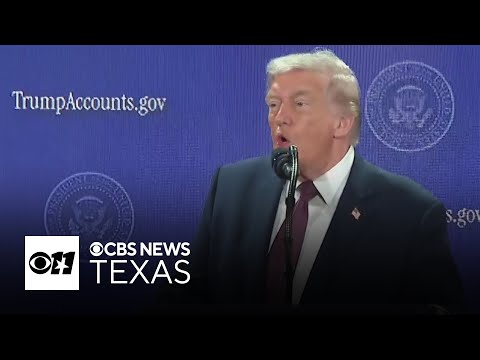
The program launched July 4, 2026, opening for contributions on America's 250th birthday. Treasury deposited $1,000 into 1.4 million eligible accounts, committing $1.4 billion in total; 6 million children are now enrolled.
Melania Trump extended the program to foster children in June, launching 'Fostering the Future Accounts' with 22 governors pledging to fund accounts for youth in state care. Micron Technology committed $250 million on July 1 — the largest single corporate pledge so far. SpaceX President Gwynne Shotwell pledged $320 million in company stock for more than 2 million children on July 6.
Why it matters
Every child born in the U.S. between 2025 and 2028 starts life with a $1,000 federal investment account that Treasury projects could grow to $500,000 by retirement.
Questions about this story
Free account needed to ask — your question is kept and asked for you right after sign-up. Answers are public.
No questions yet — be the first to ask.
Key Indicators
6M+
Children Enrolled
Accounts opened since enrollment launched in January 2026
$6.25B
Dell Donation
Largest philanthropic gift ever devoted to American children's savings
25M
Eligible Children
Estimated beneficiaries of Treasury's $1,000 seed funding (births 2025-2028)
$1.4B
Federal Seed Deployed
Total government deposits into 1.4 million eligible accounts at July 4 launch
21 events
Latest: July 4th, 2026 · 3 months ago
Showing 8 of 21
JK to step
Tap a bar to jump to that date
Jump to
July 2026
Program Opens for Contributions on Independence Day
LatestMilestone
Trump Accounts accepted contributions for the first time on July 4. Treasury also announced it would accept philanthropic donations of publicly traded stock, enabling large equity gifts like Gwynne Shotwell's pledge two days later.
Micron Technology Commits $250 Million
Corporate
Micron pledged $250 million — the largest single corporate commitment to date — split between employee matching contributions and one-time $250 deposits for children in states where it operates, reaching an estimated 1 million children.
June 2026
Melania Trump Launches Fostering the Future Accounts
Political
First Lady Melania Trump announced 'Fostering the Future Accounts,' giving foster children their first pathway into the program. State child welfare agencies can open accounts on behalf of eligible youth; 22 governors pledged to participate at launch.
May 2026
Bessent Hosts California Trump Accounts Tour Stop
Political
Bessent held a public event in Westlake Village, California, joined by actor Kelsey Grammer and members of Congress, as part of a national tour promoting the program ahead of launch.
Trump Accounts App Launches on All Major Platforms
Administrative
Treasury launched the official Trump Accounts app, letting families view account status and prepare to contribute ahead of the July 4 opening. Robinhood partnered with Bank of New York Mellon for custodial recordkeeping.
March 2026
IRS Reports 4 Million Children Enrolled
Milestone
IRS confirmed 4 million children signed up through Form 4547 by March 31, with 1 million claiming the $1,000 pilot contribution — exceeding early projections during tax season.
Treasury and IRS Issue Proposed Regulations
Administrative
Treasury and IRS published two sets of proposed rules in the Federal Register: one setting account eligibility and election procedures, the other governing the $1,000 pilot contribution mechanics. A public comment period ran through May 8, 2026.
January 2026
House Ways & Means Chair Endorses Program
Political
Chairman Jason Smith calls Trump Accounts 'transformational for America's children,' stating they give millions a stake in the American economy regardless of background.
Sign-ups Hit 1 Million
Milestone
Bessent announces enrollments doubled overnight following summit. JPMorgan, Bank of America, Wells Fargo confirm employee matching programs.
White House Summit Launches Program
Political
President Trump and Treasury Secretary Bessent unveil program details at summit featuring Nicki Minaj. Major banks announce matching contributions.
Visa Announces Cash-Back Platform
Corporate
Visa unveils platform allowing credit cardholders to deposit cash-back rewards directly into Trump Accounts, turning everyday purchases into children's savings.
Tech Giants Commit Matching Funds
Corporate
Intel, Nvidia, and Comcast announce they will make contributions to Trump Accounts. Intel confirms it will match $1,000 for eligible U.S. employees' children.
Financial Firms Announce Matching Programs
Corporate
BlackRock, Charles Schwab, Robinhood, SoFi, and BNY announce $1,000 matching contributions for employees' children, joining JPMorgan, Bank of America, and Wells Fargo.
Tax Filing Season Opens
Administrative
Families begin electing Trump Accounts through Form 4547 with e-filed tax returns. 500,000 sign up within days.
December 2025
Dalio Pledges $75M for Connecticut
Philanthropy
Ray Dalio becomes first 50-State Challenge participant, committing $75 million to fund $250 accounts for 300,000 Connecticut children under 10 in households earning under $150,000.
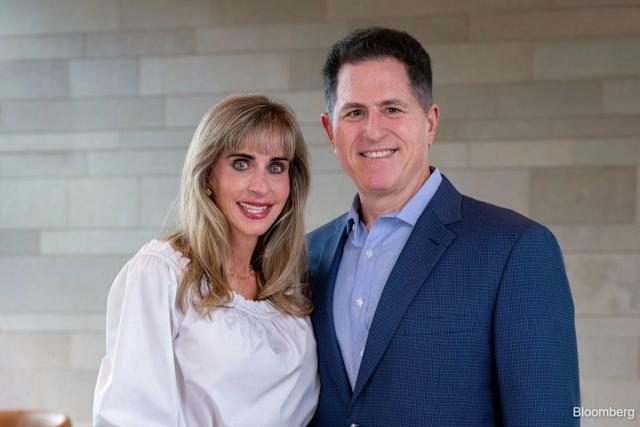
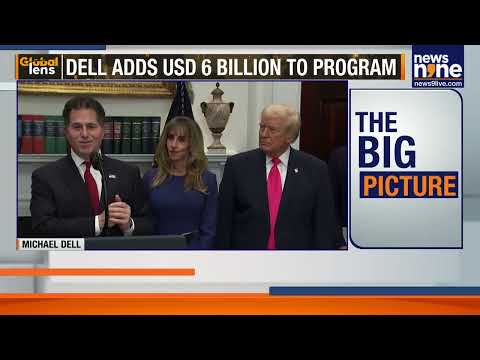
Dells Pledge $6.25 Billion
Philanthropy
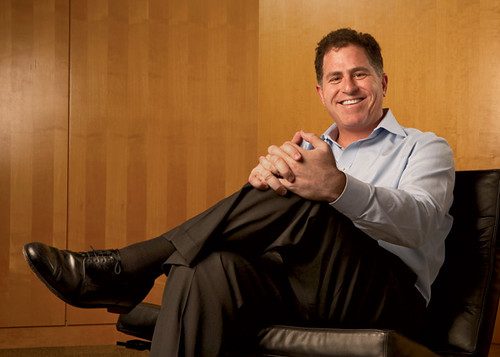
Michael and Susan Dell commit largest-ever children's philanthropy gift, funding $250 accounts for 25 million children in lower-income zip codes.
IRS Releases Enrollment Form
Administrative
Internal Revenue Service publishes Form 4547 allowing families to elect Trump Accounts with their tax returns.
July 2025
Trump Signs Bill Into Law
Legislative
President Trump signs One Big Beautiful Bill Act on Independence Day, establishing Trump Accounts as signature policy.
House Passes Bill 218-214
Legislative
House approves One Big Beautiful Bill Act with zero Democratic votes. Trump Accounts set for July 4, 2026 launch.
Senate Passes One Big Beautiful Bill 51-50
Legislative
Vice President JD Vance casts tiebreaking vote. Bill includes Trump Accounts provision creating $1,000 seed accounts for children born 2025-2028.
January 2023
Invest America Founded
Origin
Brad Gerstner establishes Invest America Foundation to advocate for universal child savings accounts and build political coalition.
Scenarios
1
Program Launches Successfully, Becomes Permanent
Likely
Discussed by: Treasury Department projections, White House Council of Economic Advisers, Invest America
The July 4, 2026 launch proceeds smoothly. The combination of government funding, corporate matching, and philanthropic support creates strong enrollment. Congress extends eligibility beyond 2028 births, making the program permanent. By 2044, the first cohort of Trump Account holders turns 18 with average balances between $5,800 (no additional contributions) and $303,000 (maximum contributions). The program becomes as politically untouchable as Social Security.
Data shows wealthy families contribute maximum amounts while low-income families cannot add beyond the initial $1,000, creating what critics call 'a $150,000 nest egg for the rich versus $2,500 for the poor.' Congressional Democrats, pointing to the UK Child Trust Fund's mixed results and Senator Cory Booker's Baby Bonds proposal, push to add progressive contributions based on family income. A future Democratic administration restructures the program to include income-based seed funding.
3
Program Scaled Back Amid Deficit Concerns
Unlikely
Discussed by: Cato Institute, fiscal conservatives, Senate Budget Committee Republicans
The $25 billion federal cost for seed funding, combined with the One Big Beautiful Bill's $3.4 trillion price tag, prompts deficit hawks to target Trump Accounts. A future Congress eliminates the $1,000 government contribution while preserving the tax-advantaged structure, converting it to a voluntary savings program without universal seed funding. Corporate and philanthropic commitments partially fill the gap but reach fewer families.
4
Administrative Failures Mirror UK Problems
Possible
Discussed by: UK National Audit Office comparisons, Government Accountability Office, program critics
The program launches but encounters the same problems that plagued the UK's Child Trust Fund: families forget accounts exist, providers lose contact with beneficiaries, and when the first cohort turns 18 in 2043, 40% of funds remain unclaimed. Complexity around qualifying withdrawals creates confusion. Reform efforts focus on simplifying access and improving outreach.
Historical Context
3 moments from history that rhyme with this story — and how they unfolded.
1 of 3
September 2002 - January 2011
UK Child Trust Fund (2002-2011)
The UK government deposited £250-£500 into accounts for every child born between 2002 and 2011, with additional contributions at age 7. Around 6.3 million accounts were opened. The government invested £2 billion before the Conservative-Liberal Democrat coalition ended new enrollments in 2011 as an austerity measure.
Then
First accounts matured in September 2020, with average values of £1,911. However, 45% of 18-year-olds had not claimed their funds by April 2021.
Now
Over £1.7 billion remains unclaimed in 2023. Parliament found administrative failures—lost contact information, provider changes, lack of awareness—undermined the program's goals. Junior Individual Savings Accounts replaced the program.
Why this matters now
Trump Accounts face similar risks: ensuring families know accounts exist, maintaining records across 18 years, and preventing unclaimed funds. The UK experience shows universal savings programs can work but require robust outreach and simple access.
2 of 3
June 1982 - Present
Alaska Permanent Fund Dividend (1982-Present)
Alaska began distributing annual payments to every resident from oil royalty investments. The first dividend was $1,000 per person. Payments have ranged from $331 (1984) to $2,069 (2009). Children receive equal payments, with parents controlling the funds.
Then
The program created broad political support for protecting the Permanent Fund's principal, as voters directly benefited from its growth.
Now
The dividend became politically untouchable—attempts to reduce payments face fierce opposition. However, Alaska imposes no requirements on how parents use children's dividends, meaning funds often go to household expenses rather than long-term savings.
Why this matters now
Trump Accounts differ by restricting access until age 18 and requiring investment in index funds, addressing the concern that direct payments get spent immediately. But Alaska shows how universal benefits create durable political constituencies.
3 of 3
April 2001 - Present
Singapore Child Development Account (2001-Present)
Singapore launched Child Development Accounts providing government-matched contributions for children's education, healthcare, and development expenses. The government contributes up to SGD 3,000 for the first two children and matches parental contributions dollar-for-dollar up to SGD 6,000-15,000 depending on birth order.
Then
High enrollment rates as the accounts integrate with Singapore's broader social safety net and can be used for approved childcare and education expenses.
Now
The program became part of Singapore's comprehensive lifelong savings infrastructure alongside Central Provident Fund accounts, creating normalized expectations of government-supported asset building from birth.
Why this matters now
Singapore's success came from integration with other programs and flexible usage rules. Trump Accounts' restriction to age 18 for specific purposes represents a different approach—prioritizing long-term wealth building over immediate needs.