Anchor

Flushing toilets spray microbes into the breathing zone, new review finds
New CapabilitiesAnalysis of 22 studies shows flush aerosols linger 20 seconds and reach adult head height
Today: Study tops r/science and spreads across news coverageNew here? Follow stories to track developments over time. Create a free account to get updates when stories you care about change.
Overview
Updated 1 hour agoEvery toilet flush hurls a cloud of microscopic droplets into the air. A systematic review by Flinders University researchers, released this week, found those droplets reach 1.5 meters above the floor, the breathing zone of adults, and stay suspended for at least 20 seconds after the flush.
The review analyzed 22 published studies and found the microbe concentration in the bowl water and the flush volume are the main drivers of how many aerosols escape. Evidence for independent effects of lid position and ventilation was inconsistent, yet the authors still recommend closing the lid as a precaution because it reduces, but does not stop, escape.
Why it matters
Every flush can spray fecal bacteria and viruses into the air you breathe, in homes, offices, schools, and public restrooms.
Questions about this story
Free account needed to ask — your question is kept and asked for you right after sign-up. Answers are public.
No questions yet — be the first to ask.
Key Indicators
22
Studies analyzed in the systematic review
Flinders University researchers synthesized two decades of toilet plume research.
92%
Flush droplets smaller than 1.0 µm
A 2025 air-gap study found these fine droplets stay airborne longest.
20+ seconds
Airborne duration after a flush
Aerosols remained suspended long enough to reach a breathing adult.
1.5 m
Height reached by flush aerosols
Within the breathing zone of most standing adults.
Related Media
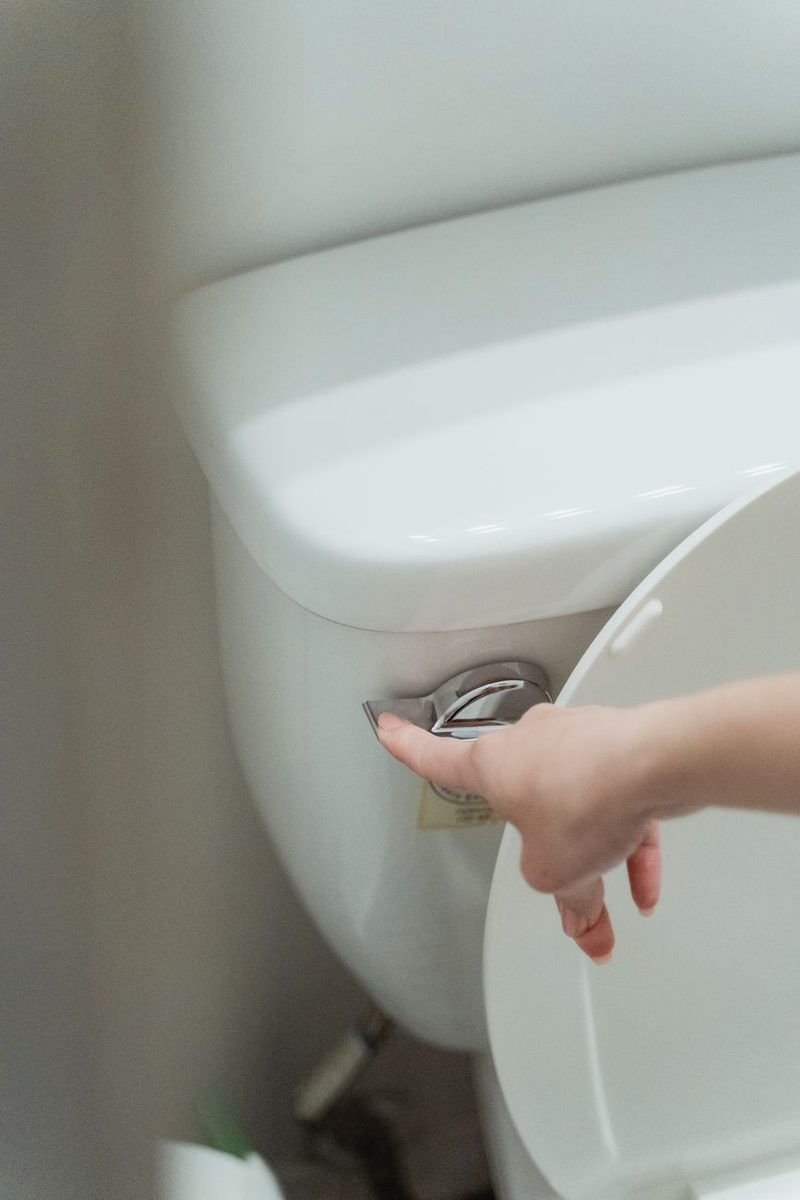
Close-up of a hand flushing a modern toilet, emphasizing hygiene and water conservation.
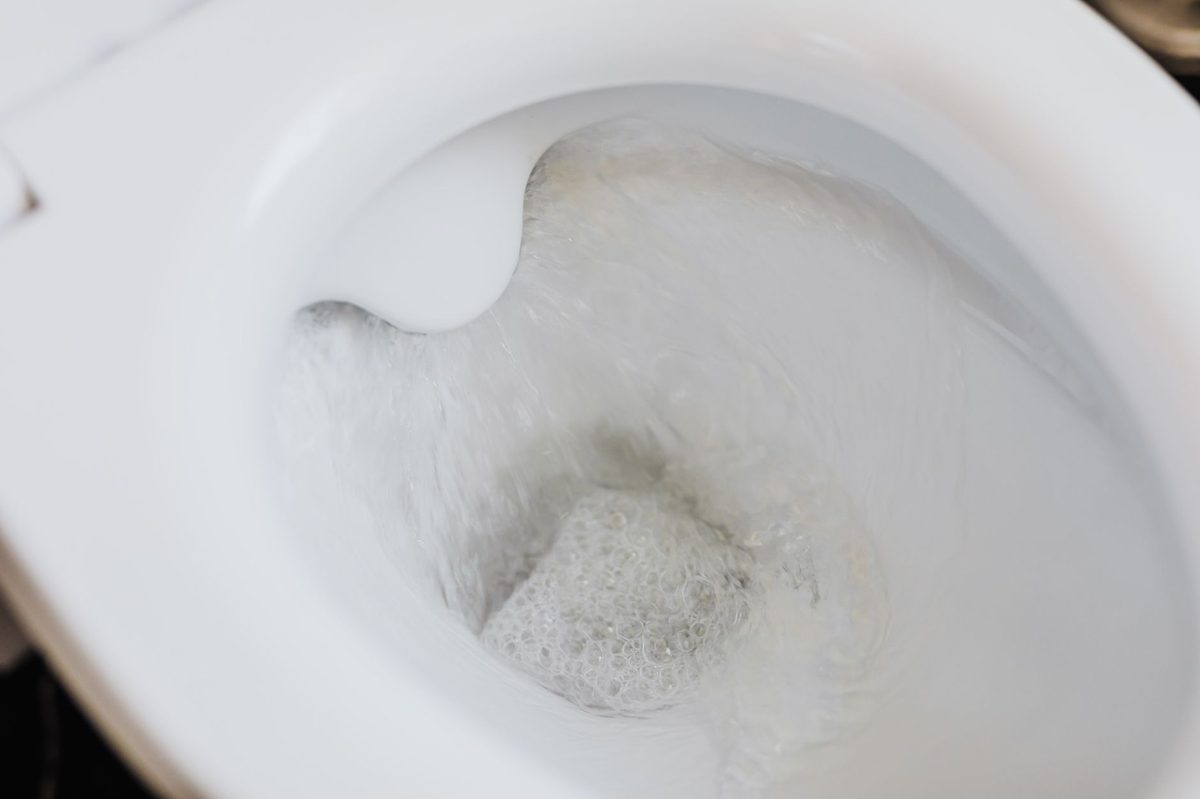
High angle of clean white ceramic toilet bowl with flushing foamy water in bathroom
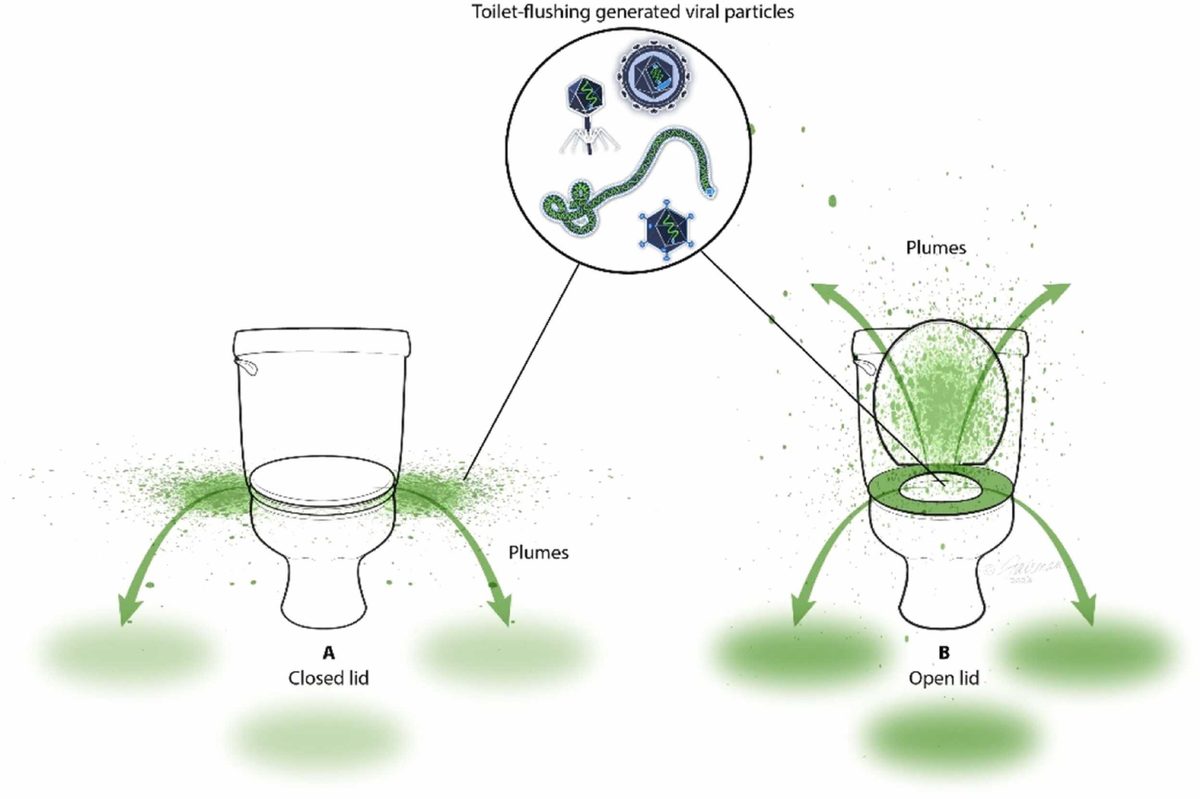
Impacts of lid closure during toilet flushing on viral contamination

289.3K views
2:21
Flushing The Toilet With The Lid Up
Wonder World
118.8K views
1:10
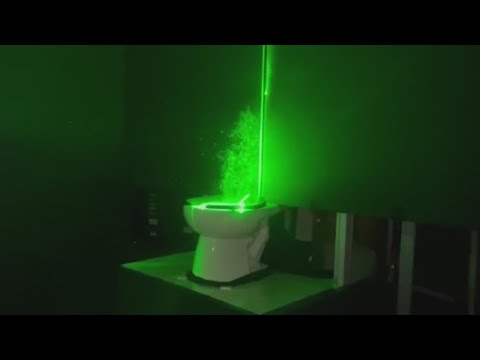
CU shows what happens when you flush the toilet
FOX31 Denver
2.3K views
6:37
Why Your Bathroom is Covered in Poop Particles
Hello TUSHY Bidet
Images from Openverse under Creative Commons licenses. Videos from YouTube.
Voices
Curated perspectives — historical figures and your fellow readers.
Play
Exploring all sides of a story is often best achieved with Play.
Most of these play right now — no account needed. Sign up to save scores, keep a streak, and unlock Debate and Predict.
Log in
Sign Up
Higher or Lower
A number from this story, against one from elsewhere in the news — guess which is bigger, then keep the chain going. 5 rounds, 3 strikes; a miss costs a strike and resets your streak.
Example
Anchor
EU tariff revenue
$52B
Big for this kind of number
Mystery
Pentagon AI contract
?
Round 1
Streak: 0
Mystery
?
Keyboard: ↓/L lower · ↑/H higher
0 pts
Best streak: 0 · Rounds: 0
0 points — sign up to put that on the leaderboard.
Now try on this story
Connections
Sixteen names from the news. Find the four hidden groups of four. Four mistakes max.
Loading today's puzzle…
0/4 groups
Mistakes
Sign up to keep a daily streak — a new puzzle lands every day.
Now try on this story
Exit debate?
Your progress in this debate will be lost.
How it works
- 1 Two AI personas square off on this story.
- 2 You predict who'll win each round — correct picks earn XP.
- 3 One crossfire question is yours to fire. Pick it carefully.
Couldn't generate a topic
Select Your Champions
Choose one persona for each side of the debate
DEBATE TOPIC
Choose personas with different perspectives for a more dynamic debate.
SIDE A (PRO)
Select debater for this side:
No debate personas available right now.
SIDE B (CON)
Select debater for this side:
No debate personas available right now.
VS
Get ready to make your prediction...
Round of
Claim
Evidence
Stakes
Crossfire Answer
Closing Statement
Claim
Evidence
Stakes
Crossfire Answer
Closing Statement
Your Crossfire Question
Generating arguments...
Who's Got This Round?
Make your prediction before the referee scores
The referee scores both sides on
Correct predictions earn +20 XP
· Press 1 or 2 to pick
Evidence
40%
Logic
30%
Detail
20%
Style
10%
Round Results
Your Pick
Not this time
(%)
Overall Score
/10
Your Pick
Not this time
(%)
Overall Score
/10
Set the Crossfire
Pick the question both personas must answer in the final round
Crafting crossfire questions...
Choosing a question earns +10 XP crossfire bonus
🏆
Total XP Earned
Cred Change
Predictions
Debate Oracle! You called every round!
Sharp Instincts! You know your debaters!
The Coin Flip Strategist! Perfectly balanced!
The Contrarian! Bold predictions!
Inverse Genius! Try betting the opposite next time!
XP Breakdown
Base completion
+20 XP
Rounds played ( rounds x 5 XP)
+ XP
Correct predictions ( correct x 20 XP)
+ XP
Crossfire bonus
+10 XP
Accuracy
%
Prediction History
Round
You picked:
✓
✗
Now try on this story
Keep debating to level up your credibility and unlock achievements
People Involved
Organizations Involved
Timeline
December 2022 September 2026
6 events
Latest: Today
Tap a bar to jump to that date
-
Study tops r/science and spreads across news coverage
Today CoverageThe review reached the top of Reddit's r/science and drew attention from science outlets worldwide.
-
Flinders review of 22 flush-aerosol studies published
ResearchSystematic review found bowl microbe load and flush volume drive aerosol generation; lid and ventilation effects inconsistent.
-
CFD study: closed lid cuts distant-user exposure 90%
ResearchSpringer simulation showed lids reduce exposure for far users but increase it for users immediately nearby via air gaps.
-
Air gap shown to leak bioaerosols even with lid closed
ResearchAmerican Journal of Infection Control found 92% of flush droplets under 1 µm; escape rose with seat-bowl gap height.
-
Design-of-experiments study maps public toilet exposure
ResearchScientific Reports analyzed how environmental conditions shape post-flush bioaerosol concentrations in public toilets.
-
Laser study shows commercial toilets emit energetic plumes
ResearchScientific Reports used laser light to show flush jets exceed 2 m/s and carry aerosols to 1.5 meters within 8 seconds.
Historical Context
3 moments from history that rhyme with this story — and how they unfolded.
September 1854
John Snow and the Broad Street pump (1854)
During a London cholera outbreak, physician John Snow mapped cases and traced the source to a contaminated public water pump on Broad Street. He persuaded local authorities to remove the pump handle, and the outbreak subsided.
Then
The outbreak ended within days of the pump handle removal, and Snow's map became a landmark in epidemiology.
Now
It took decades for germ theory and sanitation reform to become standard practice, even with strong evidence.
Why this matters now
Like Snow's work, this review links sanitation infrastructure to disease exposure. The gap between evidence and changed practice may be similarly slow.
2016
Lifting the lid on toilet plume aerosol review (2016)
A prior literature review in the peer-reviewed literature concluded that flush toilets generate potentially infectious bioaerosols, but that evidence for disease transmission was limited. It called for more standardized research methods.
Then
The review became a widely cited reference for toilet plume risk but did not change official guidance.
Now
It laid a foundation for the more systematic methods in the Flinders review a decade later.
Why this matters now
The Flinders review responds directly to that call for better methods, applying systematic review standards to 22 studies.
2020-2021
COVID-19 aerosol transmission debates (2020-2021)
During the pandemic, researchers showed SARS-CoV-2 spreads through aerosols, not just large droplets. Public health guidance shifted to emphasize ventilation, masks, and air filtration, and toilet plumes were flagged as a potential transmission route in shared bathrooms.
Then
Guidance on mask-wearing and indoor ventilation changed rapidly worldwide.
Now
Recognition of aerosol transmission reshaped building ventilation standards and infection control protocols.
Why this matters now
The pandemic normalized the idea that aerosols carry disease. This review extends that concern to a daily activity in every building.