

Pull to refresh
Logo
Daily Brief
Following
Why Sign Up
Sudan's capital slowly reopens after three years of civil war

Sudan's capital slowly reopens after three years of civil war

Force in Play
By Newzino Staff |

UN returns to Khartoum as millions stream back to a shattered city, but fighting rages across Sudan's west

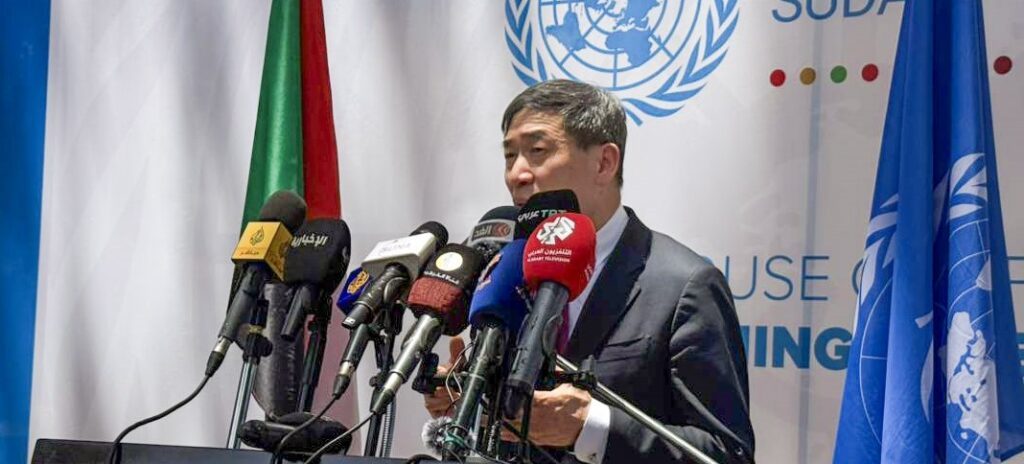
Today: UN reopens Khartoum headquarters

Overview

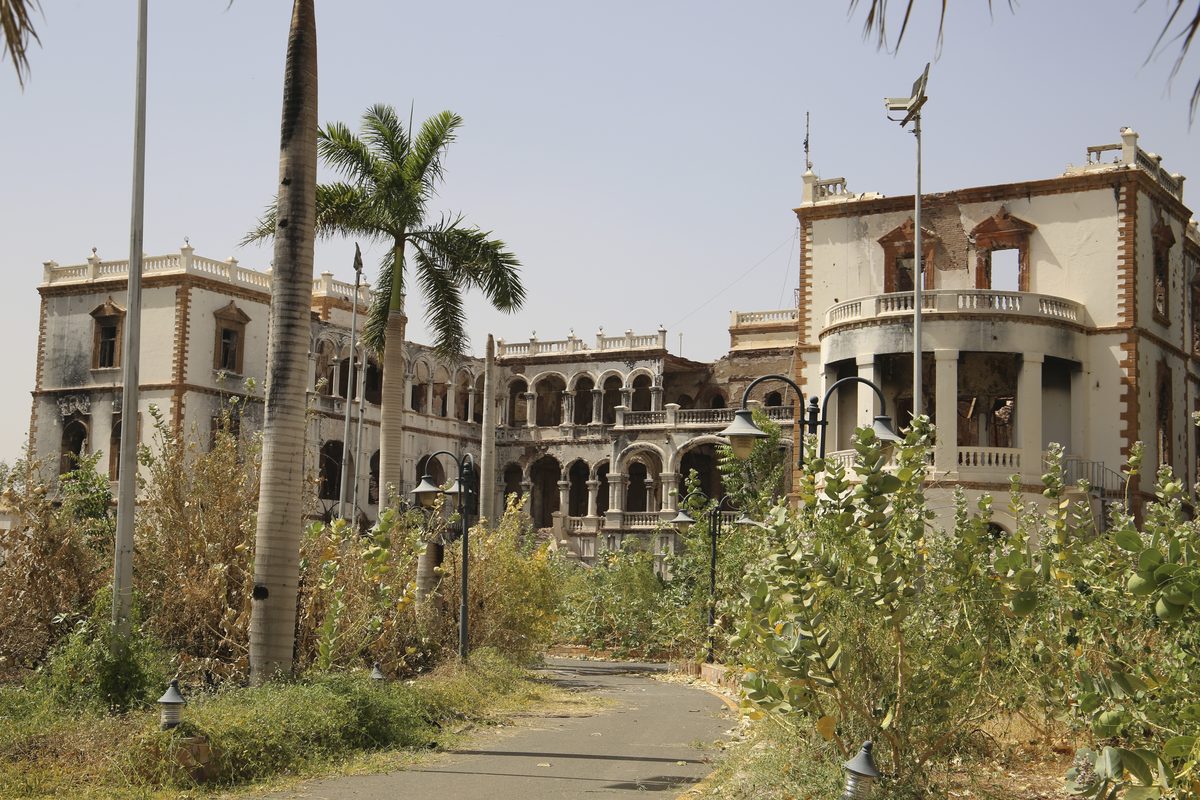
The United Nations reopened its Khartoum headquarters on Thursday, nearly three years after staff fled Sudan's capital when civil war broke out in April 2023. The Sudanese Armed Forces (SAF) recaptured Khartoum from the rival Rapid Support Forces (RSF) in March 2025, and more than two million displaced people have since returned to a city with shattered infrastructure, limited electricity, and contaminated water. The reopening makes the UN the latest international body to resume operations, following the International Organization for Migration's (IOM) return in September 2025 and a Sudanese government relocation from Port Sudan in January 2026.

Why it matters

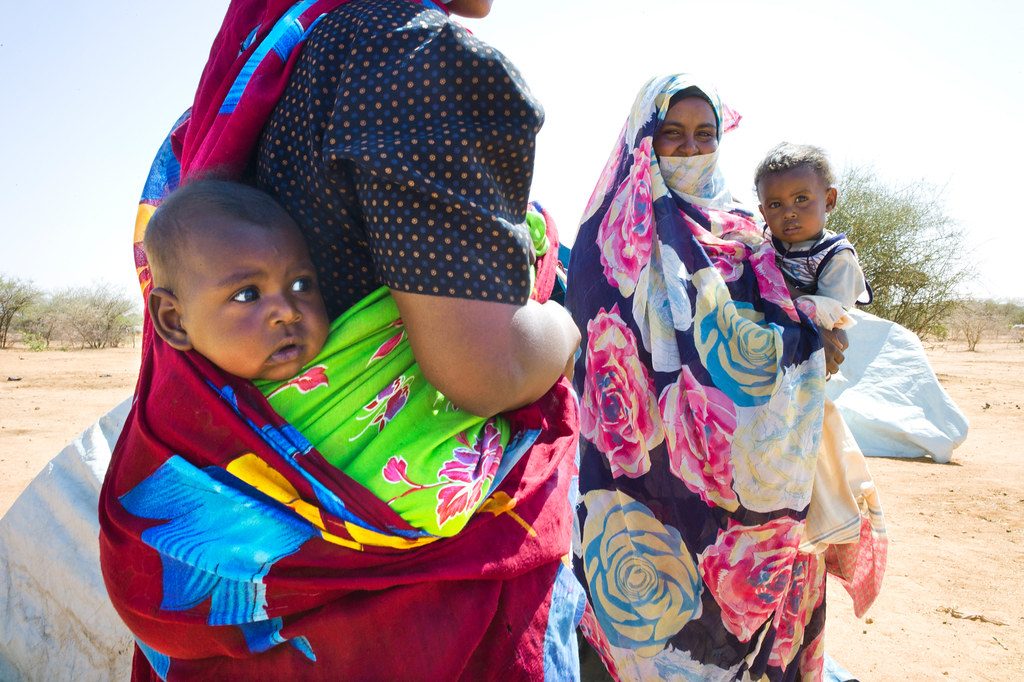
The world's largest humanitarian crisis affects 33.7 million people, and whether Khartoum stabilizes or fractures again will shape displacement across northeast Africa.

Key Indicators

33.7M
People needing humanitarian aid
Roughly two-thirds of Sudan's population, up 3.3 million from 2025
2M+
Displaced people returned to Khartoum
Of an estimated five million displaced from the city during the battle
~14M
Total displaced people
Approximately 10 million internally displaced, 4 million as refugees abroad
$4.9B
2026 funding needed
$2.9 billion for aid inside Sudan, $2 billion for Sudanese refugees abroad
3 years
Duration of UN absence from Khartoum
The longest closure of a UN country headquarters in recent memory

Interactive

Exploring all sides of a story is often best achieved with Play.

Ever wondered what historical figures would say about today's headlines?

Sign up to generate historical perspectives on this story.

Sign Up

Debate Arena

Two rounds, two personas, one winner. You set the crossfire.

People Involved

Organizations Involved

Timeline

  1. UN reopens Khartoum headquarters

    Humanitarian

    The United Nations formally reopens its headquarters in Khartoum, with Sudan's foreign minister and the UNDP's associate administrator attending the ceremony. The reopening signals a shift toward recovery planning alongside ongoing emergency response.

  2. UN concludes RSF committed genocide in El Fasher

    Legal

    The Office of the United Nations High Commissioner for Human Rights formally states that RSF violations during the capture of El Fasher "amount to war crimes" and finds "hallmarks of genocide."

  3. Sudanese government returns to Khartoum

    Political

    The SAF-led government formally relocates from Port Sudan back to Khartoum, ending nearly three years of operating from the Red Sea coast. Prime Minister Kamil Idris announces plans to restore city services.

  4. RSF captures El Fasher; mass atrocities documented

    Atrocity

    The RSF overruns El Fasher after an 18-month siege. The UN Human Rights Office documents more than 6,000 killings in three days, with a fact-finding mission identifying "hallmarks of genocide" against the Zaghawa and Fur communities.

  5. IOM becomes first UN agency to return to Khartoum

    Humanitarian

    The International Organization for Migration resumes Khartoum operations, becoming the first UN agency present in the capital since the April 2023 evacuation. It reports over two million displaced people have returned to the city.

  6. Khartoum declared liberated

    Military

    The SAF retakes Khartoum International Airport and the RSF's last stronghold in the capital. General al-Burhan declares "Khartoum is free" as the first aircraft lands at the airport since the war began.

  7. SAF recaptures presidential palace

    Military

    SAF forces retake the presidential palace in central Khartoum. An RSF drone strike during victory celebrations kills a military spokesman and state television crew.

  8. SAF launches Khartoum counteroffensive

    Military

    The SAF begins a coordinated offensive against RSF positions across the Khartoum tri-cities of Khartoum, Omdurman, and Bahri, gradually pushing the RSF out of key neighborhoods.

  9. RSF besieges El Fasher, last SAF stronghold in Darfur

    Military

    The RSF encircles El Fasher, the capital of North Darfur and the SAF's last remaining position in the region. The siege traps hundreds of thousands of civilians.

  10. West Darfur governor assassinated

    Atrocity

    Governor Khamis Abakar of West Darfur is killed, reportedly by RSF-aligned militants, after publicly accusing the RSF of attacks on civilians.

  11. Jeddah peace talks begin

    Diplomatic

    Saudi Arabia and the United States broker indirect negotiations between the SAF and RSF in Jeddah. Multiple short-lived ceasefires are agreed but none holds.

  12. Civil war erupts in Khartoum

    Military

    Fighting breaks out between the SAF and RSF across Sudan's capital after negotiations over military integration collapse. The RSF seizes the presidential palace, Khartoum airport, and military bases. UN and international organizations evacuate staff.

Scenarios

1

Military stalemate hardens into de facto partition

Discussed by: International Crisis Group, Council on Foreign Relations, Washington Institute for Near East Policy

The SAF consolidates control of eastern Sudan and Khartoum while the RSF holds western Sudan. Neither side has the capacity to conquer the other's core territory. International organizations rebuild in Khartoum while western Sudan remains largely inaccessible to aid. Sudan becomes a frozen conflict resembling Libya's east-west division, with two parallel governments and no national political process.

2

Negotiated ceasefire leads to power-sharing framework

Discussed by: Saudi-U.S. mediators (Jeddah platform), African Union envoys, UN Special Envoy

International pressure — including the genocide finding and humanitarian funding crisis — forces both sides to a table. The Saudi-U.S. three-point plan produces a humanitarian truce that evolves into a permanent ceasefire. A transitional arrangement gives both factions a role in governance while civilian actors push for elections. This scenario requires Hemedti to accept accountability frameworks and al-Burhan to share power — both have resisted these conditions.

3

Khartoum recovery collapses as fighting resumes in the east

Discussed by: Humanitarian agencies, Sudan analysts at Chatham House

The RSF, strengthened by oil revenue from the captured Heglig field, launches new offensives toward Khartoum or key eastern infrastructure. The fragile return of displaced populations reverses. The UN again evacuates. This would erase the modest gains of 2025-2026 and potentially push the humanitarian crisis beyond the capacity of any response.

4

International Criminal Court pursues RSF leadership for genocide

Discussed by: Human rights organizations, UN Human Rights Council, legal analysts

The UN's genocide finding triggers referral to the International Criminal Court (ICC), which already has jurisdiction in Darfur from a 2005 Security Council referral. Arrest warrants for RSF commanders reshape the diplomatic landscape, making a negotiated settlement harder but establishing accountability. This parallels the ICC's 2009 warrant for former president Omar al-Bashir, which took over a decade to approach enforcement.

Historical Context

Somalia UN withdrawal and return (1995-2007)

March 1995 - February 2007

What Happened

The United Nations withdrew its peacekeeping mission (UNOSOM II) from Somalia in March 1995 after the disastrous Battle of Mogadishu in 1993 killed 18 American soldiers and over 1,000 Somalis. Somalia became the textbook "failed state" — no functional central government, clan-based warfare, and a humanitarian catastrophe largely managed through cross-border operations from Kenya.

Outcome

Short Term

Somalia effectively disappeared from international attention. Aid delivery relied on local networks and NGOs operating without state infrastructure.

Long Term

International peacekeeping returned 12 years later under the African Union (AMISOM, 2007). Somalia remains fragile but has rebuilt basic state functions. The gap between withdrawal and return defined a generation of Somali suffering.

Why It's Relevant Today

Sudan's three-year UN absence from Khartoum is far shorter than Somalia's 12-year gap, but the pattern — evacuation, remote operations, gradual return — raises the same question: whether institutional reengagement can stabilize a country that fractured while the world operated at a distance.

Darfur conflict and UNAMID peacekeeping mission (2003-2020)

February 2003 - December 2020

What Happened

Sudan's western Darfur region erupted in rebellion in 2003. The government responded by arming Arab militias — the Janjaweed, precursors to today's RSF — which killed an estimated 300,000 people and displaced 2.5 million. The International Criminal Court issued an arrest warrant for President Omar al-Bashir for genocide in 2009. A joint African Union-UN peacekeeping mission (UNAMID) deployed 26,000 troops at its peak.

Outcome

Short Term

UNAMID reduced but never stopped the violence. Al-Bashir evaded arrest for over a decade, traveling to friendly countries that refused to enforce the warrant.

Long Term

UNAMID withdrew in 2020 as part of a peace deal. The Janjaweed were rebranded as the RSF and integrated into the state — the very arrangement whose collapse triggered the current civil war.

Why It's Relevant Today

The current conflict is a direct sequel to Darfur. The RSF is the Janjaweed under a new name, the same communities face the same atrocities, and the international community faces the same question of whether peacekeeping and accountability mechanisms can function when a party to the conflict controls vast territory.

Libya's institutional collapse and divided government (2014-present)

2014 - present

What Happened

After the 2011 overthrow of Muammar Gaddafi, Libya split between rival governments — one in Tripoli backed by Turkey, another in the east backed by Egypt and the United Arab Emirates. The UN Support Mission repeatedly relocated staff as fighting swept through Tripoli. International organizations maintained reduced operations, often working through local partners from neighboring Tunisia.

Outcome

Short Term

A 2020 ceasefire froze the conflict but produced no reunification. Libya operates with parallel institutions, duplicate central banks, and competing oil revenue claims.

Long Term

Six years after the ceasefire, Libya remains divided. The international community has largely accepted the partition as a manageable status quo, which reduced violence but foreclosed democratic governance.

Why It's Relevant Today

Sudan's emerging SAF-east/RSF-west division closely mirrors Libya's pattern. If a military stalemate holds, Sudan may settle into a similar frozen partition — functional enough for institutions to return to one side, but far from national recovery.

Sources

(12)