

Pull to refresh
Logo
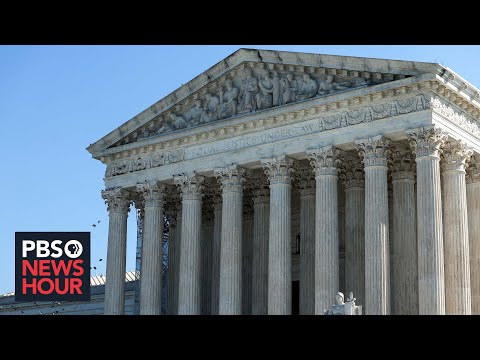
Supreme Court blocks North Dakota ruling that would have ended private Voting Rights Act suits

Supreme Court blocks North Dakota ruling that would have ended private Voting Rights Act suits

Rule Changes

The justices kept the tribes' redistricting case alive but sent it back under a stricter intent standard, leaving open who may sue under Section 2

Overview

Updated 45 minutes ago

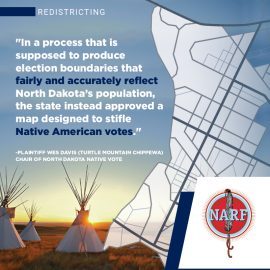
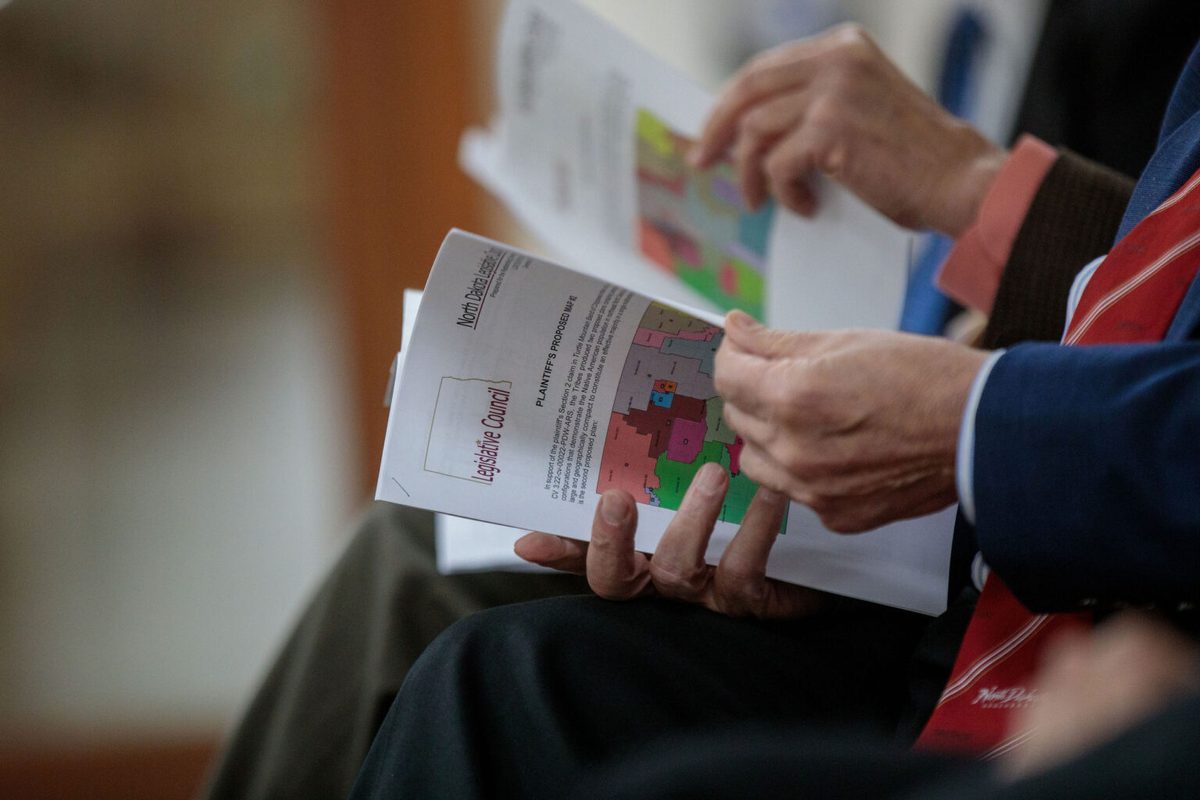
A federal judge found in 2023 that North Dakota's 2021 legislative map violated Section 2 of the Voting Rights Act by shrinking Native American voting power. Under that map, Native Americans held no state Senate seats and two House seats; the tribes' proposed alternatives would have produced one and three. The judge's replacement map, not the Legislature's, governed the 2026 elections.

The Supreme Court blocked the appellate ruling that would have thrown the tribes' case out, keeping it alive. But the justices sent it back for review under Louisiana v. Callais, an April 2026 decision requiring proof that a map was drawn with intent to discriminate, not just that it produced a discriminatory result. The question of whether private groups may sue at all remains undecided.

Why it matters

Most Section 2 suits are filed by private groups, not the Justice Department. If the Eighth Circuit's rule survives, that route closes in seven states.

Questions about this story

Free account needed to ask — your question is kept and asked for you right after sign-up. Answers are public.

No questions yet — be the first to ask.

Key Indicators

0
Native American state senators under the 2021 map
The tribes' proposed alternatives would have produced one Senate seat.
2
Native American state House seats under the 2021 map
The tribes' proposed alternatives would have produced three.
8-1
Supreme Court vote vacating the Eighth Circuit ruling
Justice Ketanji Brown Jackson dissented alone.
1
Federal appeals courts that have barred private Section 2 suits
The Eighth Circuit is the only one.

Voices

Curated perspectives — historical figures and your fellow readers.

Sign up to generate historical perspectives on this story.

People Involved

Organizations Involved

Timeline

2021 November 2026

10 events Latest: Today
Tap a bar to jump to that date
  1. North Dakota adopts a new legislative map

    Redistricting

    State lawmakers redraw House and Senate districts after the 2020 census. Native voters later challenge the result.

Scenarios

1

Supreme Court agrees to decide who can sue under Section 2

Possible Resolves by Q2 2027

Discussed by: Election Newsdesk and the Campaign Legal Center, which both note the Court left the private-right question unanswered

The Eighth Circuit's standing rule conflicts with how every other circuit has handled Section 2 for four decades. That split gives the justices a reason to take the question directly. A grant would likely land in the 2027 term, with arguments and a decision following.

2

Eighth Circuit reinstates its rule that only DOJ can enforce Section 2

Possible Resolves by End of 2027

Discussed by: North Dakota Monitor and the Campaign Legal Center, which called the original decision erroneous

On remand, the appeals court could reach the same standing conclusion, this time framed around Callais. That would end the tribes' suit and close the private enforcement route across seven states until the Supreme Court intervenes.

3

Tribes prove intentional discrimination and lock in a new map for 2028

Unlikely Resolves by Q2 2028

Discussed by: Tribal attorneys, who rewrote the complaint around intent after the Callais decision

The amended complaint now alleges the Legislature acted with discriminatory intent, the standard Callais requires. A finding of intent would let Judge Welte keep a remedial map in place through the 2028 cycle. The state must finalize maps by December of the year before an election.

Historical Context

3 moments from history that rhyme with this story — and how they unfolded.

April 1980 - June 1982

Mobile v. Bolden and the Section 2 rewrite (1980-1982)

The Supreme Court ruled in Mobile v. Bolden that the Constitution's voting guarantees reached only deliberate discrimination, not practices that happened to disadvantage minority voters. Congress responded by rewriting Section 2 to bar any standard or practice that results in a denial of an equal opportunity to participate, regardless of intent.

Then

States and localities could be held liable for maps that split minority communities even when no one could prove a racial motive.

Now

The results test became the workhorse of voting rights litigation for four decades, producing hundreds of redistricting challenges.

Why this matters now

Louisiana v. Callais moves the standard back toward the intent requirement Congress rejected in 1982. That is why the North Dakota tribes had to rewrite their complaint around motive rather than outcome.

June 1986

Thornburg v. Gingles (1986)

The Supreme Court set out the three-part test for Section 2 vote-dilution claims: a minority group must be large and compact enough to form a majority in a district, must vote cohesively, and must show that the majority usually defeats its preferred candidates.

Then

The test gave lower courts a common framework for judging redistricting maps against Section 2.

Now

Gingles became the standard structure for nearly every minority vote-dilution case, including the North Dakota suit.

Why this matters now

North Dakota's case is a textbook Gingles claim: a compact Native population, bloc voting by white voters, and a map that produced no Senate seats. Callais narrows what a Gingles showing can win.

June 2013

Shelby County v. Holder (2013)

The Supreme Court struck down the formula that determined which states and counties needed federal approval before changing voting laws. Chief Justice John Roberts wrote for the majority that the coverage map rested on decades-old data.

Then

Nine states and parts of six others were freed from preclearance, and several moved quickly to enforce rules that had previously been blocked.

Now

Enforcement shifted toward Section 2 lawsuits, which depend on private groups having the money and standing to file them.

Why this matters now

Restricting private suits compounds Shelby County. If both preclearance and private litigation narrow, the Justice Department becomes the only practical enforcement channel.

Sources

(10)