
Pull to refresh
Logo
Supreme Court keeps pause on ruling that would bar private Voting Rights Act suits

Supreme Court keeps pause on ruling that would bar private Voting Rights Act suits

Rule Changes

The Eighth Circuit held that individuals and groups cannot sue under Section 2; the justices have temporarily preserved that path.

Overview

Updated 49 minutes ago

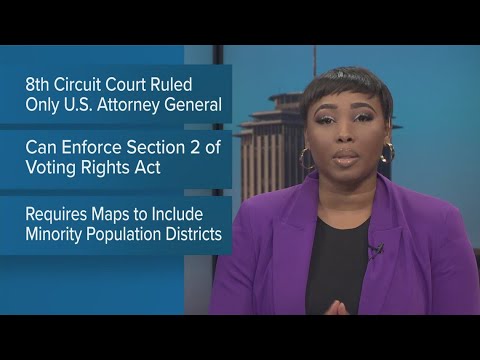
For decades, voters and civil rights groups have used private lawsuits to enforce Section 2 of the Voting Rights Act. A ruling by the Eighth Circuit would end that path in seven states.

The Supreme Court has kept the ruling on hold, so private suits can continue for now. The justices have not decided whether Congress allowed those suits.

Why it matters

If the Eighth Circuit ruling takes effect, voters in seven states could not sue over racial vote dilution; only the Justice Department could.

Questions about this story

Free account needed to ask — your question is kept and asked for you right after sign-up. Answers are public.

No questions yet — be the first to ask.

Key Indicators

7
States covered by the Eighth Circuit
Arkansas, Iowa, Minnesota, Missouri, Nebraska, North Dakota and South Dakota are covered by the Eighth Circuit.
3
Justices who would have denied the stay
Thomas, Alito and Gorsuch said they would have denied the stay.
2
Native-majority districts eliminated by the 2021 map
The 2021 map eliminated two of three districts where Native voters could elect their candidates.
70%
Justice Department Civil Rights Division staff shed
The Brennan Center says the division shed 70 percent of its staff since January 2025.

Voices

Curated perspectives — historical figures and your fellow readers.

Sign up to generate historical perspectives on this story.

People Involved

Organizations Involved

Timeline

2021 November 2026

10 events Latest: Today
Tap a bar to jump to that date
  1. Full Eighth Circuit denies rehearing

    Appeal

    The plaintiffs asked the full court to rehear the case. The court declined.

  2. Eighth Circuit bars private Section 2 suits

    Appeal

    A three-judge panel held that private plaintiffs cannot use Section 1983 to enforce Section 2.

  3. North Dakota adopts new legislative map

    Redistricting

    The map eliminated two of three districts where Native American voters could elect their candidates.

Scenarios

1

Supreme Court upholds private Section 2 suits

Possible Resolves by Q2 2027

Discussed by: Brennan Center for Justice, SCOTUSblog

The justices grant review in Turtle Mountain v. Howe and hold that private plaintiffs may enforce Section 2. That would preserve the main path for challenging maps in the seven Eighth Circuit states.

2

Supreme Court bars private Section 2 suits

Possible Resolves by Q2 2027

Discussed by: Eighth Circuit majority, North Dakota officials

The justices grant review and adopt the Eighth Circuit's view that Section 2 does not create a private right of action. Enforcement would then depend on the Justice Department.

3

No merits ruling; private suits continue on remand

Likely Resolves by End of 2027

Discussed by: SCOTUSblog, GBH

The Supreme Court again declines to take up the private-right question, leaving the stay in place and the case in lower courts. Private suits remain available in the Eighth Circuit for now.

Historical Context

3 moments from history that rhyme with this story — and how they unfolded.

August 1965

Voting Rights Act of 1965

Congress enacted the Voting Rights Act. Section 2 bans racial discrimination in voting, including redistricting plans that dilute minority voting power.

Then

Private plaintiffs and the Justice Department began using Section 2 to challenge maps and voting rules.

Now

Private suits became the main enforcement path. A majority of Section 2 cases have been brought by private parties.

Why this matters now

The current fight is over whether that private path survives.

November 2023

Eighth Circuit private-action ruling (2023)

A separate Eighth Circuit panel held that Congress did not intend private parties to sue directly under Section 2. The ruling did not address Section 1983.

Then

The decision created a split among courts on private enforcement.

Now

It set up the 2025 panel ruling that extended the bar to Section 1983 claims.

Why this matters now

The North Dakota case now tests whether that approach survives Supreme Court review.

July 2025

Supreme Court emergency stay (2025)

Two days before the Eighth Circuit ruling was to take effect, the Supreme Court stayed it. Justices Thomas, Alito and Gorsuch said they would have denied the request.

Then

Private plaintiffs could keep bringing Section 2 claims while the case continued.

Now

The stay preserved the status quo but did not resolve the private-right question.

Why this matters now

The current order repeats that temporary fix.

Sources

(9)