


Pull to refresh
Logo
Synthesia launches Sessions for two-way AI avatar conversations

Synthesia launches Sessions for two-way AI avatar conversations

New Capabilities

Roleplay coaching and conversational surveys join its video creation business

Yesterday: Synthesia launches Sessions interactive avatar platform

Overview

Updated Yesterday

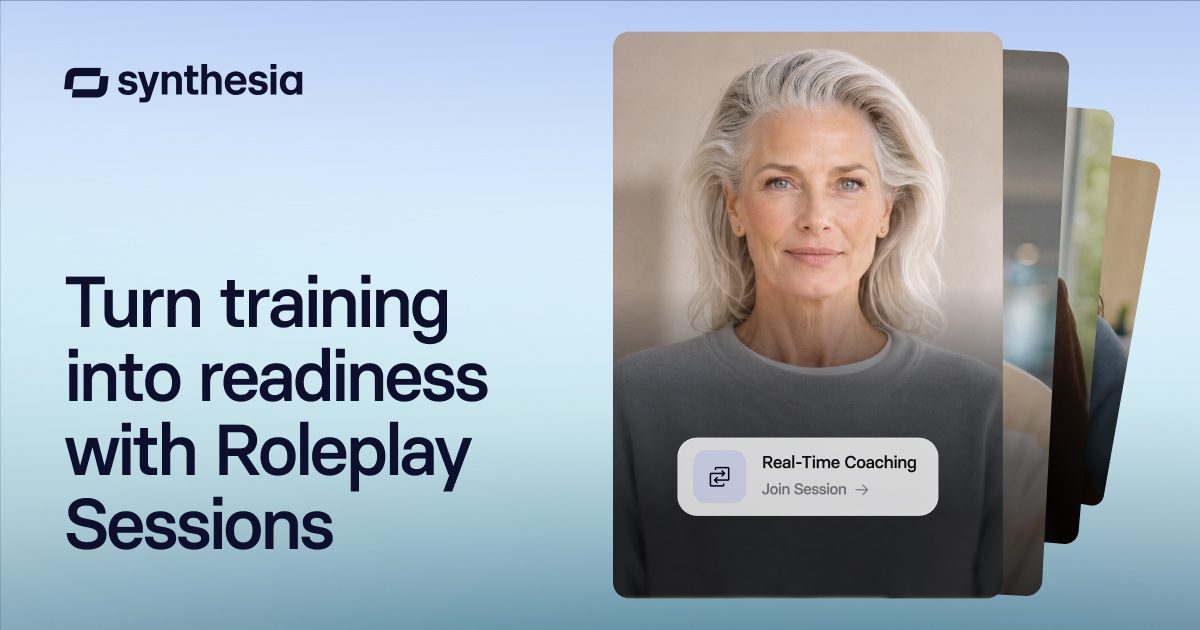
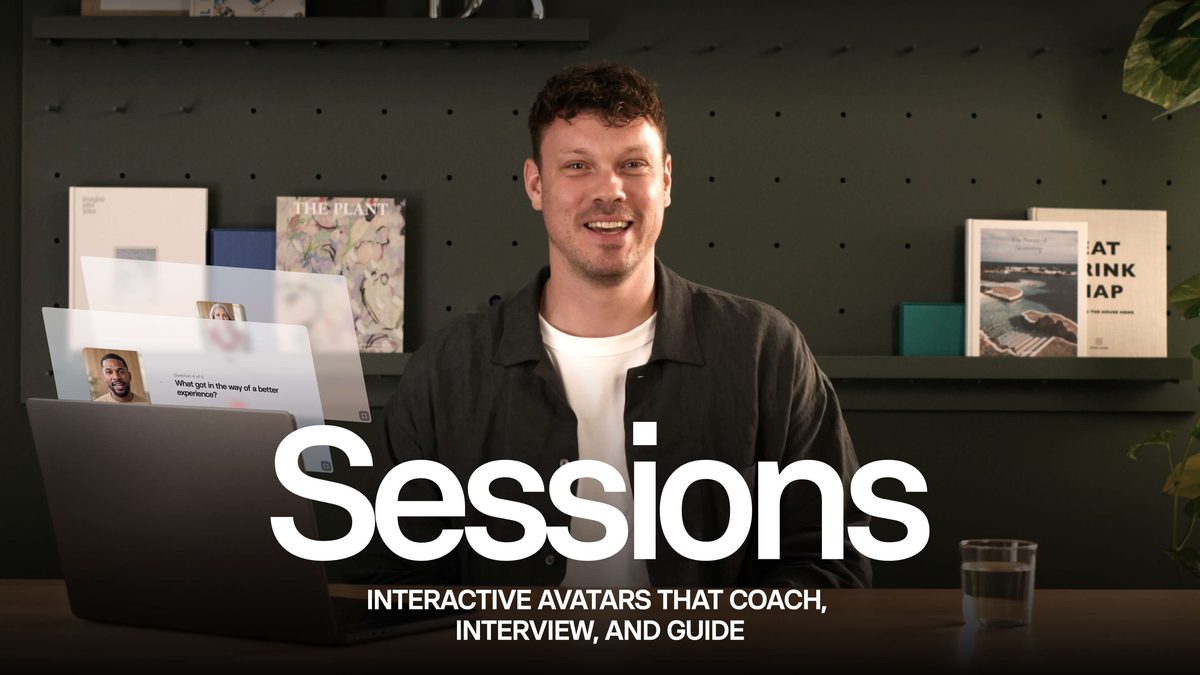
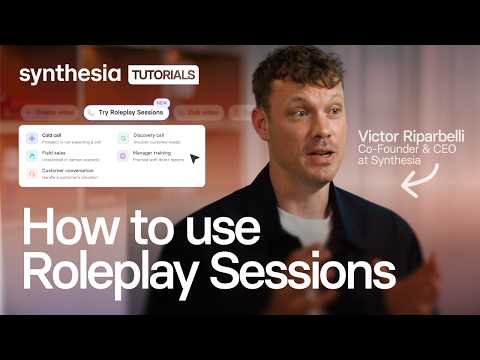
Synthesia launched Sessions on October 1, 2026, a platform for two-way conversations with lifelike AI avatars. Two session types went live immediately: Roleplay, where an avatar practices high-stakes conversations, coaches, and scores the user, and Survey, which turns forms into human-like interviews at scale.

The company built its business on one-way avatar videos — a script in, a presenter out. Sessions extends that into back-and-forth interaction, letting one avatar coach every sales rep or interview every customer around the clock. Early data suggests the format holds people's attention: 78% of learners attempted a roleplay more than once, and 83% of those who returned improved their score.

Why it matters

One trained avatar can now coach every employee or interview every customer individually, at a fraction of the cost of a human call.

Questions about this story

Free account needed to ask — your question is kept and asked for you right after sign-up. Answers are public.

No questions yet — be the first to ask.

Key Indicators

78%
Learners who repeated a roleplay
Across early Sessions deployments, 78% of learners attempted a roleplay more than once.
83%
Repeat learners who improved
Of those who returned, 83% improved their score on a later attempt.
$4B
Synthesia valuation
TechCrunch reported Synthesia reached a $4 billion valuation earlier in 2026.
$100M
Annual recurring revenue
TechCrunch said Synthesia passed $100 million in annual recurring revenue in 2025.

Voices

Curated perspectives — historical figures and your fellow readers.

Ever wondered what historical figures would say about today's headlines?

Sign up to generate historical perspectives on this story.

People Involved

Organizations Involved

Timeline

September 2026 October 2026

3 events Latest: Yesterday
  1. Synthesia launches Sessions interactive avatar platform

    Latest Product Launch

    Roleplay and Survey Sessions went live with the opportunity to try them free. Expert Sessions was announced as coming soon.

  2. Full-stack Interactive Avatar API opens

    Product Launch

    Synthesia launched a hosted pipeline letting teams build two-way avatar conversations without running their own large language model, text-to-speech, or rendering stack.

  3. TechCrunch builds a working interactive avatar demo

    Preview

    A TechCrunch writer visited Synthesia's New York office, had photos and a voice sample captured, and received a functioning interactive avatar of himself days before launch.

Scenarios

1

Sessions becomes a standard enterprise training tool

Likely Resolves by Q2 2027

Discussed by: Synthesia's own deployment data and Unite.AI product coverage

Early numbers show strong repeat use: 78% of learners attempted a roleplay more than once, and 83% of those improved their score. If that pattern holds as Hays, Xponential Fitness, and other customers scale deployments, learning and development teams will fold Sessions into standard onboarding and sales training. Triggers include customers publicizing expansions and Synthesia reporting sustained return rates.

2

Rivals ship competing interactive avatar platforms

Possible Resolves by Q2 2027

Discussed by: TechCrunch, which names HeyGen, D-ID, and Colossyan as Synthesia competitors

Two-way avatars are a natural extension for video avatar rivals. A competitive response would pressure pricing and push Synthesia to differentiate on coaching quality, data, and integrations rather than on the novelty of conversation itself.

3

Expert Sessions stalls, signaling adoption limits

Possible Resolves by Q2 2027

Discussed by: Unite.AI, which noted Expert Sessions as coming soon at launch

If the third announced session type has not shipped by mid-2027, the company may be focusing on the two live formats. Cost and trust concerns could slow enterprise rollout: avatar interviews for HR and customer feedback raise questions about data handling and impersonation, and some security teams may restrict deployment despite the platform's SOC 2 Type II and ISO certifications.

Historical Context

3 moments from history that rhyme with this story — and how they unfolded.

January 1966

ELIZA (1966)

MIT researcher Joseph Weizenbaum built ELIZA, a text program that matched keywords to scripted responses. A persona called DOCTOR mimicked a psychotherapist by reflecting users' statements back as questions, running on the limited terminals of the time.

Then

Many users confided in DOCTOR and asked to be left alone with it, surprising Weizenbaum, who had intended a demonstration of superficial understanding.

Now

The episode became a founding case study in how readily people treat AI as a social partner, a dynamic at the core of every later conversational product.

Why this matters now

ELIZA showed that interaction alone draws people in. Synthesia's Sessions adds a rendered face, a voice, and a two-way channel, testing whether the effect survives when the AI looks and sounds human.

May 2018

Google Duplex (2018)

Google demonstrated Duplex, a voice system that booked restaurant reservations by phone. The AI paused naturally, said "um," and did not identify itself as a machine during the demo call.

Then

The reveal triggered widespread concern about AI impersonation, and Google later tightened its disclosure rules about when Duplex must identify itself.

Now

It established the policy boundary for realistic voice AI: how much a system must say it is synthetic, and where the line sits between helpful and deceptive.

Why this matters now

Sessions avatars face the same trade-off. Survey Sessions interview employees and customers as avatars, making disclosure and consent central to whether enterprises trust the product.

1997

Microsoft Clippy (1997)

Microsoft shipped Clippy, an animated paperclip assistant embedded in Office. It popped up to interpret tasks, offering unsolicited help that users found intrusive, and it became a widely mocked symbol of bad AI design.

Then

Microsoft disabled Clippy by default within a few years and removed it from Office in 2007.

Now

It became the standard warning that anthropomorphism does not make an assistant useful; the value sits in the interaction, not the persona.

Why this matters now

Sessions bets that a realistic avatar plus a genuinely useful two-way interaction will avoid Clippy's fate, where the assistant's persona outran its competence.

Sources

(5)