

Pull to refresh
Logo
TeraWulf doubles Kentucky data center power to 1 GW

TeraWulf doubles Kentucky data center power to 1 GW

Built World

Amended Kentucky Power agreement moves second phase to 2029, pending state commission approval

3 days ago: TeraWulf and Kentucky Power sign amended 1 GW agreement

Overview

Updated Yesterday

TeraWulf has doubled the contracted power for its Muskie data center in eastern Kentucky from 500 megawatts to 1 gigawatt. The amended agreement with Kentucky Power, announced October 5, 2026, also pulls the second phase's delivery from 2030 to 2029.

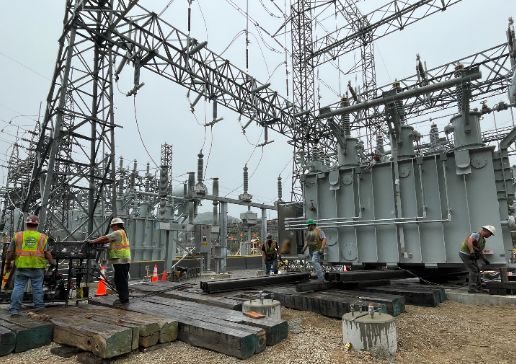
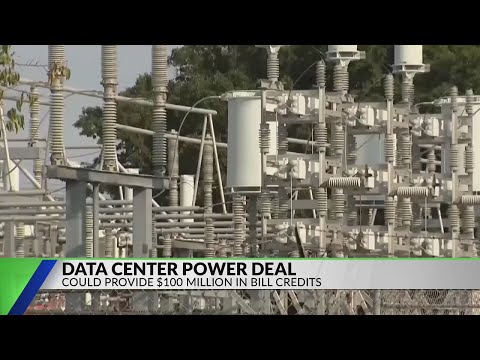
That growth depends on Kentucky Power building a new 765- and 345-kilovolt substation tied to the regional grid. TeraWulf will cover the utility's financing costs for a planned 760-megawatt gas plant and fund $100 million in winter bill credits for residential customers. The arrangement aims to keep the data center's demand from raising rates for existing customers.

Why it matters

A 1-gigawatt data center can be built without raising existing customers' rates — the developer pays for transmission, generation, and $100 million in bill credits.

Questions about this story

Free account needed to ask — your question is kept and asked for you right after sign-up. Answers are public.

No questions yet — be the first to ask.

Key Indicators

1 GW
Contracted power at Muskie campus
Doubled from 500 megawatts under the amended Kentucky Power agreement.
$100M
Residential winter bill credits funded by TeraWulf
Paid to Kentucky Power customers over the first 10 years of the contract, pending PSC approval.
2029
Second 500 MW phase delivery year
Advanced from 2030 under the amendment, subject to regulatory and construction schedules.
760 MW
Big Sandy combined-cycle gas plant capacity
Kentucky Power's planned plant, with financing costs covered by TeraWulf.

Voices

Curated perspectives — historical figures and your fellow readers.

Ever wondered what historical figures would say about today's headlines?

Sign up to generate historical perspectives on this story.

People Involved

Organizations Involved

Timeline

May 2026 October 2026

2 events Latest: 3 days ago
  1. TeraWulf and Kentucky Power sign amended 1 GW agreement

    Latest Agreement

    Amended contract doubles Muskie's contracted power to 1 GW and moves the second 500 MW phase from 2030 to 2029, pending PSC approval.

  2. TeraWulf acquires Muskie campus

    Acquisition

    Bought the roughly 285-acre site at EastPark Industrial Park from Industrial Equity Partners for AI and high-performance computing development.

Scenarios

1

Kentucky PSC approves TeraWulf's 1 GW power deal

Likely Resolves by Q2 2027

Discussed by: Company filings and industry coverage (ENR, Data Center Dynamics)

Kentucky Power files the amended contract and the PSC issues a final order approving it. Construction on the Venator substation then starts on schedule, and the second 500 MW phase delivers by 2029 as accelerated.

2

Regulatory review or construction delays push the schedule

Possible Resolves by End of 2029

Discussed by: Company filings note delivery is subject to PSC approval and Kentucky Power's construction calendar

The PSC takes longer than expected, or permitting, equipment procurement, or transmission queue delays push substation construction past its February 2027 target, sliding second-phase delivery beyond 2029.

3

Muskie grows toward 2 GW with anchor tenants

Possible Resolves by End of 2028

Discussed by: TeraWulf says it continues evaluating up to 2 GW; Private Infrastructure Daily notes capacity is contracted before tenants

TeraWulf signs one or more AI or high-performance-computing anchor tenants for the 1 GW and advances planning for additional capacity up to the 2 GW the site could support, subject to further utility and regulatory work.

Historical Context

2 moments from history that rhyme with this story — and how they unfolded.

2023-2024

Bitcoin miners pivot to AI hosting (2023–2024)

Core Scientific filed for Chapter 11 bankruptcy in December 2022 after crypto prices collapsed, then emerged in January 2024 and signed a multibillion-dollar deal with CoreWeave to host AI graphics processing units at its power sites.

Then

Core Scientific's pivot became a template for bitcoin miners to monetize their power infrastructure by renting it to AI companies instead of hashing bitcoin.

Now

Power capacity, not land or hardware, became the scarce asset that miners could sell to AI firms.

Why this matters now

TeraWulf, which local coverage still describes as a bitcoin mining company, is executing the same pivot at Muskie — buying and contracting power infrastructure to host AI and high-performance computing workloads.

2023-2026

The data center grid bottleneck (2023–2026)

As AI computing demand surged, available grid capacity replaced land and capital as the main constraint on new data centers. Utilities announced multi-year transmission buildouts and developers began contracting power before signing tenants.

Then

Power procurement became the gating step in data center development, with developers announcing capacity deals ahead of customer agreements.

Now

Utilities and regulators developed structures — customer-funded infrastructure and ratepayer protections — to manage large new loads.

Why this matters now

TeraWulf's deal is a concrete instance: it contracted 1 GW with no named tenant, the substation is the gating item, and the company funds the grid buildout and $100 million in residential credits.

Sources

(9)