




Pull to refresh
Logo
Germany plans strategic gas reserve to replace storage mandates

Germany plans strategic gas reserve to replace storage mandates

Rule Changes

The cabinet approved a 24-terawatt-hour emergency reserve, paid for by a levy on gas customers, that would take over from mandatory storage targets in 2027

Overview

Updated Yesterday

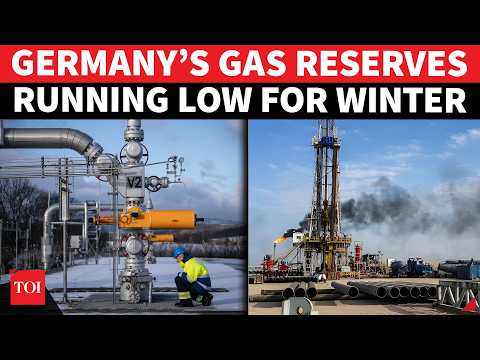
Germany's gas stores were 58.5% full on November 9. A year earlier they held 74.8%, and the country had just missed its own target of 70% by November 1. On November 11 the cabinet approved a bill to keep 24 terawatt-hours of gas off the market, about a tenth of national storage capacity, for use only in an emergency.

The reserve replaces the winter filling mandates that have governed German storage since 2022. Those rules expire on March 31, 2027, and gas customers would pay for the new buffer through a levy whose first collection period begins October 1, 2027. Parliament still has to pass the law.

Why it matters

German gas bills would rise 0.3% to 0.5% to fund a reserve sized to cover a 30-day loss of import capacity.

Questions about this story

Free account needed to ask — your question is kept and asked for you right after sign-up. Answers are public.

No questions yet — be the first to ask.

Key Indicators

24 TWh
Planned reserve volume
About 2.3 billion cubic metres, or roughly 10% of Germany's gas storage capacity.
10%
Share of national storage capacity
The target size relative to total German storage, the largest in the European Union.
58.5%
German storage fullness, November 9, 2026
Down from 74.8% a year earlier, and short of the 70% target set for November 1.
€247M–€405M
Estimated annual cost
Government estimate covering a ten-year period, split roughly 40% households and small business, 60% industry.
30 days
Import outage the reserve is sized to cover
The main sizing scenario is a 30-day loss of Germany's principal gas import infrastructure.
0.3%–0.5%
Estimated rise in household gas costs
Ministry estimate, equal to €3.77–€9.40 a year for typical households.

Voices

Curated perspectives — historical figures and your fellow readers.

Sign up to generate historical perspectives on this story.

People Involved

Organizations Involved

Timeline

2022 November 2026

5 events Latest: Yesterday
Tap a bar to jump to that date
  1. Cabinet approves strategic gas reserve bill

    Latest Legislation

    The draft sets a 24 TWh reserve run by the federal regulator and funded by a levy on gas customers.

  2. Industry group asks for budget funding

    Statement

    BDEW backed the reserve but said the federal budget, not gas customers, should pay for it.

  3. Storage sites sit at 58.5% full

    Measurement

    German facilities were at 58.5%, against 74.8% a year earlier, well below the EU average of nearly 75%.

  4. Germany misses its 70% storage target

    Measurement

    The average fill level fell short of the 70% benchmark set for the start of November.

  5. Germany introduces mandatory gas storage targets

    Regulation

    After Russia's full-scale invasion of Ukraine, Berlin required storage operators to hit filling levels ahead of each winter.

Scenarios

1

Bundestag passes the reserve law and the levy starts in October 2027

Likely Resolves by Oct 1, 2027

Discussed by: German energy ministry, which says the law must be in place before storage mandates lapse

The bill reaches the Bundestag with cabinet backing and passes close to its current form. Gas suppliers begin stocking the reserve from winter 2027, spreading the build-up over up to three years, and the first levy period opens on October 1, 2027. If this happens, the mandatory storage targets can expire at the end of March 2027 without leaving a gap.

2

Coalition rewrites the funding so the federal budget pays

Possible Resolves by Q2 2027

Discussed by: BDEW and, per tagesschau, sceptical lawmakers in the governing parties

The levy is the bill's weakest point inside the coalition, and BDEW argues the reserve protects the whole economy rather than only gas customers. If the Bundestag switches the financing to the federal budget, the reserve survives but the household cost estimate disappears and the annual €247 million to €405 million moves onto the government's books.

3

Mandates lapse in March 2027 with no reserve in place

Unlikely Resolves by Apr 1, 2027

Discussed by: Not yet argued publicly by the ministry, which wants the law passed before then

The storage filling targets expire on March 31, 2027, regardless of what happens to the reserve bill. If parliamentary passage slips past that date, Germany enters the following winter with neither binding filling requirements nor a state buffer, leaving only LNG imports and market incentives in place. The ministry says the reserve build-up should start in winter 2027.

Historical Context

2 moments from history that rhyme with this story — and how they unfolded.

2022

Germany's gas storage mandate (2022)

After Russia's full-scale invasion of Ukraine, Berlin required storage operators to hit filling levels ahead of each winter. The rules were introduced as an emergency measure, with the aim of avoiding a repeat of the price spike and supply scramble of 2022.

Then

Storage filled ahead of the 2022–23 and 2023–24 winters, and Germany avoided the rationing some feared.

Now

Berlin now argues the mandates can distort the market and discourage operators from filling storage beyond the required level, and plans to let them lapse in March 2027.

Why this matters now

The reserve is the replacement for that mandate, so its design decides whether Germany keeps any binding winter-stocking rule at all.

1974

Creation of the International Energy Agency (1974)

Western industrialised countries set up the International Energy Agency after the 1973–74 oil embargo, with an emergency oil stockholding obligation as one of its core functions. Members were required to hold reserves equivalent to roughly 90 days of net imports.

Then

Emergency oil stocks became a standing feature of Western energy policy rather than an ad hoc response to one crisis.

Now

Stockholding shifted from a private commercial decision to a public obligation, with coordinated release mechanisms for emergencies.

Sources

(6)