
Pull to refresh
Logo
Brain stimulation guided by fMRI outperforms scalp targeting in depression trial

Brain stimulation guided by fMRI outperforms scalp targeting in depression trial

New Capabilities

A 40-patient randomized trial found 80% response with connectivity-guided targeting versus 60% with standard scalp measurement.

Overview

Updated 2 hours ago

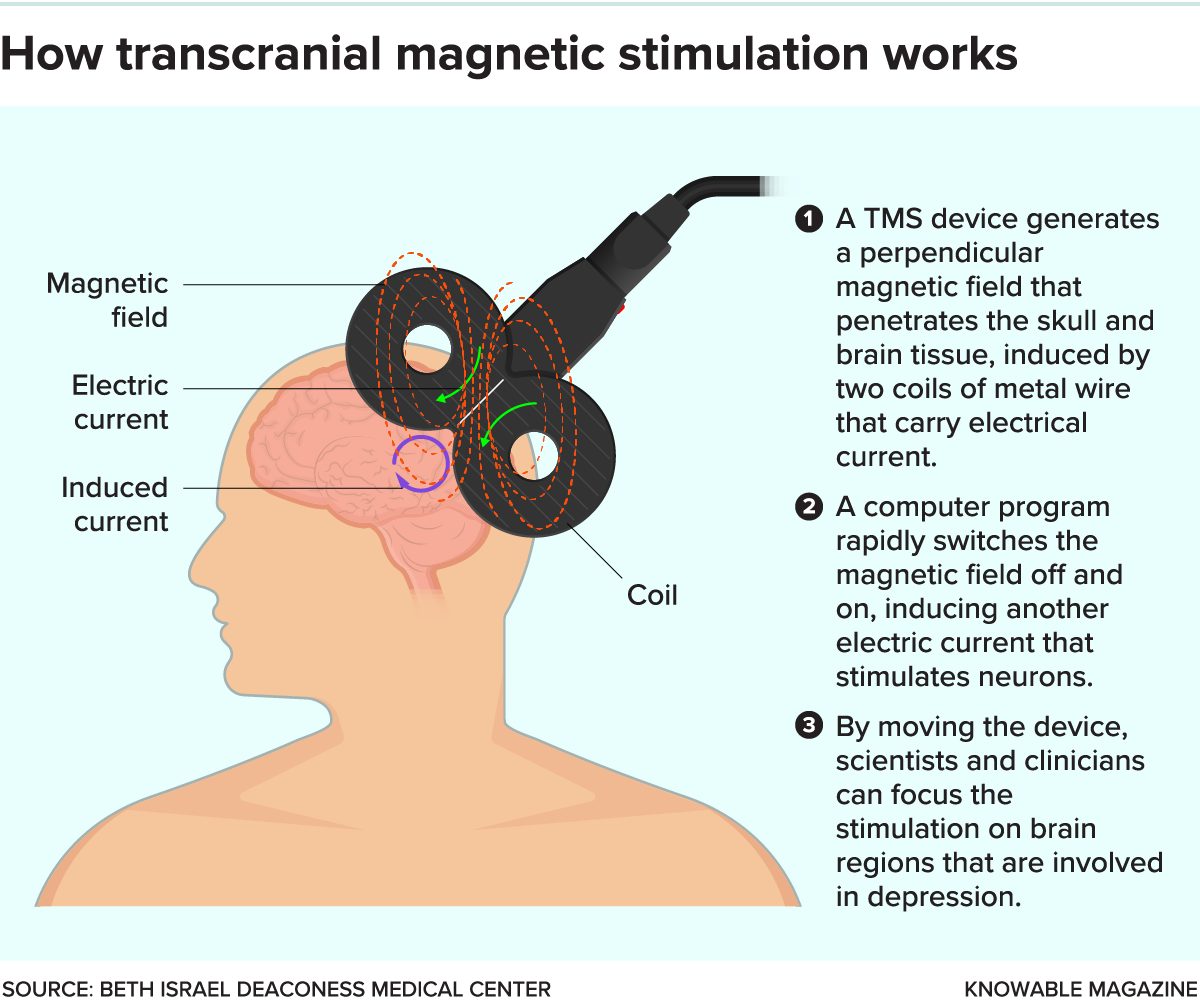
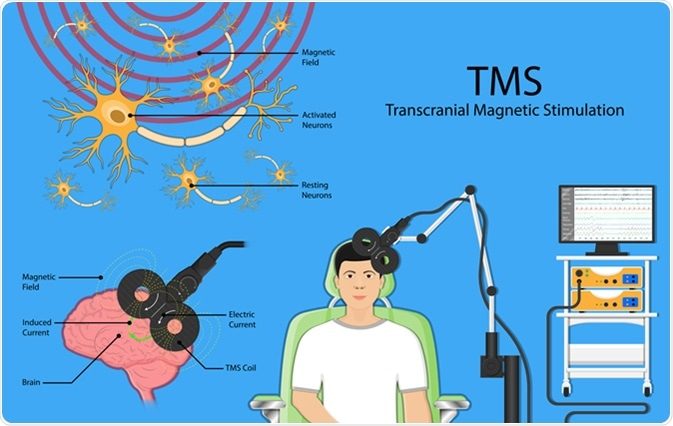
Forty people with treatment-resistant depression received the same accelerated brain stimulation schedule. The only difference was where the magnetic pulses landed. One month later, 80% of those whose target came from their own fMRI scan responded, against 60% of those targeted by scalp measurement.

The result, reported in JAMA Psychiatry, tests an assumption that has shaped psychiatric brain stimulation for years: that a fixed spot on the scalp is close enough. If the advantage holds in larger trials, personalization could add one responder for every five patients scanned.

Why it matters

One extra patient responds for every five scanned, if clinics can absorb the 41-minute fMRI scan.

Questions about this story

Free account needed to ask — your question is kept and asked for you right after sign-up. Answers are public.

No questions yet — be the first to ask.

Key Indicators

80%
Response rate, connectivity-guided targeting
Patients whose stimulation site was chosen from their own fMRI scan showed at least 50% symptom reduction one month after treatment.
60%
Response rate, scalp-guided targeting
Patients targeted by standard head measurement showed the same threshold of improvement.
5
Number needed to scan
The trial authors estimate five patients must receive the personalized scan for one additional response.
24 points
Median MADRS reduction, connectivity-guided
Measured on the Montgomery-Åsberg Depression Rating Scale one month after treatment.
0.8
Effect size
The reported between-group effect size, with a wide confidence interval in a 40-person sample.
41 minutes
Length of the targeting scan
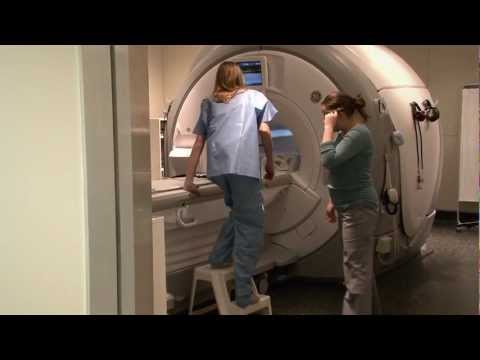
Each personalized target required a multi-echo resting-state fMRI scan, a practical barrier to routine use.

Voices

Curated perspectives — historical figures and your fellow readers.

Sign up to generate historical perspectives on this story.

People Involved

Organizations Involved

Timeline

2021 November 2026

5 events Latest: Yesterday
Tap a bar to jump to that date
  1. Forty-patient trial links fMRI targeting to higher response

    Latest Research

    Eighty percent of the connectivity-guided group responded, against 60% with scalp measurement.

  2. Connectivity targeting beats 5-cm rule at week six

    Research

    In 123 patients, structural and functional targeting outperformed scalp measurement early; differences faded by week 12.

  3. Three-arm iTBS trial begins enrolling

    Research

    A single-center trial randomized patients to scalp, structural or functional connectivity targeting.

  4. Stanford reports rapid remission with five-day TMS

    Research

    A 29-person trial found 78.6% of the active group were no longer depressed after five days.

  5. Researchers map a shared depression circuit

    Research

    Siddiqi, Fox and colleagues pooled 14 datasets of lesions and stimulation sites to find a common depression network.

Scenarios

1

Larger trial confirms the response advantage

Possible Resolves by Q2 2029

Discussed by: Fox and colleagues at the Berenson-Allen Center, who describe the 40-patient result as a promising estimate that needs replication

A multi-site trial enrolls several hundred patients and repeats the comparison between connectivity-guided and scalp-guided targeting. If the response gap holds, the method moves toward clinical guidelines and insurer review. The main hurdle is cost: each patient needs a long resting-state scan before treatment begins.

2

Payers decline to cover the targeting scan

Possible Resolves by End of 2027

Discussed by: Health economists and coverage analysts cited in interventional psychiatry coverage of the trial

The personalized method depends on a 41-minute multi-echo fMRI scan that many clinics cannot offer. If insurers treat that scan as investigational, adoption stays confined to research centers and patients who can pay directly. The targeting map itself is free and public, so the bottleneck is imaging capacity rather than licensing.

3

The advantage fades by three months

Uncertain Resolves by End of 2027

Discussed by: Authors of the three-arm iTBS trial, whose between-group differences were no longer significant at week 12

The 40-patient trial measured its primary outcome one month after treatment. Longer follow-up could show the groups converging, as happened in the 123-patient iTBS trial by week 12. That would leave targeting as a way to speed response rather than to produce more durable remission.

Historical Context

3 moments from history that rhyme with this story — and how they unfolded.

October 2021

Stanford SAINT trial (2021)

Stanford researchers tested a five-day accelerated TMS protocol with ten sessions a day. In a 29-person trial, 78.6% of those receiving the active treatment were no longer depressed after five days.

Then

The result showed accelerated schedules could produce rapid remission in treatment-resistant patients.

Now

It set the benchmark for later targeting studies and made the choice of stimulation site the next question.

Why this matters now

The 40-patient trial uses the same structure: ten sessions daily for five days, 90,000 pulses total.

2021

Convergent depression circuit (2021)

Siddiqi, Fox and colleagues pooled 14 independent datasets of brain lesions, TMS sites and deep-brain stimulation sites that changed depression symptoms. They found a shared network across treatments.

Then

The map gave researchers a data-driven target rather than an anatomical guess.

Now

It was published openly, allowing other groups to test it without licensing fees.

Why this matters now

The 40-patient trial targeted the spot most strongly connected to this circuit in each patient's scan.

February 2023-March 2025

Three-arm iTBS trial (2023-2025)

A single-center trial randomized 123 adults with depression to 5-cm scalp targeting, functional connectivity targeting or structural connectivity targeting. Structural guidance beat the 5-cm rule at week 2; both connectivity arms beat it at week 6.

Then

Connectivity targeting produced larger early symptom reductions than scalp measurement.

Now

By week 12 the groups no longer differed significantly, leaving durability unresolved.

Why this matters now

Together with the 40-patient trial, it supports connectivity targeting while raising the question of how long the benefit lasts.

Sources

(9)