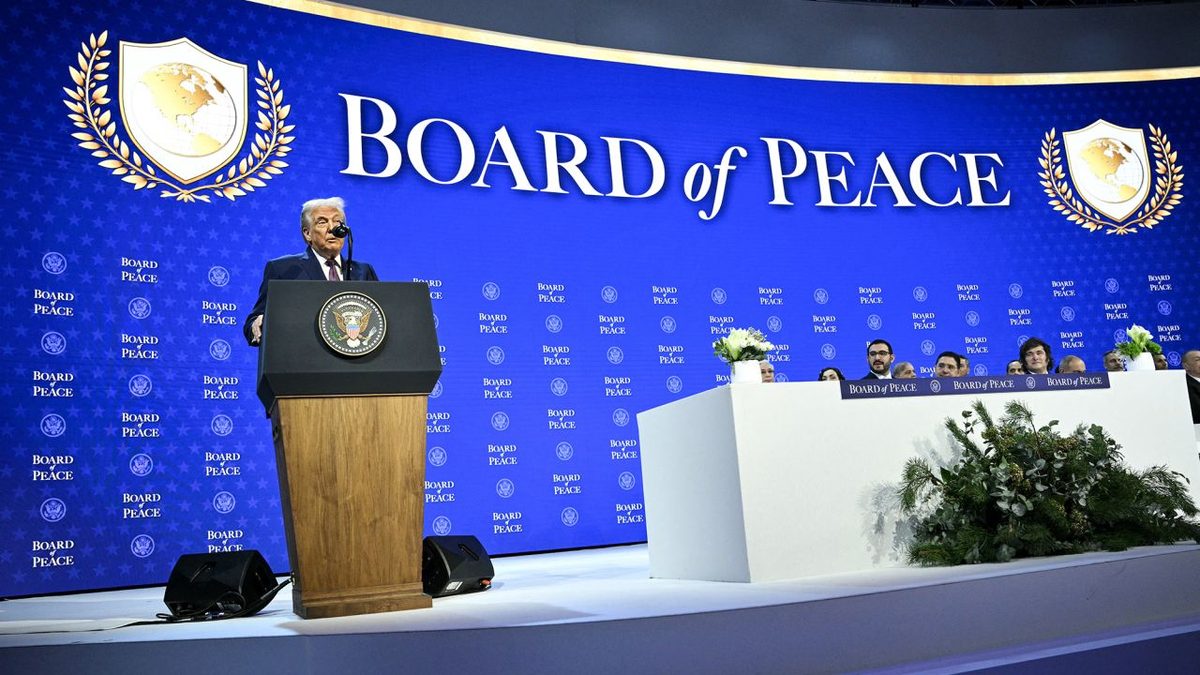
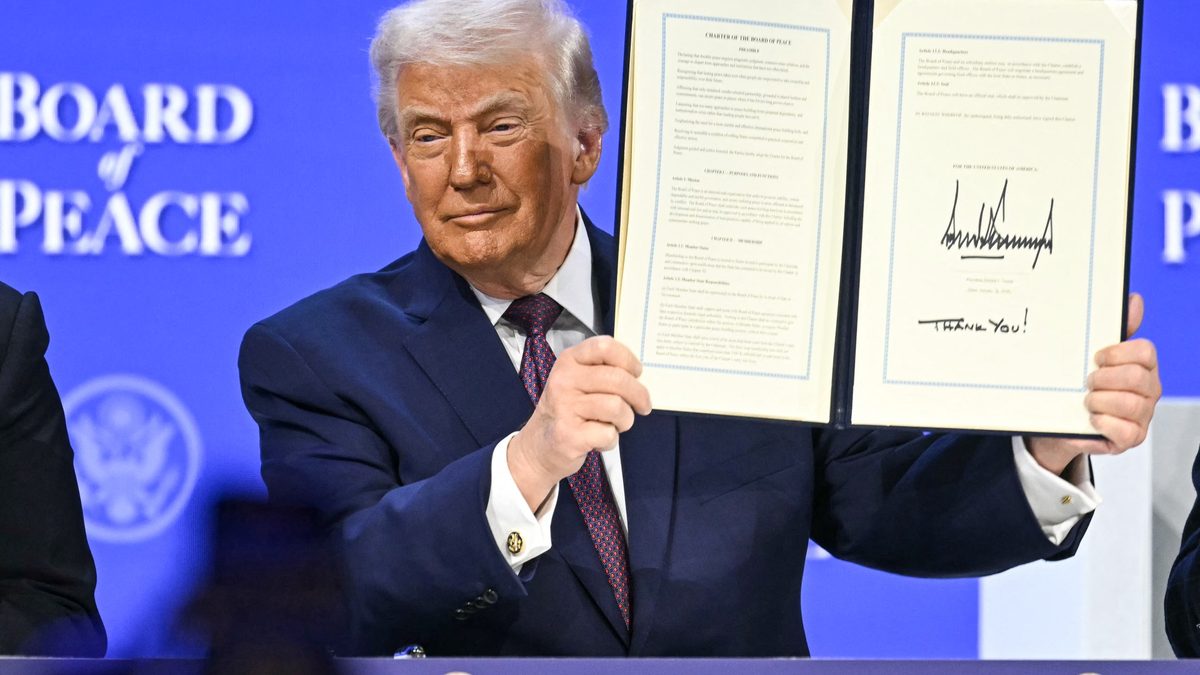
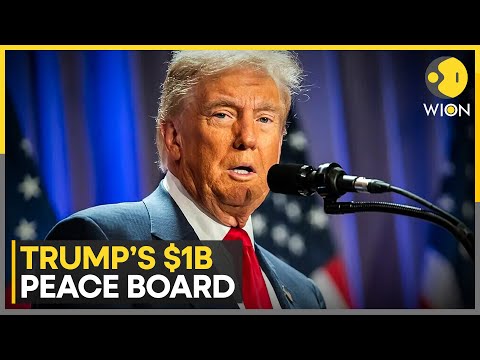
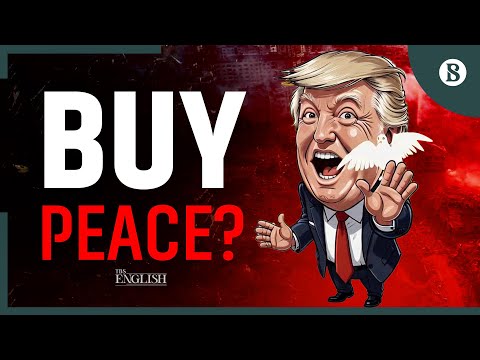
The United Nations has been the primary venue for international conflict resolution since 1945. On January 22, 2026, President Trump launched an alternative: the Board of Peace, a body he chairs for life where permanent membership costs $1 billion and he holds sole veto power.
On February 19, member states met at the Donald J. Trump Institute of Peace in Washington. They pledged $5 billion toward Gaza reconstruction and committed thousands of personnel for security forces.
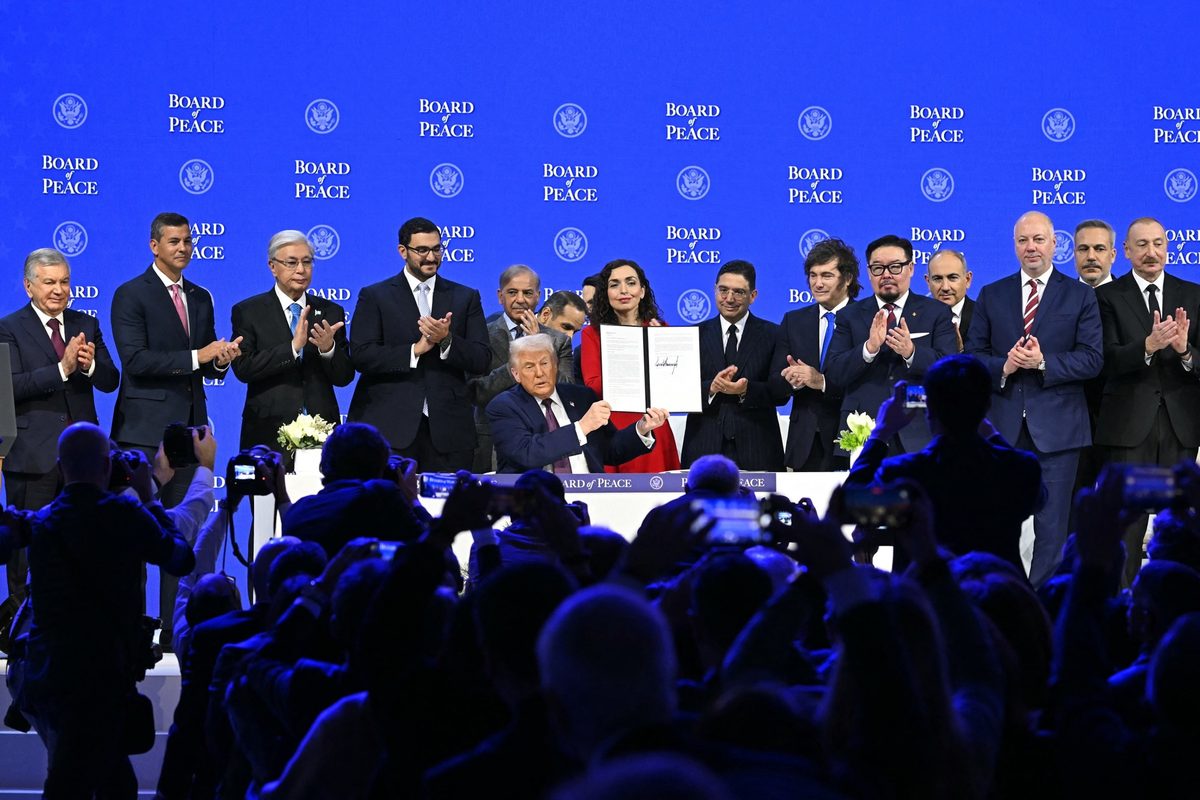
What began as a Gaza reconstruction mechanism in Trump's September 2025 peace plan has expanded to claim authority over 'areas affected or threatened by conflict' worldwide. Over 25 countries signed on at Davos, including Israel, Saudi Arabia, and Hungary, while Britain, France, and Germany declined citing UN concerns; France also faced tariff threats and Canada lost its invitation. Russia remains noncommittal as the board advances Gaza funding amid ongoing demilitarization talks with Hamas.
Questions about this story
Free account needed to ask — your question is kept and asked for you right after sign-up. Answers are public.
No questions yet — be the first to ask.
Key Indicators
25+
Founding member countries
Nations that signed the charter at Davos on January 22, 2026
$1B
Permanent membership fee
Payment required for permanent seat; non-payers get three-year terms
60
Countries invited
Total invitations extended; Canada's invitation withdrawn January 23
1
Veto holder
Trump alone holds veto power and serves as chairman for life
$15B
Total Gaza pledges
$5B reconstruction pledge at Feb 19 inaugural meeting plus $10B GDP target by 2035; UN estimates full rebuild at $70B
$5B
Inaugural pledges secured
Member states commit $5B for Gaza humanitarian and reconstruction at first board meeting
Images from Openverse under Creative Commons licenses.
Videos from YouTube.
Voices
Curated perspectives — historical figures and your fellow readers.
Oscar Wilde
(1854-1900) ·Victorian · wit
Fictional AI pastiche — not real quote.
"One billion dollars for a seat at the table of peace — how refreshingly honest of him to price what diplomats have always sold for far less and called it virtue."
0% found this insightful
Ayn Rand
(1905-1982) ·Cold War · philosophy
Fictional AI pastiche — not real quote.
"A man who sells veto power by the billion has not created a Board of Peace — he has created a Board of His Peace, which is precisely the distinction that separates a businessman from a philosopher-king, and a philosopher-king from a thug with a charter. The United Nations was collectivism's cathedral; this is merely collectivism with a cover charge and a lifetime membership for its founder. One almost admires the honesty of making the price explicit."
0% found this insightful
Ever wondered what historical figures would say about today's headlines?
Sign up to generate historical perspectives on this story.
18 events
Latest: February 19th, 2026 · 8 months ago
Showing 8 of 18
JK to step
Tap a bar to jump to that date
Jump to
February 2026
Inaugural Board of Peace meeting secures $5B Gaza pledges
LatestMilestone
Trump hosted first operational meeting at Donald J. Trump Institute of Peace; 20+ countries pledged $5B for reconstruction and thousands of personnel for International Stabilization Force and local police. European allies absent; UN estimates full rebuild at $70B.
January 2026
Trump withdraws Canada's Board of Peace invitation
Diplomacy
Trump revokes Canada's invitation hours after PM Mark Carney's Davos speech warning against 'economic coercion by the world's superpowers.' First diplomatic casualty of the initiative.
Germany formally declines membership
Diplomacy
German foreign ministry releases official document stating opposition due to concerns the board would undermine the UN and grant Trump predefined powers.
Trump threatens 200% tariffs on French wine after refusal
Statement
Following France's formal decline citing incompatibility with UN Charter, Trump threatens 200% tariffs on French wine and champagne.
Russia still evaluating membership
Diplomacy
Kremlin spokesman Dmitry Peskov confirms Putin is 'studying all the details' of Trump's invitation, seeking to 'clarify all the nuances' with Washington. No decision or timeline provided.
Board of Peace charter signed at Davos
Milestone
Trump signs founding charter with 25+ countries at World Economic Forum. UK, France, Germany absent. Charter makes no mention of Gaza, claims global conflict resolution authority.
Kushner unveils Gaza reconstruction vision at Davos
Announcement
Jared Kushner presents detailed Gaza reconstruction plan: 100,000+ housing units, 200 schools, 75+ medical facilities. Projects Gaza GDP reaching $10 billion by 2035, up from $362 million in 2024. Does not specify funding sources.
Israel agrees to join; European nations decline
Diplomacy
Netanyahu confirms Israel will join. France, Norway, Sweden, Slovenia decline. UK, Germany remain noncommittal.
Trump says board 'might' replace UN
Statement
Trump states 'the United Nations never helped me' as justification for Board of Peace, claims it 'might' replace the UN.
Putin invited to join
Diplomacy
Kremlin confirms Trump has invited Putin to join. Putin suggests Russia could pay $1 billion from U.S.-frozen assets.
$1 billion membership fee revealed
Revelation
Draft charter obtained by media shows permanent membership requires $1 billion contribution; Trump serves as chairman for life with sole veto power.
Trump formally announces Board of Peace
Announcement
Trump announces establishment via social media, names executive committee including Rubio, Kushner, Blair, Witkoff.
Phase Two begins, NCAG formed
Implementation
Trump announces Phase Two launch with full demilitarization, reconstruction. National Committee for Administration of Gaza established under Ali Shaath.
November 2025
UN Security Council adopts Resolution 2803
Legal
Resolution passes 13-0-2 (Russia, China abstaining), endorsing Trump's peace plan and authorizing Board of Peace and International Stabilization Force specifically for Gaza transition.
October 2025
Gaza ceasefire takes effect
Implementation
Ceasefire begins. Living hostages released within 72 hours, Israel begins releasing 2,000 Palestinian prisoners.
Israel-Hamas ceasefire agreement signed
Agreement
Agreement signed in Egypt. Phase One begins with hostage exchange for Palestinian prisoners.
Hamas agrees to hostage release, rejects full disarmament
Negotiation
Hamas accepts releasing hostages and handing administration to Palestinian technocrats, but does not agree to disarm or forgo all influence in Gaza.
September 2025
Trump unveils 20-point Gaza peace plan
Announcement
At a White House press conference with Netanyahu, Trump announces comprehensive Gaza plan including concept of a 'Board of Peace' to oversee reconstruction, with himself as chairman.
Scenarios
1
Board Becomes De Facto Alternative to UN for Willing Nations
Possible
Discussed by: The Guardian, international law scholars at George Washington University and University of Exeter
If major regional powers like Saudi Arabia, Turkey, and Egypt continue engaging with the Board while Western democracies stay out, a parallel system emerges. Conflicts involving member states could be mediated through the Board rather than the UN Security Council, where the U.S. faces Chinese and Russian vetoes. This would fragment the international order into competing systems—one led by Trump, one by the traditional UN structure.
2
Charter Scope Scaled Back to Gaza-Only Mandate
Unlikely
Discussed by: European government officials, Chatham House analysts
Pressure from European allies and questions about the charter's legal basis under Resolution 2803 lead to a revised charter limiting the Board to its original Gaza reconstruction mandate. Trump retains his chairman role but the body operates within UN-authorized boundaries. This would require Trump to accept constraints he has shown no inclination to accept.
3
European Nations Join Under Modified Terms
Possible
Discussed by: NBC News, analysts tracking UK and German positions
As Gaza reconstruction funding needs become urgent and the Board demonstrates operational capacity, holdout nations negotiate modified membership terms—perhaps lower fees or observer status. Britain's Labour government faces pressure to participate in shaping outcomes rather than ceding influence to Hungary and Saudi Arabia.
4
Russia's Membership Triggers NATO Alliance Fracture
Uncertain
Discussed by: UK Foreign Secretary Yvette Cooper, Congressional critics including Rep. Mike Lawler
If Russia pays its $1 billion (from frozen assets or otherwise) and joins as a permanent member, the Board becomes a venue where Putin sits alongside Western-aligned nations. This could legitimize Russia's position while its war in Ukraine continues, potentially fracturing NATO consensus on Russia policy.
5
Trump Weaponizes Tariffs Against Non-Member European Nations
Possible
Discussed by: Canadian officials, trade policy analysts following the French wine tariff threat
Trump's threat of 200% tariffs on French products after France declined membership establishes a pattern: join the Board or face economic consequences. This could pressure smaller European economies dependent on U.S. trade to reconsider refusal, potentially fracturing EU unity on multilateral institutions. Canada's invitation withdrawal suggests Trump will also punish nations whose leaders criticize the initiative.
Historical Context
3 moments from history that rhyme with this story — and how they unfolded.
1 of 3
1920-1946
League of Nations and U.S. Absence (1920-1946)
President Woodrow Wilson championed the League of Nations after World War I, but the U.S. Senate refused to ratify membership. Senate Foreign Relations Chairman Henry Cabot Lodge led opposition, arguing the League would entangle America in foreign disputes and constrain its sovereignty.
Then
The League operated without American participation, facing early deadlocks between former Allied and Central powers with equal voting weight.
Now
Unable to respond effectively to Japanese aggression in Manchuria (1931) or Italian invasion of Ethiopia (1935), the League dissolved in 1946. The pattern of great power absence undermining international institutions became a cautionary example.
Why this matters now
The Board of Peace inverts this dynamic: rather than a great power abstaining from a multilateral body, the U.S. is creating a parallel institution where it holds unilateral authority. Western European nations are now the ones declining to participate.
2 of 3
1815-1914
Concert of Europe (1815-1914)
After Napoleon's defeat, Austria's Metternich, Britain's Castlereagh, and Russia's Alexander I created an informal system where five great powers—Austria, Prussia, Russia, Britain, and France—resolved disputes through diplomatic congresses rather than war.
Then
Europe avoided broad continental conflict for a century, with the great powers meeting regularly to address crises from Belgian independence to Balkan tensions.
Now
The system worked while powers shared common goals of preventing revolution and maintaining balance. Once economic and nationalist rivalries supplanted these goals, the Concert collapsed into World War I.
Why this matters now
The Board of Peace resembles the Concert in concentrating authority among select powers rather than universal membership. Unlike the Concert's rough equality among five powers, however, the Board vests final authority in one individual.
3 of 3
2000-2002
U.S. Withdrawal from International Criminal Court (2002)
President Clinton signed the Rome Statute creating the ICC in 2000. President Bush withdrew the signature in May 2002, then negotiated bilateral immunity agreements with over 100 countries, threatening aid cuts to those who refused.
Then
The ICC proceeded without U.S. membership. Washington secured immunity agreements with many nations, limiting the court's practical reach over American personnel.
Now
The ICC operates with 125 member states but lacks jurisdiction over the world's most powerful military. The pattern established that the U.S. would build alternative arrangements rather than submit to international authority it didn't control.
Why this matters now
The Board of Peace extends this approach from opting out of an institution to creating a competing one. Where ICC withdrawal was defensive—avoiding accountability—the Board is offensive, seeking to supplant existing structures.