Hamas governed Gaza since June 2007, but on January 15, 2026, a 15-member committee of Palestinian technocrats met in Cairo—none affiliated with Hamas or the Palestinian Authority. The next day, Trump announced the Board of Peace's leadership: himself as chair, Secretary of State Marco Rubio, former UK PM Tony Blair, Jared Kushner (his son-in-law), special envoy Steve Witkoff, and others. By January 17, Netanyahu's office had declared the arrangement to be 'not coordinated with Israel and contrary to its policy.'
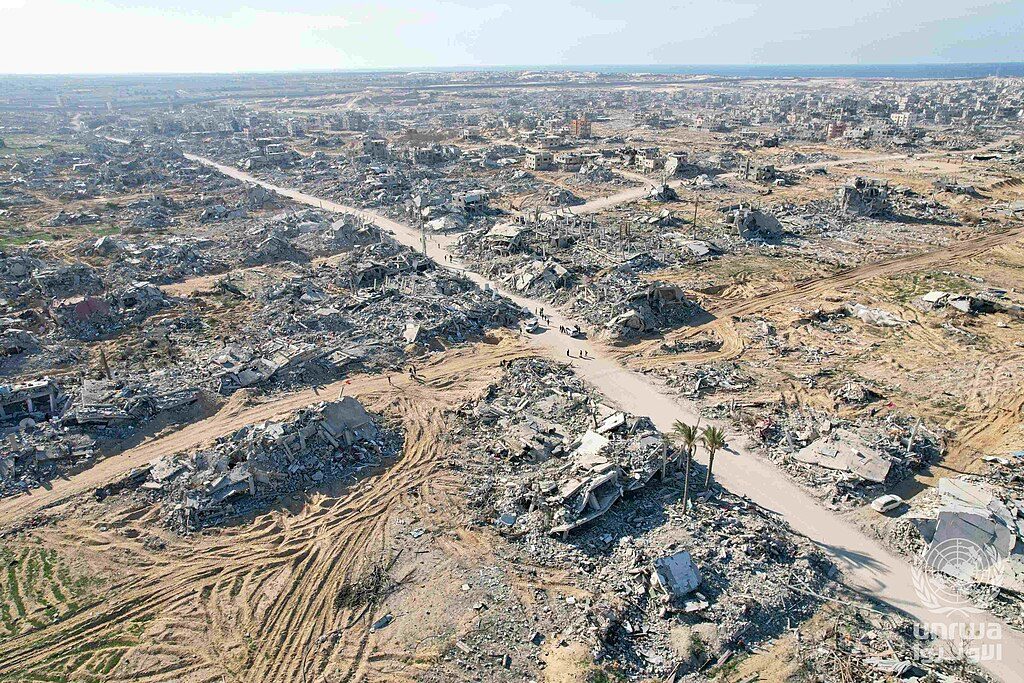
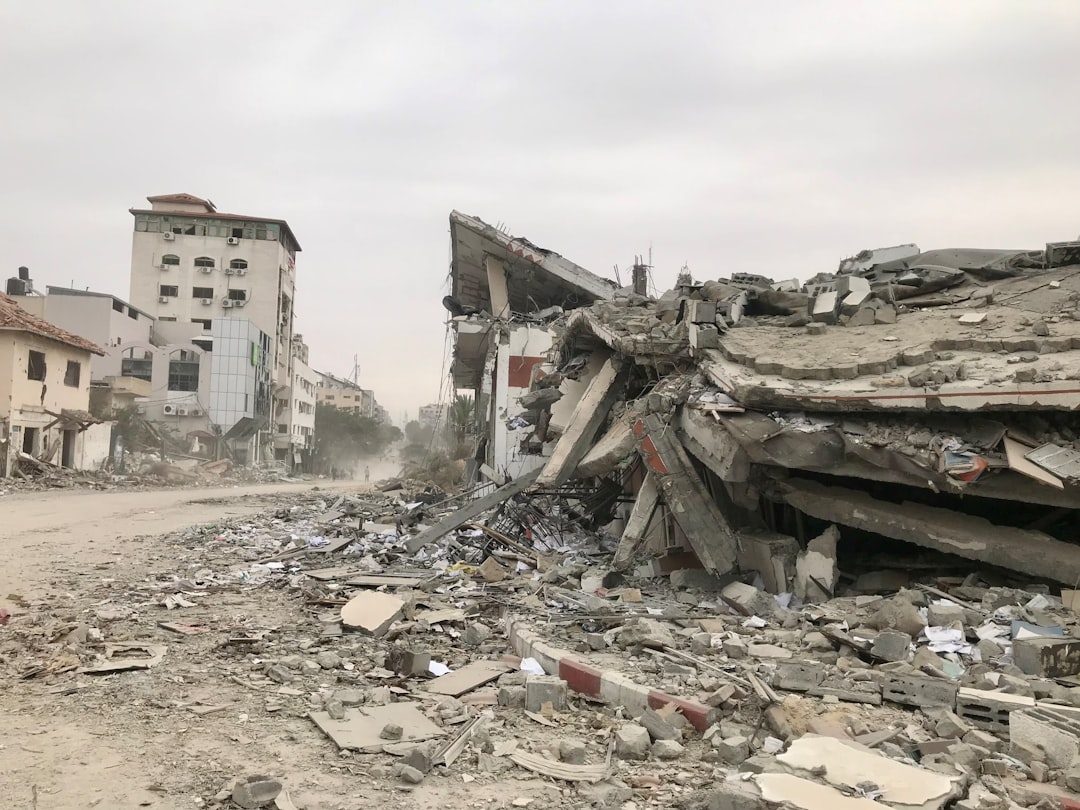
The National Committee for the Administration of Gaza will manage utilities, education, and civil services for 2 million people. In that territory, 90% of homes are damaged, reconstruction costs exceed $70 billion, and Israel still occupies 53% of the land. Whether this arrangement survives depends on three unresolved questions. Will Hamas actually disarm when negotiations show no agreement on what disarmament means? Will Israel withdraw further while publicly rejecting the international framework? Will the International Stabilization Force deploy before governance collapses, with General Jasper Jeffers as commander but with uncertain troop commitments?
Questions about this story
Free account needed to ask — your question is kept and asked for you right after sign-up. Answers are public.
No questions yet — be the first to ask.
Key Indicators
18
Years of Hamas rule ending
Hamas took control of Gaza in June 2007 after defeating Fatah forces
$70B
Estimated reconstruction cost
UN October 2025 estimate, up from $50B in February 2025
53%
Gaza under Israeli control
IDF controls majority of territory after withdrawing from urban areas
15
Committee members
Technocrats vetted by Israel, none affiliated with Hamas or PA
20,000
Planned peacekeeping troops
ISF authorized by UN; Indonesia and Morocco expected as main contributors
442
Palestinians killed since ceasefire
Casualties from alleged Israeli violations between October 2025 and mid-January 2026
17 events
Latest: January 18th, 2026 · 8 months ago
Showing 8 of 17
JK to step
Tap a bar to jump to that date
Jump to
January 2026
NCAG Publishes Mission Statement
LatestPolitical
Committee chair Ali Shaath signs official mandate statement emphasizing 'peace, democracy, and justice' as core values. Statement outlines priorities including restoring security, electricity, water, healthcare, and education.
US-Israel Diplomatic Rift Over Board Composition
Diplomatic
Netanyahu's office declares Board of Peace composition 'was not coordinated with Israel and is contrary to its policy.' Senior U.S. official responds: 'This is our show, not his show.'
General Jasper Jeffers Named ISF Commander
Appointment
Trump appoints Major General Jasper Jeffers to command International Stabilization Force. Jeffers previously co-chaired Israel-Hezbollah ceasefire monitoring mechanism in Lebanon.
Pakistan, Turkey, Egypt Invited to Join Board
Diplomatic
Trump invites Prime Minister Shehbaz Sharif of Pakistan, President Erdoğan of Turkey, and President el-Sisi of Egypt to become founding members of Peace Council. More than 60 countries reportedly contacted.
Board of Peace Executive Members Announced
Political
Trump reveals founding executive board: himself as chair, Secretary of State Marco Rubio, former UK PM Tony Blair, Jared Kushner, Steve Witkoff, World Bank President Ajay Banga, Apollo CEO Marc Rowan, and deputy NSA Robert Gabriel.
NCAG Holds First Meeting in Cairo
Political
Committee meets with UN envoy Mladenov. Arab diplomat warns Israel blocking civil servant deployment, 'hobbling it out of the gate.'
Phase Two Launched, NCAG Formed
Political
Witkoff announces launch of Phase Two. Egyptian, Qatari, and Turkish mediators reveal 15-member technocratic committee led by Ali Shaath.
Mladenov Named Board of Peace Director
Appointment
Former UN Middle East envoy Nickolay Mladenov confirmed as director-general of Board of Peace after meeting Netanyahu in Jerusalem.
December 2025
ISF Command Planning Conference
Military
CENTCOM hosts 26-nation conference in Qatar to plan International Stabilization Force deployment structure.
November 2025
UN Security Council Adopts Resolution 2803
Legal
Council votes 13-0 (China, Russia abstaining) to authorize Board of Peace and International Stabilization Force. Mandate runs through December 2027.
October 2025
Ceasefire Takes Effect
Milestone
Fighting officially pauses. Israel withdraws from urban areas but retains control of approximately 53% of Gaza's territory.
Israel and Hamas Sign Ceasefire
Diplomatic
Agreement signed in Sharm el-Sheikh. Phase One includes hostage releases, prisoner exchanges, and partial Israeli withdrawal.
September 2025
Trump Unveils 20-Point Gaza Plan
Diplomatic
Trump announces comprehensive peace plan alongside Netanyahu at the White House. Gives Hamas deadline of October 5 to accept.
October 2023
Israeli Ground Invasion Begins
Military
IDF enters Gaza after weeks of airstrikes. Over the following two years, more than 71,000 Palestinians are killed.
Israel Declares War
Military
Israel declares war for first time since 1973, mobilizes 300,000 reservists—the largest call-up in the nation's history.
Hamas Attacks Southern Israel
Military
Hamas launches Operation Al-Aqsa Flood with 4,300+ rockets and ground incursions. 1,195 Israelis and foreign nationals killed, 251 taken hostage.
June 2007
Hamas Seizes Control of Gaza
Political
Hamas forces defeat Fatah in violent clashes, taking full control of the Gaza Strip. 188 people killed in the fighting.
Scenarios
1
NCAG Consolidates, ISF Deploys, Hamas Fades
Possible
Discussed by: Trump administration, Israeli government (conditionally), Gulf state mediators
The technocratic committee establishes basic services across Gaza within six months. Indonesia and Morocco deploy peacekeeping troops, creating a security buffer that allows Israel to withdraw further. Hamas retains political influence but loses administrative relevance as reconstruction funding flows through the Board of Peace. This requires Hamas to acquiesce to demilitarization or face isolation from reconstruction benefits—a bet that economic incentives outweigh military capacity.
2
Governance Vacuum: NCAG Collapses Before ISF Arrives
Possible
Discussed by: Arab diplomats, UN officials, security analysts
Israel continues blocking civil servants and restricting imports, preventing the NCAG from providing basic services. Without visible improvement in daily life, the committee loses credibility among Gazans. The International Stabilization Force delays deployment due to troop contribution disputes or security concerns. Hamas reasserts control in the governance vacuum, or armed factions fragment authority entirely. This scenario follows the pattern of Iraq's Coalition Provisional Authority—international structures overwhelmed by local dynamics.
Discussed by: European analysts, Carnegie Endowment, Washington Institute
The ceasefire persists despite mutual accusations of violations. The NCAG operates in limited territory as Israel maintains occupation of strategic areas and refuses further withdrawal. The Board of Peace functions primarily as a coordination mechanism for humanitarian aid rather than a transitional authority. Gaza remains in an indefinite limbo—not at war, not reconstructing, not self-governing. This resembles the post-2014 Gaza Reconstruction Mechanism, which took years to rebuild a fraction of destroyed homes.
A significant attack—whether by Hamas remnants, Israeli forces, or splinter factions—collapses the ceasefire. Israel reoccupies cleared territory. International actors abandon the Board of Peace framework. Reconstruction funding freezes. The October 2025 agreement joins the list of failed Gaza truces. This outcome becomes more likely if domestic political pressures in Israel (Netanyahu faces elections by October 2026) or within Palestinian factions incentivize escalation.
5
US-Israel Split Paralyzes Transition Framework
Possible
Discussed by: Israeli opposition leaders, U.S. State Department officials, Middle East analysts
The public dispute between Netanyahu and the Trump administration escalates into a sustained policy divergence. Israel continues blocking civil servant deployment and refuses to coordinate with the Board of Peace, while the U.S. proceeds with international governance structures that cannot function without Israeli cooperation. The NCAG operates in name only, unable to access Gaza or control resources. Hamas exploits the vacuum to reassert control. This scenario becomes likelier if Netanyahu faces domestic political pressure from coalition partners like Ben-Gvir who are calling for renewed military operations.
Historical Context
3 moments from history that rhyme with this story — and how they unfolded.
1 of 3
May 2003 - June 2004
Coalition Provisional Authority in Iraq (2003-2004)
After the U.S. invasion toppled Saddam Hussein, the Coalition Provisional Authority governed Iraq under administrator Paul Bremer. The CPA wielded executive, legislative, and judicial authority under UN Security Council Resolution 1483. It disbanded the Iraqi army—instantly unemploying 500,000 people—and purged Ba'ath Party members from government, creating a leadership vacuum.
Then
Iraq's economy grew 46.5% in 2004, the highest post-conflict growth on record. But security deteriorated rapidly; the decisions to disband the military and de-Ba'athify fueled an insurgency.
Now
The CPA transferred sovereignty after just 13 months. Iraq descended into civil war by 2006. The experience established that technocratic governance cannot succeed without security—and that excluding existing power structures creates enemies.
Why this matters now
The Gaza transition faces the same fundamental question: Can international administrators provide services and legitimacy faster than armed factions can destabilize them? Hamas, unlike the Ba'ath Party, has not been forcibly excluded—but also has not disarmed.
2 of 3
June 1999 - February 2008
UNMIK in Kosovo (1999-2008)
After NATO's bombing campaign ended Serbian control, UN Security Council Resolution 1244 established UNMIK with unprecedented authority—all legislative, executive, and judicial power over Kosovo's 2 million people. A NATO-led peacekeeping force (KFOR) provided security. The mission gradually transferred powers to elected local institutions.
Then
UNMIK stabilized Kosovo and prevented a return to ethnic violence. Within three years, Provisional Institutions of Self-Government were functioning under international oversight.
Now
Kosovo declared independence in 2008; international supervision ended in 2012. The 13-year transition demonstrated that UN administration can work—but requires sustained commitment, clear end-state goals, and functional security.
Why this matters now
Resolution 2803's Board of Peace structure mirrors UNMIK's approach: international oversight transitioning to local governance. But Kosovo had no equivalent to Hamas—an armed movement that governed the territory and refuses to disband. The question is whether Gaza can follow the Kosovo path without first resolving Hamas's status.
3 of 3
September 2014 - May 2021
Gaza Reconstruction Mechanism (2014-2021)
After the 2014 Gaza war killed 2,251 Palestinians and destroyed 17,800 homes, the UN established the Gaza Reconstruction Mechanism to coordinate rebuilding under Israeli security restrictions. The GRM controlled imports of construction materials to prevent diversion to militant use.
Then
Reconstruction proceeded slowly. Three years after the 2014 war, only 57% of destroyed homes had been rebuilt.
Now
The GRM became a model of 'normalized siege'—managing humanitarian minimums rather than enabling recovery. Gaza's infrastructure remained fragile when the 2021 and 2023 conflicts struck, each time destroying what had been partially rebuilt.
Why this matters now
The $70 billion reconstruction challenge dwarfs 2014's scale. If the NCAG faces similar restrictions—Israel is already blocking civil servants—Gaza risks another cycle of partial recovery and renewed conflict rather than genuine transition.