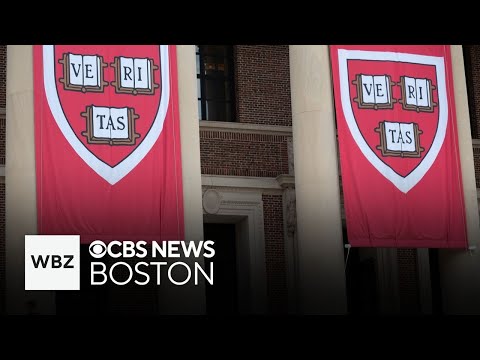
Harvard has received billions in federal research funding for decades without major controversy. Now President Trump is demanding the university pay $1 billion to the government—five times what he sought months earlier—after a year of escalating threats, frozen grants, and failed negotiations. The university has refused to capitulate, and a federal judge has ruled the funding freeze unconstitutional.
The standoff has become a test case for how far the executive branch can push elite universities to change their policies, with Harvard alone among its Ivy League peers in refusing a cash settlement. Six institutions paid settlements, including Columbia, Brown, and Cornell.
Questions about this story
Free account needed to ask — your question is kept and asked for you right after sign-up. Answers are public.
No questions yet — be the first to ask.
Key Indicators
$1B
Current Trump demand
Escalated from $200M after New York Times reported the administration was backing off a cash demand
$2.7B
Funding frozen then restored
Federal judge ruled the freeze unconstitutional in September 2025; administration appealing
$56.9B
Harvard endowment
World's largest university endowment, giving Harvard unusual capacity to resist financial pressure
6
Universities that settled
Columbia ($221M), Northwestern ($75M), Cornell ($60M), Brown ($50M), Penn, and Virginia reached deals
20 events
Latest: February 4th, 2026 · 8 months ago
Showing 8 of 20
JK to step
Tap a bar to jump to that date
Jump to
February 2026
Trump Escalates to $1 Billion Demand
LatestEscalation
Trump responds to reports of softening stance by demanding $1 billion from Harvard—five times his previous demand—and threatens criminal investigation.
New York Times Reports Administration Backing Off Cash Demand
Negotiation
Report indicates administration has dropped demand for $200 million settlement payment from Harvard after protracted talks.
December 2025
Administration Appeals Harvard Ruling
Legal
Justice Department files notice of appeal against Judge Burroughs' ruling, extending the legal battle.
November 2025
Northwestern Settles for $75 Million
Settlement
Northwestern agrees to $75 million payment, mandatory antisemitism training, and revocation of agreement with pro-Palestinian protesters.
Cornell Settles for $60 Million
Settlement
Cornell agrees to pay $30 million to government plus $30 million for agriculture research, and provide quarterly admissions data.
October 2025
University of Virginia Reaches Settlement
Settlement
UVA becomes first public university to settle, agreeing to compliance requirements but no financial payment or external monitor.
Judge Burroughs grants Harvard summary judgment, finding the funding freeze violated the Constitution and calling antisemitism claims 'a smoke screen.'
July 2025
Columbia Reaches $221 Million Settlement
Settlement
Columbia University agrees to pay $221 million over three years, accept an independent monitor, and provide detailed admissions data.
May 2025
Judge Blocks International Student Ban
Legal
Federal judge grants temporary restraining order blocking DHS from enforcing the enrollment revocation.
DHS Revokes Harvard's Ability to Enroll Foreign Students
Enforcement
Department of Homeland Security revokes Harvard's SEVP certification, which would bar it from enrolling international students.
April 2025
DHS Demands International Student Records
Enforcement
Secretary Noem demands records on every F-1 visa holder at Harvard's 13 schools within 10 business days—unprecedented in the program's 70-year history.
Harvard Sues Federal Government
Legal
Harvard files lawsuit alleging the funding freeze is unconstitutional retaliation for protected speech.
Harvard Rejects Demands, Funding Frozen
Confrontation
President Garber publicly rejects demands. Administration immediately freezes $2.2 billion in grants and $60 million in contracts.
Administration Issues Demands to Harvard
Demand
Federal letter demands Harvard overhaul governance, reform hiring and admissions, eliminate diversity programs, and submit to unprecedented federal scrutiny.
March 2025
Columbia Becomes First Target
Enforcement
Trump administration slashes $400 million in federal funding to Columbia University, the first action against any university.
February 2025
DOJ Creates Antisemitism Task Force
Executive Action
Department of Justice announces multi-agency Task Force to Combat Antisemitism, prioritizing campus investigations.
January 2025
Trump Signs Campus Antisemitism Executive Order
Executive Action
President Trump signs executive order calling for tougher enforcement against campus antisemitism, establishing legal framework for subsequent actions.
January 2024
Claudine Gay Resigns
Leadership
Gay resigns after the shortest tenure in Harvard's history, citing plagiarism allegations. Alan Garber becomes interim president.
Harvard President Claudine Gay testifies before Congress on antisemitism. Her response that calling for genocide of Jews 'can be' a violation 'depending on context' generates immediate controversy.
October 2023
Hamas Attack on Israel Triggers Campus Protests
Background
Hamas attack on Israel leads to pro-Palestinian protests at American universities, including Harvard, setting stage for federal scrutiny of campus responses.
Scenarios
1
Harvard Wins on Appeal, Establishes Precedent
Possible
Discussed by: American Council on Education, AAUP legal analysts, constitutional law scholars
Appeals court upholds Judge Burroughs' ruling that the funding freeze was unconstitutional retaliation for protected speech. This would establish binding precedent limiting executive branch power to condition research funding on institutional policy changes, potentially shielding other universities from similar pressure campaigns.
2
Harvard Negotiates Settlement Without Cash Payment
Possible
Discussed by: Bloomberg, Boston Globe reporters covering negotiations
Harvard and the administration reach agreement similar to UVA's: compliance commitments and data reporting without direct payment or external monitoring. This allows both sides to claim partial victory—Harvard preserves its position that it won't pay to settle, while the administration points to policy changes.
3
Prolonged Standoff Continues Through Trump Term
Likely
Discussed by: Higher Ed Dive analysis, Harvard Crimson reporting on faculty sentiment
Neither side budges. Harvard continues operating on its endowment income while litigation proceeds through appeals. The standoff becomes a permanent feature of the administration's higher education policy, with Harvard serving as a symbol of institutional resistance but also absorbing ongoing operational costs from frozen federal programs.
4
Administration Pursues Criminal Investigation
Unlikely
Discussed by: Legal analysts responding to Trump's February 2026 statement
Justice Department opens criminal investigation into Harvard based on Trump's characterization of the dispute as 'Criminal, not Civil.' Such an investigation would be unprecedented against a university and could target specific administrators. Legal experts note no obvious criminal statute has been violated, making this scenario high-risk for the administration.
Historical Context
3 moments from history that rhyme with this story — and how they unfolded.
1 of 3
1949-1956
McCarthyism and University Loyalty Oaths (1949-1956)
During the Red Scare, legislatures and university boards imposed loyalty oaths on faculty, requiring them to swear they were not Communist Party members. UC Berkeley fired 157 employees in 1950 for refusing to sign. Faculty across the country faced dismissal for past political associations, with institutions often cooperating with investigators.
Then
Hundreds of faculty lost positions. Free inquiry in social and political subjects was suppressed across American higher education.
Now
Courts eventually struck down most loyalty oath requirements. The 1956 Supreme Court case Slochower v. Board of Education established due process protections. The episode is now viewed as a cautionary tale about political interference in academia.
Why this matters now
Like the current dispute, McCarthyism used federal pressure and funding threats to demand universities adopt government-preferred ideological positions. The eventual legal and cultural backlash established protections for academic freedom that Harvard is now invoking.
2 of 3
1935
Governor Earle and University of Pittsburgh (1935)
Pennsylvania Governor George Earle launched an investigation after a professor's firing raised academic freedom concerns. Earle demanded the university restructure its board, declaring 'suppression of discussion is a violation of constitutional liberty and will not be permitted in any institution which receives state aid.'
Then
The university restructured under political pressure to preserve state funding.
Now
The episode contributed to the AAUP's 1940 Statement of Principles on Academic Freedom and Tenure, which remains the foundational document for faculty protections.
Why this matters now
This precedent cuts both ways: it shows government can successfully pressure universities to change governance, but also that such interventions historically lead to stronger codified protections for academic independence.
3 of 3
1985-1997
Steve Jobs Returns to Apple (1997)
Apple's board forced out co-founder Steve Jobs in 1985 after a power struggle with CEO John Sculley. Twelve years later, with Apple near bankruptcy, the board brought Jobs back as interim CEO. He proceeded to transform the company into the world's most valuable enterprise.
Then
Jobs immediately streamlined Apple's product line and negotiated a $150 million investment from Microsoft.
Now
Apple's market cap grew from under $3 billion in 1997 to over $3 trillion, validating the founder's vision against institutional management.
Why this matters now
While not directly parallel, this case illustrates how institutions under existential pressure sometimes face binary choices about capitulation versus resistance. Harvard's endowment gives it unusual staying power—unlike Apple in 1997, it is not facing bankruptcy—which may enable a longer standoff than peer institutions could sustain.