



Pull to refresh
Logo
Daily Brief
Following
Why Sign Up
Closing the US retirement coverage gap

Closing the US retirement coverage gap

Rule Changes
By Newzino Staff |

Federal effort to enroll uncovered workers before the 2027 Saver's Match

Today: Trump signs retirement access executive order

Overview

In January 2027, the federal government will start depositing up to $1,000 a year into the retirement accounts of lower-income workers. There is a problem: roughly 27 million of the workers who qualify do not have an account to put it in.

Why it matters

Starting 2027, Washington will deposit up to $1,000 a year into IRAs for lower-income workers—but most who qualify don't yet have an account.

Key Indicators

54M
Workers without workplace retirement plan
US workers whose employers offer no 401(k) or similar plan.
27M
Eligible for Saver's Match, no IRA
Workers who would qualify for the federal match but currently have no account to receive it.
$1,000
Maximum annual federal contribution
Saver's Match pays 50% of contributions up to $2,000 per worker, phasing out at moderate incomes.
Jan 2027
Saver's Match effective date
Set by the Secure 2.0 Act of 2022; replaces the older Saver's Credit.
TrumpIRA.gov
New Treasury portal
Federal site to help uncovered workers find and enroll in private-sector IRAs.

Interactive

Exploring all sides of a story is often best achieved with Play.

Ever wondered what historical figures would say about today's headlines?

Sign up to generate historical perspectives on this story.

Sign Up

Debate Arena

Two rounds, two personas, one winner. You set the crossfire.

People Involved

Organizations Involved

Timeline

  1. Trump signs retirement access executive order

    Executive Action

    Order directs Treasury to launch TrumpIRA.gov to help workers without a 401(k) enroll in private IRAs, publicize the upcoming Saver's Match, and issue guidance for private donor contributions to workers' accounts.

  2. Secure 2.0 Act signed into law

    Legislation

    President Biden signs the bipartisan retirement bill, which creates the Saver's Match to replace the Saver's Credit beginning in 2027.

  3. Treasury ends myRA program

    Policy

    The first Trump administration shuts down myRA, citing low demand and high per-account administration costs.

  4. Obama administration launches myRA

    Policy

    Treasury rolls out a starter retirement account aimed at workers without a 401(k). Uptake stays low; the program enrolls roughly 30,000 savers over its lifetime.

Scenarios

1

Saver's Match drives the largest IRA enrollment surge in a decade

Discussed by: Retirement industry analysts at Morningstar, Vanguard, and AARP Public Policy Institute

TrumpIRA.gov funnels millions of uncovered workers into low-cost IRAs ahead of January 2027. The match's structure—real federal dollars, not a tax credit—proves more compelling than prior incentives. Account openings spike through 2026, and providers compete to capture new low-balance customers, accelerating fee compression.

2

Uptake disappoints as workers stall on account setup

Discussed by: Brookings retirement policy researchers, prior myRA postmortems

Despite the federal portal, enrollment moves slowly. Workers find IRA paperwork, identity verification, and contribution mechanics intimidating. Without payroll deduction or auto-enrollment, savings rates among low-income workers stay low—mirroring the myRA experience and undercutting the match's reach.

3

Private donor channel becomes major retirement funding source

Discussed by: Tax-policy commentators in Tax Notes and the Wall Street Journal

The order's unusual provision letting private donors contribute to other workers' IRAs draws interest from philanthropists, employers, and financial firms. Treasury rules eventually allow employer-style top-ups, charitable matching, and structured giving programs, expanding low-income retirement contributions in ways the original Secure 2.0 architects did not anticipate.

4

Saver's Match implementation slips past January 2027

Discussed by: Practitioners at the American Retirement Association and IRS Advisory Council

Tax provisions of this complexity routinely arrive late. The IRS misses key build milestones for verifying eligibility and routing payments into millions of accounts; final guidance comes piecemeal; the first match payments arrive months after the statutory effective date.

5

Congress modifies or delays the match before it takes effect

Discussed by: Tax-policy reporters at Bloomberg Tax and Politico

Budget pressure or a future political shift prompts Congress to revisit Saver's Match parameters—lowering the cap, narrowing eligibility, or pushing back the start date as part of a broader tax package. The TrumpIRA portal continues, but the federal dollars it was designed to channel shrink.

Historical Context

myRA program (2014–2017)

November 2014 – July 2017

What Happened

The Obama Treasury launched myRA, a no-fee starter retirement account aimed squarely at workers whose employers offered no 401(k). Contributions were invested in a single low-yield government bond fund. After three years and an estimated $70 million in setup and operating costs, only about 30,000 accounts had been opened.

Outcome

Short Term

The first Trump administration shut myRA down in 2017, citing low demand and high per-account costs.

Long Term

The episode hardened a view among retirement-policy experts that voluntary, federally-run starter accounts—without auto-enrollment or matching dollars—struggle to attract workers, even when access barriers are stripped away.

Why It's Relevant Today

TrumpIRA.gov targets the same population myRA targeted, but with two key differences: it routes workers to private IRAs rather than a government account, and it arrives paired with an actual federal match starting in 2027. Whether that combination breaks the myRA pattern is the central question.

OregonSaves and the state auto-IRA wave (2017–present)

July 2017 – present

What Happened

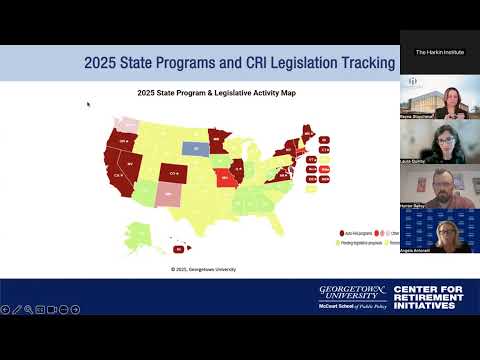
Frustrated by federal inaction, Oregon launched OregonSaves, a state-run program that automatically enrolls workers without employer plans into Roth IRAs funded through payroll deduction. Illinois, California, and more than a dozen other states followed with similar mandates. Combined, state auto-IRA programs now hold billions in contributions across more than a million accounts.

Outcome

Short Term

Auto-enrollment with payroll deduction proved decisively more effective than voluntary federal options at moving low-income workers into retirement savings.

Long Term

The state programs established a working template for closing the coverage gap and built political momentum for a federal counterpart, contributing to provisions in Secure 2.0.

Why It's Relevant Today

TrumpIRA.gov is a voluntary federal portal, not an auto-enrollment mandate. The state experience suggests this design choice will limit reach—unless the Saver's Match itself provides enough pull to overcome inertia.

Pension Protection Act and the rise of auto-enrollment (2006)

August 2006

What Happened

Congress passed the Pension Protection Act, which gave employers legal cover to automatically enroll workers in 401(k) plans rather than requiring opt-in. Within a decade, auto-enrollment became the default at large employers, and 401(k) participation rates among eligible workers climbed sharply.

Outcome

Short Term

Participation in employer plans rose, especially among younger and lower-paid workers who had previously failed to enroll.

Long Term

Auto-enrollment is now widely viewed as the single most effective retirement-policy intervention of the modern era—and a benchmark against which voluntary programs are measured.

Why It's Relevant Today

The 2006 law worked because it changed the default, not because it created new incentives. The 2026 order relies on workers actively visiting a website and opening an account. Behavioral economics strongly suggests defaults beat portals.

Sources

(4)