
Pull to refresh
Logo
Singapore breaks ground on Tuas Port's largest phase

Singapore breaks ground on Tuas Port's largest phase

Built World

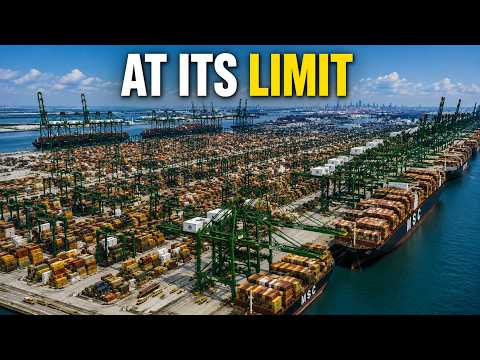
Twenty-one berths and 8.6km of wharf on reclaimed land, part of a build meant to consolidate every container terminal on the island by the 2040s

Overview

Updated 3 hours ago

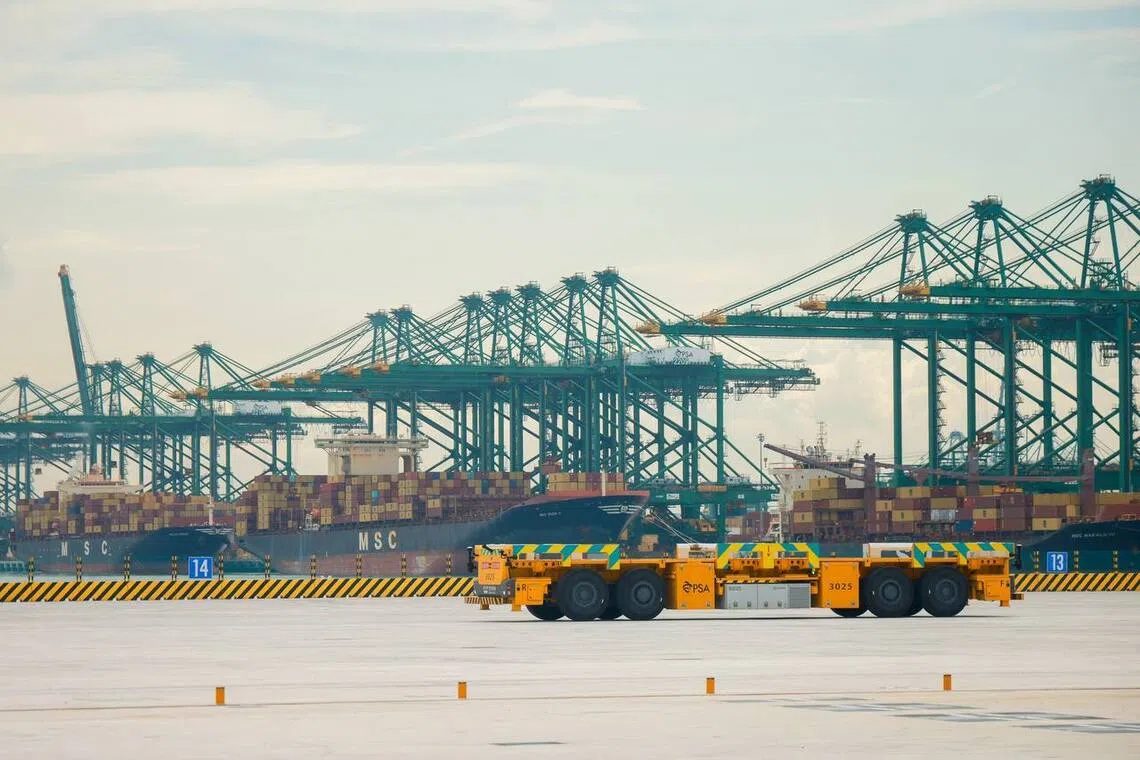
Singapore has run container terminals at Tanjong Pagar, Keppel, Brani and Pasir Panjang for decades, four sites strung along a tight coastline. On November 20, 2026, work began on the Tuas Port phase meant to absorb them: 21 berths and 8.6 kilometres of wharf on nearly 400 hectares of reclaimed land, an area about the size of Clementi Town.

The first ships are due in 2028, with the finger fully running by the mid-2030s. When the last of Tuas' four phases finishes in the 2040s, every container box in Singapore moves through one automated yard rated for 65 million twenty-foot equivalent units (TEUs) a year, against the 37.5 million the country handled in 2021.

Why it matters

Singapore imports almost all its food and fuel by sea; Tuas is the bet that automation keeps it the region's default transhipment stop.

Questions about this story

Free account needed to ask — your question is kept and asked for you right after sign-up. Answers are public.

No questions yet — be the first to ask.

Key Indicators

65 million
Annual capacity at full build-out
Twenty-foot equivalent units (TEUs) a year once all four phases finish in the 2040s.
21
Mega berths in Phase Two
Berths at 23-metre depth, built to take the largest container ships afloat.
8.6 km
Wharf length in Phase Two
Quay length where ships load and unload at the new finger.
400 ha
Reclaimed land for Phase Two
About 560 football fields, roughly the size of Clementi Town.
25 million
TEUs handled at Tuas since 2022
Cumulative throughput since the port officially opened.
1,000
Autonomous yard vehicles at completion
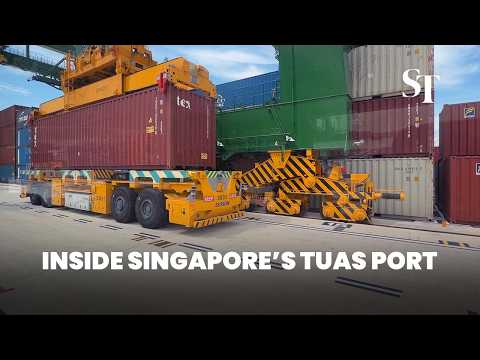
Self-routing guided vehicles that pick their own paths instead of following fixed tracks.

Voices

Curated perspectives — historical figures and your fellow readers.

Sign up to generate historical perspectives on this story.

People Involved

Organizations Involved

Timeline

February 2015 2028

9 events Latest: Today
Tap a bar to jump to that date
  1. First Phase Two berths due to start work

    Upcoming Operations

    PSA plans to bring the new finger into service progressively from 2028.

  2. Maritime masterplan scheduled for release

    Upcoming Policy

    Siow says the plan will cover port capacity, technology and worker training.

  3. City terminals due to close as operations shift to Tuas

    Upcoming Consolidation

    Tanjong Pagar, Keppel and Brani are scheduled to move; Tuas expects 18 berths that year.

  4. Ground broken on Phase Two's 21 berths

    Today Milestone

    PSA starts work on the largest of four phases: 8.6km of wharf at 23-metre depth.

  5. Reclamation finished for Phase Two's northern berths

    Construction

    MPA marks the end of land-filling for the northern half of the new finger.

  6. Tuas Port officially opens

    Milestone

    Container operations begin at the new site; 25 million TEUs follow by late 2026.

  7. Phase One reclamation completed

    Construction

    Six years of filling and soil improvement finish, with 221 caissons forming 8.6km of seawall.

  8. Phase Two reclamation begins on open sea

    Construction

    Work starts on the land that becomes Finger Three; 227 caissons will form 9.1km of seawall.

  9. Reclamation starts for Tuas Phase One

    Construction

    MPA begins filling 414 hectares of sea, a job that takes until November 2021.

Scenarios

1

First Phase Two berth handles a container ship in 2028

Likely Resolves by End of 2028

Discussed by: PSA Singapore's stated schedule and MPA's construction timeline

PSA says Phase Two operations start progressively from 2028, and the land is ready ahead of time: reclamation for the northern berths finished on November 10, 2026. What remains is berth construction, crane delivery and getting the automated yard to run at volume. Any slip shows up first in PSA's own announcements, not in throughput data.

2

Tanjong Pagar, Keppel and Brani close by end-2027

Possible Resolves by End of 2027

Discussed by: MPA's published plan for the old city terminals

MPA's schedule has the three city terminals relocating to Tuas by 2027, with Pasir Panjang following in the 2040s. The move is the test of whether consolidation actually happens or drifts the way large port projects often do. Each terminal's closure is a discrete, checkable event.

3

Maritime masterplan published with a capacity target

Likely Resolves by Apr 30, 2027

Discussed by: Transport Minister Jeffrey Siow, who announced the April 2027 date

Siow used the groundbreaking to name three priorities for the plan: capacity across the port and maritime ecosystem, technology, and workforce training. The document itself is the scoreable item. Watch whether it commits to a tonnage or berth target beyond Tuas' existing 65 million TEU design.

Historical Context

3 moments from history that rhyme with this story — and how they unfolded.

December 2005

Yangshan Deep Water Port (2005)

Shanghai built a container port on reclaimed islands in Hangzhou Bay and linked it to the mainland with the 32.5-kilometre Donghai Bridge. The first phase opened in December 2005. Within five years Shanghai had passed Singapore as the world's busiest container port.

Then

Shanghai's annual container throughput overtook Singapore's around 2010.

Now

The site anchored Shanghai's role as a regional transhipment hub and later added a highly automated terminal.

Why this matters now

Tuas is Singapore's response to that ranking shift: a purpose-built, automated port on new land, sized for the biggest ships.

2013-2015

Rotterdam Maasvlakte II (2015)

Rotterdam pushed Europe's largest port further into the North Sea on reclaimed land, and built the new terminals around automated container handling rather than manual crane work.

Then

The site gave Rotterdam deep-water berths built for the largest container ships then in service.

Now

It became the reference case in Europe for running a container terminal with very few people on the quay.

Why this matters now

Tuas is a whole-port version of the same bet: new land, built from the start for machines rather than drivers.

June 2016

Panama Canal new locks (2016)

Panama opened a second set of locks that let far larger container ships through the canal. Ports on both coasts, and along the routes feeding them, rebuilt berths and dredged channels to take the bigger vessels.

Then

Container traffic shifted toward ports able to serve the larger ships.

Now

The race to handle bigger vessels became a standing constraint on port design worldwide.

Why this matters now

Tuas' 23-metre berth depth and 8.6km wharf are Singapore's entry in that same race, built to hold for at least a decade.

Sources

(7)