
Pull to refresh
Logo
U.S. becomes first country to skip U.N. rights review twice

U.S. becomes first country to skip U.N. rights review twice

Rule Changes

The Human Rights Council postponed the U.S. review to January 2027 rather than hold it without Washington

Overview

Updated 1 hour ago

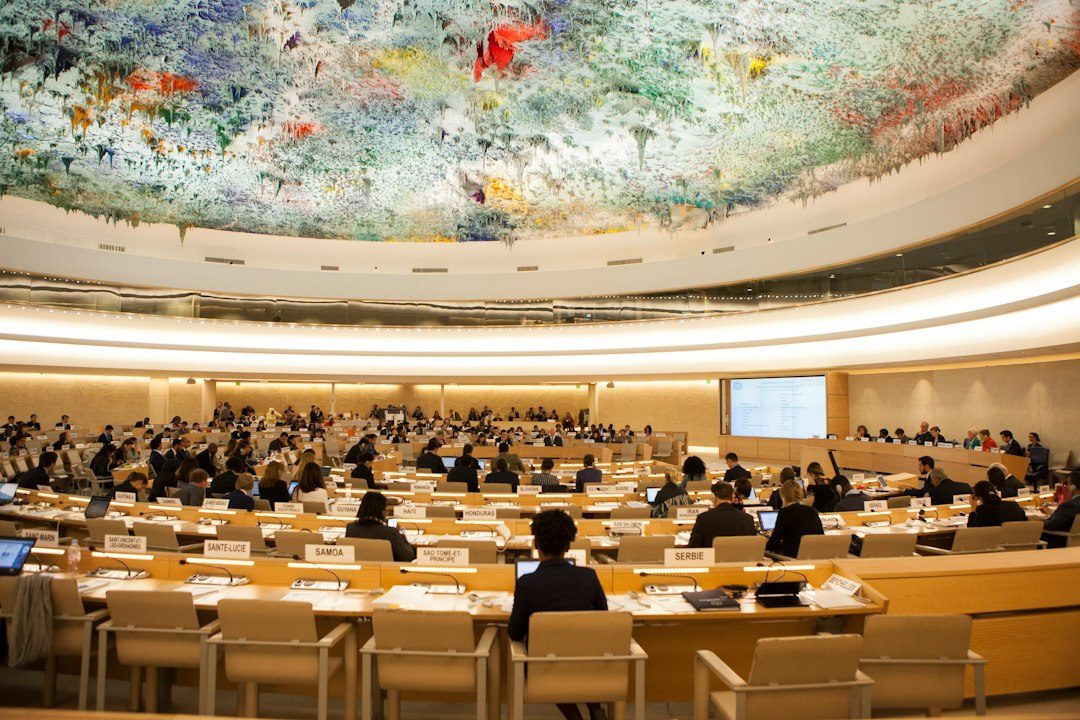
On November 10, 2026, the United States left its seat empty at the United Nations Universal Periodic Review in Geneva for the second year in a row. No other of the 193 member states has skipped the review twice. The Human Rights Council responded by postponing the U.S. review to January 2027.

The review is often the only global hearing on a country's human rights record, and the only one where outside groups can put evidence on the record. Washington's absence removes that forum for U.S. citizens and tests whether a mechanism built on universal participation can survive a major power opting out.

Why it matters

If other states copy Washington's no-show, the review loses the universality that gives its findings weight.

Questions about this story

Free account needed to ask — your question is kept and asked for you right after sign-up. Answers are public.

No questions yet — be the first to ask.

Key Indicators

2
Consecutive U.S. no-shows at its review
The first country to miss the Universal Periodic Review twice.
193
U.N. member states covered by the review
Each is examined by peers roughly every four to five years.
~200
Civil society submissions on the U.S. record
U.S. and international groups filed reports covering migration and racial discrimination.
Jan 2027
Rescheduled review date
The council adopted the postponement without a vote.

Voices

Curated perspectives — historical figures and your fellow readers.

Sign up to generate historical perspectives on this story.

People Involved

Organizations Involved

Timeline

2025 November 2026

4 events Latest: Today
Tap a bar to jump to that date
  1. U.S. skips review a second time

    Today Diplomacy

    Washington became the first state to miss the review twice; the council postponed it to January 2027.

  2. Rights groups demand consequences

    Today Statement

    Human Rights Watch and others asked the council to act instead of rescheduling again.

  3. First U.S. no-show at its review

    Diplomacy

    The scheduled review was pushed back to November 2026 in hopes Washington would attend.

  4. U.S. withdraws from Human Rights Council

    Diplomacy

    Washington left the 47-member council, citing anti-Israel bias and anti-American rhetoric.

Scenarios

1

U.S. delegation appears at the January 2027 review

Unlikely Resolves by Jan 31, 2027

Discussed by: Diplomats quoted by Reuters, who said the aim was to leave the door open

The council postponed rather than proceed without Washington, betting that a new date could draw the U.S. back. A U.S. delegation would present a report, face questions on the death penalty and abortion, and hear recommendations. Diplomats were skeptical, with one telling Reuters the hope was simply that Washington returns in two years.

2

U.S. skips a third time and the council reviews it in absentia

Possible Resolves by Jan 31, 2027

Discussed by: Human Rights Watch and other rights groups

Rights groups want the council to hold the review anyway and take evidence about alleged violations. U.N. insiders worry that proceeding without the state under review sets a precedent that could let other governments stay away, leaving civil society to present evidence with no one answering.

3

High Commissioner briefs the council on U.S. rights in March 2027

Possible Resolves by Q1 2027

Discussed by: Human Rights Watch and campaigners including Noor Abdalla

Rights groups asked Volker Türk to present an update on the U.S. human rights situation at the council's 64th session, with civil society and victims taking part. That would create a U.N. forum on the U.S. record even if Washington never attends its review.

4

Another state skips its review, citing the U.S. precedent

Unlikely Resolves by End of 2027

Discussed by: U.N. insiders cited by NPR

The concern is that a great power treating the review as optional weakens the norm for everyone. If a second state fails to appear, the mechanism's claim to universal coverage erodes and the council faces the same choice it now faces with Washington.

Historical Context

2 moments from history that rhyme with this story — and how they unfolded.

January 2013

Israel skips its U.N. rights review (2013)

Israel declined to attend its scheduled Universal Periodic Review, protesting what it called anti-Israel bias in the process. It was the only state to have skipped a review before the U.S. did so in 2025.

Then

The council rescheduled the review rather than proceed without Israel.

Now

Israel returned about nine months later. The episode set a pattern of accommodation rather than enforcement for a no-show.

Why this matters now

It shows the council's established response to a boycott has been to reschedule and wait, the same approach it is now taking with Washington.

June 2018 – 2021

U.S. leaves and rejoins the Human Rights Council (2018–2021)

The first Trump administration withdrew the United States from the Human Rights Council in 2018, also citing anti-Israel bias. The Biden administration rejoined as an observer in 2021.

Then

The U.S. gave up its council seat and vote for roughly three years.

Now

Rejoining showed that withdrawal from the body could be reversed by a later administration.

Why this matters now

The current boycott is the second U.S. disengagement from the council in under a decade, and the first to extend to the review itself.

Sources

(8)