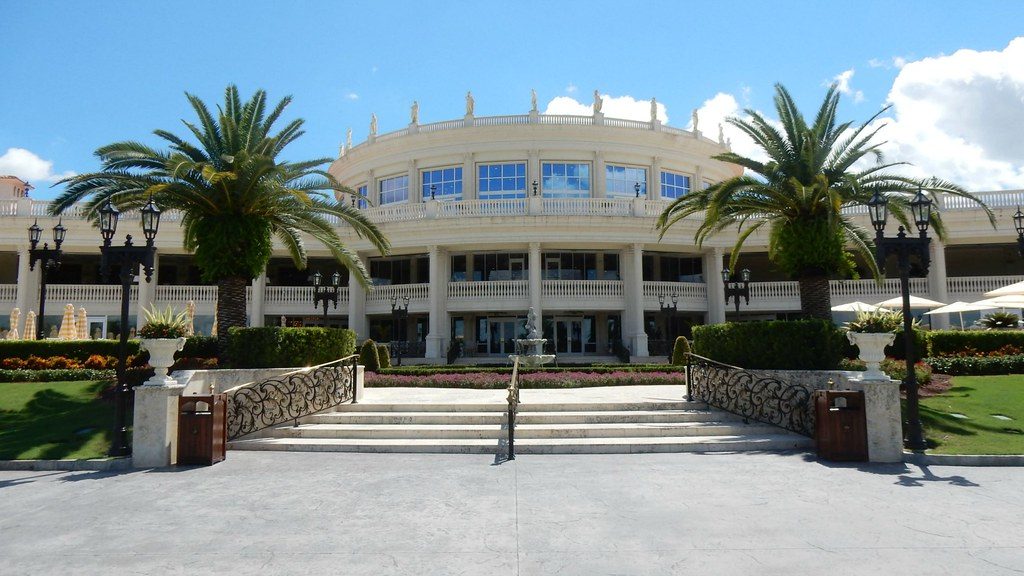
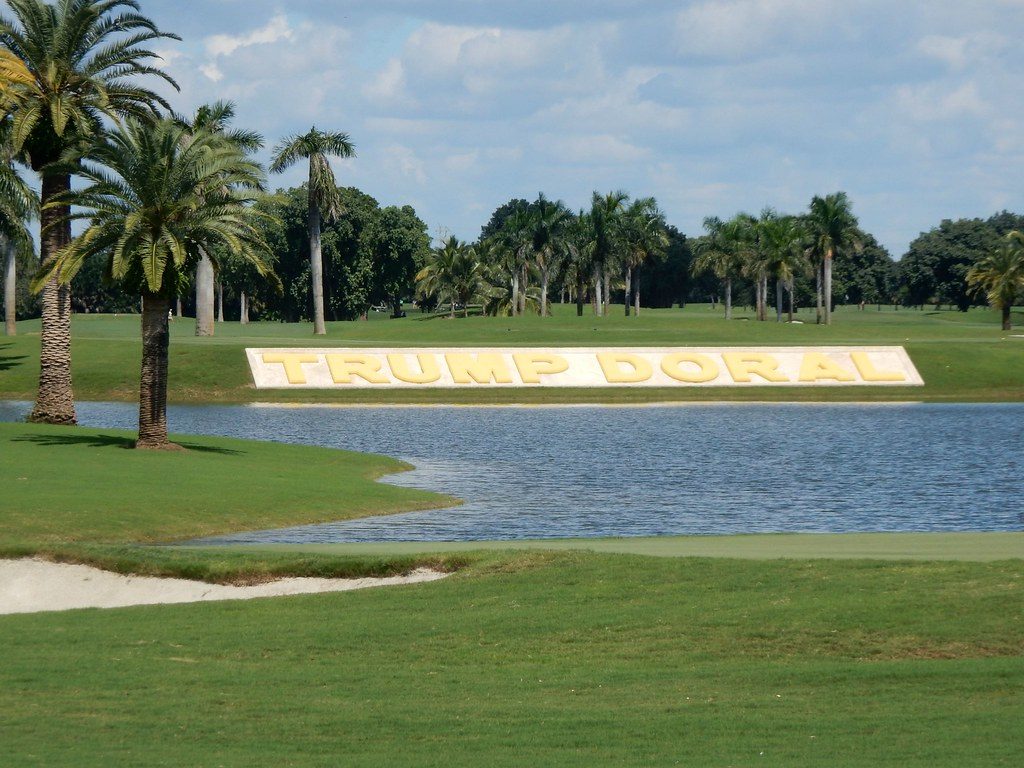
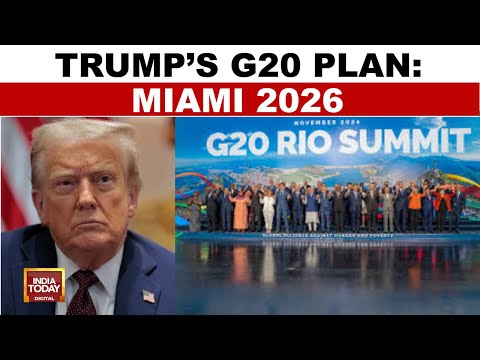
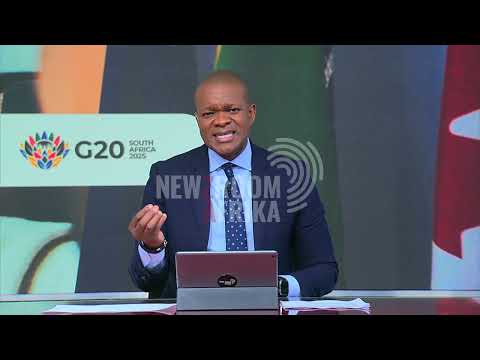
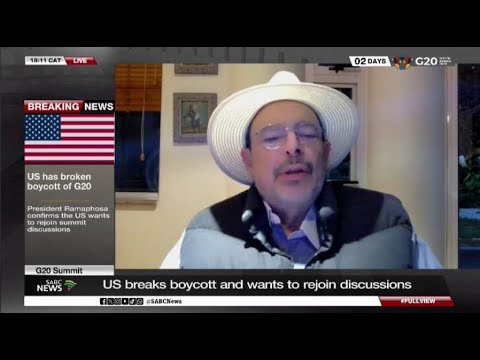
The Group of Twenty, operating by consensus since 1999, hosts its December 2026 summit at Trump National Doral Miami. For the first time, it's excluding South Africa—a founding member—and seating Poland instead, the world's twentieth-largest economy.
The exclusion breaks a 27-year precedent and raises questions about whether host countries can unilaterally reshape G20 membership. If other members accept this outcome, the principle of consensus-based governance shifts: the host nation would control who sits at the table. The G20 represents 85% of global GDP, so any rupture in that consensus would ripple through global finance.
Questions about this story
Free account needed to ask — your question is kept and asked for you right after sign-up. Answers are public.
No questions yet — be the first to ask.
Key Indicators
1st
Member Exclusion
First time a G20 founding member has been formally barred from a summit
122
Declaration Paragraphs
Length of 2025 Johannesburg declaration adopted without US participation
4x
Tariff Trade Increase
Trade covered by G20 tariffs grew four times faster than the previous reporting period
3
New Guest Countries
Poland, Kazakhstan, and Uzbekistan invited as non-member guests
15 events
Latest: December 23rd, 2025 · 10 months ago
Showing 8 of 15
JK to step
Tap a bar to jump to that date
Jump to
December 2026
Miami G20 Summit Scheduled to Open
UpcomingSummit
The 21st G20 leaders' summit is scheduled to begin at Trump National Doral Miami, with Xi Jinping expected to attend.
December 2025
Kazakhstan and Uzbekistan Invited as Guests
LatestInvitation
Trump announces invitations to the Central Asian nations, signaling US interest in their critical minerals for nuclear fuel supply chains.
First US Sherpa Meeting Convenes Without South Africa
Negotiation
Senior officials from 18 G20 members plus Poland meet in Washington. The US launches four working groups on trade, energy, technology, and regulatory reform.
South Africa Asks Members to Object to Exclusion
Diplomacy
South Africa formally requests fellow G20 members challenge its exclusion, testing whether the forum's consensus norms will hold.
Poland Invited to Replace South Africa
Invitation
The US formally invites Poland—now the 20th largest economy—as the only full guest participant, effectively replacing South Africa at the table.
Rubio Unveils 'New G20' Agenda
Policy
Secretary of State Rubio outlines three priorities: removing regulatory burdens, securing energy supply chains, and advancing technology. Climate and development dropped.
US Assumes G20 Presidency
Transition
The United States officially takes over the rotating G20 presidency from South Africa.
November 2025
Trump Bars South Africa from 2026 Summit
Exclusion
Trump announces South Africa will not be invited to the Miami G20—the first time in history a founding member has been excluded from the forum.
G20 Adopts 122-Point Declaration Without US
Declaration
Leaders adopt a comprehensive declaration on development, climate, and debt relief. Ramaphosa refuses US request to hand presidency to a junior embassy official.
Johannesburg G20 Summit Opens Without US
Summit
For the first time since 2008, a G20 leaders' summit convenes without US participation. The first G20 on African soil proceeds despite the boycott.
Trump Announces US Will Boycott Johannesburg Summit
Boycott
Trump declares the US will not attend the South Africa-hosted G20, citing allegations about treatment of white farmers and South Africa's genocide case against Israel.
July 2025
White House Discusses Doral as G20 Venue
Planning
Reports emerge that Trump is privately discussing plans to host the 2026 G20 summit at his Florida golf resort.
October 2019
Trump Abandons Doral G7 Plans After Ethics Criticism
Precedent
Trump reverses course on hosting the G7 at his Miami-area resort following widespread criticism over potential constitutional violations.
November 2008
First G20 Leaders' Summit Convenes in Washington
Institutional
Amid the global financial crisis, G20 is elevated from finance ministers to heads of state. Leaders agree to $4 trillion in coordinated stimulus.
December 1999
G20 Created After Asian Financial Crisis
Origin
Finance ministers and central bank governors from 19 countries plus the EU meet for the first time in Berlin, establishing the Group of Twenty.
Scenarios
1
Miami Summit Proceeds, New Norms Take Hold
Likely
Discussed by: Atlantic Council, Council on Foreign Relations analysts
Most G20 members attend Miami despite South Africa's exclusion. No coordinated boycott materializes. The precedent of host-country discretion over invitations becomes accepted practice, and future presidencies gain similar latitude. The forum fragments into a more transactional venue where participation is negotiated bilaterally rather than guaranteed by membership.
2
BRICS Members Boycott, G20 Splits Into Rival Blocs
Possible
Discussed by: Foreign Policy, Center for Global Development
China, Russia, Brazil, and other BRICS-aligned nations refuse to attend in solidarity with South Africa. The G20 effectively becomes a G15 while BRICS emerges as the alternative forum for Global South economic coordination. Two parallel governance architectures compete for legitimacy.
3
Members Force South Africa's Reinstatement
Unlikely
Discussed by: South African Institute of International Affairs
A critical mass of G20 members formally objects to South Africa's exclusion. Facing the prospect of a delegitimized summit, the US either reverses course or the troika mechanism reasserts itself. The consensus principle survives, but US influence over the forum diminishes.
4
Summit Produces Major US-China Trade Deal
Possible
Discussed by: Bloomberg, CNBC analysts
Trump and Xi use Miami as the venue for a comprehensive trade agreement, potentially including Boeing aircraft purchases and tariff reductions. The controversy over membership recedes as economic outcomes dominate headlines. The G20's relevance is reaffirmed through bilateral deal-making rather than multilateral consensus.
Historical Context
3 moments from history that rhyme with this story — and how they unfolded.
1 of 3
July 1980
US Boycotts Moscow Olympics (1980)
President Jimmy Carter led a boycott of the Moscow Summer Olympics to protest the Soviet invasion of Afghanistan. Sixty-five countries ultimately stayed away, though major allies like Britain, France, and Australia still participated. The Soviet Union and its allies retaliated by boycotting the 1984 Los Angeles Olympics.
Then
The games proceeded with reduced participation. The US boycott did not change Soviet policy in Afghanistan.
Now
Established a precedent for using international forum boycotts as diplomatic weapons, though effectiveness remained disputed. Tit-for-tat exclusions became normalized.
Why this matters now
Like the G20 situation, the Olympics boycott showed how the US could use exclusion as leverage—but also how such actions can fragment institutions and invite retaliation rather than achieve policy goals.
2 of 3
March 2014
Russia Suspended from G8 (2014)
Following Russia's annexation of Crimea, the G7 nations suspended Russia's participation in what had been the G8 since 1997. The move was coordinated among all remaining members and responded to a specific act of territorial aggression.
Then
Russia lost its seat at the G8 table. The forum reverted to its pre-1997 G7 format.
Now
Russia pivoted toward BRICS and other alternative forums. The suspension has never been reversed, and Russia has since shown diminished interest in rejoining.
Why this matters now
The G8 suspension required consensus among members responding to clear norm violations. The G20 situation differs: one host country is unilaterally excluding a member without group consensus, over bilateral disputes rather than international law violations.
3 of 3
1933-1939
League of Nations Collapse (1930s)
The League of Nations, the interwar precursor to the United Nations, slowly collapsed as major powers withdrew or were expelled. Japan left in 1933 after condemnation of its Manchuria invasion. Germany withdrew the same year. Italy followed in 1937. The Soviet Union was expelled in 1939.
Then
The League continued to function but lost credibility as a forum for major power coordination.
Now
The institution became irrelevant to preventing World War II. Its failure informed the design of the UN, which gave major powers veto rights to keep them engaged.
Why this matters now
When major powers can selectively exclude others or withdraw without consequence, multilateral institutions lose their core function. The G20's value depends on keeping all major economies at the table—including adversaries.