
Pull to refresh
Logo
October hiring far exceeds forecasts as December rate-hike odds rise

October hiring far exceeds forecasts as December rate-hike odds rise

Money Moves

Payrolls beat expectations and unemployment fell to 4.1%, but the average jobless spell reached 27.1 weeks

Overview

Updated 1 hour ago

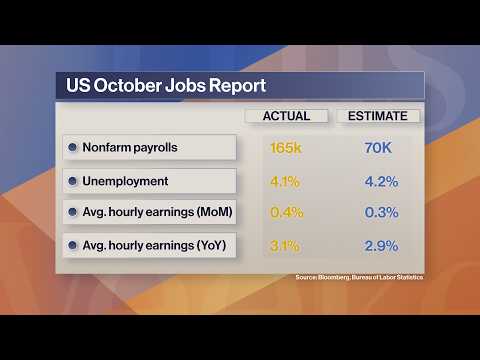
US employers added 165,000 jobs in October, nearly triple the 59,000 economists expected, and the unemployment rate slipped to 4.1%. August and September were revised up by a combined 84,000.

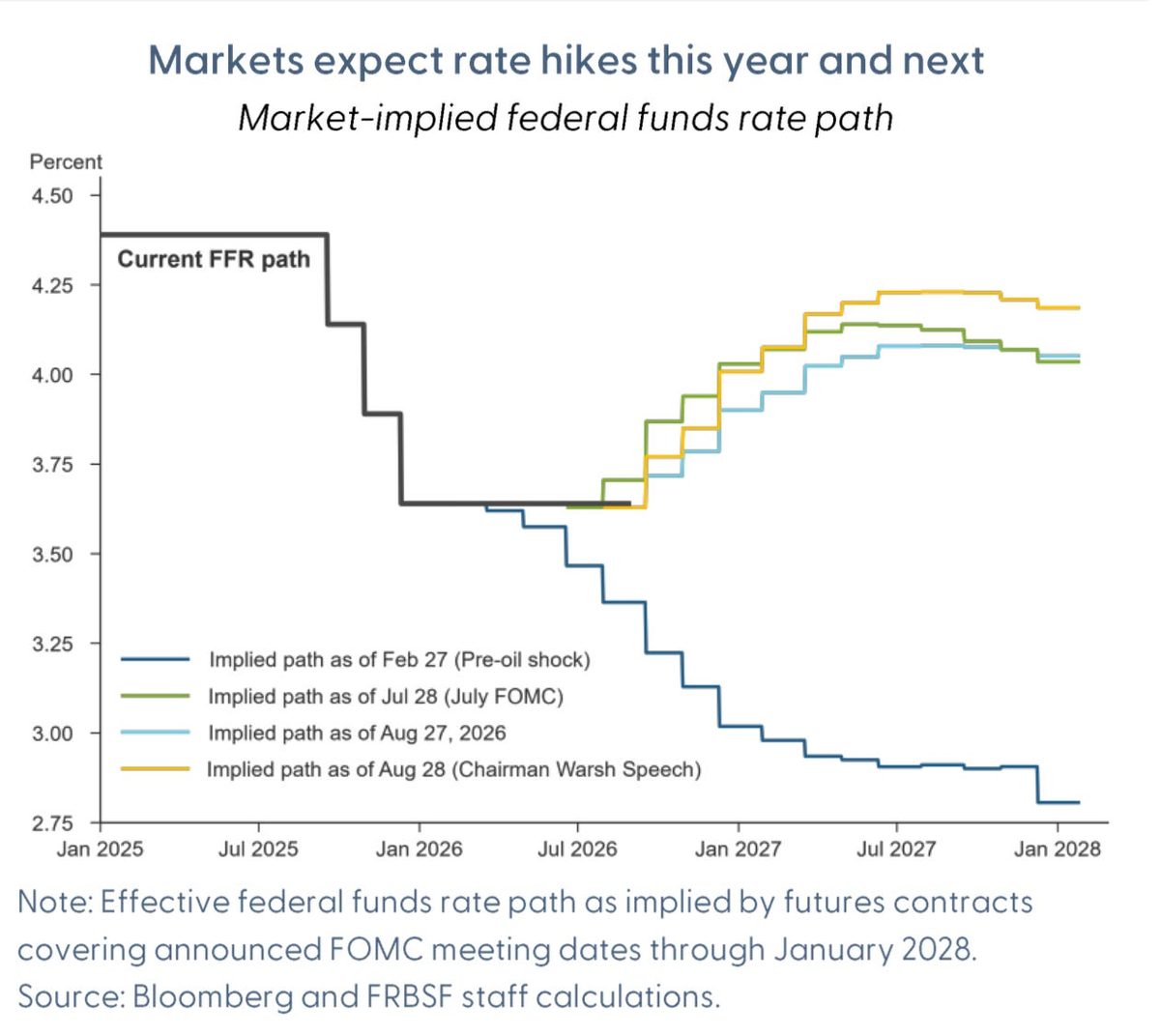
The headline strength sits alongside a weaker household survey and the longest average jobless spell since 2021. Traders now put 76.8% odds on a quarter-point Fed hike in December.

Why it matters

A December rate hike would raise mortgage, car-loan and credit-card costs while long-term joblessness sits at a five-year high.

Questions about this story

Free account needed to ask — your question is kept and asked for you right after sign-up. Answers are public.

No questions yet — be the first to ask.

Key Indicators

165,000
October payroll gain
Nonfarm payrolls rose well above the 59,000 Dow Jones forecast.
4.1%
Unemployment rate
Down from 4.2% and below the 4.2% forecast.
3.1%
Annual wage growth
Average hourly earnings rose 0.4% on the month.
76.8%
Odds of a December rate hike
CME FedWatch probability for the Dec. 8-9 meeting.
27.1 weeks
Average unemployment duration
Up 2.3 weeks, the highest since September 2021.
86,000
2026 average monthly job gain
Up from an average of 9,700 a month in 2025.

Voices

Curated perspectives — historical figures and your fellow readers.

Sign up to generate historical perspectives on this story.

People Involved

Organizations Involved

Timeline

2025 November 2026

8 events Latest: Yesterday
Tap a bar to jump to that date
  1. October payrolls smash forecasts

    Latest Economic data

    BLS reports 165,000 jobs and a 4.1% unemployment rate.

  2. Prior months revised higher

    Economic data

    August moves to 186,000 and September to 60,000.

  3. Long-term joblessness climbs

    Economic data

    Average unemployment duration hits 27.1 weeks, highest since 2021.

  4. December hike odds jump

    Markets

    FedWatch puts the probability of a quarter-point hike at 76.8%.

  5. Foreign-born workers lead gains

    Economic data

    Native-born employment and participation begin falling; foreign-born workers account for net gains.

  6. Hiring recovers

    Economic data

    Payrolls average 86,000 a month through October, up from 2025.

  7. Job growth bottoms out

    Economic data

    Monthly job creation averages 9,700, the weakest outside a recession since 2002.

  8. Manufacturing sheds jobs

    Economic data

    The sector loses 93,000 jobs during Trump's first year back in office.

Scenarios

1

Fed raises rates a quarter point in December

Likely Resolves by Dec 9, 2026

Discussed by: CME FedWatch traders, CNBC

A strong October payroll number and 3.1% wage growth keep inflation pressure in view. If the Fed follows through at its Dec. 8-9 meeting, it would be the first increase after a pause, lifting the target range by a quarter point.

2

Fed holds rates steady through December

Possible Resolves by Dec 9, 2026

Discussed by: Investors pricing only one more hike, Reuters

The household survey was weaker than the payroll count, involuntary part-time work rose and long-term unemployment climbed. Officials who weight those signals could leave rates unchanged and wait for more data.

3

Long-term unemployment keeps rising in November

Possible Resolves by Dec 4, 2026

Discussed by: Indeed's Cory Stahle, CNBC

The average jobless spell has climbed past 27 weeks, and about 2 million people have been out of work for at least that long. A further increase in the November report would suggest the hiring pickup is not reaching people already unemployed.

Historical Context

3 moments from history that rhyme with this story — and how they unfolded.

February 1994 - February 1995

The 1994-95 soft landing

The Federal Reserve raised its target rate from 3% to 6% in a series of moves to head off inflation. Unemployment kept falling through the tightening rather than rising.

Then

Bond markets sold off sharply, and Orange County, California, filed for bankruptcy in December 1994 after losses on derivatives.

Now

The economy entered a long expansion, and the episode became the standard example of tightening without a recession.

Why this matters now

It shows that rate increases and a strengthening labor market can occur at the same time, the combination now in play.

March 2022 - July 2023

The 2022-23 rate hikes

The Fed raised rates from near zero to a range of 5.25% to 5.5% to fight the highest inflation in four decades. Unemployment stayed near 3.5% to 3.7% throughout.

Then

Mortgage rates doubled and hiring slowed, but layoffs stayed low.

Now

Inflation cooled without a recession, though rates stayed high longer than markets expected.

Why this matters now

This is the most recent test of whether aggressive tightening can coexist with low unemployment, the question December's decision turns on.

2021 - 2022

The 2021-22 hiring boom

As the economy reopened from pandemic shutdowns, employers added an average of 491,000 jobs a month.

Then

Wages rose quickly and vacancies hit record levels.

Now

Hiring cooled to about 166,000 a month in 2023 and 2024, then to 9,700 a month in 2025.

Why this matters now

It sets the scale for the current 86,000 monthly average, which is a recovery from 2025 but far below the post-pandemic peak.

Sources

(10)