

Pull to refresh
Logo
US second-quarter GDP revised higher on consumer spending and AI investment

US second-quarter GDP revised higher on consumer spending and AI investment

Money Moves

Commerce Department raises April-June growth to 2.2% from 1.5%; the Federal Reserve hiked rates for the first time in three years

3 days ago: BEA raises Q2 GDP estimate to 2.2%

Overview

Updated 1 hour ago

The US economy grew at a 2.2% annual rate in the second quarter, the Commerce Department reported Wednesday, up from its earlier estimate of 1.5%. Consumer spending rose 3.8% and nonresidential business investment jumped 9%, much of it tied to AI infrastructure.

The revision comes as the Federal Reserve raised rates this month for the first time in three years to fight inflation. Growth now depends on the AI investment cycle holding and on households that are saving less and spending more as borrowing costs rise.

Why it matters

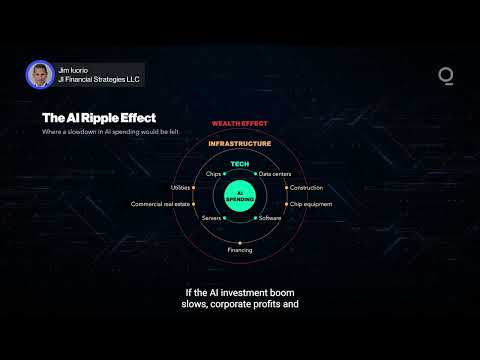
The Fed's first hike in three years lands just as AI investment, not consumers, is carrying growth. If that spending sputters, growth stalls.

Questions about this story

Free account needed to ask — your question is kept and asked for you right after sign-up. Answers are public.

No questions yet — be the first to ask.

Key Indicators

2.2%
Q2 2026 real GDP growth (annualized)
Third estimate, revised up from 1.5%.
3.8%
Consumer spending growth (annualized)
Up from 0.7% in Q1; goods and services both strengthened.
9.0%
Nonresidential business investment growth
Led by AI infrastructure in structures and equipment.
12.6%
Import growth (annualized)
Surge in computer chips for AI subtracted nearly 1.7 points from GDP.
+$384B
Corporate profit increase in Q2
Profits with inventory valuation and capital consumption adjustments.

Voices

Curated perspectives — historical figures and your fellow readers.

Ever wondered what historical figures would say about today's headlines?

Sign up to generate historical perspectives on this story.

Organizations Involved

Timeline

2 events Latest: 3 days ago
  1. BEA raises Q2 GDP estimate to 2.2%

    Latest Economic Data

    Third estimate revises growth up from 1.5%, led by consumer spending and AI-driven business investment. Benchmark revision also updates quarterly data back to 2021.

  2. Federal Reserve hikes rates for first time in three years

    Policy

    The Fed raises interest rates in September to tame inflation that has accelerated on higher gasoline prices.

Scenarios

1

AI investment keeps US growth strong into 2027

Likely Resolves by Oct 29, 2026

Discussed by: Reuters reporting; BEA data showing business investment up 9%

Businesses keep pouring money into AI infrastructure, the spending the BEA cited as a main driver of the upward revision. Consumer spending stays firm, supported by tax refunds from last year's legislation. The Fed pauses after a single hike, and Q3 growth comes in near the current pace.

2

Fed rate hikes and inflation cool consumer spending

Possible Resolves by Jan 29, 2027

Discussed by: Conference Board survey; economists polled by Reuters

Higher rates and elevated gasoline prices strain household budgets. Consumers are already saving less and dipping into savings to spend, a pattern the Conference Board flagged as confidence hits a 12.5-year low. Growth slows in the second half of 2026 as spending weakens.

3

Inflation forces more Fed hikes through the end of 2026

Uncertain Resolves by Dec 15, 2026

Discussed by: Federal Reserve's September action; rising gasoline prices

If inflation stays hot, the Fed hikes again in December, extending its first tightening cycle in three years. Higher borrowing costs then press on the AI capex cycle into 2027, compounding the strain on growth.

Historical Context

2 moments from history that rhyme with this story — and how they unfolded.

1997-2000

Late-1990s internet investment boom (1997-2000)

In the late 1990s, US business spending on telecom networks, servers, and software for the emerging internet grew at double-digit rates and became the main engine of GDP growth. Stock prices, led by the NASDAQ, roughly tripled between 1998 and 2000.

Then

Growth ran strong through 2000, but the investment outpaced demand. When it stalled, capital spending fell hard, helping push the economy into the 2001 recession.

Now

The bust left a glut of fiber-optic capacity that took years to absorb, a cautionary example of investment-led booms overshooting.

Why this matters now

Today's AI infrastructure buildout looks similar: fast, investment-led growth whose durability depends on whether the spending produces returns or overcapacity.

June 2004 - June 2006

2004-2006 Fed tightening cycle

The Federal Reserve raised its benchmark rate from 1% to 5.25% in seventeen steps between mid-2004 and mid-2006, aiming to cool housing and inflation.

Then

The economy kept growing through most of the tightening and inflation eased, a period often cited as a successful soft landing.

Now

Housing cracked in 2007, and the credit crisis that followed produced the worst recession since the 1930s, showing that tightening can work until it doesn't.

Why this matters now

The Fed is starting a hiking cycle after a three-year pause at a moment of upward-revised growth. The 2004-06 episode shows how long expansions can survive rising rates before breaking.

Sources

(8)