
Pull to refresh
Logo
Daily Brief
Following
Why
Ukraine turns battlefield drone expertise into diplomatic currency

Ukraine turns battlefield drone expertise into diplomatic currency

New Capabilities
By Newzino Staff |

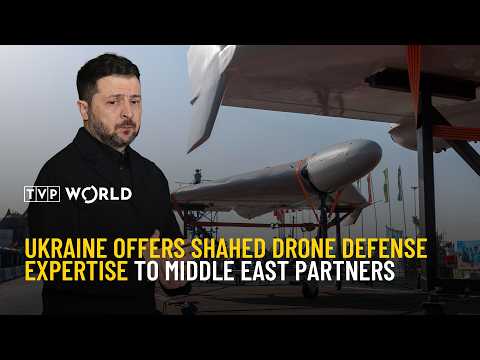
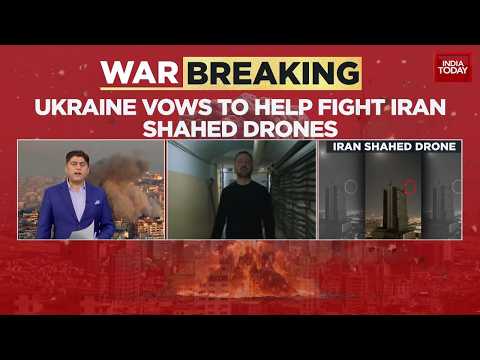
After downing tens of thousands of Iranian-made drones over three years, Kyiv exports its counter-drone knowledge to the Middle East — and asks for ceasefire pressure in return

Yesterday: Ukraine announces deployment of specialists; Pentagon and Gulf states enter procurement talks

Overview

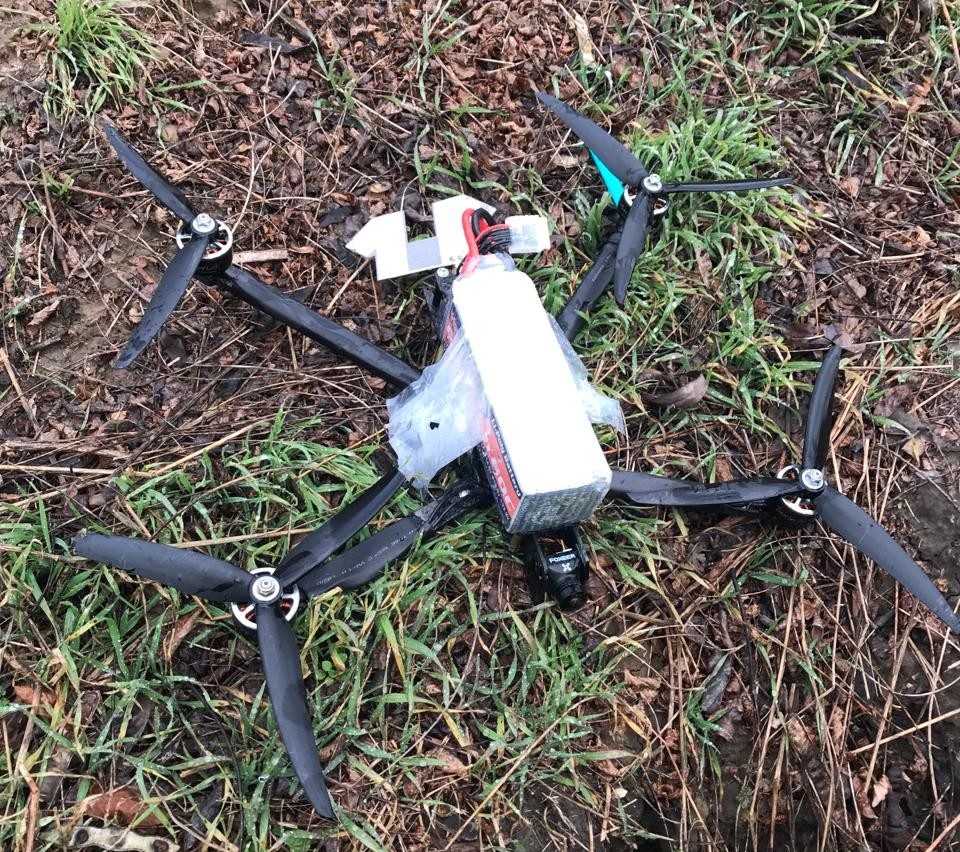
Russia began bombing Ukrainian cities with Iranian-made Shahed drones in October 2022. Three and a half years later, Ukraine has turned that onslaught into an exportable advantage: low-cost interceptor drones, costing as little as $2,100 apiece, that now account for more than 70 percent of Shahed kills — and that the Pentagon, Gulf states, and NATO allies all want to buy.

Key Indicators

~57,000
Shahed-type drones launched at Ukraine
Total Iranian-designed drones Russia has fired at Ukraine since fall 2022, including strike drones and decoys
70%+
Shahed kills by interceptor drones
Share of Shahed downings credited to low-cost Ukrainian interceptor drones in February 2026
$2,100 vs. $3M+
Interceptor vs. Patriot missile cost
A Sting interceptor drone costs roughly $2,100; a single Patriot interceptor missile costs over $3 million
941
Iranian drone strikes on Gulf states
Number of drone attacks Iran launched against the United Arab Emirates alone in the days after the February 28 U.S.-Israeli strikes
1,500/day
Ukrainian interceptor production rate
Ukraine ramped first-person-view interceptor drone production to 1,500 units per day by January 2026

Interactive

Exploring all sides of a story is often best achieved with Play.

Ever wondered what historical figures would say about today's headlines?

Sign up to generate historical perspectives on this story.

Sign Up

Debate Arena

Two rounds, two personas, one winner. You set the crossfire.

People Involved

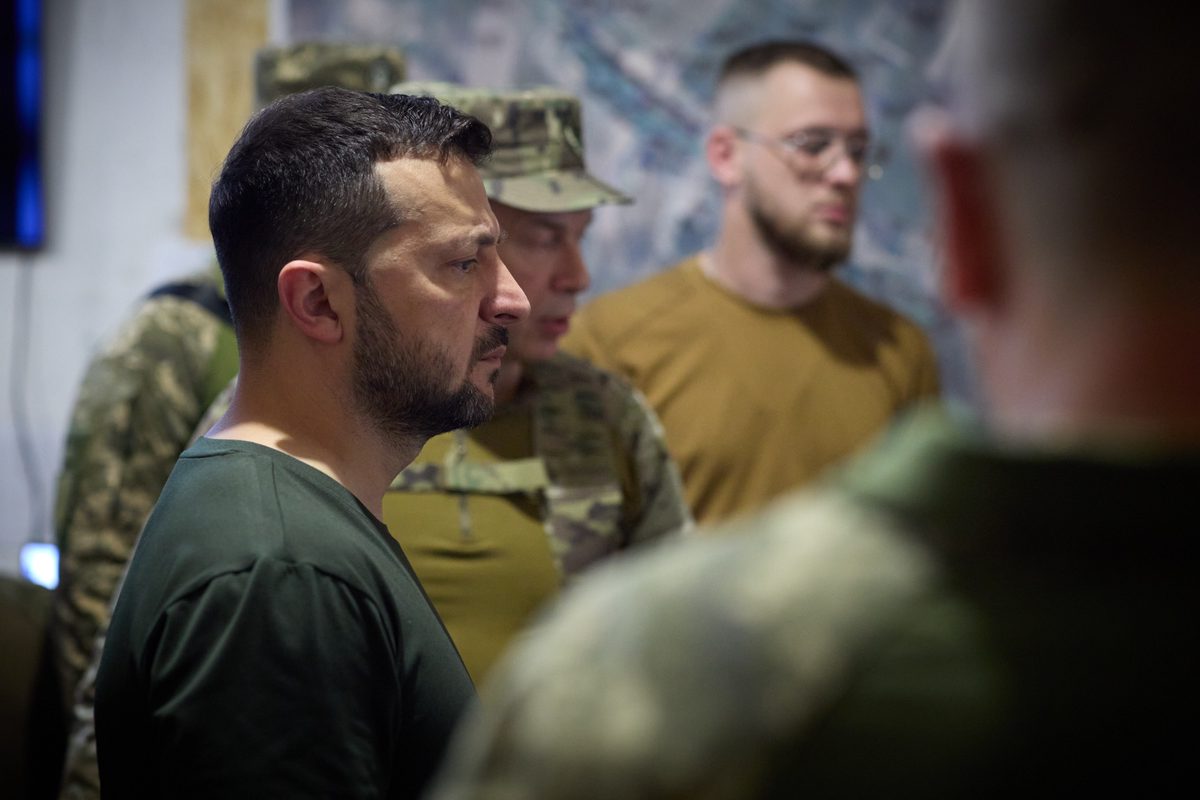
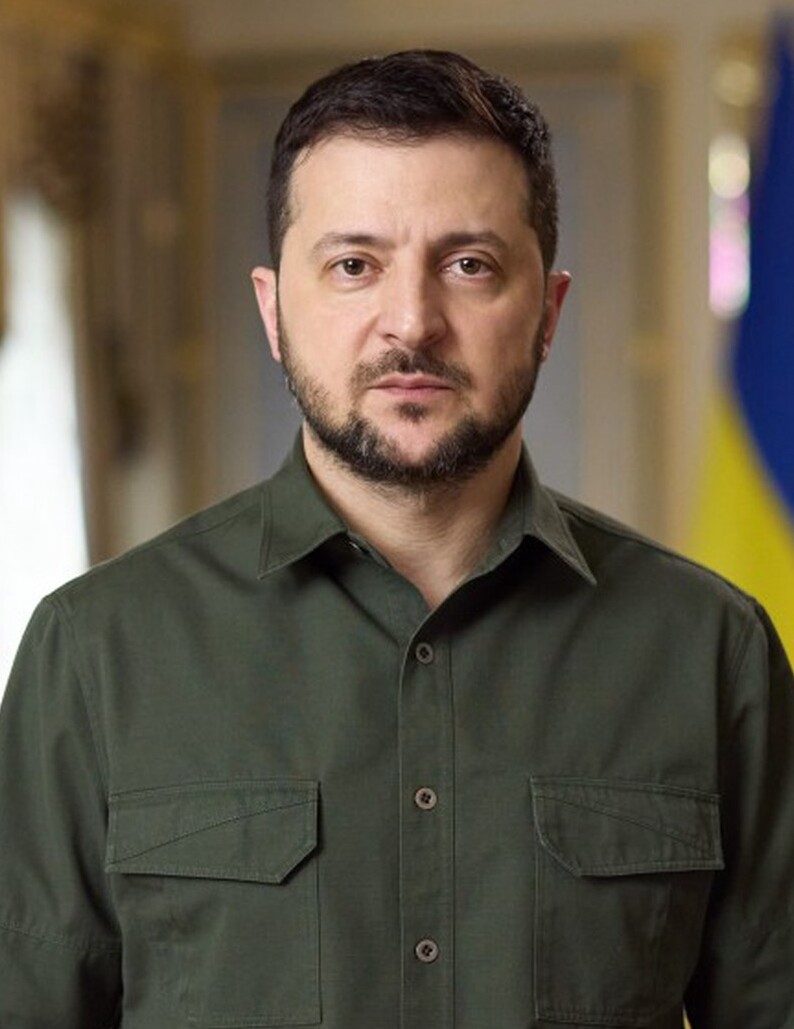
Volodymyr Zelenskyy
Volodymyr Zelenskyy
President of Ukraine (Actively negotiating drone defense transfers and ceasefire talks simultaneously)
Oleksandr Syrskyi
Oleksandr Syrskyi
Commander-in-Chief of the Armed Forces of Ukraine (Overseeing integration of interceptor drones into Ukraine's layered air defense)

Organizations Involved

Wild Hornets
Wild Hornets
Ukrainian defense nonprofit and drone manufacturer
Status: Primary producer of the Sting interceptor drone, now drawing international buyer interest

A volunteer-founded Ukrainian nonprofit that developed the Sting interceptor drone, which destroyed over 1,000 enemy drones in its first five months of operation.

ME
Merops
Counter-drone defense company
Status: Deploying to NATO allies and under consideration for Middle East sales

A counter-drone company backed by former Google chief executive Eric Schmidt that produces a fixed-wing interceptor credited with roughly 40 percent of Shahed downings in Ukraine.

U.S. Department of Defense
Government defense agency
Status: In active procurement talks for Ukrainian interceptor drones

The Pentagon is negotiating to purchase Ukrainian-made interceptor drones to counter Iranian Shaheds in the Middle East, as Patriot missile stockpiles diminish.

Timeline

  1. Ukraine announces deployment of specialists; Pentagon and Gulf states enter procurement talks

    Deployment

    Zelensky confirmed that the United States had formally requested Ukrainian support against Shaheds in the Middle East and that he had ordered specialists and equipment deployed. Separately, the Financial Times reported that the Pentagon and at least one Gulf government were negotiating to purchase Ukrainian interceptor drones.

  2. Zelensky offers drone expertise in exchange for ceasefire pressure

    Diplomacy

    In a Bloomberg interview, Zelensky proposed sending Ukraine's best drone interception experts to the Middle East if Gulf leaders could convince Russian President Vladimir Putin to agree to a one-month truce.

  3. U.S. and Israel strike Iran; Tehran retaliates with drone swarms against Gulf states

    Military

    Coordinated U.S.-Israeli strikes hit Iranian military targets. Iran retaliated by launching 189 ballistic missiles, 941 drone attacks, and 3 cruise missiles against the United Arab Emirates, plus strikes on U.S. bases in Qatar, Kuwait, Bahrain, and Saudi Arabia.

  4. Poland becomes first NATO country to deploy Ukrainian counter-drone systems

    Deployment

    Poland received Merops counter-drone systems for deployment along its border, followed by Romania. Denmark also declared intent to acquire the system.

  5. Zelensky sets target for mass interceptor production

    Policy

    President Zelensky ordered a national ramp-up of interceptor drone production, setting a target of 1,500 first-person-view interceptor drones per day.

  6. Ukraine begins series production of interceptor drones

    Production

    Wild Hornets commenced mass manufacturing of the Sting. Merops, backed by former Google chief executive Eric Schmidt, was already operational and destroying hundreds of Shaheds per month.

  7. Sting interceptor drone prototype revealed

    Innovation

    The British newspaper The Telegraph published the first report on Wild Hornets' Sting interceptor, a 3D-printed drone capable of reaching 213 miles per hour to chase down Shaheds at a fraction of conventional interception costs.

  8. Russia begins manufacturing Shahed copies domestically

    Production

    Russia started producing its own version of the Shahed, designated Geran-2, at a factory in Alabuga, Tatarstan. An initial $1.75 billion deal with Iran permitted technology transfer alongside direct imports.

  9. Wild Hornets founded to build counter-drone systems

    Innovation

    Engineers from Ukraine's Separate Presidential Brigade formed the Wild Hornets nonprofit to develop low-cost interceptor drones specifically designed to hunt Shaheds.

  10. Russia strikes Kyiv with Iranian Shahed drones for the first time

    Military

    Russia used Iranian-made Shahed-136 drones in an attack on Kyiv, killing four civilians. The strike marked the first major deployment of Iranian drones against Ukrainian cities, initially in batches of a few dozen.

Scenarios

1

Ukrainian interceptors become standard Gulf air defense layer

Discussed by: Foreign Policy Research Institute, Defense News, and Financial Times defense correspondents

If Ukrainian interceptor drones prove effective against Shaheds in the Gulf theater — where they face different terrain, climate, and electronic warfare conditions than Ukraine — procurement could scale rapidly. Gulf states collectively spent billions on Patriot systems but are burning through interceptor stockpiles at unsustainable rates. Ukraine could become a significant defense exporter almost overnight, generating revenue that reduces Kyiv's dependence on Western aid while embedding its interests into Gulf security architectures. The precedent would reshape the global counter-drone market, currently dominated by Israeli and American firms.

2

Gulf states pressure Moscow on ceasefire in exchange for continued Ukrainian support

Discussed by: Kyiv Independent, Bloomberg, and Middle Eastern diplomatic sources cited by Ukrainska Pravda

Zelensky's explicit linkage of drone defense aid to ceasefire pressure gives Gulf leaders — particularly the United Arab Emirates and Qatar, which maintain strong economic ties with Moscow — a concrete incentive to advocate for at least a temporary truce. If Iranian drone attacks persist and Ukrainian systems prove indispensable, the leverage increases. However, Gulf states have historically avoided directly confronting Russia, and Moscow has repeatedly refused ceasefire proposals. This path depends on whether the drone threat to Gulf cities is severe enough to override Gulf reluctance to antagonize Putin.

3

Technology transfer stalls over export controls and operational security

Discussed by: Ukrainian defense officials quoted by Kyiv Post, and arms control analysts at the Foreign Policy Research Institute

Ukrainian officials have described procurement talks as "sensitive," and any sale — even systems manufactured abroad — must be approved by Kyiv. Ukraine risks exposing tactical methods that Russia could exploit if interception techniques are widely shared. Export control frameworks for drone technology remain underdeveloped, and Western allies may resist transfers that could reach adversary hands. If operational security concerns or bureaucratic obstacles slow deliveries, Gulf states may turn to Israeli or American counter-drone alternatives, reducing Ukraine's leverage.

4

Iran adapts drones faster than defenses can scale

Discussed by: Institute for Science and International Security, CNBC defense analysts

Iran has already introduced the Hadid-110, a faster alternative to the Shahed-136, and is shifting tactics based on lessons from both the Ukraine and Gulf theaters. If Tehran iterates on drone design — adding electronic countermeasures, varying flight profiles, or deploying swarms that overwhelm interceptor capacity — Ukrainian systems optimized for current Shahed variants may lose effectiveness. The counter-drone arms race would then favor the cheaper, more numerous attacker, as it has in previous asymmetric conflicts.

Historical Context

Israel's defense exports as diplomatic leverage (1960s–present)

1960s–present

What Happened

Israel, a small country under persistent security threats, built a defense industry that grew to $14.8 billion in annual exports by 2024. Systems like Iron Dome, developed from Israel's own experience intercepting Hamas rockets, became globally sought after. Israel used these exports to forge diplomatic relationships — including with countries that might otherwise have supported resolutions against it at the United Nations.

Outcome

Short Term

Defense exports gave Israel economic self-sufficiency in military technology and reduced dependence on American arms.

Long Term

An Israeli diplomat described arms deals as creating "long-term relationships" that "help curb moves towards sanctions." Defense exports became a core instrument of Israeli foreign policy, providing both revenue and diplomatic insurance.

Why It's Relevant Today

Ukraine is attempting a compressed version of the same strategy: converting combat-tested defensive technology into both revenue and diplomatic leverage. The key difference is that Ukraine is doing so while still fighting the war that generated the expertise, and is explicitly conditioning transfers on diplomatic outcomes rather than simply building relationships.

The Stinger missile and the Afghan-Soviet War (1986–1989)

1986–1989

What Happened

The United States supplied shoulder-fired Stinger anti-aircraft missiles to Afghan mujahideen fighting the Soviet Union. The missiles cost roughly $38,000 each but could destroy Soviet helicopters and jets worth millions. The introduction of Stingers in September 1986 shifted the air war: the Soviets lost an estimated 269 aircraft over the course of the war and were forced to change tactics, flying higher and reducing close air support.

Outcome

Short Term

Stingers negated the Soviet Union's air superiority advantage in Afghanistan and raised the cost of continued occupation.

Long Term

The technology transfer contributed to the Soviet withdrawal in 1989 but also raised proliferation concerns — the Central Intelligence Agency spent years trying to buy back unused Stingers to prevent them from reaching hostile actors.

Why It's Relevant Today

Ukraine's interceptor drones occupy a similar niche: cheap, effective systems that invert the cost equation against a more expensive adversary. The Stinger precedent also highlights the proliferation risk Ukraine faces — once interception techniques and hardware spread to the Gulf, controlling their further distribution becomes difficult.

Finland's wartime innovations and post-war diplomacy (1939–1948)

1939–1948

What Happened

Finland, massively outgunned by the Soviet Union in the 1939–1940 Winter War, developed asymmetric innovations — including the Molotov cocktail as an anti-tank weapon — that inflicted disproportionate casualties on Soviet forces. Despite eventually ceding 9 percent of its territory, Finland's military performance earned it international credibility and a degree of diplomatic autonomy rare for a small state neighboring the Soviet Union.

Outcome

Short Term

Finland's battlefield reputation helped it negotiate terms that preserved its independence and political system, unlike the Baltic states.

Long Term

Finland maintained formal neutrality for decades (a policy later called "Finlandization") but its demonstrated military capability served as implicit leverage — the Soviets knew the cost of invasion was higher than the prize.

Why It's Relevant Today

Like Finland, Ukraine is a smaller nation that has developed asymmetric innovations under existential pressure against a much larger adversary. Ukraine's drone expertise now serves a similar dual function: practical military capability at home and diplomatic credibility abroad. The question is whether Ukraine can convert wartime innovation into lasting strategic position, as Finland did, or whether the expertise will be absorbed by larger allies without proportional return.

Sources

(13)