Pull to refresh
Logo
Daily Brief
Following
Why Ranks Sign Up
US warns NATO allies to fund their own defense

US warns NATO allies to fund their own defense

Rule Changes

Pentagon shifts long-standing transatlantic security commitments under Trump's second term

Today: Hegseth calls 2% target 'freeloading' at Shangri-La

Overview

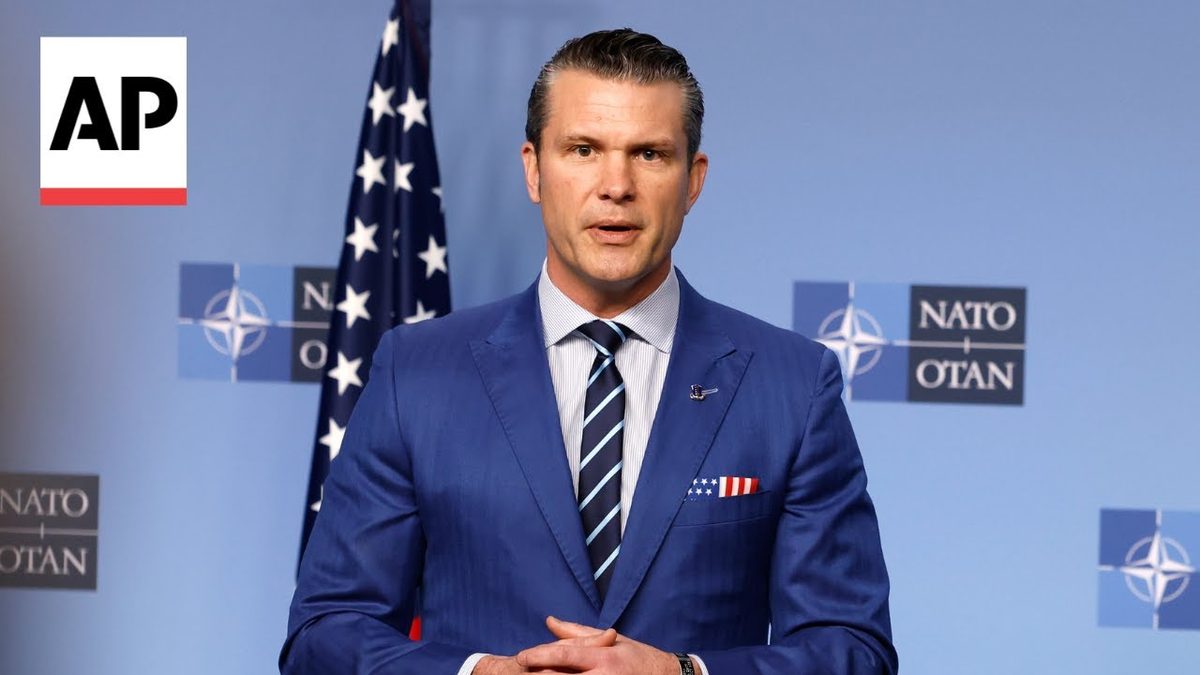
US Defense Secretary Pete Hegseth told NATO allies on Saturday that Washington will no longer subsidize the defense of wealthy nations. Speaking at the Shangri-La Dialogue in Singapore, he called the 2% of GDP spending floor 'freeloading' and warned of 'major decisions' on European security.

NATO set the 2% target at its 2014 Wales summit. Twelve years later, fewer than two-thirds of members meet it. Hegseth's speech signals Washington may rework its European footprint if allies don't accelerate spending.

Why it matters

If the US shrinks its European military presence, NATO members must rebuild capabilities they outsourced to Washington for seven decades.

Key Indicators

5%
New NATO spending target
Agreed at the June 2025 Hague summit, to be reached by 2035.
2%
Old NATO floor
Set at the 2014 Wales summit; fewer than two-thirds of members met it.
~80,000
US troops in Europe
Permanent personnel, excluding rotational forces. Now under review.
32
NATO members
Includes Finland and Sweden, who joined after Russia's invasion of Ukraine.

Voices

Curated perspectives — historical figures and your fellow readers.

Ever wondered what historical figures would say about today's headlines?

Sign up to generate historical perspectives on this story.

Play

Exploring all sides of a story is often best achieved with Play.

Log in to play. Track your picks, climb the leaderboards. Log in Sign Up
Predict 4 ways this could play out. Contrarian picks score more — points lock when the scenario resolves. Log in to play
Higher or Lower Two numbers from this story. Guess which is bigger. 5 rounds to set a streak. Log in to play
Timeline Five events from this story — drag them oldest to newest. Log in to play
Connections Sixteen names from the news. Find the four hidden groups of four. Log in to play

People Involved

Organizations Involved

Timeline

September 2014 May 2026

6 events Latest: Today
Tap a bar to jump to that date
  1. Hegseth calls 2% target 'freeloading' at Shangri-La

    Today Statement

    The Defense Secretary tells NATO allies the US will no longer subsidize wealthy nations' defense. He hints at major decisions on European security.

  2. NATO agrees 5% spending target at Hague summit

    Policy

    Members commit to 5% of GDP by 2035: 3.5% on traditional military spending and 1.5% on broader security.

  3. Hegseth tells Europe to take primary defense responsibility

    Statement

    In his first NATO speech at Brussels, Hegseth signals Washington will no longer treat European security as its main concern.

  4. Russia invades Ukraine

    Conflict

    European NATO members accelerate defense spending. Finland and Sweden join the alliance. The 2% target becomes a floor, not a ceiling.

  5. Trump threatens NATO withdrawal at Brussels summit

    Statement

    In his first term, Trump reportedly tells allies he could pull the US from NATO if spending doesn't rise. European spending starts climbing.

  6. NATO sets 2% spending target at Wales summit

    Policy

    Members pledge to move toward spending 2% of GDP on defense within a decade. The target has no enforcement mechanism.

Historical Context

3 moments from history that rhyme with this story — and how they unfolded.

July 1969

Nixon Doctrine (1969)

On Guam in July 1969, President Richard Nixon told reporters the US would no longer commit ground troops to defend Asian allies. Allies had to defend themselves, with US material and air support as backup. The doctrine emerged from Vietnam War strain on the US military and budget.

Then

South Korea, Japan, and Taiwan accelerated their own military buildups. US troop levels across Asia dropped sharply through the early 1970s.

Now

Asian allies developed stronger indigenous defense industries. South Korea grew its army past 600,000 troops. The doctrine showed allies could fund their own forces when forced to.

Why this matters now

Hegseth's Singapore speech echoes Nixon's logic for Europe: wealthy allies must defend themselves. The Asian reaction in 1969-1970 offers a template for how Europe might respond.

March 1966

France withdraws from NATO integrated command (1966)

Charles de Gaulle pulled France from NATO's integrated military command and demanded all US bases leave French soil within a year. He kept France in the alliance politically but ended military integration. About 27,000 American troops and 60,000 dependents had to relocate.

Then

NATO headquarters moved from Paris to Brussels. The US withdrew its bases and nuclear weapons from France. French defense policy went fully independent.

Now

France built its own nuclear deterrent. The alliance survived but became more Anglo-Saxon-led. France only fully rejoined NATO command in 2009.

Why this matters now

Shows that fundamental NATO restructuring is possible without collapsing the alliance. A US drawdown could resemble France's 1966 step in reverse.

May 2017 - July 2018

Trump's first-term NATO confrontation (2017-2018)

At his first NATO summit in May 2017, Trump berated allies over spending and refused to commit publicly to Article 5. At Brussels in July 2018, he threatened to leave NATO unless allies raised spending immediately. He reportedly told staff he wanted to withdraw.

Then

European spending rose. By 2019, eight more members hit the 2% target. NATO members publicly affirmed Article 5 commitments to reassure each other.

Now

The 2% target became a serious obligation rather than aspiration. European leaders began contingency planning for US withdrawal. Macron called NATO 'brain dead' in 2019.

Why this matters now

Hegseth's threats follow the Trump 1.0 playbook. The first iteration produced higher spending but not US withdrawal. Whether Trump 2.0 follows through is the open question.

Sources

(3)