Pull to refresh
Logo
Daily Brief
Following
Why Sign Up
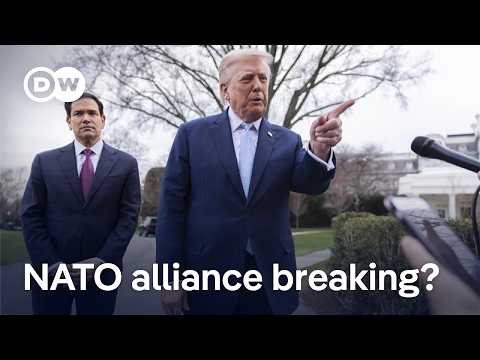
US threatens to leave NATO after allies refuse to support Iran war

US threatens to leave NATO after allies refuse to support Iran war

Force in Play
By Newzino Staff |

Trump calls alliance a 'paper tiger' as European members deny airspace and base access for Iran operations

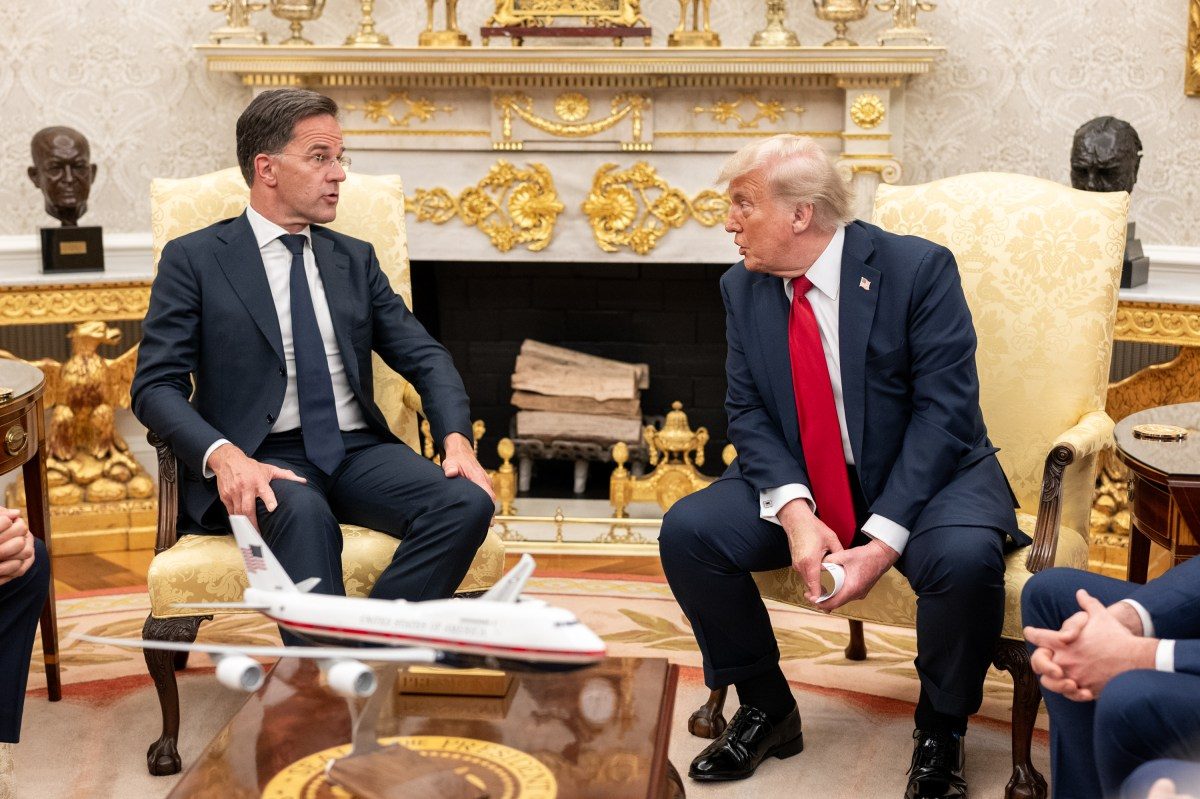
Today: Rutte meets Trump at White House in alliance-rescue summit

Overview

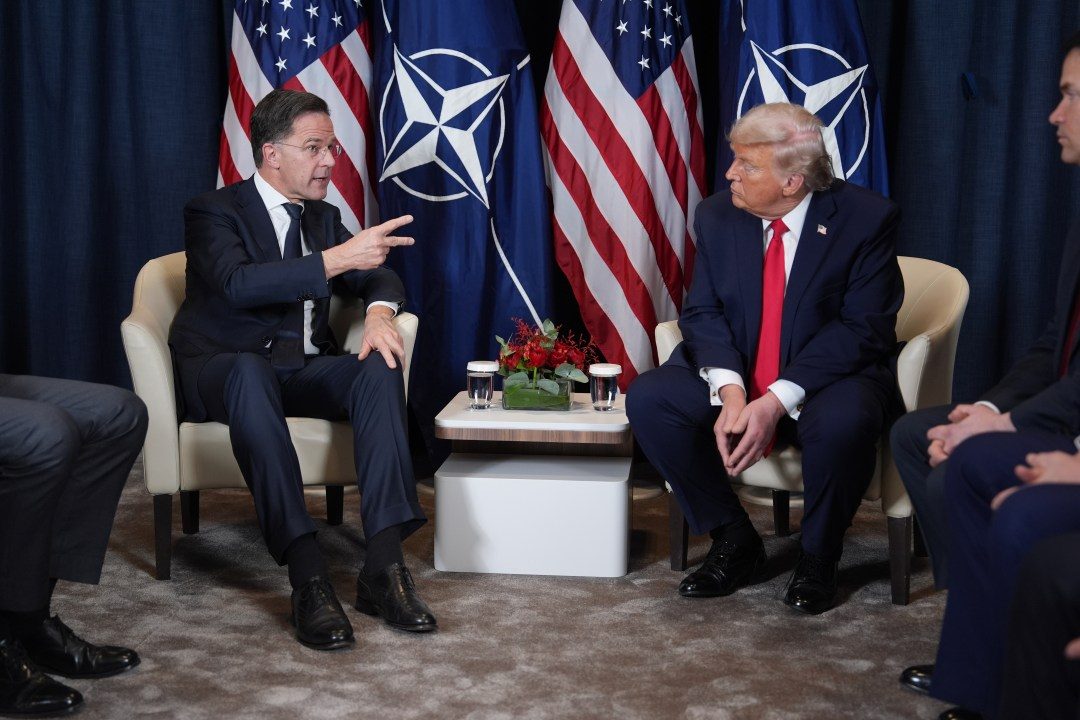
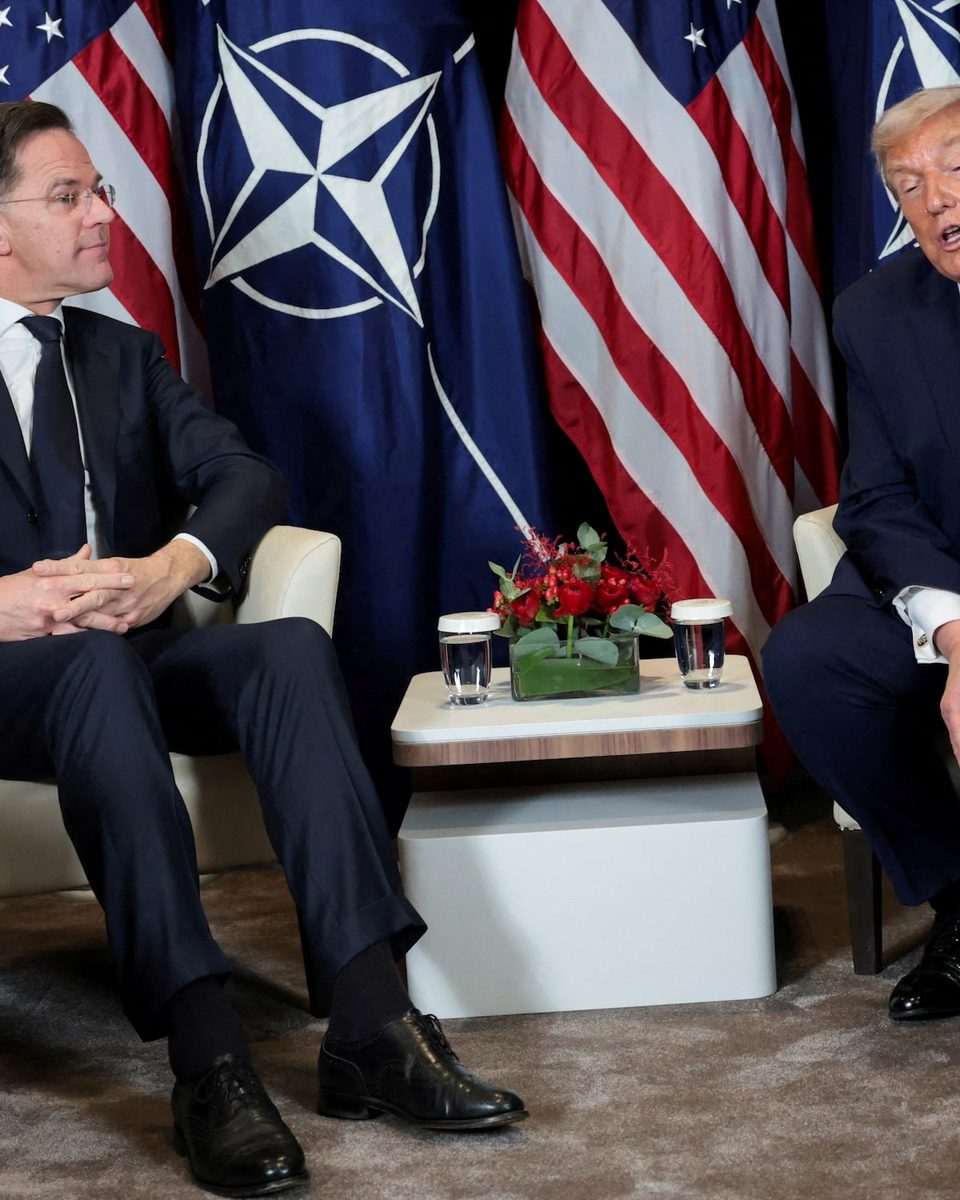
The North Atlantic Treaty Organization (NATO) has survived 77 years, the Cold War, and the collapse of the Soviet Union. Now it faces something new: a sitting US president publicly weighing withdrawal—not over a theoretical dispute, but because allied nations refused to let American warplanes use their airspace during an active shooting war with Iran. NATO Secretary General Mark Rutte met with President Trump at the White House on April 8, 2026, one day after a US-Iran ceasefire, in what officials on both sides described as a make-or-break moment for the alliance.

Why it matters

If the US disengages from NATO, the security architecture that has prevented major war in Europe for eight decades unravels.

Key Indicators

77 years
Age of the NATO alliance
Founded in 1949, NATO is the longest-standing military alliance in modern history
5%
New GDP defense spending target
Allies pledged at The Hague summit in June 2025 to spend 5% of GDP on defense by 2035, up from the previous 2% target
~60%
US share of NATO defense spending
The US accounts for roughly 60% of total alliance defense expenditure, a longstanding source of friction
4+
Allies that denied US military access
Spain, Italy, France, and the UK all restricted US use of bases or airspace during Iran operations
2/3
Senate supermajority required to withdraw
A 2023 law co-sponsored by Rubio and Kaine bars unilateral presidential withdrawal from NATO without Senate or congressional approval

Interactive

Exploring all sides of a story is often best achieved with Play.

Ever wondered what historical figures would say about today's headlines?

Sign up to generate historical perspectives on this story.

Sign Up

Debate Arena

Two rounds, two personas, one winner. You set the crossfire.

People Involved

Organizations Involved

Timeline

  1. Rutte meets Trump at White House in alliance-rescue summit

    Diplomacy

    NATO Secretary General Rutte met with Trump, Rubio, and Hegseth at the White House. Rutte aimed to persuade Trump that NATO still serves US strategic interests despite allied refusals to support the Iran war.

  2. US and Iran agree to two-week ceasefire

    Diplomacy

    Pakistan brokered a two-week ceasefire halting 40 days of US-Israeli strikes on Iran. Iran agreed to reopen the Strait of Hormuz during the truce. Formal talks were set for Islamabad on April 10.

  3. Trump says withdrawal is 'beyond reconsideration'

    Statement

    In an interview with The Telegraph, Trump called NATO a 'paper tiger' and said leaving the alliance was 'beyond reconsideration.' Ambassador Whitaker confirmed on Newsmax that the president is 'reevaluating everything.'

  4. Hegseth refuses to reaffirm Article 5 commitment

    Statement

    Defense Secretary Hegseth declined to reaffirm the US commitment to NATO's collective defense clause, saying the Iran conflict had 'laid bare' problems with the alliance. Rubio separately said the US must 're-examine' NATO's value.

  5. US begins military campaign to reopen the Strait

    Military

    US armed forces launched a sustained operation to clear and reopen the Strait of Hormuz, striking over 8,000 Iranian military targets including 130 vessels.

  6. Trump announces intent to seize control of Strait of Hormuz

    Statement

    Trump declared the US would take control of the Strait of Hormuz and warned Iran against laying mines in the waterway.

  7. Iran closes the Strait of Hormuz

    Escalation

    Iran's Islamic Revolutionary Guard Corps officially closed the Strait of Hormuz to shipping, disrupting roughly 20% of the world's oil supply and sending global energy prices soaring.

  8. US and Israel launch joint strikes on Iran

    Military

    The US launched Operation Epic Fury alongside Israel, striking Iranian military and nuclear targets. The initial strikes killed Iran's supreme leader Ali Khamenei. Multiple NATO allies refused to provide basing or airspace access for the operations.

  9. Rutte defuses Greenland crisis at Davos

    Diplomacy

    Rutte met Trump at the World Economic Forum and brokered a framework for Greenland negotiations, persuading Trump to drop threats of forceful annexation and retaliatory tariffs against Europe.

  10. NATO allies pledge 5% GDP defense spending at The Hague

    Summit

    At the 2025 summit, all NATO members except Spain agreed to spend 5% of GDP on defense by 2035—3.5% on military forces and 1.5% on security infrastructure. The commitment more than doubled the previous 2% target.

Scenarios

1

Trump backs down, NATO survives with new conditions

Discussed by: Atlantic Council analysts, European defense officials, and scholars who point to the Greenland precedent where Rutte successfully de-escalated Trump's threats

Rutte's personal diplomacy succeeds again. Trump extracts concessions—accelerated defense spending timelines, new commitments on allied burden-sharing, or explicit pledges to support future US operations—and declares victory while remaining in the alliance. This echoes the Greenland resolution and Trump's first-term pattern of threatening withdrawal to gain leverage. The 2023 congressional law makes formal exit nearly impossible, and Trump may prefer the appearance of a win to an extended legal battle with Congress.

2

US stays in NATO formally but disengages operationally

Discussed by: War on the Rocks analysts, Brookings Institution scholars, and European defense planners preparing for reduced US participation

Trump does not formally withdraw—the congressional requirement makes that difficult—but instead hollows out US participation. He could reduce troop levels below the 76,000 floor (triggering a fight with Congress), recall the US ambassador, skip summits, downgrade intelligence sharing, or simply stop treating Article 5 as a binding commitment. This 'quiet withdrawal' would undermine the alliance without a formal legal confrontation and would be difficult for Congress to prevent through legislation alone.

3

Trump formally moves to withdraw, triggering constitutional crisis

Discussed by: Constitutional law scholars cited by CNN, Congressional Research Service analysis published February 2026, and Lawfare legal commentators

Trump invokes presidential authority over foreign policy to argue the 2023 law unconstitutionally constrains executive power, and initiates withdrawal proceedings. This triggers a legal battle over whether Congress can bind the president on treaty withdrawal—a question the Constitution leaves ambiguous. Courts would likely have to intervene. Even if Trump ultimately loses, the months or years of uncertainty could fatally damage allied trust in US commitments.

4

Europe accelerates autonomous defense, NATO transforms into a looser partnership

Discussed by: French Foreign Minister Jean-Noël Barrot, European Commission President von der Leyen, and European Policy Centre analysts

Regardless of whether the US formally stays, European allies conclude that Washington is no longer a reliable security guarantor and invest heavily in independent defense capacity. Rutte himself estimated Europe would need 10% of GDP on defense and its own nuclear capability to go it alone—an enormous undertaking. A more realistic version: Europe builds a stronger 'European pillar' within NATO, reducing dependence on the US while maintaining the alliance structure. This process was already underway before the Iran war but could accelerate dramatically.

Historical Context

France withdraws from NATO military command (1966)

March 1966

What Happened

French President Charles de Gaulle pulled France out of NATO's integrated military command structure over disagreements about nuclear weapons control and American dominance of the alliance. All 30-plus NATO bases in France were evacuated—27,000 US troops and 37,000 civilians relocated. NATO headquarters moved from outside Paris to Brussels.

Outcome

Short Term

France remained a political member of NATO but operated its military independently for over four decades.

Long Term

France rejoined NATO's military command in 2009 under President Sarkozy, demonstrating that even dramatic ruptures in alliance participation can be reversed—but also that they can last generations.

Why It's Relevant Today

France's 1966 exit is the closest precedent for a major power partially withdrawing from NATO. It shows that an alliance member can reduce participation without formal departure—but also that the damage to allied trust and coordination can persist for decades.

Trump's first-term NATO Article 5 ambiguity (2017–2021)

May 2017 – January 2021

What Happened

During his first term, Trump repeatedly questioned NATO's value, demanded allies spend more, and at a May 2017 ceremony at NATO headquarters became the only post-war president to decline to explicitly endorse Article 5's mutual defense guarantee. He reportedly told aides multiple times he wanted to withdraw from NATO entirely.

Outcome

Short Term

Allied defense spending increased—the number of members meeting the 2% GDP target rose from 3 in 2014 to 11 by 2021. But trust in US reliability declined significantly.

Long Term

Congress passed the 2023 law requiring legislative approval for withdrawal—a direct response to fears Trump might act unilaterally in a second term. European defense cooperation accelerated through EU mechanisms.

Why It's Relevant Today

Trump's current threats follow a pattern established in his first term, but with a critical difference: this time there is a concrete grievance (allied refusal to support active combat operations) rather than an abstract burden-sharing complaint. The congressional guardrail passed in response to first-term threats is now being tested.

Suez Crisis fractures NATO allies (1956)

October–November 1956

What Happened

Britain, France, and Israel secretly invaded Egypt to seize the Suez Canal after Egyptian President Nasser nationalized it. US President Eisenhower was furious at not being consulted and threatened economic sanctions against his own allies. The US forced Britain and France to withdraw, humiliating two of NATO's founding members.

Outcome

Short Term

British Prime Minister Anthony Eden resigned. France concluded it could never depend on the US and accelerated its independent nuclear program.

Long Term

The crisis established that NATO allies could pursue sharply different military objectives in the Middle East without destroying the alliance—but also that such rifts carry lasting strategic consequences.

Why It's Relevant Today

Suez is a mirror image of the current crisis: in 1956, the US opposed allied military action in the Middle East; in 2026, allies opposed US military action. Both cases tested whether disagreements over out-of-area operations could break an alliance built for European defense.

Sources

(14)