
Pull to refresh
Logo
Daily Brief
Following
Why
NATO shifts warfighting commands to European leadership

NATO shifts warfighting commands to European leadership

Rule Changes
By Newzino Staff |

US cedes operational-level command posts while retaining strategic control

February 12th, 2026: US Armed Forces Confirms Command Transfers

Overview

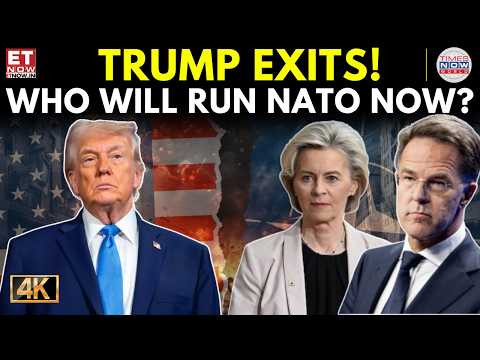
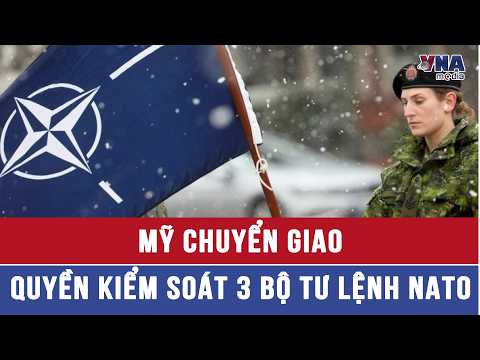
Since NATO's founding in 1949, an American four-star general has led every Joint Force Command responsible for warfighting operations on European soil. That 75-year tradition ended on February 6, 2026, when NATO announced that Italy will take command of Joint Force Command Naples, the United Kingdom will lead Joint Force Command Norfolk, and Germany and Poland will share leadership of Joint Force Command Brunssum on a rotating basis.

The restructuring gives Europeans control of all three operational-level commands while the United States retains the Supreme Allied Commander Europe position and takes direct leadership of three functional commands: Allied Air Command, Allied Maritime Command, and Allied Land Command. The changes, to be phased in over several years, represent the most significant redistribution of NATO military leadership since the alliance's creation.

Key Indicators

3
Joint Force Commands transferring to European leadership
All operational-level warfighting commands will now be led by European officers
75
Years of US command at Naples and Norfolk
US admirals have led NATO's southern flank command since 1951
5%
New NATO defense spending target
Members pledged 3.5% gross domestic product for core defense plus 1.5% for security infrastructure by 2029
100,000
Approximate US troops in Europe
Trump administration has proposed reducing this by up to 20,000

Interactive

Exploring all sides of a story is often best achieved with Play.

Ever wondered what historical figures would say about today's headlines?

Sign up to generate historical perspectives on this story.

Sign Up

Debate Arena

Two rounds, two personas, one winner. You set the crossfire.

People Involved

Alexus G. Grynkewich
Supreme Allied Commander Europe and Commander, US European Command (In command since July 2025)
Mark Rutte
Mark Rutte
NATO Secretary General (Actively advocating for increased European defense spending)
Donald Trump
Donald Trump
President of the United States (Driving NATO restructuring through burden-sharing demands)

Organizations Involved

North Atlantic Treaty Organization (NATO)
Military alliance
Status: Undergoing significant command restructuring

A 32-member military alliance bound by Article 5, which states an attack on one member is an attack on all.

Allied Joint Force Command Naples
NATO Operational Command
Status: Transitioning to Italian leadership

NATO's operational command responsible for the alliance's southern flank, overseeing missions across Southern and Eastern Europe.

Joint Force Command Norfolk
NATO Operational Command
Status: Transitioning to British leadership

NATO's operational command focused on protecting transatlantic sea lines of communication and the High North.

Timeline

  1. US Armed Forces Confirms Command Transfers

    Implementation

    Pentagon officially announces the transfer of Joint Force Commands Naples and Norfolk to European leadership, with US taking Allied Air, Maritime, and Land Commands.

  2. NATO Announces European Command Takeover

    Restructuring

    Alliance agrees Italy will lead Naples command, UK will lead Norfolk, and Germany-Poland will rotate at Brunssum. US retains SACEUR and takes three functional commands.

  3. Rutte Warns Europe Cannot Defend Itself Alone

    Statement

    NATO Secretary General says Europe would need 10% defense spending and its own nuclear capability to achieve independence from US military protection.

  4. US Begins Withdrawing Troops from Eastern Europe

    Military

    Pentagon confirms Army brigade from 101st Airborne will return to US without replacement; considers withdrawing up to 10,000 troops from Romania and Poland.

  5. Grynkewich Assumes SACEUR Role

    Command

    General Alexus Grynkewich becomes 21st Supreme Allied Commander Europe, first appointed from three-star rank in recent history.

  6. Trump Demands 5% Defense Spending at Davos

    Policy

    President calls for NATO members to more than double the existing 2% target, a level no member currently meets.

  7. Trump Inaugurated for Second Term

    Political

    Returns to office with stated goal of making NATO a 'European-led' alliance and reducing US military footprint in Europe.

  8. Mark Rutte Becomes NATO Secretary General

    Leadership

    Former Dutch Prime Minister takes helm of NATO as alliance faces pressure from both Russian aggression and US demands for burden-sharing.

  9. Joint Force Command Norfolk Activated

    Command

    NATO creates new Atlantic-focused command in Virginia to counter Russian threat to transatlantic sea lanes.

  10. France Withdraws from NATO Military Command

    Restructuring

    President Charles de Gaulle announces French withdrawal from NATO's integrated military structure, forcing relocation of headquarters from Paris.

  11. First US Admiral Commands NATO's Southern Flank

    Command

    Admiral Robert Carney appointed Commander-in-Chief of Allied Forces Southern Europe, establishing 75-year tradition of US naval leadership at Naples.

  12. NATO Founded in Washington

    Founding

    Twelve nations sign the North Atlantic Treaty, establishing collective defense principle that an attack on one is an attack on all.

Scenarios

1

Gradual Europeanization: NATO Completes Transition Without Crisis

Discussed by: NATO officials, European defense ministers, Atlantic Council analysts

European officers assume command positions over 2-3 years as scheduled rotations occur. The US maintains SACEUR and functional command leadership, preserving strategic coherence. Defense spending rises toward 5% target. The restructuring is seen as a successful burden-sharing model that keeps America engaged while empowering European allies.

2

Further US Retrenchment: Command Transfer Accelerates American Withdrawal

Discussed by: Hudson Institute analysts, Congressional critics, Eastern European officials

The command transfer signals broader US disengagement. Troop withdrawals accelerate beyond the proposed 20,000. Congress fails to block Pentagon drawdowns. European nations struggle to fill capability gaps, particularly in intelligence, logistics, and precision strike. Eastern flank allies express alarm at diminished US commitment.

3

European Defense Breakthrough: EU Develops Strategic Autonomy

Discussed by: French defense officials, European Commission, RAND Corporation

The command restructuring catalyzes genuine European defense integration. EU nations pool resources, harmonize procurement, and develop independent command-and-control capabilities. Within a decade, Europe can conduct major operations without US leadership. This scenario requires sustained political will and defense spending increases that have historically proven elusive.

4

Crisis Test: Russian Aggression Exposes Command Transition Vulnerabilities

Discussed by: CEPA analysts, Baltic defense officials, Breaking Defense

A security crisis on NATO's eastern flank occurs during the transition period. Command coordination problems emerge between new European leaders and US functional commands. The crisis either strengthens the new structure by proving its value or exposes weaknesses that force a partial reversal of the restructuring.

Historical Context

France Withdraws from NATO Military Command (1966)

March 1966

What Happened

President Charles de Gaulle withdrew France from NATO's integrated military structure, citing concerns about US dominance and fears of being drawn into American conflicts like Vietnam. France remained a political member of the alliance but removed its forces from NATO command and expelled NATO headquarters from Paris.

Outcome

Short Term

NATO relocated its headquarters to Brussels. France signed the Ailleret-Lemnitzer agreements in 1967, which clarified how French forces would cooperate with NATO in a European crisis.

Long Term

France remained outside the integrated command for 43 years, rejoining fully in 2009 under President Sarkozy. The episode demonstrated that major allies can resist US command dominance while maintaining collective defense commitments.

Why It's Relevant Today

The current restructuring represents a negotiated, US-approved shift toward European command, unlike de Gaulle's unilateral withdrawal. Both episodes reflect European desire for greater military autonomy within the alliance framework.

Post-Cold War NATO Command Reorganization (2002-2003)

2002-2004

What Happened

After the Soviet Union's collapse eliminated NATO's primary adversary, the alliance dramatically restructured its command system. Allied Command Atlantic was disbanded entirely. Regional commands were consolidated, and Joint Force Command Naples was redesignated from the older Allied Forces Southern Europe structure.

Outcome

Short Term

NATO's command structure shrank from 65 headquarters to 20. The focus shifted from territorial defense to expeditionary operations and crisis management.

Long Term

This restructuring created the Joint Force Command model now being transferred to European leadership. It also created a gap in Atlantic defense that led to JFC Norfolk's creation in 2019 after Russian resurgence.

Why It's Relevant Today

Demonstrates that NATO command structures are not permanent and can be fundamentally reorganized in response to changing strategic circumstances. The current changes continue this pattern of adaptation.

European Defense Initiative at Saint-Malo (1998)

December 1998

What Happened

British Prime Minister Tony Blair and French President Jacques Chirac agreed at Saint-Malo that the European Union must have the capacity for autonomous military action, backed by credible forces and the means to use them. This reversed Britain's traditional opposition to EU defense initiatives separate from NATO.

Outcome

Short Term

The agreement led to creation of the EU's Common Security and Defence Policy, European Defence Agency, and various battlegroup structures.

Long Term

Despite 25 years of initiatives, EU defense integration has produced institutions and frameworks but limited operational capability. European nations still rely on US logistics, intelligence, and command systems for major operations.

Why It's Relevant Today

The gap between European defense aspirations and capabilities explains both why the current NATO restructuring matters and why Secretary General Rutte warns that Europe cannot yet defend itself alone.

10 Sources: