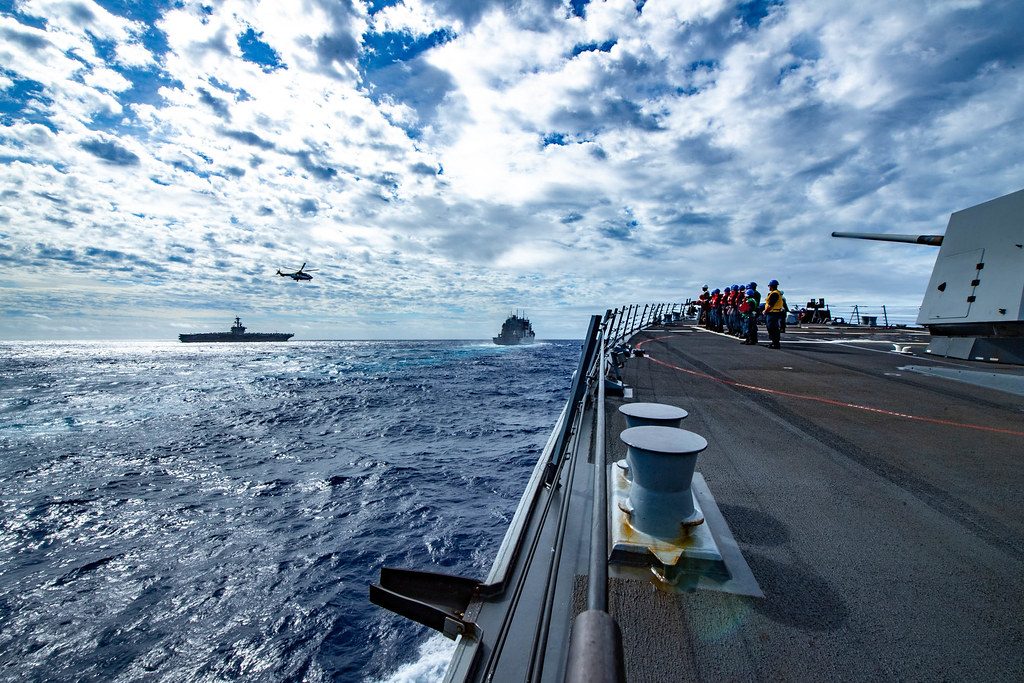
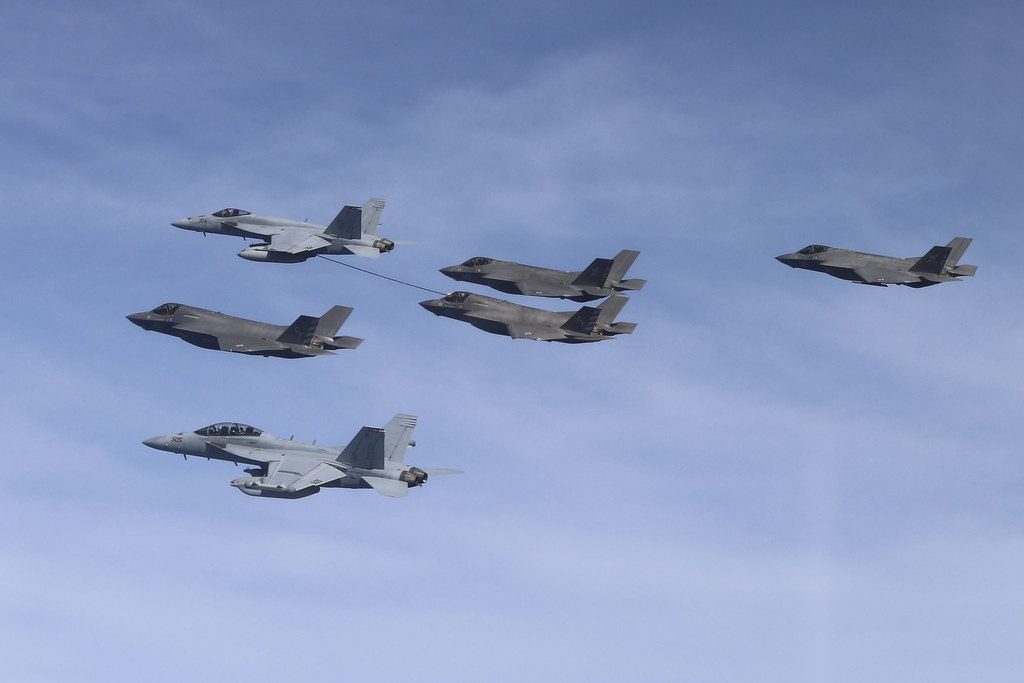
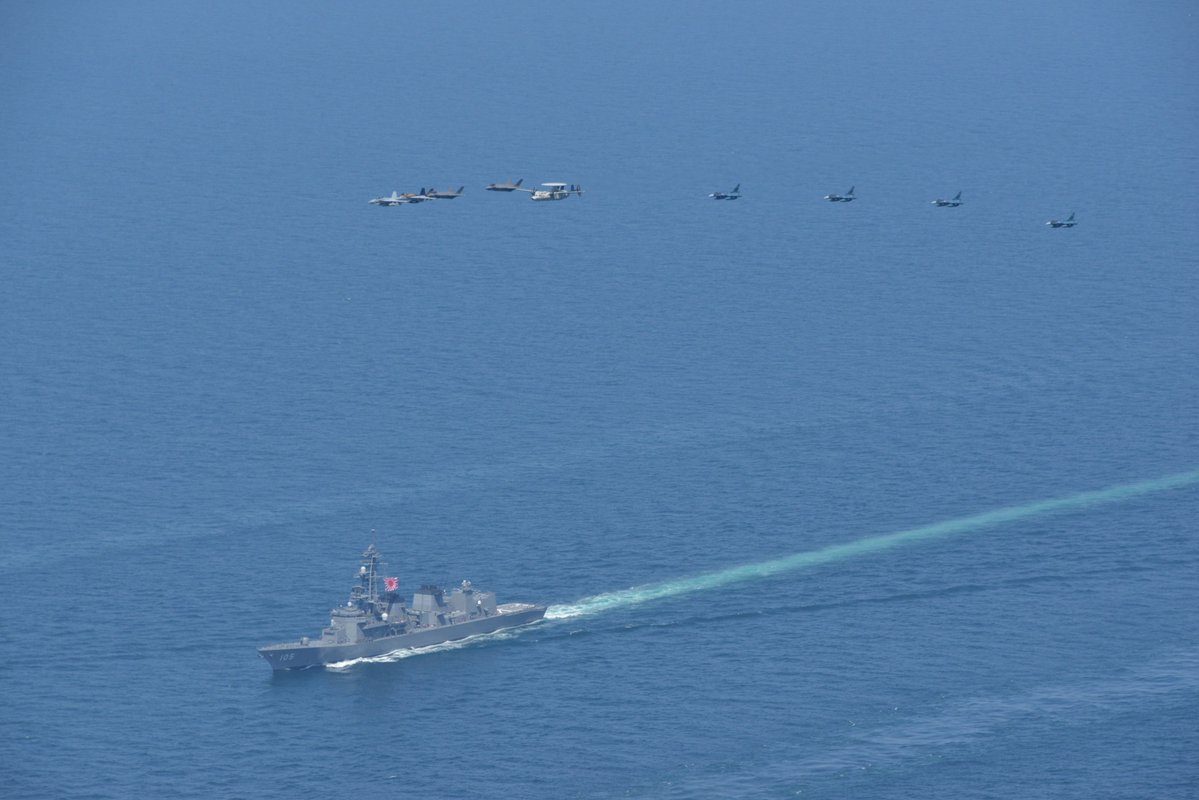
U.S. carrier strike groups converge on Persian Gulf
Force in Play
Fourth carrier group en route; ceasefire fraying as US destroys tankers, Iran strikes Gulf states; Saudi pipeline down; Hormuz blockade holds as oil flows shift to alternate routes
Fourth carrier group en route; ceasefire fraying as US destroys tankers, Iran strikes Gulf states; Saudi pipeline down; Hormuz blockade holds as oil flows shift to alternate routes
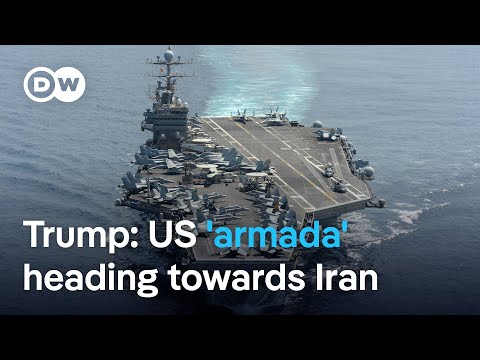
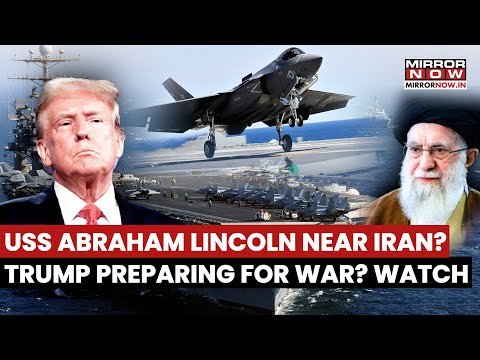
Three U.S. carrier strike groups deployed: USS Abraham Lincoln (Arabian Sea since January 2026), USS Gerald R. Ford (Mediterranean), and USS George H.W. Bush. This triple-carrier presence responded to Iran's crackdown on December 2025 protests.
On February 25, the U.S. deployed 12 F-22 Raptors and KC-46 tankers to Israel's Ovda Airbase—the largest Middle East buildup since 2003. February 28: 'Operation Epic Fury' struck Iranian nuclear sites, navy, and infrastructure and killed Supreme Leader Ayatollah Ali Khamenei. Iran retaliated March 1 and attacked 27 U.S. bases, Israeli sites, and Gulf states; Hezbollah opened a Lebanon front March 2.
By March 21, U.S. strikes hit 7,000+ targets using B-1/B-2/B-52 bombers, A-10s, Apaches: 120+ ships sunk, air defenses and missile factories destroyed, Kharg Island military sites leveled. Israel struck South Pars (March 18), Iran hit Qatar LNG, Pentagon requested $200B munitions. By March 25, Pentagon deployed 2,000-3,000 82nd Airborne paratroopers supplementing 50,000+ personnel (6,000-8,000 total), Washington transmitted ceasefire proposal, Mojtaba Khamenei became successor (March 8), Hormuz partially reopened, oil ~$95/barrel, protest deaths 3,117–36,500, Qatar and Oman positioned for talks.
Why it matters
Blockaded Hormuz and the shut Saudi East-West pipeline threaten global oil supply; the fraying ceasefire risks a wider Gulf war.
Questions about this story
Free account needed to ask — your question is kept and asked for you right after sign-up. Answers are public.
No questions yet — be the first to ask.
Key Indicators
4 Carriers + 10,000 troops
US Military Presence
Abraham Lincoln, Gerald R. Ford, George H.W. Bush deployed; Theodore Roosevelt carrier strike group and Makin Island Amphibious Group en route, adding up to 10,000 personnel. ~50,000 already in region.
~$103
Oil Price (Brent)
Brent crude trading near $103 a barrel on October 6 as Hormuz disruptions and Saudi pipeline outage squeeze supply.
40%
Oil Bypassing Hormuz
As of early October, ~40% of crude leaves the Gulf without crossing Hormuz via pipelines and offshore transfers, up from 17% before the war.
Images from Openverse under Creative Commons licenses.
Videos from YouTube.
Voices
Curated perspectives — historical figures and your fellow readers.
Ayn Rand
(1905-1982) ·Cold War · philosophy
Fictional AI pastiche — not real quote.
"The rational mind recoils at watching two theocracies—one cloaked in Islamic mysticism, the other increasingly in populist tribalism—preparing to sacrifice thousands of productive lives to satisfy the egos of men who create nothing but demand everything. In this standoff between degrees of irrationality, one can only mourn the engineers, pilots, and workers who will perish for leaders unworthy of commanding a street corner, let alone nuclear arsenals."
0% found this insightful
Benjamin Franklin
(1706-1790) ·Enlightenment · wit
Fictional AI pastiche — not real quote.
"I observe three great vessels of war sailing toward a quarrel, whilst both parties declare they wish no fight—yet neither will withdraw their fist from the other's face. 'Tis a curious species of peace-keeping, to mass one's entire arsenal at a neighbor's doorstep; rather like preventing a house-fire by stockpiling gunpowder in the cellar."
0% found this insightful
Ever wondered what historical figures would say about today's headlines?
Sign up to generate historical perspectives on this story.
76 events
Latest: 2 days ago
Showing 8 of 76
JK to step
Tap a bar to jump to that date
Jump to
October 2026
Tanker Struck in Strait of Hormuz as Iran Rules Out US Talks
LatestMilitary
A tanker was struck by an unidentified projectile in the Strait of Hormuz, sparking a fire in its engine room. Iran's parliament security committee head said 'No negotiations. Until Iran's terms are met, talks are futile.'
CENTCOM Reports 130 Vessels Redirected, 13 Destroyed in Blockade
Military
US Central Command said its forces had redirected 130 commercial vessels since resuming the naval blockade on July 14, disabled three ships that refused to comply, and destroyed 13 commercial vessels it said were violating the blockade.
Trump Says Iran War 'Essentially Almost Over,' Rules Out Nuclear Weapon
Statement
President Trump told reporters the war is 'essentially almost over' while ruling out Iran acquiring a nuclear weapon. He rejected Tehran's seven-day proposal to reopen Hormuz.
B-1 Bombers Withdrawn from UK Base Amid Drone Threat
Military Movement
RFE/RL reported that approximately a dozen B-1 bombers were withdrawn from a British base after intelligence reports of a potential Iranian drone strike.
CBS News Reports New Carrier and Amphibious Group Sent to Middle East
Media Report
CBS News reported the Theodore Roosevelt Carrier Strike Group and Makin Island Amphibious Group were being sent, potentially adding 9,000 personnel by late October.
Al Jazeera Reports Third Carrier Deployment and 10,000 Troop Increase
Media Report
Al Jazeera reported the US is deploying a third carrier strike group and up to 10,000 additional troops, with the US official confirming the Theodore Roosevelt departure.
September 2026
Makin Island Amphibious Group Departs for Middle East
Military Movement
The Makin Island Marine Expeditionary Unit, carrying more than 2,000 Marines, left San Diego a day after the Theodore Roosevelt.
USS Theodore Roosevelt Carrier Strike Group Departs San Diego for Middle East
Military Movement
A US official told Al Jazeera the carrier strike group left its San Diego base on Sunday, bound for the region. The Makin Island Marine Expeditionary Unit followed the next day.
US Rejects Iran's Mine Claim; Says Tanker Hit by Iranian Weapons
Military
CENTCOM disputed Iran's claim that the tanker El Gaia struck a naval mine, saying the ship was hit by an Iranian missile last month and a drone over the weekend. The IRGC said the tanker was engulfed in flames and declared the Strait of Hormuz 'closed' under its 'smart control.'
UAE Attacked for First Time Since April; US Sinks Six Iranian Boats
Military
The UAE reported its first attack since the early April ceasefire, and a British maritime monitor said two cargo vessels were ablaze off its coast. During Project Freedom escorts through the strait, US forces sank six small Iranian boats that were targeting civilian vessels.
Araghchi: Iran Won't Reopen Strait Until US Demands Met
Diplomacy
Iran's foreign minister, Abbas Araghchi, said Iran will not reopen the strait until the US satisfies Tehran's demands, even with an agreement with Oman. His comments followed the postponement of the Gulf meeting.
Houthis Claim Missile and Drone Barrage on Saudi Airbase
Military
Houthi rebels launched missile and drone attacks on Saudi military targets, claiming hits at King Khalid airbase in Khamis Mushait. The group also seized Yemen's Red Sea coast last week, gaining control of the Bab el-Mandeb strait.
Iranian Cargo Vessel Struck Off Qeshm Island; One Killed
Military
Iranian state media said an Iranian cargo vessel was struck early Sunday off Qeshm Island in the Strait of Hormuz, killing one crew member and wounding four.
Oman Postpones Iran-Gulf Meeting on Hormuz Shipping
Diplomacy
Oman's foreign minister, Badr Albusaidi, said the regional meeting planned for Monday was postponed 'in the interests of consensus.' Iran said the decision was made jointly by Tehran and Muscat at the request of regional countries; Gulf states cited Saudi anger over Iranian-backed Houthi attacks in Yemen.
Drone Strikes Shut Saudi East-West Pipeline
Military
Drone strikes knocked out the 1,200-km East-West pipeline across Arabia, the main route for Middle East oil exports that bypasses the Strait of Hormuz. Traders told Reuters that Riyadh has enough crude stored at Yanbu to maintain exports for only five to seven days.
Iran Targets US Bases in UAE and Kuwait
Military
Iranian missiles and drones hit Ahmad al-Jaber air base in Kuwait and Al Minhad air base in the UAE. Kuwait's defense ministry said its air defenses intercepted attacks during a 'blatant Iranian aggression.'
May 2026
US Strikes Iranian Ports After Destroyers Attacked
Military
Three US Navy destroyers (USS Truxton, USS Mason, USS Rafael Peralta) came under attack in the Strait of Hormuz. US forces struck the Iranian ports of Bandar Abbas and Qeshm in self-defense. The ceasefire held despite the exchange.
Secretary of State Marco Rubio said Operation Epic Fury concluded because its objectives were achieved. Trump paused Project Freedom, the operation to guide ships through the Strait of Hormuz, to allow Pakistan-mediated negotiations with Iran.
April 2026
US-Iran Ceasefire Takes Hold
Diplomacy
A ceasefire between the US and Iran largely held from April 8, buying time for negotiations. Pakistan hosted the first round of in-person talks in April; they ended without a resolution.
March 2026
Pentagon Orders 82nd Airborne Deployment; US Transmits Ceasefire Proposal to Tehran
Military/Diplomacy
Pentagon orders 2,000-3,000 paratroopers from 82nd Airborne Division's Immediate Response Force to deploy to CENTCOM AOR, bringing total US ground forces to 6,000-8,000 near Iran. Same day, Washington transmits ceasefire proposal to Tehran, signaling dual-track military pressure and diplomatic engagement.
US Navy enforcement operations clear Strait of Hormuz for commercial shipping; Iranian fast boats and drones stand down. First significant shipping traffic in 72 hours; oil tankers transit with naval escort.
Oil Prices Stabilize Around $95/Barrel
Economic
Crude oil prices fall from $140+ peak to $95/bbl as markets price in Hormuz partial reopening and ceasefire negotiations. OPEC+ emergency production increases take effect.
Mojtaba Khamenei, designated Supreme Leader on March 8, consolidates control over IRGC and security apparatus. Hardline faction (Qalibaf, military commanders) pledges loyalty; Rafsanjani faction marginalized. Succession crisis resolved in favor of IRGC continuity.
SecDef Hegseth, Gen. Caine: Overwhelming strikes using B-1/2/52, A-10s, Apaches; 120+ ships sunk, defenses flattened; largest packages yet; tribute to 6 fallen airmen.
Israel Strikes South Pars Gas Field; Iran Hits Qatar LNG Facility
Military
US-coordinated Israeli attack on world's largest gas field; Iran retaliates on Qatar LNG; Trump unaware, vows no more oil hits, threatens Iran.
US Enforces Strait of Hormuz vs. Iranian Vessels/Drones
Military
Aerial campaign targets ships, one-way attack drones to reopen shipping; A-10s, Apaches active southern flank.
US Large-Scale Strikes on Kharg Island; Kata'ib Hezbollah Leader Killed
Military
90+ military targets hit (oil spared); CENTCOM oil price warning; Baghdad airstrike kills Abu Ali al-Askari.
Mojtaba Khamenei Designated Supreme Leader; Third US Carrier Deploys
Political
Khamenei's son named successor; USS George H.W. Bush sent to Middle East; HMS Prince of Wales readied.
Iran Vows to Halt Neighbor Strikes; ~1,000 Missiles Left
Military
Pezeshkian pledges no attacks unless provoked; Dubai Airport hit anyway; third carrier en route.
Hezbollah Launches Rockets at Israel; Israel Strikes Beirut
Military
Hezbollah fires rockets and drones at Israeli military base near Haifa in first attack since 2024 ceasefire, claiming retaliation for Khamenei's death. Israel responds with airstrikes on Beirut's southern suburbs, killing at least 31 people and wounding 149. Opens second front in widening US-Israel-Iran conflict.
Iran Succession Crisis Deepens; No Clear Successor to Khamenei
Political
With Khamenei dead and no designated successor, Iranian factions position for power: IRGC leadership, Rafsanjani allies, and exiled Reza Pahlavi all emerging as potential contenders. International observers warn of instability amid ongoing war.
Iran Retaliates on 27 US Bases, Israel, Gulf States
Military
IRGC launches missiles/drones at US bases across Middle East, Tel Aviv military HQ, UAE/Qatar/Kuwait/Bahrain/Jordan/Saudi sites in response to Khamenei killing. Civilian hits in Dubai; shelter-in-place US embassies.
February 2026
UNSC Emergency Session on Iran War
Diplomacy
Security Council meets at 4PM NY time on requests from France/Bahrain/Colombia/Russia/China; first multilateral response to US-Israel strikes and Iranian retaliation.
OPEC+ Plans Oil Supply Boost Amid War
Economic
Emergency meeting to consider larger supply increase after US-Israel strikes; fears over Iran 3.3M bpd output and Hormuz Strait disruption.
Iran Initial Retaliation on US Bases in Gulf
Military
Strikes hit Al Udeid Qatar, Fifth Fleet Bahrain HQ, explosions Kuwait/UAE; shelter orders issued; missiles toward Israel.
US-Israel 'Operation Epic Fury' Strikes Iran
Military
Joint multi-day operation targets nuclear/missile/naval sites; Trump declares major combat ops to eliminate threats; kills Khamenei hours after Oman talks progress report.
12 F-22 Raptors Deploy to Israel—First Ever
Military Posture
U.S. Air Force deploys squadron of 12 F-22 Raptor stealth fighters from RAF Lakenheath to Ovda Airbase in southern Israel. First-ever F-22 deployment to Israel; aircraft designed to penetrate heavily defended airspace and suppress enemy air defenses. Represents significant escalation in strike readiness against Iranian targets.
KC-46 Tankers Deploy to Ben Gurion Airport
Military Posture
US Air Force KC-46 Pegasus tankers arrive at Israel's Ben Gurion Airport as part of largest Middle East buildup since 2003, with 85+ tankers and 170 cargo planes supporting dual-carrier operations.
Second Oman Talks Yield Mixed Results
Diplomacy
US-Iran indirect nuclear talks in Oman produce no major progress, leaving gaps on enrichment and missiles; Middle East on edge as US buildup continues.
Pentagon Confirms Second Carrier Deployment to Region
Military Posture
USS Gerald R. Ford or George H.W. Bush CSG advances toward Middle East to join Abraham Lincoln, extending dual-carrier presence amid Iran tensions; expected arrival late April/May.
Pentagon Orders Second Carrier Strike Group Preparation
Military Posture
Pentagon directs USS George H.W. Bush CSG to prepare for Middle East deployment amid Iran tensions and nuclear talks; could deploy in two weeks to join Abraham Lincoln.
Oman Nuclear Talks Conclude with Plans to Continue
Diplomacy
US-Iran indirect talks in Muscat end 'for now' after positive atmosphere; Iran rejects zero-enrichment demand, sides agree to consult capitals for next round; US announces sanctions same day.
US-Iran Nuclear Talks Set for Oman Feb 6
Diplomacy
Iran and U.S. confirm nuclear talks in Muscat despite format disputes over missiles; Trump warns Khamenei to worry as regional leaders urge dialogue. White House skeptical but proceeds at allies' request.
Oil Drops 5% on Trump-Iran Talks Signal
Economic
Oil prices slide over 5% as markets price out strike risks following Trump's statement on active Iran talks; reflects de-escalation expectations amid carrier presence.
CENTCOM Posts Abraham Lincoln Video Ahead of Talks
Military Posture
U.S. Central Command releases footage of Lincoln's aircraft ahead of US-Iran Oman talks, signaling readiness amid tensions.
January 2026
Death Toll Estimates Revised to Potentially 30,000+
Casualty Report
Time Magazine reports two senior Iranian Ministry of Health officials state as many as 30,000 may have been killed on January 8-9 alone. Hospital tally reached 30,304 as of January 24 according to German-Iranian surgeon's report. Iran International reports intelligence estimates of 36,500 by January 24.
US Destroyer Docks at Eilat; Trump Weighs Commando Raids
Military Posture
A US destroyer docked at Eilat port, Israel, as Trump weighs expanded military options including strikes on nuclear facilities and covert penetration by American commando forces to destroy undamaged nuclear installations inside Iranian territory.
Iran Warns Retaliation Will Not Be Limited
Statement
Iran threatens to instantly strike US bases and aircraft carriers in response to any attack, warning that retaliation to any US attack will not be limited in scope or geography.
Kuwait announces it will not allow its bases or airspace to be used for offensive actions against Iran, joining Saudi Arabia and UAE in constraining U.S. military options.
Trump Reviews Imminent Strike Options; EU Designates IRGC as Terrorist Organization
Military Posture
Trump actively weighing strikes targeting Iranian government bodies, nuclear installations, and security officials. No final decision made. Regional allies Saudi Arabia and UAE announce they will not allow airspace use for strikes. EU designates IRGC as terrorist organization. Oil prices rise 3%+ on strike fears.
Trump Announces 25% Tariff on Countries Doing Business With Iran
Economic
Trump announces 'effective immediately, any Country doing business with the Islamic Republic of Iran will pay a Tariff of 25%' on all business with the U.S. First time Trump appears to explicitly call for end of Khamenei's rule, stating 'It's time to look for new leadership in Iran.'
Turkey, Oman, and Qatar attempt to broker diplomatic talks to head off strikes. Saudi Arabia and UAE inform U.S. they will not allow airspace use for attacks on Iran. Regional constraints narrow Trump's military options.
Iran Warns Military Has 'Fingers on Trigger'
Statement
Iranian Foreign Minister Abbas Araghchi warns Iran's military is ready 'with their fingers on the trigger' and would 'immediately and powerfully respond' to any new U.S. attack. Escalation in rhetoric as Abraham Lincoln becomes operational.
Saudi Crown Prince Confirms No Airspace Access for Iran Strikes
Diplomacy
Crown Prince Mohammed bin Salman tells Iranian President Pezeshkian in phone call that Saudi Arabia will not allow its airspace or territory to be used for military action against Tehran 'from any party, regardless of their origin.'
Death Toll Reaches 6,126 Confirmed
Casualty Report
Human Rights Activists News Agency reports at least 6,126 people killed in the crackdown. Iran's government puts the toll at 3,117 (2,427 civilians/security forces, 690 labeled 'terrorists').
Abraham Lincoln Arrives in Arabian Sea, Operational
Military Posture
USS Abraham Lincoln carrier strike group completes transit and enters CENTCOM area of responsibility in Arabian Sea, now within striking distance of Iran. The carrier and three destroyers bring approximately 5,000 additional U.S. troops to the region.
Iranian State TV Airs Assassination Threat Using Butler Photo
Statement
Iranian state broadcasting published a photo from the July 2024 Butler assassination attempt with text: 'This time it will not miss the target.' Secret Service confirmed awareness of the threat. Iranian cultural and media figures issue statement supporting Khamenei amid Trump threats.
Trump: U.S. 'Armada' Approaching; Death Toll Reaches 5,002
Statement
Trump announces 'we have an armada heading that direction and maybe we won't have to use it.' Death toll in crackdown reaches at least 5,002 according to activists.
Abraham Lincoln Goes 'Dark' in Bay of Bengal; Iran Issues Military Threats
Military Posture
The carrier turned off its transponder while transiting the Bay of Bengal, now days from the Middle East. Iran's Foreign Minister warned Tehran will 'fire back with everything we have' if attacked. Armed forces spokesman threatened to 'set fire to their world' if Trump targets Khamenei. Trump issued new ultimatum: assassination plots would result in Iran getting 'blown up.'
Death Toll Estimates Revised Sharply Upward
Casualty Report
HRANA reports 4,519 confirmed deaths. The Sunday Times cites doctors inside Iran estimating 16,500 killed and 330,000 injured. Iranian Parliament threatens jihad if Khamenei is targeted. Over 26,300 arrested.
Abraham Lincoln Transits Strait of Malacca
Military Movement
The carrier strike group continues transit through the Strait of Malacca toward the Arabian Sea. Death toll estimates exceed 4,000.
F-15E Strike Eagles Deploy to Middle East
Military Movement
A dozen F-15E Strike Eagles from the 494th Fighter Squadron departed for the Middle East as Trump seeks 'decisive' military options against Iran.
Supreme Leader Khamenei admits thousands died, some in an 'inhuman, savage manner,' but attributes casualties to U.S. and Israeli interference. Calls Trump a 'criminal.'
Pentagon Orders Abraham Lincoln to Middle East
Military Order
The carrier strike group, in the South China Sea, receives orders to transit to the CENTCOM area of responsibility. Expected arrival: late January.
Trump Claims Killings Have Stopped
Statement
Trump announces he's been told 'on good authority' that killings stopped and 800 planned executions were halted. He confirms strikes were held off but denies being persuaded by regional allies.
Al Udeid Evacuation; Iran Closes Airspace
Military Posture
Pentagon advises non-essential personnel to leave Qatar's Al Udeid Air Base. Iran issues a NOTAM closing airspace for five hours. G7 threatens additional sanctions.
USS George H.W. Bush Departs Norfolk
Military Movement
The carrier leaves for the Mediterranean Sea, potentially heading to the Arabian Sea to join the Abraham Lincoln.
Trump Threatens 'Strong' Military Action
Statement
President Trump warns of U.S. intervention if Iran continues killing protesters or conducts mass executions of detainees.
CENTCOM Activates New Air Defense Coordination Center at Al Udeid
Military Posture
U.S. Central Command announces American forces, working with regional allies, have stood up a new joint air and missile defense coordination center at Al Udeid Air Base in Qatar to enhance integrated air and missile defense capabilities.
Death Toll Estimates Reach 2,000+ in 48 Hours
Casualty Report
Iran International reports at least 2,000 protesters killed during the internet blackout as security forces escalate use of live ammunition.
Regime Cuts Internet; Mass Killings Begin
Crackdown
Iran disconnects from the global internet. IRGC and Basij conduct coordinated live-fire operations. At least 217 killed in Tehran. Reza Pahlavi's call for unified protests preceded the escalation.
Rial Hits Record Low of 1.5 Million to the Dollar
Economic
The currency collapse accelerates. Oil workers and truckers join the strikes alongside bazaar merchants.
Khamenei Warns 'Rioters Must Be Put in Their Place'
Statement
Supreme Leader Khamenei distinguishes between 'protesters' the government will talk to and 'rioters' who will be suppressed.
December 2025
Tehran Bazaar Merchants Close Shops, Protests Begin
Unrest
Merchants in Tehran's Grand Bazaar shut down and demonstrated over the rial's collapse to 1.45 million per dollar. Protests spread to 17 of Iran's 31 provinces within three days.
June 2025
12-Day War Begins: Israel Strikes Iran
Military
Israel launches Operation Rising Lion, bombing Iranian nuclear facilities at Natanz, Fordo, and Isfahan. The U.S. joins the campaign on June 22. Iran retaliates with 550+ ballistic missiles and 1,000+ drones. Ceasefire reached June 24.
Scenarios
1
U.S. Launches Limited Strikes on Iranian Military Targets
Possible
Discussed by: Jerusalem Post, CNN, Washington Post national security reporters
If Trump determines Iran has resumed mass killings or begun executions, the U.S. could strike IRGC facilities, air defenses, or command centers using carrier-launched aircraft and Tomahawk missiles. The June 2025 precedent established that U.S. strikes on Iran are survivable without regional war—though Iran's retaliation then hit Al Udeid and Israeli cities. Regional allies (Israel, Saudi Arabia, Qatar, Turkey, Oman) are reportedly lobbying against strikes, fearing prolonged conflict.
2
Carrier Presence Deters Without Kinetic Action
Likely
Discussed by: Pentagon officials, The Hill defense reporters, Washington Institute analysts
The carrier buildup serves its intended purpose: signaling resolve without firing a shot. Iran's crackdown has already succeeded in suppressing street protests. If the regime avoids executions and maintains the claimed pause in killings, Trump may claim credit for deterrence without military action. The carriers would eventually rotate out. This outcome preserves U.S. credibility while avoiding escalation.
3
Iran Retaliates Against U.S. Bases, Escalation Spiral Begins
Possible
Discussed by: Al Jazeera, Qatar foreign ministry, Iranian state media
Iran has warned neighbors hosting U.S. troops that it will strike American bases if attacked. Al Udeid, with 10,000 troops, is the most vulnerable target. Iran demonstrated this capability in June 2025. A tit-for-tat cycle could draw in Israel, trigger oil supply disruptions, and force regional states to choose sides. Qatar's foreign ministry has warned of 'catastrophic results.'
4
Regime Collapse Amid Economic Implosion
Unlikely
Discussed by: Foreign Policy, GIS Reports, exile opposition figures
The protests revealed cross-sectional unity unprecedented in Iranian unrest: bazaar merchants, students, workers, women, and elderly joining together with explicitly anti-regime slogans. The rial has lost 90% of value since 2018. If sanctions tighten, oil revenues fall, and the population remains restive, the Islamic Republic could face prolonged instability or even collapse—though the IRGC has shown willingness to kill at scale to prevent this.
5
Trump Orders Strikes Despite Regional Opposition
Possible
Discussed by: Washington Post, CNN, Israel Hayom military analysts
Trump proceeds with aerial bombardments targeting Iranian government bodies, nuclear installations, and security officials despite Saudi and UAE refusal to provide airspace access. This would require longer flight paths, potentially through Iraqi airspace or entirely carrier-based operations. Strikes could be intended to inspire renewed protests and engineer regime change conditions. Regional backlash and Iranian retaliation against U.S. bases would be likely. The constraint on airspace access makes operations more complex but not impossible.
6
Diplomatic Track Succeeds in Delaying Action
Possible
Discussed by: CBS News, Al Jazeera, regional diplomacy reporters
Turkey, Oman, and Qatar's diplomatic efforts, combined with regional allies' refusal to support strikes, convince Trump to delay military action while exploring negotiated solutions. This mirrors the January 15 pattern when Trump claimed killings stopped after warnings. Iran would need to avoid executions and maintain pause in mass killings to keep diplomatic window open. Both sides save face while stepping back from the brink.
7
F-22s Enable Deep Penetration Strikes on Iranian Nuclear Facilities
Possible
Discussed by: Israeli defense analysts, U.S. Air Force strategists, Washington Institute for Near East Policy
The F-22 Raptors' stealth capability and air superiority design enable strikes deep into Iranian territory against hardened nuclear sites at Natanz, Fordo, and Isfahan—targets that would be difficult for conventional aircraft to reach. Combined with carrier-based F-35Cs and KC-46 tanker support, the F-22 deployment signals capability for comprehensive air campaign. Iran's air defenses, degraded since June 2025 war, would struggle against fifth-generation stealth aircraft. This scenario assumes Trump decides to strike after nuclear deadline expires early March.
Discussed by: Iranian military analysts, Al Jazeera regional correspondents, Soufan Center
Iran interprets F-22 arrival as imminent strike signal and launches preemptive attack on U.S. bases or carriers before stealth fighters can be fully integrated. IRGC has demonstrated willingness to strike first (June 2025 war). Preemption could target Al Udeid (10,000 troops), carriers in Arabian Sea, or Israeli bases hosting F-22s. Would trigger immediate U.S. retaliation and potential regional escalation spiral.
9
Iranian Regime Collapses Post-Khamenei
Possible
Discussed by: Foreign Policy, exile groups like Reza Pahlavi, Washington Institute
Khamenei's death creates power vacuum; IRGC fractures or protests reignite leading to regime fall. Trump urges overthrow; Reza Pahlavi positioned for return. U.S. could support transition without ground troops.
10
Regional War Expands to Full Gulf Conflict
Likely
Discussed by: Al Jazeera, Soufan Center, Gulf state analysts
Iranian strikes draw in Saudi/UAE; Hormuz closed, oil spikes 50%+; U.S. enforces sea lane with carriers, risking multi-front war involving proxies in Iraq/Yemen/Lebanon.
11
Ceasefire via UN/Russia/China Mediation
Possible
Discussed by: UN diplomats, Reuters, ISW
UNSC session yields resolution; Russia/China pressure Iran for pause; limited U.S. aims achieved (nuclear setback, Khamenei eliminated), allowing de-escalation before ground invasion.
12
Hezbollah-Israel War Escalates Into Regional Conflict
Likely
Discussed by: Al Jazeera, Washington Post, Israeli defense analysts, Lebanese government officials
Hezbollah's March 2 attack signals Iranian-backed retaliation beyond direct US-Iran conflict. If Israel escalates strikes on Beirut and southern Lebanon, Hezbollah could launch sustained rocket barrages into northern Israel, drawing in Syrian air defenses and potentially triggering US intervention. This scenario risks transforming a US-Iran-Israel conflict into a broader Levantine war involving Lebanon, Syria, and proxy forces across Iraq and Yemen.
13
IRGC Consolidates Power; Hardline Successor Emerges
Likely
Discussed by: Institute for the Study of War, Foreign Policy, Iranian exile analysts
The Islamic Revolutionary Guard Corps, already dominant in Iran's security apparatus, uses the succession vacuum to install a hardline commander as Supreme Leader or establish collective leadership. This scenario would entrench military rule, accelerate nuclear weapons development, and sustain proxy warfare across the region without diplomatic off-ramps.
14
Reza Pahlavi Returns to Iran; Monarchy Restored
Possible
Discussed by: Exile opposition groups, Washington Institute, Trump administration officials
Amid regime collapse and popular unrest, exiled Crown Prince Reza Pahlavi returns to Iran with US backing, positioning himself as alternative to IRGC rule. Protesters and secular opposition rally to monarchist banner. IRGC resists, triggering civil conflict. Outcome depends on military defections and international recognition.
15
US Strikes Hezbollah Targets in Lebanon
Possible
Discussed by: Pentagon officials, Israeli military analysts, Washington Post defense reporters
Following Hezbollah's March 2 attack, Trump orders US airstrikes on Hezbollah command centers, rocket caches, and training camps in southern Lebanon. This would mark direct US military action against a non-state actor and risk civilian casualties, potentially triggering Syrian and Iranian retaliation and destabilizing Lebanon's fragile government.
16
Hormuz Strait Closure; Oil Spikes 50%+
Possible
Discussed by: OPEC+ officials, energy analysts, Bloomberg, CNBC
Iran or Hezbollah-aligned forces attempt to close the Strait of Hormuz in response to US-Israel strikes. US Navy enforces passage, triggering naval confrontation. Oil prices spike 50% or more; global recession fears mount. OPEC+ emergency production increases prove insufficient to offset supply shock.
17
Ceasefire Brokered via Qatar/Oman; Limited US Aims Achieved
Possible
Discussed by: Qatar foreign ministry, Oman diplomats, UN officials, Reuters
Regional mediators broker temporary ceasefire: Iran halts further retaliation; Hezbollah stands down; Israel agrees to limited strikes. US claims victory (Khamenei eliminated, nuclear program degraded, deterrence restored). Negotiations begin on succession, sanctions relief, and nuclear framework. Avoids ground invasion and prolonged regional war.
18
US Marines Seize Kharg Island, Forces Hormuz Reopening
Possible
Discussed by: Axios, NPR, Pentagon officials
11th MEU occupies oil export hub after air strikes; secures 90% Iranian oil flow, neutralizes missile/drone threats; risks ground casualties but ends supply crisis.
Hormuz Naval Clash: US vs. IRGC Fast Boats, Full Closure
Possible
Discussed by: USNI, CENTCOM briefings
Iran sinks tankers; US carriers/destroyers clear strait with A-10/Apache strikes; oil to $150/bbl, global recession.
21
Ceasefire Holds; Regional De-escalation Begins
Possible
Discussed by: Qatar foreign ministry, Oman diplomats, UN officials, Reuters
Iran accepts US ceasefire proposal; Hezbollah stands down; Israel agrees to limited strikes. US claims victory (Khamenei eliminated, nuclear program degraded, deterrence restored). Negotiations begin on succession recognition, sanctions relief, and nuclear framework. Avoids ground invasion and prolonged regional war. Oil prices stabilize at $80-90/bbl.
Mojtaba Khamenei and IRGC leadership reject ceasefire proposal as capitulation. Iran launches new missile/drone strikes on US bases or carriers; Hezbollah resumes rocket barrages. 82nd Airborne and Marines engage in ground operations; Hormuz closure attempted again. Oil spikes to $120+/bbl; global recession fears mount.
23
82nd Airborne Participates in Kharg Island Seizure
Possible
Discussed by: Pentagon officials, Axios, NPR
Paratroopers from 82nd Airborne join Marines in amphibious assault on Kharg Island oil hub. Ground operation secures facility after air strikes; US forces establish forward operating base. Hormuz fully reopened; Iranian oil exports halted. Casualties on both sides; international outcry over occupation.
24
Reza Pahlavi Returns to Iran; Monarchy Restoration Bid
Unlikely
Discussed by: Exile opposition groups, Washington Institute, Trump administration officials
Amid regime instability and IRGC power consolidation, exiled Crown Prince Reza Pahlavi returns to Iran with US backing. Secular opposition and monarchist supporters rally; IRGC resists. Civil conflict erupts between regime forces and opposition militias. International recognition of Pahlavi government splits along US-Russia/China lines.
Discussed by: Qatar foreign ministry, Oman diplomats, UN mediators
Regional mediators broker phased ceasefire: Iran halts retaliation; US commits to gradual carrier withdrawal; Israel agrees to limited strikes. Negotiations on nuclear framework, sanctions relief, and prisoner exchanges begin. 82nd Airborne and Marines remain in region as peacekeeping force pending agreement implementation.
26
Tanker War Escalates: US Targets Iran's Oil Fleet
Likely
Resolves by End of 2026
Discussed by: CENTCOM, The Guardian, Reuters
After destroying three Iranian oil tankers on September 5, the US warned it would 'if necessary, destroy Iran's limited and exposed oil fleet.' Iran depends on oil exports for revenue; cutting off the fleet could cripple the economy but risks Iranian retaliation against Gulf shipping and US bases.
27
Project Freedom Convoy Clash Ends the Ceasefire
Likely
Discussed by: CENTCOM statements, Iran's military command, iNFOnews.ca
US forces are escorting commercial ships through Hormuz under Project Freedom, announced September 13. Iran warns ships must coordinate with Tehran and that foreign military forces approaching the strait will be targeted. On September 14, US ships came under fire and sank six Iranian boats. A heavier attack on a convoy could collapse the ceasefire for good.
28
Saudi Pipeline War Draws Gulf States Into the Fight
Possible
Discussed by: Reuters, The Guardian, energy analysts
Houthi drone strikes shut Saudi Arabia's East-West pipeline, the main Hormuz bypass. Riyadh has about five to seven days of stored crude at Yanbu to keep exporting. Saudi anger at Iranian-backed Houthi and Iraqi militia attacks may push the kingdom to back US strikes on Iran or break the Arab consensus that postponed the Oman meeting.
29
Oil Flows Fully Shift to Pipelines, Hormuz Remains Closed
Possible
Resolves by End of 2026
Discussed by: Fortune, energy analysts, Reuters
Persian Gulf oil flows have returned to prewar levels using pipeline routes and offshore transfers that bypass Hormuz. If the strait stays closed and the Saudi East-West pipeline remains down, other producers may fill the gap, but the system becomes more fragile.
Historical Context
3 moments from history that rhyme with this story — and how they unfolded.
1 of 3
August 1990 - February 1991
Operation Desert Shield/Desert Storm (1990-1991)
After Iraq invaded Kuwait, the U.S. deployed six aircraft carriers, two battleships, and 425,000 troops to the Gulf region over five months. The buildup—Operation Desert Shield—preceded the combat phase. Coalition air power flew 20,000 Navy sorties and achieved total air dominance within days.
Then
The largest U.S. military deployment since Vietnam expelled Iraqi forces from Kuwait in 100 hours of ground combat.
Now
Established the template for U.S. power projection in the Gulf: visible carrier presence, coalition building, and massive logistics buildup preceding potential action.
Why this matters now
The current three-carrier mobilization echoes Desert Shield's deliberate buildup of options before any decision to strike. Both situations involve positioning forces first, deciding on action later.
2 of 3
November 1979 - April 1980
Iran Hostage Crisis and Operation Eagle Claw (1979-1980)
Iranian revolutionaries held 52 American diplomats hostage for 444 days. President Carter ordered a rescue mission in April 1980: eight helicopters launched from the USS Nimitz. A sandstorm caused mechanical failures; a collision during abort killed eight servicemembers. The mission never reached Tehran.
Then
The failed rescue contributed to Carter's 1980 election defeat. Secretary of State Cyrus Vance resigned over the operation.
Now
The disaster led to creation of Joint Special Operations Command and fundamental reforms in U.S. special operations capabilities.
Why this matters now
The only previous U.S. military operation launched from a carrier against Iran ended in catastrophe. The lesson—that Iran operations carry unique risks and require overwhelming capability—shapes current force posture decisions.
3 of 3
June 13-24, 2025
June 2025 Israel-Iran War (12-Day War)
Israel launched Operation Rising Lion, striking Iranian nuclear facilities at Natanz, Fordo, and Isfahan. The U.S. joined on June 22, bombing three nuclear sites. Iran retaliated with 550+ ballistic missiles against Israel and struck Al Udeid Air Base in Qatar. Over 2,500 Iranians and hundreds of Israelis died.
Then
A U.S.-brokered ceasefire ended the conflict after 12 days. Iran's nuclear program and missile arsenal sustained significant damage.
Now
The rial lost 40% of its value after the war, contributing directly to the December 2025 protests. Khamenei's authority eroded. The war proved direct U.S.-Iran conflict was survivable but costly.
Why this matters now
The current crisis is a direct consequence of the June war's economic devastation. Both sides have recent experience exchanging fire—reducing uncertainty about capabilities but not about escalation dynamics.