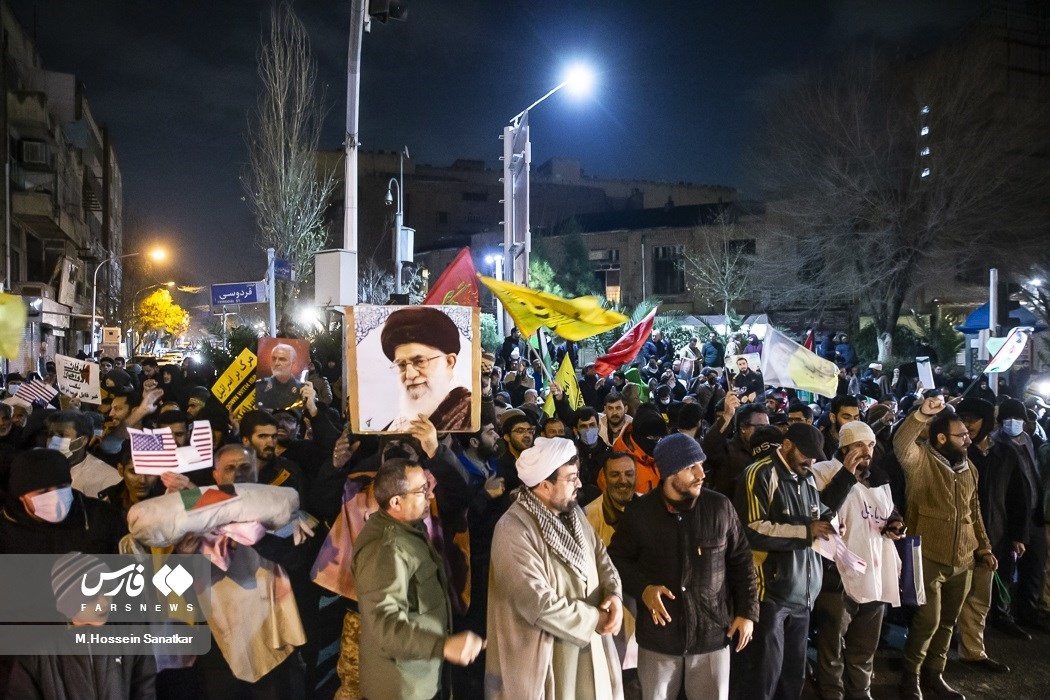
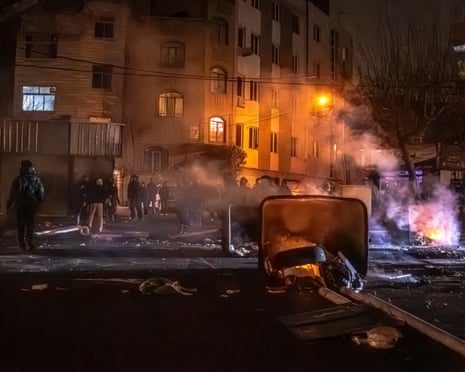
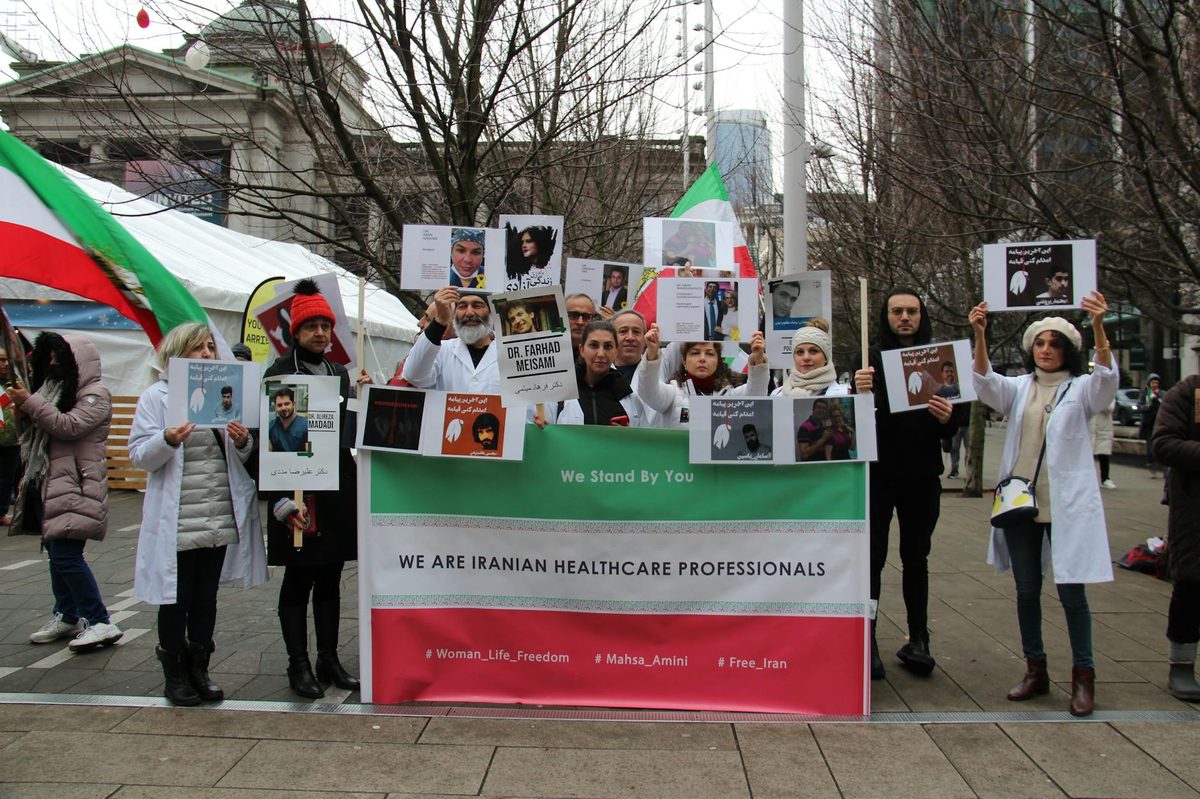
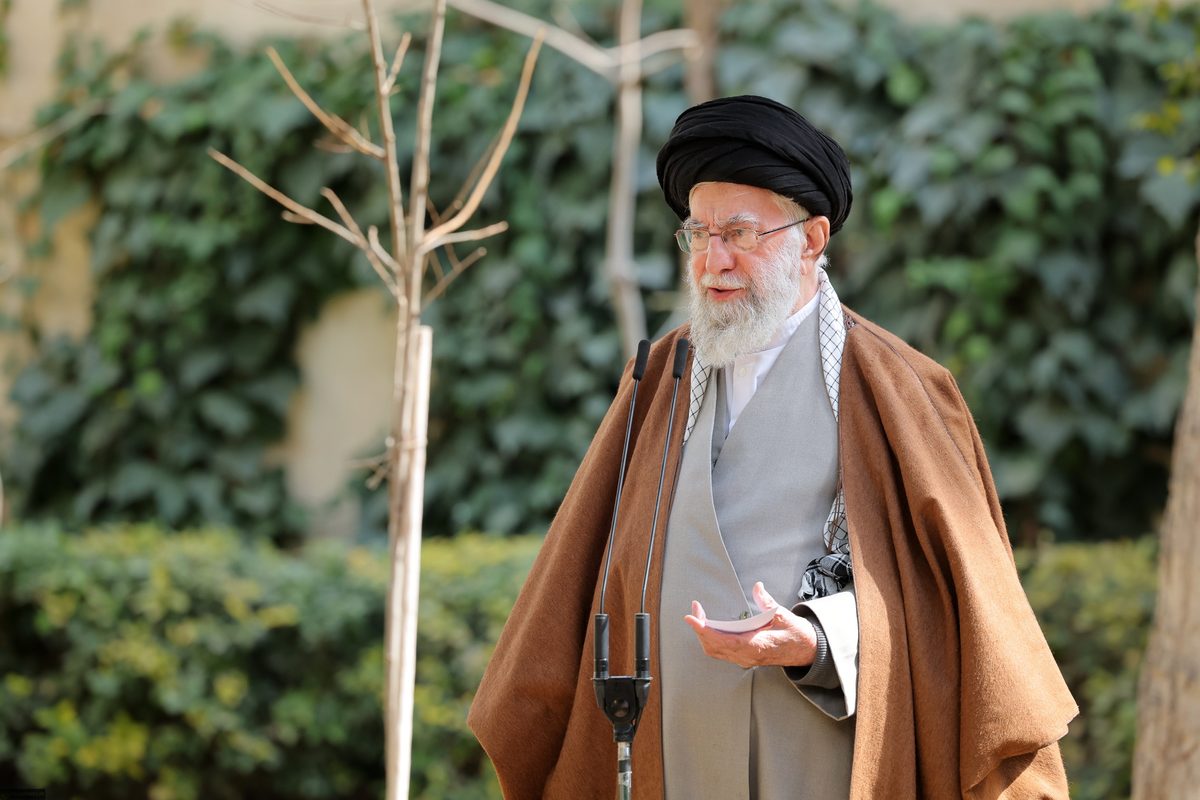
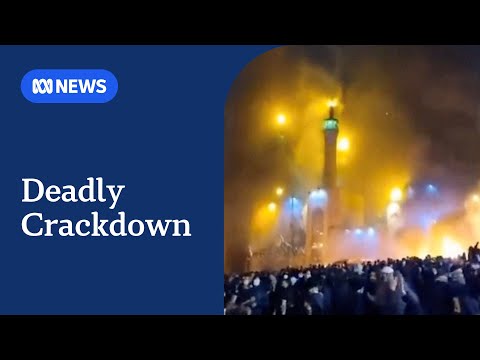
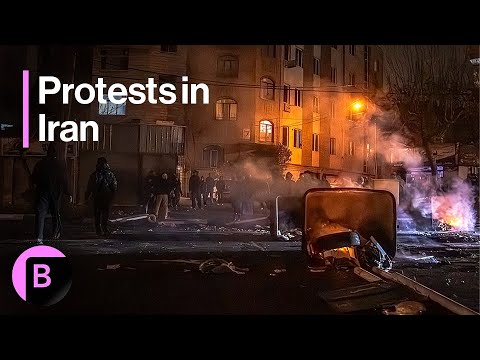
Iran's judiciary chief announced January 14 that detained protesters face fast-track trials and executions, despite Trump's warning of "very strong action." The death toll hit at least 2,571, per Human Rights Activists News Agency — four times the count from two days earlier and more than any crackdown since 1979.
Erfan Soltani, 26, was the first protester sentenced to death after a four-day proceeding without legal representation; his execution was postponed amid international outcry. The U.S. began evacuating hundreds of troops from Al Udeid Air Base in Qatar (home to 10,000 personnel and Central Command's forward headquarters) to move them out of Iranian missile range. Trump's 25% tariff ultimatum on countries trading with Iran would stack on existing 20% China duties, creating a 45% rate that risks derailing recent U.S.-China trade agreements.
China, Iran's largest trading partner at $13 billion annually, rejected the "illicit unilateral sanctions" and vowed to "take all necessary measures" to defend its interests. What began December 28 as bazaar closures over currency collapse has spread to 187 cities, with over 18,100 detained. Iran's parliament speaker previously warned that U.S. bases throughout the region would be "legitimate targets" — a threat its supreme leader advisor reinforced by referencing Tehran's 2025 missile attack on Al Udeid during the June war.
Questions about this story
Free account needed to ask — your question is kept and asked for you right after sign-up. Answers are public.
No questions yet — be the first to ask.
Key Indicators
2,571
Protesters Killed
Death toll reported by HRANA as of January 14, with 2,403 adult protesters and 12 minors
187
Cities With Protests
Demonstrations in 614 locations across all 31 provinces
18,100+
Detained
Arrests documented; judiciary announces fast-track trials and executions
25%
U.S. Tariff Threat
Tariff on countries trading with Iran; China rejects as 'illicit sanctions'
132+ hrs
Internet Blackout
Sustained national communications shutdown to hide violations
Images from Openverse under Creative Commons licenses.
Videos from YouTube.
Voices
Curated perspectives — historical figures and your fellow readers.
Eleanor Roosevelt
(1884-1962) ·Progressive Era · politics
Fictional AI pastiche — not real quote.
"The spectacle of threatening military action while simultaneously evacuating our own forces reveals a dangerous confusion between projection of strength and prosecution of war—yet neither bombs nor tariffs have ever restored dignity to those dying in prison cells for demanding their basic rights. One might achieve dominance through such measures, but never justice, and it is justice alone that brings lasting peace."
0% found this insightful
Dorothy Parker
(1893-1967) ·Jazz Age · wit
Fictional AI pastiche — not real quote.
"How charming that we've progressed from sending young men to die over oil to sending them to die over tariffs—at least the twenties had the decency to be honest about our appetites. Meanwhile, Mr. Trump threatens military strikes with all the restraint of a drunk at a typewriter, which would be rather more amusing if the typewriter weren't loaded."
0% found this insightful
Ever wondered what historical figures would say about today's headlines?
Sign up to generate historical perspectives on this story.
23 events
Latest: January 14th, 2026 · 9 months ago
Showing 8 of 23
JK to step
Tap a bar to jump to that date
Jump to
January 2026
Judiciary Chief Orders Fast-Track Trials and Executions
LatestCrackdown
Gholamhossein Mohseni-Ejei announces in state TV video: 'If we want to do something, we have to do it quickly...If it becomes late, two months, three months later, it doesn't have the same effect.' Direct defiance of Trump's warning.
Death Toll Reaches 2,571 in Deadliest Crackdown Since 1979
Crackdown
Human Rights Activists News Agency reports 2,571 deaths including 2,403 adult protesters, 12 minors, 147 security personnel, and 9 civilians. Over 18,100 detained. Exceeds all previous protest deaths in Islamic Republic history.
US Evacuates Troops From Al Udeid Air Base in Qatar
Military
Hundreds of troops leave Al Udeid—Central Command's forward headquarters with 10,000 personnel—moving to other regional facilities and hotels. Pentagon describes as 'posture change' ahead of potential strikes on Iran. Qatar confirms evacuation amid regional tensions.
Erfan Soltani Execution Postponed After International Pressure
Legal
Execution of 26-year-old protester postponed hours before scheduled hanging. Soltani sentenced to death four days after arrest without access to lawyer. U.N. Special Rapporteur condemns as 'unlawful' with 'disregard for freedom of assembly.' First death sentence of current uprising.
China Rejects Trump's Iran Tariffs as 'Illicit Sanctions'
Diplomatic
Chinese Embassy spokesman says China 'firmly opposes any illicit unilateral sanctions and long-arm jurisdiction,' vows to 'take all necessary measures' to defend interests. Foreign Ministry warns 'there are no winners in a trade war.' China is Iran's largest trading partner with $13 billion annual trade.
Trump Warns of 'Very Strong Action' Over Executions
Statement
In CBS interview, Trump threatens Iran over planned protester executions: 'If they do such a thing, we will take very strong action.' Later claims Iran 'stopped the killing' after his warnings, though death toll continues rising.
Trump Announces 25% Tariffs on Countries Trading With Iran
Economic
President declares "effective immediately" any country doing business with Iran faces 25% tariffs on all U.S. trade, targeting major partners including China, India, and Turkey.
Trump Announces Military Considering 'Very Strong Options'
Statement
President says Iran's leaders want to negotiate but U.S. "may have to act before a meeting." Options include strikes, cyber weapons, sanctions.
Iran Foreign Minister Declares Readiness for War or Dialogue
Statement
Abbas Araghchi warns U.S. that Iran is "prepared for war" if Washington wants to "test" it, but remains open to "fair negotiations with mutual respect." Says Iran has "large and extensive military preparedness" compared to 2025 war.
Parliament Speaker Threatens Retaliation
Statement
Ghalibaf warns all U.S. bases and ships in region will be "legitimate targets" if America attacks Iran.
Death Toll Exceeds 500
Crackdown
Human Rights Activists in Iran documents 495 confirmed deaths with 500+ cases under review. Over 2,600 detained.
Iranian Army Pledges to Defend 'National Interests'
Military
Regular army (Artesh) issues statement promising to "protect and safeguard national interests" and "strategic infrastructure." Significant because Artesh refused to suppress past uprisings, arguing it protects the nation, not the regime.
Pahlavi Urges Protesters to 'Seize City Centres'
Opposition
Exiled Crown Prince issues operational commands for imminent return. Khamenei vows regime "will not back down."
Regime Imposes Internet Blackout
Crackdown
Internet and telecommunications shut down nationwide to hide violations. Crown Prince Pahlavi calls for coordinated 8 p.m. protests.
Rial Breaks Record Again at 1.5 Million Per Dollar
Economic
Currency hits new low, intensifying economic crisis driving protests.
Khamenei: 'Rioters Must Be Put in Their Place'
Statement
Supreme Leader signals upcoming crackdown, distinguishing "protesters" from "rioters," accusing demonstrators of acting for Trump.
Trump Vows to 'Rescue' Iranian Protesters
Statement
Trump warns Iran he has "put them on notice" and threatens U.S. will "start shooting" if regime kills demonstrators.
December 2025
Security Forces Begin Violent Crackdown
Crackdown
At least 28 protesters and bystanders killed in 13 cities across 8 provinces over four days. Videos show gunshot wounds to heads and eyes.
Rial Hits Record Low of 1.45 Million to Dollar
Economic
Currency collapse triggers sharp price increases for food and essentials, with inflation at 48.6% and food prices up 72% year-over-year.
Protests Erupt Across Iran Over Economic Collapse
Protest
Merchants in Tehran's Grand Bazaar close shops over currency crash. Demonstrations spread to multiple cities, quickly evolving into anti-government uprising.
June 2025
Israel-Iran Ceasefire Under U.S. Pressure
Diplomatic
12-Day War ends with ceasefire. Iran's nuclear program damaged but economy devastated, regional proxies weakened.
U.S. Joins War, Bombs Three Iranian Nuclear Facilities
Military
Trump orders strikes on nuclear sites, claiming they "obliterated" Iran's program. Iran retaliates with missiles on U.S. base in Qatar.
Israel Launches Strikes on Iranian Nuclear Sites
Military
Israel attacks dozens of Iranian nuclear facilities in surprise operation using 200+ fighter jets, beginning the 12-Day War.
Scenarios
1
Limited U.S. Strikes Target Security Forces, Protests Continue
Possible
Discussed by: Council on Foreign Relations, CNBC analysts, military experts
Trump authorizes targeted strikes on IRGC facilities, cyber attacks disabling security apparatus, and expanded sanctions while providing covert support to protesters. Strikes avoid nuclear sites to prevent rallying effect. Iran retaliates with missile attacks on U.S. bases in Iraq and Syria but avoids full-scale war. Protests continue but regime survives in weakened state, creating prolonged instability. Nuclear negotiations collapse. Risk: miscalculation triggers wider regional war involving Israel, Hezbollah remnants, and remaining Iranian proxies. Trump faces criticism for another Middle East quagmire without clear exit strategy.
2
Regime Crushes Protests, Trump Backs Down
Possible
Discussed by: Brookings Institution, congressional skeptics including Senators Paul and Warner
Trump's threats prove hollow as he faces Pentagon resistance and congressional opposition to another Middle East intervention. Iran's security forces violently suppress protests over several weeks, arresting tens of thousands. Internet blackout prevents documentation of worst abuses. Death toll reaches into thousands but regime holds. Khamenei frames survival as victory over American imperialism, using Trump's threats to rally nationalist sentiment. Supreme Leader purges reformists including President Pezeshkian. Iran emerges more hardline and isolated, racing toward nuclear breakout. Trump's credibility damaged, emboldening adversaries globally.
3
Protests Succeed, Islamic Republic Collapses
Unlikely
Discussed by: Iranian opposition figures, some Western analysts, historical precedent of 1979 revolution
Economic crisis proves fatal as protests spread to oil workers and other critical sectors. IRGC splits as rank-and-file troops refuse to fire on massive crowds. Senior officials flee the country (as reported with Ghalibaf seeking visas). Khamenei dies or is removed. Transitional government forms with uncertain composition—Crown Prince Pahlavi claims leadership but faces competition from reformists, ethnic minorities, and other factions. U.S. avoids direct military intervention but provides diplomatic support. Risk: power vacuum creates Libya-style chaos with regional powers (Turkey, Saudi Arabia, Israel) intervening to back different factions. Iran's nuclear materials become unaccounted for during collapse.
4
U.S. Intervention Backfires Catastrophically
Possible
Discussed by: Middle East experts, Iranian analysts, historical parallel to 1980s interventions
Trump orders strikes on IRGC and government facilities. Iranian nationalism surges as citizens rally against foreign attack, decimating protest movement overnight. Khamenei declares national emergency, executes protest leaders as foreign agents. Iran launches sustained missile campaign against U.S. bases in Qatar, Bahrain, Iraq, Syria, and UAE, plus attacks on Gulf energy infrastructure, causing oil price spike. Israel drawn into conflict. Proxy forces attack U.S. targets globally. American casualties mount with no clear objective. Trump faces impeachment proceedings for unauthorized war. Iran accelerates nuclear program underground, achieving weapons capability within months. Intervention creates exactly the nuclear-armed, radicalized Iran it aimed to prevent.
Historical Context
3 moments from history that rhyme with this story — and how they unfolded.
1 of 3
June 2009 - February 2010
2009 Iranian Green Movement
Massive protests erupted after disputed presidential election declared Mahmoud Ahmadinejad winner with 63% despite reported irregularities. Millions took to Tehran's streets demanding removal of Ahmadinejad, with demonstrations spreading nationwide. The reform movement evolved from election grievances into demands for greater civil liberties and democratic rights promised in the 1979 revolution.
Then
Regime violently suppressed protests, killing 36-72 people and arresting thousands. Movement lost momentum within months as internet blackouts prevented coordination.
Now
Green Movement collapsed by 2010. Iran emerged more repressive with hardliners ascendant. However, it established protest tactics and networks revived in subsequent uprisings.
Why this matters now
Shows Iran's regime can survive mass urban protests if security forces stay loyal and internet is shut down—exactly the playbook being deployed now. But current crisis differs: 2009 centered on educated Tehran middle class, while 2026 protests spread to 185 cities with economic desperation affecting all classes. Supreme Leader Khamenei is now 86, not 70, and Iran has lost regional proxies and suffered military defeats that weakened the system.
2 of 3
March - October 2011
2011 Libya Intervention
NATO authorized airstrikes to protect civilians during Libyan uprising against Muammar Gaddafi. Western powers provided air support to rebels without ground troops. Gaddafi was captured and killed in October 2011 after seven months of intervention. No country committed to stabilizing Libya post-intervention, leaving the nation to find solutions independently.
Then
Gaddafi regime toppled, rebels victorious. Initially hailed as successful humanitarian intervention under "Responsibility to Protect" doctrine.
Now
Libya descended into civil war between competing militias, becoming a haven for extremists. Remains fractured and unstable over a decade later. Refugee crisis. Weapons proliferation across region.
Why this matters now
The cautionary tale shaping debate over Iran intervention. Libya shows regime-change operations create power vacuums and long-term chaos even with limited military involvement. China and Russia cite Libya when blocking Syria intervention. Key difference: Iran is far larger (85 million vs 6 million), more strategically important, and has nuclear materials that could go missing during collapse. But Libya proves Trump's promise to 'rescue' protesters requires post-regime planning no one is discussing.
3 of 3
1984-1988
1980s U.S.-Iran Naval Conflict
During Iran-Iraq War, Reagan administration sided with Saddam Hussein. U.S. engaged in undeclared naval and air war in Persian Gulf while Iraq fought ground war. In 1988, USS Vincennes shot down Iran Air Flight 655, killing all 290 civilians aboard—U.S. claimed it was mistaken for fighter jet. U.S. paid $61.8 million in compensation but never apologized.
Then
U.S. inflicted damage on Iranian navy and oil infrastructure. Iran created Hezbollah in Lebanon to attack American, French, and Israeli targets as retaliation, expanding the battlefield beyond the Gulf.
Now
Conflict proved easy to start with Iran, very difficult to end. Iran developed asymmetric warfare capabilities and proxy networks still threatening U.S. interests today. Deep mistrust embedded in U.S.-Iran relations.
Why this matters now
Demonstrates Iran's proven ability to retaliate asymmetrically when militarily outmatched—attacking soft targets, taking hostages, building proxy forces. Parliament Speaker Ghalibaf's threat to strike U.S. bases throughout the region isn't bluster; it's Iran's established doctrine from 1980s. Lesson: military intervention triggers long-term irregular warfare, not quick resolution. Also shows Iranian institutional memory: Khamenei referenced this era when warning Trump he'll be 'brought down' like past tyrants.